
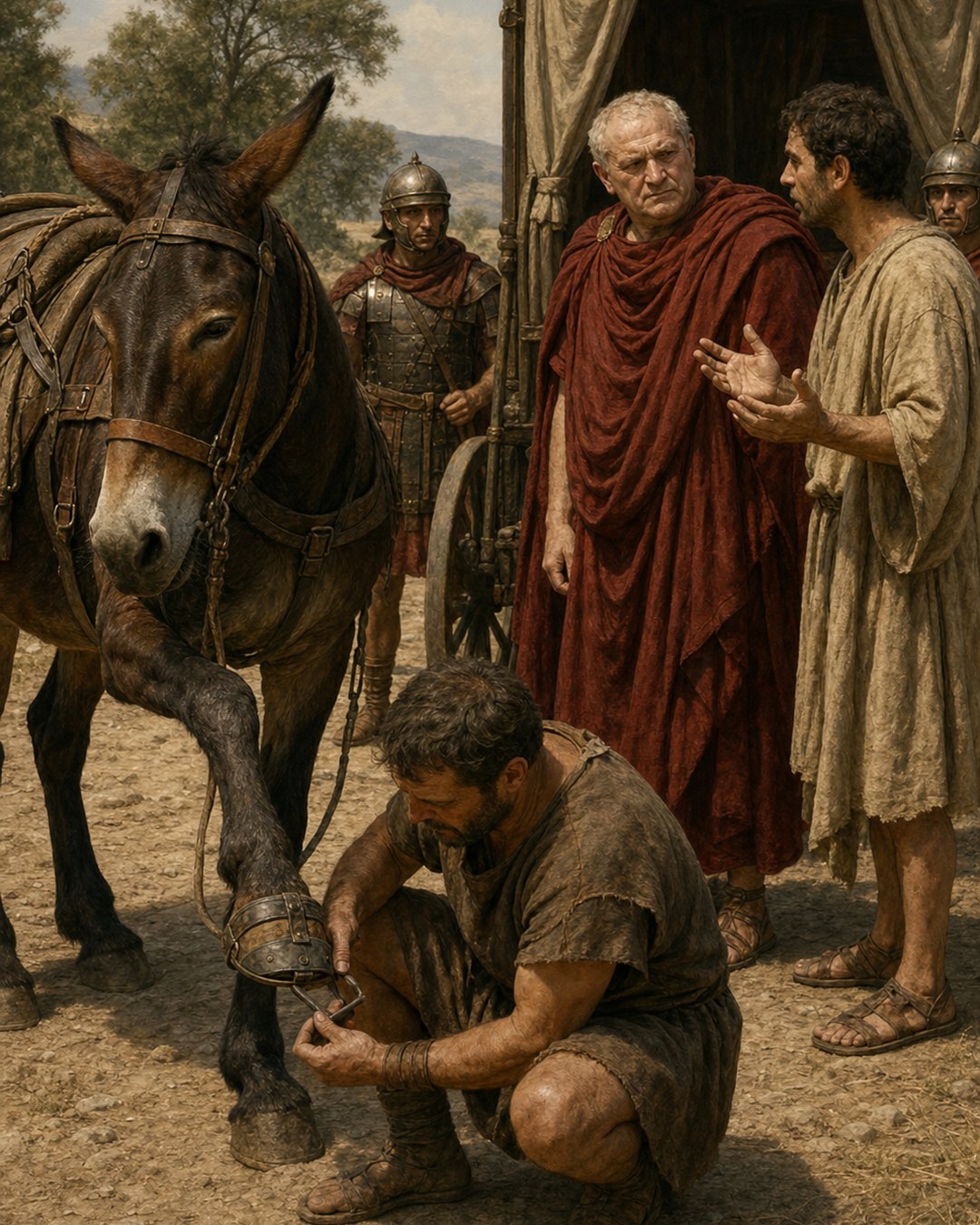
The imperial journey stopped because a mule needed a shoe. At least, that was the explanation offered beside the road.
Vespasian suspected a different cause. The muleteer had created just enough delay for a man with a lawsuit to approach the emperor. Someone who could not order the travelling court to halt had apparently found a person who could slow its animals.
Suetonius gives Vespasian no solemn inquiry. The emperor asked how much the muleteer had been paid and demanded a share. The joke exposed the arrangement while folding it into Vespasian’s own reputation for finding revenue everywhere.
The scene lasts only a few lines, but it catches imperial government in motion. Access depended not only on law, rank or written petition. It could depend on who controlled the next minute of a mule’s pace.
The emperor’s day was divided into chances to be heard
Suetonius describes Vespasian rising before daylight. He read letters and reports from officials, admitted friends, received greetings while dressing, handled business, took a drive and later rested. The routine presents government as a sequence of openings and closures. Some people entered through office, friendship or appointment. Others waited for a crack in the timetable.
A travelling emperor created a special problem. Movement linked residences, ceremonies, inspections and military or civic business, but it also carried the ruler past people who wanted decisions. A petitioner could know the route and still fail to reach the person whose answer mattered. Guards, attendants, speed and protocol turned physical closeness into political distance.
The man in Suetonius’s story had a lawsuit. The source does not identify him, explain his case or say whether Vespasian heard it. That silence should remain. What the anecdote preserves is the tactic used to manufacture proximity: persuade the muleteer to stop.
The arrangement belongs beside the written petitions that carried provincial complaints toward an emperor. A document could formalize a request, but even written claims needed a route through human gatekeepers. On the roadside, the gatekeeper held reins and knew when an interruption could be made to look ordinary.
Time itself became the scarce resource. The litigant did not buy a judgment in the surviving account. He bought a pause long enough to become visible.
A muleteer controlled more than the animals
Shoeing a working mule was plausible. Hooves wore, surfaces changed and transport animals required attention. A halt for maintenance did not announce corruption. Its very ordinariness made it useful.
The muleteer occupied a narrow but powerful position. He could not decide lawsuits, issue decrees or command guards. He could decide whether the team kept moving. Control over one small operational task gave him temporary influence over imperial access.
That influence resembles other forms of Roman intermediation. Households, courts and armies depended on people whose titles sounded secondary but whose location placed them between a request and authority. A doorkeeper controlled entry. A secretary controlled paperwork. An attendant controlled the order of approach. Here the critical intermediary worked below the carriage.
The transport world behind the joke is visible in the wider labour of Roman muleteers on difficult roads. Animals did not move imperial business by themselves. Handlers judged pace, loads, surfaces, rest and repair. The same practical discretion that kept a journey functioning could be sold as a political opportunity.
Suetonius says Vespasian suspected the motive. The wording matters. The emperor inferred a transaction from the convenient timing; the biographer does not present a confession or a recovered contract. The story’s truth is the recognizable structure: a suspicious halt, an approaching litigant and a ruler quick enough to connect them.
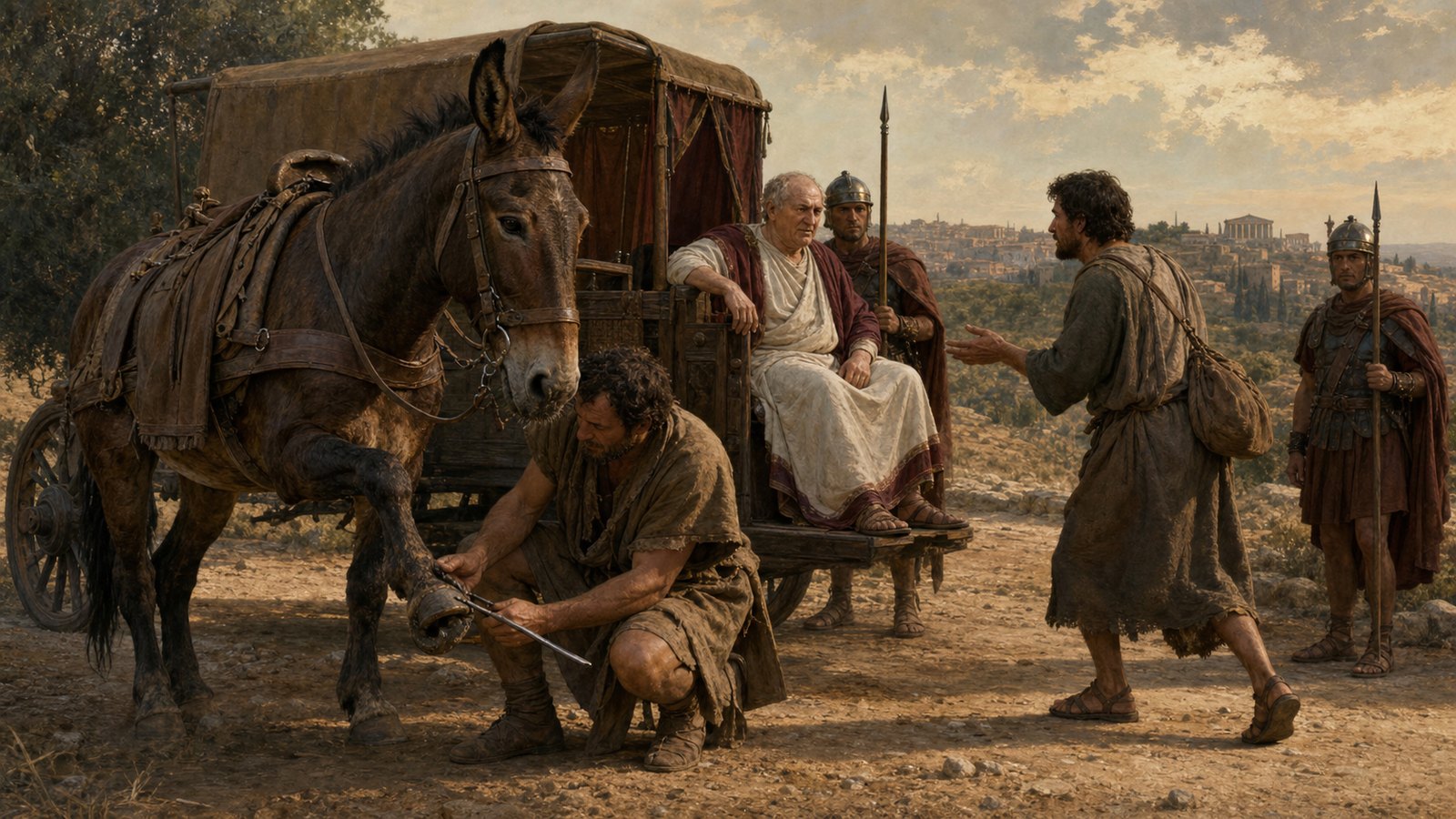
Vespasian answered a hidden fee with an open claim
Vespasian did not merely accuse the muleteer. He asked what the shoeing had earned and insisted on a share. The response converted a covert side payment into the emperor’s own comic revenue.
That move worked because Suetonius had already built a fiscal character. He groups the episode with jokes about Vespasian’s unpopular means of gain. In another anecdote, an attendant sought a stewardship for a supposed brother and expected payment for arranging it. Vespasian dealt directly with the candidate, took the money himself and told the attendant to find another brother. The emperor displaced the intermediary rather than pretending no market existed.
The famous latrine story follows the same pattern. When Titus objected to a charge connected with public conveniences, Vespasian held money from the first payment to his son’s nose. The coin did not smell, he observed, although it came from urine. Humour did not erase the tax. It reframed criticism around the usefulness and neutrality of revenue.
The mule joke is sharper because the emperor had not created the fee. His demand for a share mocked both parties. The litigant had treated imperial attention as purchasable. The muleteer had monetized a delay inside the emperor’s own journey. Vespasian’s answer claimed ownership of the opportunity they had carved from his time.
This was not a transparent anti-corruption system. The joke could normalize the idea that access and office circulated through payments. Yet it also made the concealed arrangement legible to everyone present. The ruler showed that he understood how minor servants could profit from controlling approach.
A legal backlog made improvised access worth buying
Why risk such a maneuver for a lawsuit? Suetonius elsewhere says legal business had accumulated to an extraordinary degree. Older cases remained unsettled after interruptions, while civil disorder produced new disputes. The backlog had become so severe that ordinary proceedings might outlast the litigants themselves.
Vespasian appointed commissioners by lot to restore property seized during war and make special decisions in the Court of the Hundred. The aim was to reduce cases quickly. That administrative response shows the pressure behind the roadside anecdote. Formal courts existed, but delay could make formal entitlement feel useless.
A personal approach to the emperor offered no guaranteed remedy. It did offer a chance to leap from an anonymous queue into a remembered encounter. The man beside the mules may have wanted referral, attention, protection or simply the assurance that someone powerful had heard his name. Suetonius does not tell us which, so the article cannot supply it.
The contrast with Afrania’s conspicuous appearances in a Roman courtroom is revealing. Court procedure could make a litigant’s voice public but also subject it to hostile judgment. The roadside tactic worked before procedure began. Its purpose was to reach the channel at all.
Backlogs create shadow markets around attention. When official pace slows, people pay guides, advocates, clerks or anyone who can shorten the distance to decision. Suetonius’s muleteer is an ancient version of that durable problem, using animal maintenance rather than a stamped appointment.
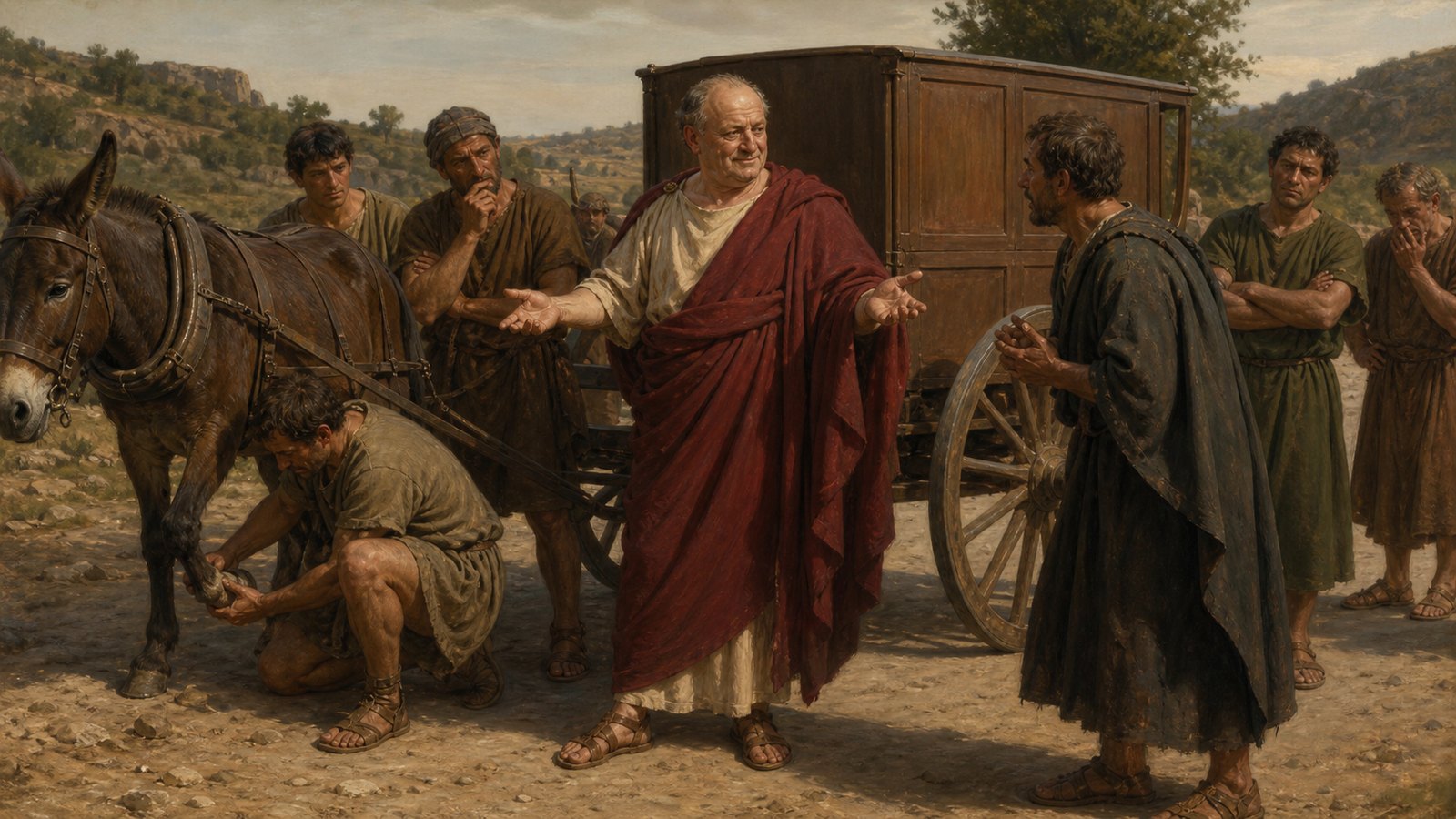
The road exposed the machinery of personal rule
The anecdote survives because it fits Vespasian’s comic portrait. He appears alert, practical, suspicious of intermediaries and unembarrassed by money. A different biographer might have used the scene to condemn venality or praise accessibility. Suetonius makes it a one-line test of character.
Its value is larger than character. The halt reveals how personal monarchy concentrated hope in the ruler’s body. A court could employ councils, secretaries and judges, but a man with a lawsuit still believed that getting within speaking distance of Vespasian might change his prospects.
The carriage therefore carried two systems at once. Officially, it moved the emperor through his duties. Informally, it moved a scarce audience past people seeking intervention. Everyone around it occupied a position in that economy: guards could block, attendants could introduce, drivers could hasten, and a muleteer could stop.
The shoe may have been necessary; the motive may have been mixed; the lawsuit may have gone nowhere. Suetonius leaves all three uncertainties intact. What Vespasian recognized was timing too convenient to ignore.
For a few minutes, the empire’s pace depended on one hoof. A petitioner turned that pause into an opening, a muleteer turned it into a fee, and Vespasian turned it into a joke that reclaimed the value of his own delayed attention.
Sources
Suetonius, Life of Vespasian 10, 21 and 23