
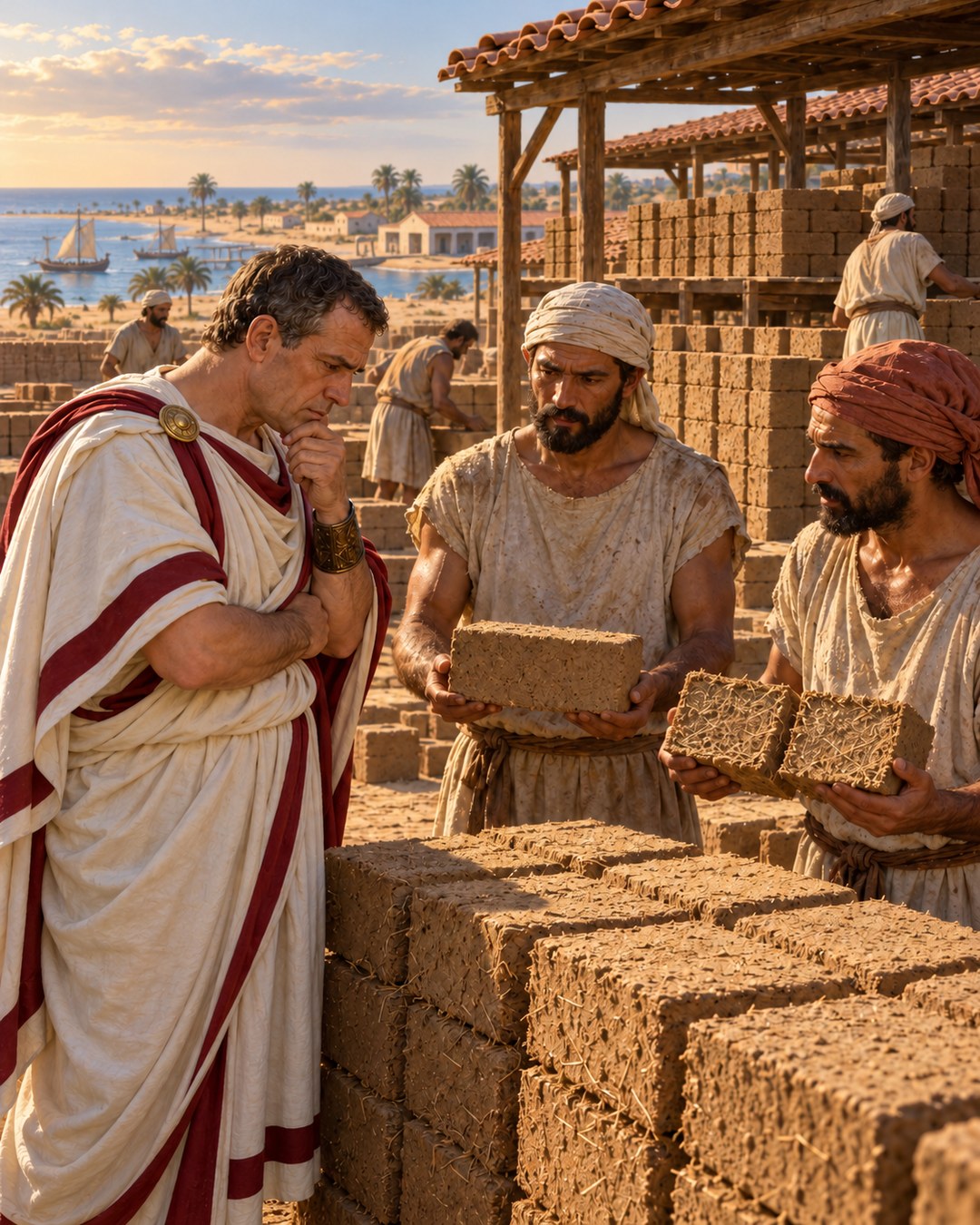
A mud brick could lie. Under the summer sun, its surface looked dry while moisture remained inside. Vitruvius says the deception appeared later: the core contracted, the hardened exterior broke, plaster lost its support, and a wall could begin to fail after the mason’s work seemed complete.
Utica answered that hidden defect with time and an official. The city, according to Vitruvius, allowed no brick into a building unless it was at least five years old and had received a magistrate’s approval. A material process became a municipal rule because the dangerous condition could not be judged from a freshly baked-looking face.
The passage is often reduced to an old recipe for mud brick. It is more useful as a chain of accountability. Soil selection affected binding. Season affected drying. Age affected shrinkage. Size affected wall bond. Plaster exposed mistakes. Inspection translated all of those workshop choices into permission to build.
The wrong earth defeated straw before the wall rose
Vitruvius begins below the mould, with soil. Gravelly and pebbly earth made poor bricks. Rough sandy clay was also rejected. Such material produced excessive weight, deteriorated under rain, and did not let chopped straw bind the mass properly.
The straw was not an ornamental sign of humble construction. It crossed weak points inside the earthen mix, but only if the surrounding particles held it. Coarse inclusions interrupted that relationship. A worker could add the expected fibre and still obtain a bad brick because the earth around it refused cohesion.
Recommended earth was red or white and chalky, or of a strong sandy character. Vitruvius valued ductility, cohesion, and manageable weight. Those qualities reached beyond the brick yard. Lighter units were easier to carry upward, so the correct clay reduced handling work as well as weathering risk.
Selection demanded touch and observation before standardized dimensions mattered. A mould could make two blocks look alike while their internal mixtures behaved differently. The first quality gate therefore belonged to the worker who broke, moistened, and kneaded the earth.
Summer made a dry face before a dry centre
Spring and autumn were the preferred making seasons because bricks dried evenly. At the summer solstice, intense heat hardened the outside too quickly. The face presented the appearance of readiness while the interior remained in another state.
As the hidden moisture finally departed, the centre shrank. The parts already dried could not follow gently, so they cracked. Strength vanished through differential movement rather than one dramatic blow. Fast surface drying had preserved the shape only long enough to conceal the future fracture.
Vitruvius considered bricks aged at least two years best. Time was not idle inventory. It completed manufacture by allowing water to leave through the full thickness before the unit carried finishes and loads. A yard stacked with bricks was still performing material work.
The warning belongs beside the legal depreciation assigned to exposed brick walls. That story concerns value after construction. Here the decisive loss can be planted beforehand, when a builder mistakes a dry skin for a stable block.
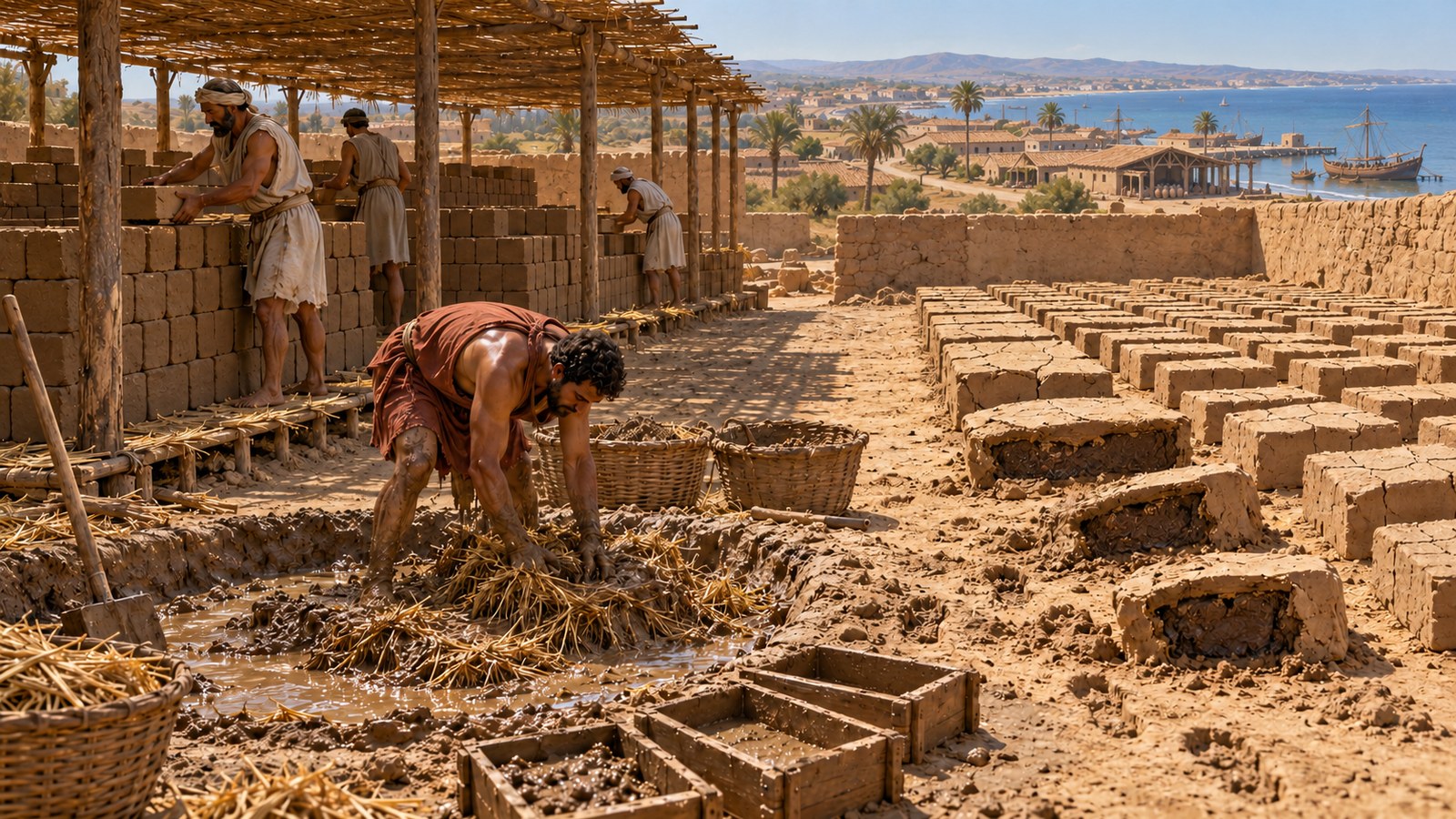
Plaster revealed what the brick yard had hidden
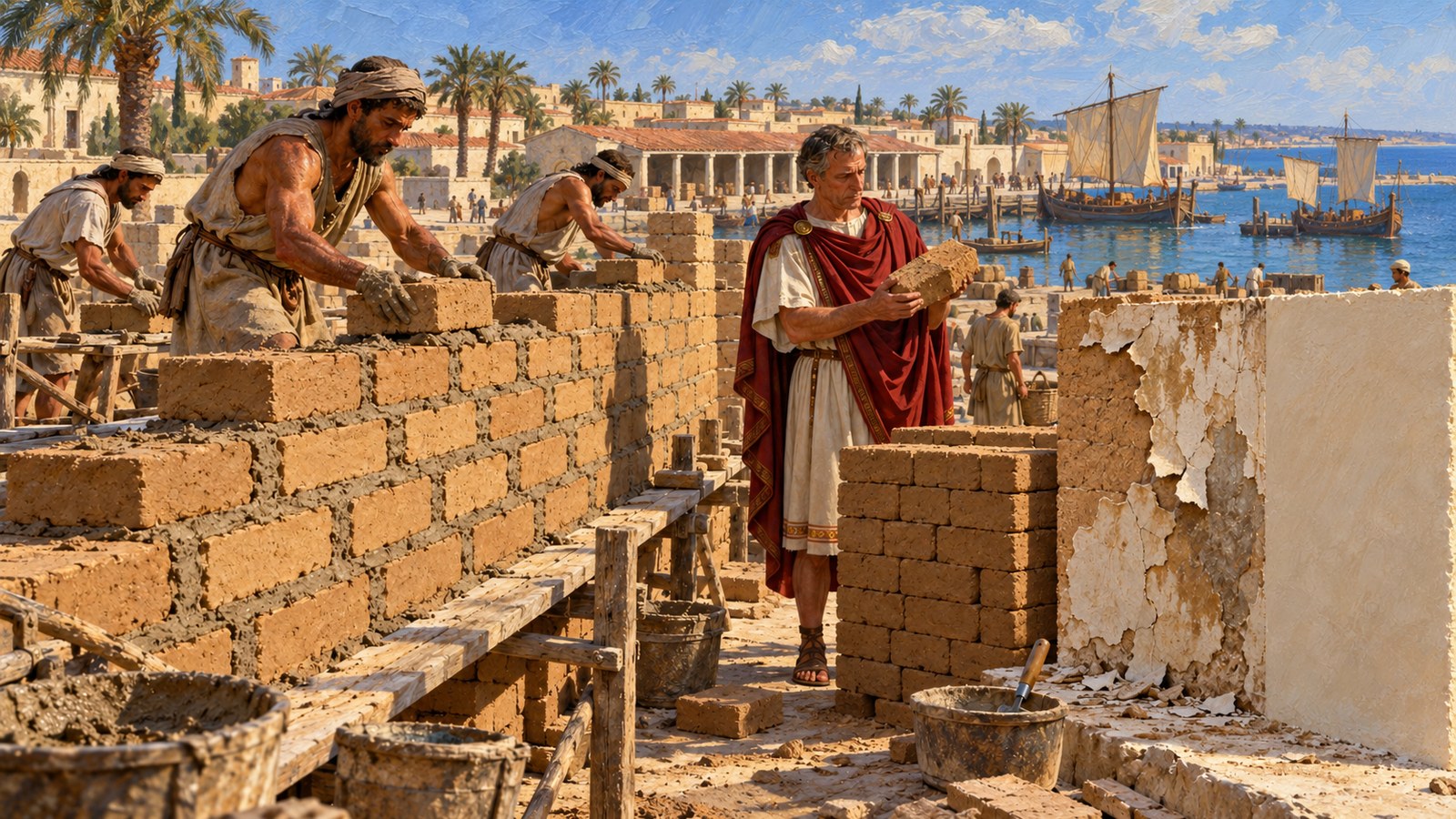
A wall of incompletely dried bricks might stand long enough to receive plaster. The finish then hardened at its existing dimensions. When the masonry below contracted, a gap opened between substrate and surface. Thin plaster was left to support itself, something it could not do for long.
The failure could travel back into the wall. Falling or broken finish was not merely cosmetic evidence. It announced movement in the blocks and could help pull the assembly apart. The mason who rushed drying exported the brick yard’s moisture problem into the occupied building.
This explains why age offered an attractive standard. A magistrate could not watch every brick lose water from its core, but the city could require a long interval and reject damaged stock. Five years at Utica exceeded Vitruvius’s general two-year preference, adding a larger safety margin before approval.
The official did not create dry weather or good clay. Inspection depended on craft already performed by producers. Yet the magistrate changed the incentives around that craft. Bricks made too quickly could remain unsaleable for public use, tying a hidden physical condition to a visible administrative decision.
Finishes elsewhere also depended on disciplined preparation. The sequence in turning limestone into workable Roman mortar shows heat, slaking, aggregate, and curing changing stone through controlled stages. Mud brick used less spectacular energy, but it demanded the same respect for time between raw material and wall.
Half bricks locked measured units into one wall
Dryness solved only part of construction. Vitruvius describes a common brick one foot long and half a foot wide, then distinguishes Greek pentadoron and tetradoron units. The five-palm type belonged to public buildings; the four-palm type to private ones.
Each system included half bricks. Courses used whole units on one face and halves on the other, then alternated the arrangement. The pattern prevented continuous joints from running straight through the wall and bound the two faces together.
A half brick was therefore not leftover debris. It was a planned component of bond geometry. Standard sizes made the alternating sequence predictable, while the mason’s placement converted separate dried blocks into a continuous mass.
Vitruvius points to admired brick buildings at Arretium and Tralles and to brick walls in Athens and Patrae. Such examples matter because mud brick can disappear from popular images of monumental antiquity. The material could support respected architecture when earth, fibre, age, bond, and protective finish were coordinated.
The different formats also show that “a brick” was not one universal object. Public and private Greek buildings could use separate square dimensions, while Vitruvius’s familiar unit followed another proportion. Half units had to belong to the same system as the wholes. Mixing dimensions without a plan would disrupt the alternating bond that gave the wall continuity.
Measurement therefore joined moisture control. The yard needed moulds that produced repeatable units, sheltered space that let them age, and enough inventory to wait through multiple building seasons. A five-year threshold implied storage capacity and records or reliable memory about when batches had been made. The rule reached backward into the organization of production.
Utica’s five years placed the slowest stage at the centre of the system. Moulding a block was quick. Carrying it was visible. Laying a course produced immediate progress. Internal drying produced almost none of the spectacle, yet it determined whether plaster and bond would continue to work after the builders left.
Long storage also exposed obviously bad units before they reached a wall. Cracks, crumbling edges, distortion, and rain damage had time to appear in the yard. Waiting did not merely dry the good bricks; it made some failures visible while replacement was still cheaper than demolition.
Vitruvius’s recommended seasons further shaped the calendar. Spring and autumn production could not be expanded instantly in midsummer without accepting uneven drying. A builder planning a large project needed material well before excavation, and a city enforcing age requirements forced contractors to think beyond the next contract.
The magistrate stood at the end of that waiting period as a public witness to invisible time. Approval could not guarantee every wall, and Vitruvius’s account is a prescriptive text rather than a city archive. Still, the rule identifies the failure people feared: a brick that entered the wall before it had finished becoming a brick.
Sources
Vitruvius, On Architecture, 2.3.