
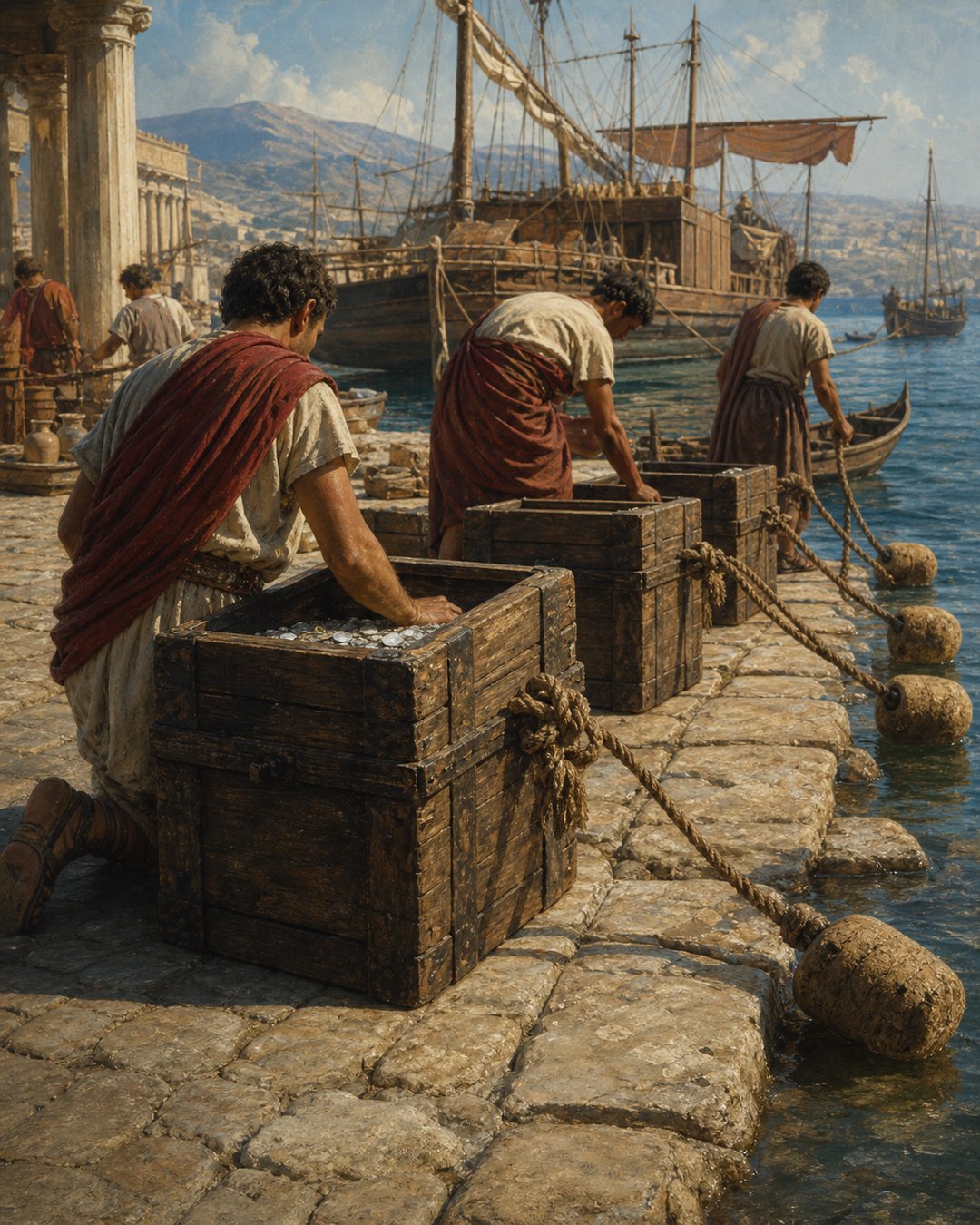
Cato the Younger prepared for a shipwreck by giving the sea something it could not easily hide: huge pieces of cork.
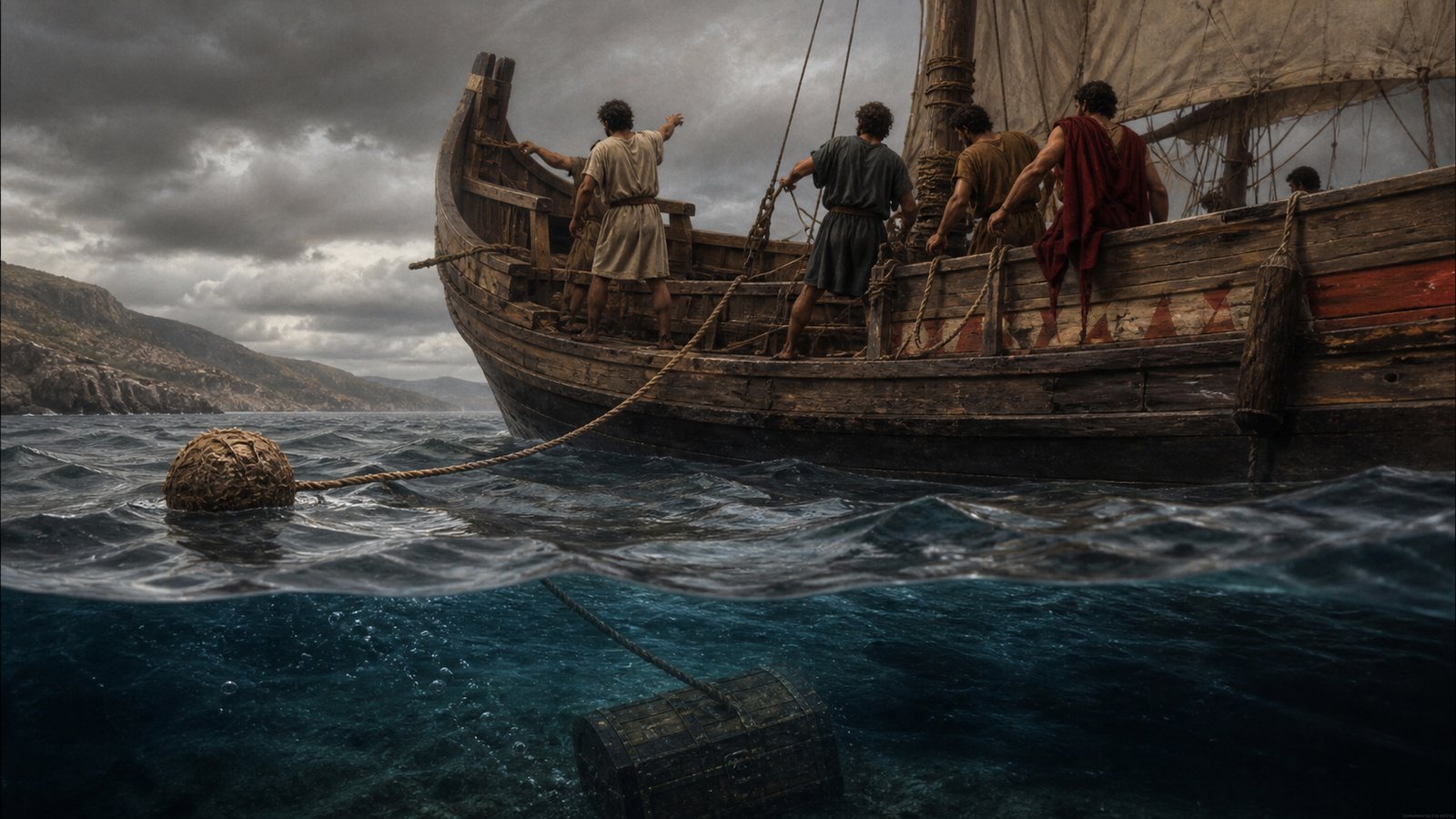
Plutarch says Cato gathered nearly seven thousand talents of silver during his commission in Cyprus. For the long voyage to Rome, he divided it among many coffers. Each held two talents and five hundred drachmas. A long rope ran from every coffer to a large cork float, intended to remain above a wreck and mark where the treasure had sunk.
The scheme was physical, specific and limited. It did not promise to prevent disaster. It tried to make a loss recoverable. A broken hull might send silver to the bottom, but rope and cork could preserve a line between the invisible cargo and the surface.
Almost all the money arrived. The two books recording Cato’s administration did not. One went down with a freedman’s ship; the other disappeared when sailors’ fires spread through tents at Corcyra. Rome received the treasure with spectacle, but the evidence Cato wanted to leave for future officials was gone.
A political exile became a financial commission
Cato did not volunteer for Cyprus as an agreeable provincial honor. Plutarch frames the appointment within the politics of Publius Clodius. Clodius wanted Cato away from Rome and presented the commission as recognition of his incorruptibility. Cato called it a snare and an insult. Clodius then made clear that refusal would not matter and secured a public measure sending him.
The means supplied were strikingly small. Cato received neither a ship nor soldiers, and Plutarch gives him only two clerks. He was also ordered to deal with exiles from Byzantium. A task involving a royal estate, a sea crossing and politically dangerous sums began without the entourage that its scale might suggest.
This origin matters because the treasure was never merely cargo. Every chest carried the possibility of accusation. A critic could question what had been collected, what had been sold, what had vanished and who had profited. Cato therefore had to move value and construct an account of how he had moved it.
The pressure resembles the treasury ledgers that made Roman war expenditure countable. Money became politically governable when transactions left records. Cyprus added the harder problem of carrying both the assets and their audit trail across open water.
Plutarch’s story praises Cato, and it should be read as a biographical portrait rather than an impersonal transport report. Yet the concrete devices he records—coffers, ropes, cork and duplicate books—show what that portrait considered persuasive evidence of careful administration.
Cork turned a wreck into a searchable place
Cato’s coffers were deliberately bounded loads. Two talents and five hundred drachmas in each still represented formidable weight and value, but division avoided making the entire treasury depend on one container. The long ropes and cork pieces then addressed the next problem: silver sinks, and a wreck can scatter its identifying features beneath water.
A cork marker would not lift a treasure chest. It was not a buoyancy system for raising thousands of talents. Plutarch says it would hold to its deep mooring and indicate the place. The distinction is important. Recovery begins by knowing where to search.
The arrangement joined a dense object to a light one. The coffer belonged below if disaster struck; the cork belonged above. Rope kept the two fates connected. To an approaching salvage crew, the floating marker could translate an unseen position into a point on the sea.
It was also a distributed precaution. Every coffer received its own rope and float. If vessels or loads separated, the markers did not reduce the whole treasury to a single clue. The system followed the units in which the silver had already been packed.
That design sits beside the Roman rule that shared losses when cargo was deliberately thrown overboard. The legal rule allocated an emergency cost after a captain saved the voyage. Cato’s ropes addressed another maritime failure: not who should pay, but how a heavy public asset might be found after it disappeared from sight.
Plutarch reports the result without a dramatic recovery scene. All the money except a very little was transported safely. The floats may never have been needed. Their significance lies in the risk Cato recognized before departure and the practical answer he prepared.
Two account books took different roads to the same loss
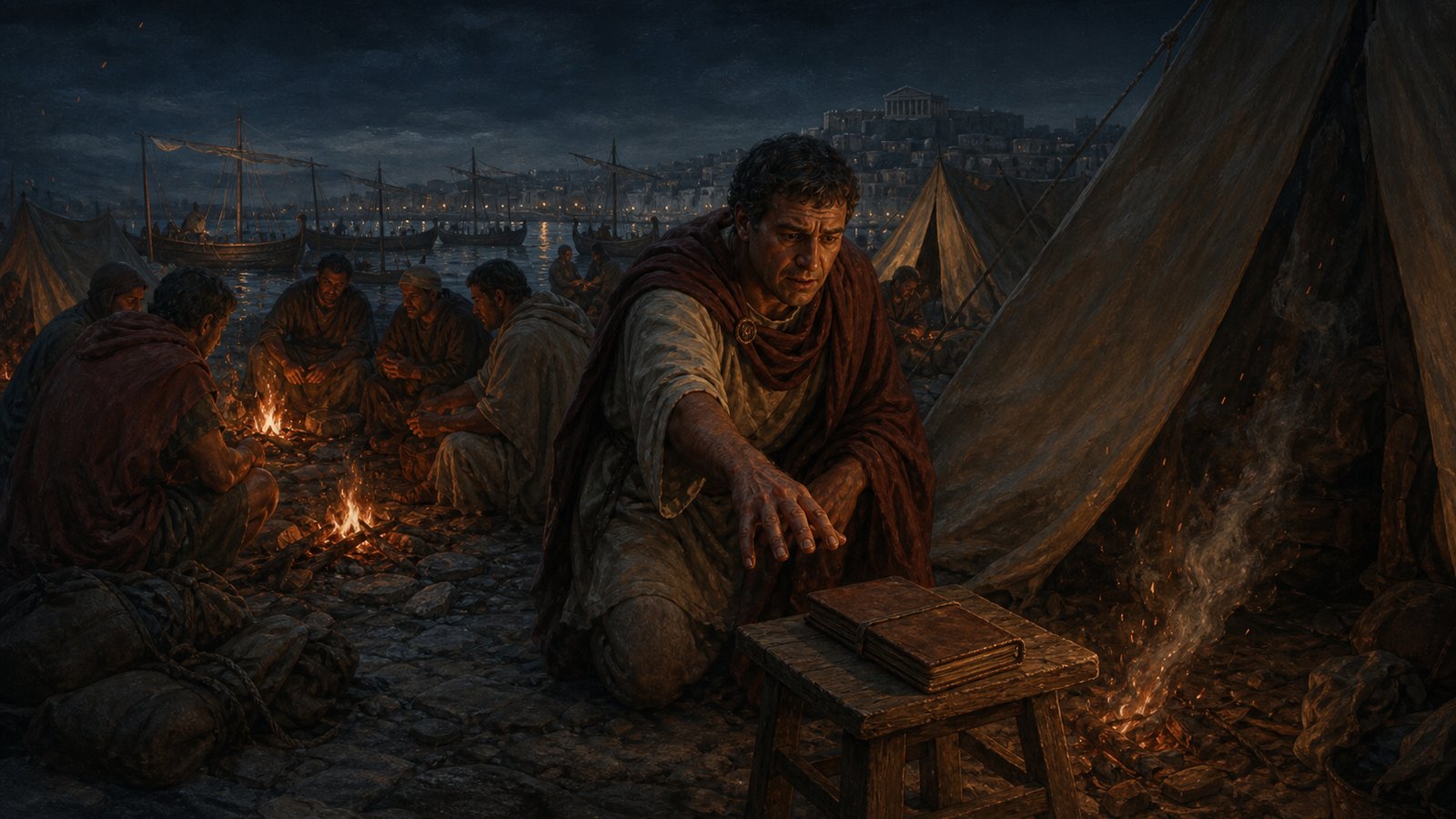
The records received their own form of redundancy. Cato had the accounts carefully written in two books. One traveled with his freedman Philargyrus. The other remained with Cato. Separating them meant that one accident should not destroy both copies.
The first accident occurred after Philargyrus sailed from Cenchreae. His vessel capsized, and Plutarch says the freedman lost the book together with his cargo. The source does not invite an invented rescue or recovered fragments. One documentary path simply ended in the sea.
Cato carried the second copy safely as far as Corcyra. There, he pitched his tent in the market-place. The night was cold enough for sailors to make many fires. The tents caught, and the remaining book disappeared.
The pairing gives Plutarch’s narrative its force. Maritime planning saved nearly all the silver, while duplicated writing failed through two unrelated hazards. One copy was protected from the fate of the other, but independence did not guarantee survival when shipwreck struck one route and fire struck the next.
The scene also reverses the expected hierarchy of vulnerability. Silver seems tempting, cumbersome and exposed. A book seems portable. Yet dense metal could be portioned, roped and tracked, while thin pages or tablets could be destroyed outright. The better protected object was not the easier object to carry; it was the object for which the risk had been imagined in concrete terms.
The missing proof mattered even when witnesses remained
Plutarch says royal stewards were present and able to silence enemies or accusers. Cato did not therefore return without witnesses. Their knowledge could support the integrity of his actions, and the arrival of almost all the silver supplied its own powerful fact.
Still, the lost books annoyed him. Plutarch explains why: Cato had not prepared them solely to prove that he had avoided theft. He wanted to offer an example of exact administration. The records were meant to outlive the immediate defense of one man and show how public business should be documented.
That ambition gives the accident a political dimension. Personal reputation could lean on character witnesses. Institutional memory needed an object that another magistrate could consult. Stewards could answer charges, but they were not the same as a durable, itemized account.
Cato’s frustration also complicates a simple moral tale in which integrity makes paperwork unnecessary. Plutarch’s Cato is confident in his conduct and still values records. Honesty and auditability are not substitutes. A public official may believe he acted correctly while also wanting a method by which others can test, imitate or criticize the administration.
The episode does not show a modern bureaucracy. It preserves one elite biographer’s account of a famous Roman and his habits. Even so, the contrast is precise: witnesses could defend the person, while books could preserve the process.
Rome saw abundance, not the fragile route behind it
Cato’s arrival turned transport into display. In the parallel English translation, crowds covered both banks of the Tiber. He continued upriver in a royal galley with six banks of oars until the vessels reached the dock. The money was carried through the streets, and its quantity astonished spectators.
The public ending made success visible. People could see vessels, silver and a returning commissioner. They could not see the submerged possibility represented by every rope and cork float, nor the absent account books that had failed to complete the journey.
That mismatch is the lasting point of the episode. Spectacle compresses administration into an arrival. The logistics had been dispersed across coffers, markers, ships, clerks, witnesses and duplicate records. One part of that system reached Rome in overwhelming material form. Another existed only as Plutarch’s story of how it vanished.
Cato’s corks reveal a mind working backward from disaster. If the vessel sinks, the silver must still leave a sign. His books reveal a similar instinct: if one record is lost, another should survive elsewhere. The first precaution enjoyed good fortune; the second met two different accidents.
The result is not proof that Roman officials possessed a complete salvage service or a standard rule for floating treasury markers. Plutarch attributes the arrangement to Cato in this mission. Its value comes from specificity. The rope had a length, the cork had a task, each coffer had a capacity, and each book had a separate keeper.
Nearly seven thousand talents crossed from Cyprus, while the written model of their administration did not. Rome could count the treasure it received, applaud the commissioner and hear his witnesses. What it could no longer inspect was the exact record he had meant to leave behind.
Sources
Plutarch, Cato the Younger 34, 38–39