
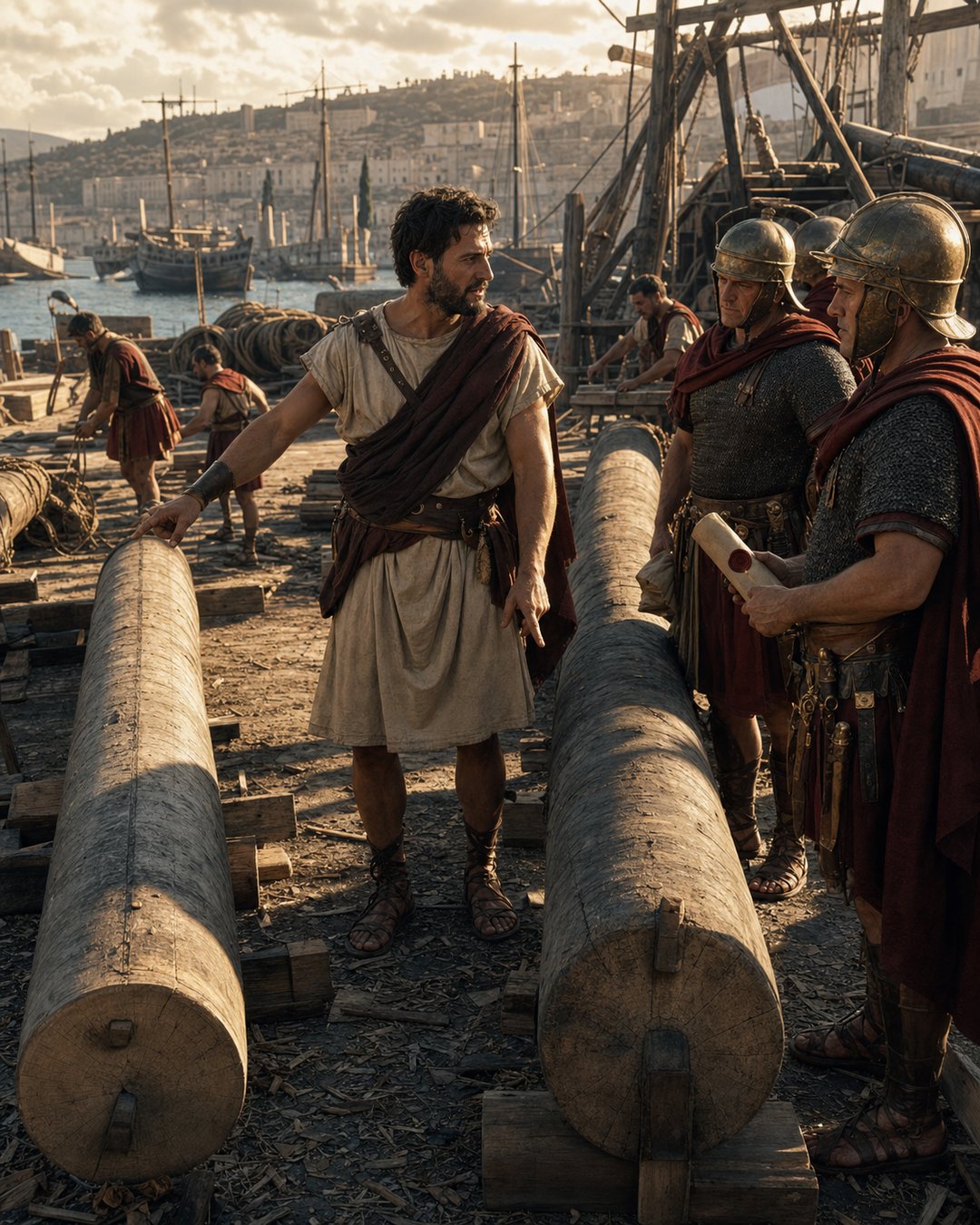
The order named the larger of two masts. The engineer sent the smaller one.
He had not confused the timbers. After learning that Publius Crassus Mucianus wanted a beam for a battering ram, the chief engineer at Mylatta judged the smaller mast better suited to the machine and easier to transport. His substitution addressed the commander’s purpose more intelligently than a blind choice might have done.
Crassus had him summoned, listened to the explanation and ordered him beaten with rods. In Aulus Gellius’s telling, the commander believed that authority would become ineffective if a subordinate could answer a precise instruction with an unsolicited plan.
The anecdote is brutal, but Gellius does not present it merely as a story about a cruel temper. He places it after a careful philosophical dispute. Must an order be followed exactly, or may the recipient depart from it when circumstances reveal a more useful course? The two masts force that abstract question into wood, distance, siege work and bodily punishment.
A better outcome could still damage the next order
Gellius begins before Crassus, with what philosophers called duties. Someone has assigned a task and defined exactly what should be done. The person carrying it out sees an alternative that appears more successful and more advantageous to the person who issued the command. Is initiative now a duty, or is obedience?
He reports that wise thinkers answered both ways. The strict side argued that a decision made after proper deliberation by the person whose interests and authority were involved should bind the recipient. An unexpected opportunity did not erase the instruction.
Failure made the danger obvious. If the substitute plan went wrong, the disobedient agent faced blame and punishment not only for a bad result but for insubordination. Yet Gellius also records a less obvious concern: even success could create a damaging precedent. The gods might receive thanks for the favorable outcome, while the habit of departing from orders weakened the force of future plans.
This is an institutional argument rather than a claim that commanders always know best. One improvised success can teach everyone that an order is merely a suggestion. The next subordinate may possess less skill, worse information or a private motive. A system built around coordinated action then pays for the first exception later.
Roman military systems depended on predictable space and signals as well as courage. a deliberately empty belt inside a camp kept units and baggage from colliding. Its value came from many people respecting the same arrangement. Gellius’s strict argument applies a similar logic to words: the command must retain a stable shape after it leaves the commander.
The flexible answer weighed risk, gain and temperament
The opposing view did not celebrate disobedience for its own sake. Gellius says its advocates compared the disadvantages feared from ignoring the order with the advantage confidently expected from the alternative. Only when the former were light and the latter greater and substantial could departure become reasonable.
That formulation demands more than a hunch. The advantage must be credible, and the possible harm of disobedience must be assessed in advance. Initiative becomes a judgment under uncertainty, not a license to replace every instruction with personal preference.
These thinkers also considered the temperament of the person to whom an account would be given. A stern, hard, autocratic and implacable commander changed the calculation. Gellius invokes Postumius and Manlius as warning types: under such authority, the safest advice was to do nothing contrary to the letter.
Temperament matters because an order operates in two worlds. It aims at an external result, but it also structures a relationship. A flexible commander may reward someone who understands the purpose and adapts well. An implacable one may see the same adaptation as an attack on rank. The material outcome cannot be separated from the authority that authorized the work.
Battlefield communication magnified this problem. a torch system could encode letters only when both sides shared its grid and procedure. A recipient who helpfully changed the system mid-message might improve one signal and destroy comprehension. Expertise has to know whether the rule is a means that may be optimized or a convention whose sameness is the means.
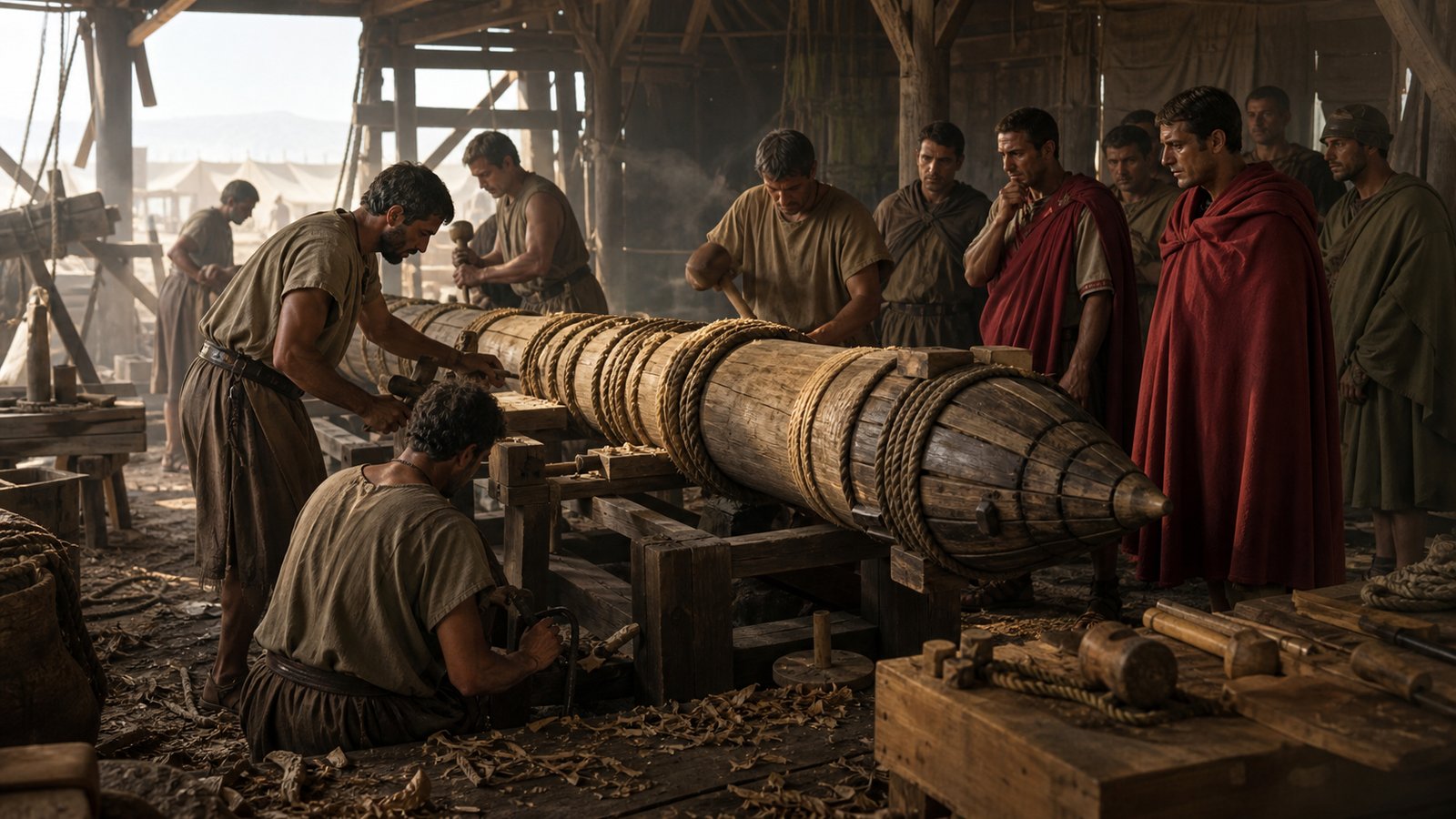
Two masts turned philosophy into siege logistics
Gellius then names Publius Crassus Mucianus. Sempronius Asellio and other Roman historians, he says, credited Crassus with five chief blessings: great wealth, very high birth, exceptional eloquence, deep learning in law and the office of chief pontiff. The list removes an easy excuse. This was not an ignorant commander who could not understand an engineer’s reasoning.
During his consulship, Crassus commanded in the province of Asia and prepared to besiege Leucae. He needed a long, stout beam for a battering ram capable of breaching the wall. At Mylatta, a community allied and friendly to Rome, he had seen two masts. His written instruction to its chief engineer specified the larger one.
The order contained both an object and an unstated purpose. Crassus named the exact mast; the engineer later learned why it was needed. Once the purpose became clear, professional judgment changed the choice. The smaller mast, he believed, was more suitable for conversion into a ram and easier to move.
Transport was not a minor afterthought. A siege beam had to leave a city or shipyard, travel to the army, enter a frame and withstand repeated impact. Greater size could bring weight, awkward handling and construction problems. The engineer interpreted “send the larger mast” as “supply the best practical ram.”
Crassus interpreted it differently. He had already compared the two visible pieces of timber and made his selection. The recipient was not asked to design the project anew. By sending the other mast, the engineer silently transferred the final decision from the commander to himself.
The episode therefore cannot be reduced to expertise against stupidity. The engineer possessed knowledge about suitability and transport. Crassus possessed responsibility for the siege and the authority to choose among risks the text does not fully disclose. Gellius gives us no test result proving which mast would actually have performed better.
The punishment protected command, not the machine
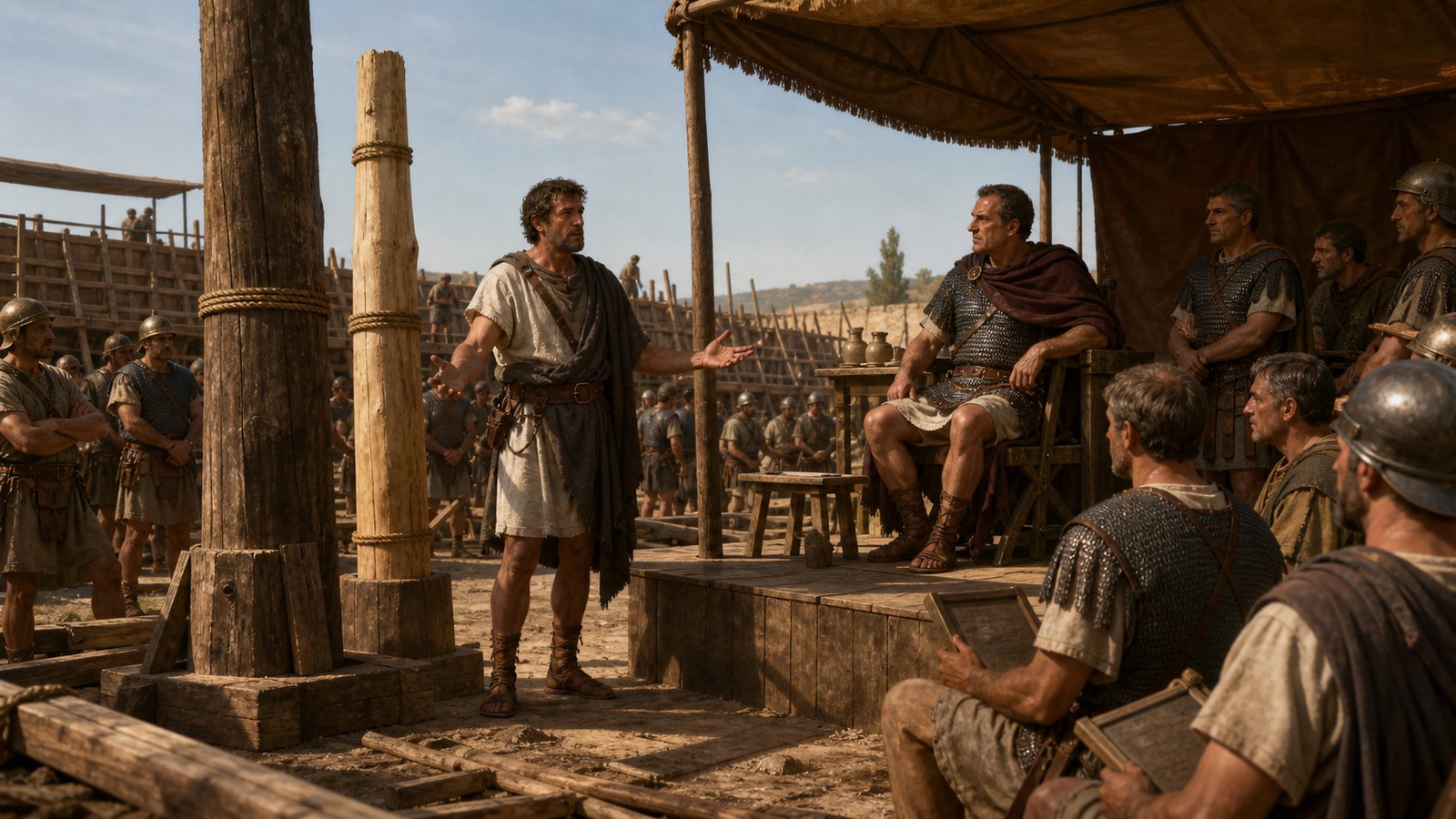
When the engineer arrived, Crassus asked why the specified mast had not been sent. Gellius says the commander ignored the excuses and reasons offered. He had the man stripped and soundly beaten with rods.
The violence is not evidence that the engineer’s design was poor. Gellius supplies Crassus’s rationale: if people could reply to received orders with plans of their own, a commander’s authority would be weakened and made ineffective. The punishment defended the pathway from decision to execution.
That rationale exposes the cost of hierarchy. The organization can preserve consistency by making unauthorized improvement dangerous. It can also frighten knowledgeable people into silence when an order is genuinely flawed. The same discipline that coordinates an army may suppress the warning that saves it from a bad beam, a blocked road or an impossible timetable.
Gellius does not close the debate with a universal rule. The anecdote clarifies why the question is hard. The smaller mast embodies substantial practical reasons; the beating embodies the institutional consequence of letting each recipient rewrite a command. Neither consideration disappears because the other is vivid.
Modern readers should also resist turning Crassus’s punishment into an efficient management lesson. The source reports coercion under Roman command, not a model to imitate. Its historical value lies in the conflict it preserves: a skilled subordinate improved the means, while a powerful commander guarded the form of authority.
Two pieces of timber made the stakes measurable. One was larger. One was easier to transport and, according to the engineer, better for the ram. The siege needed a machine, but command needed obedience. Gellius leaves those needs colliding in the timber yard, where the technically useful answer became the politically intolerable one.
Sources
Aulus Gellius, Attic Nights 1.13