
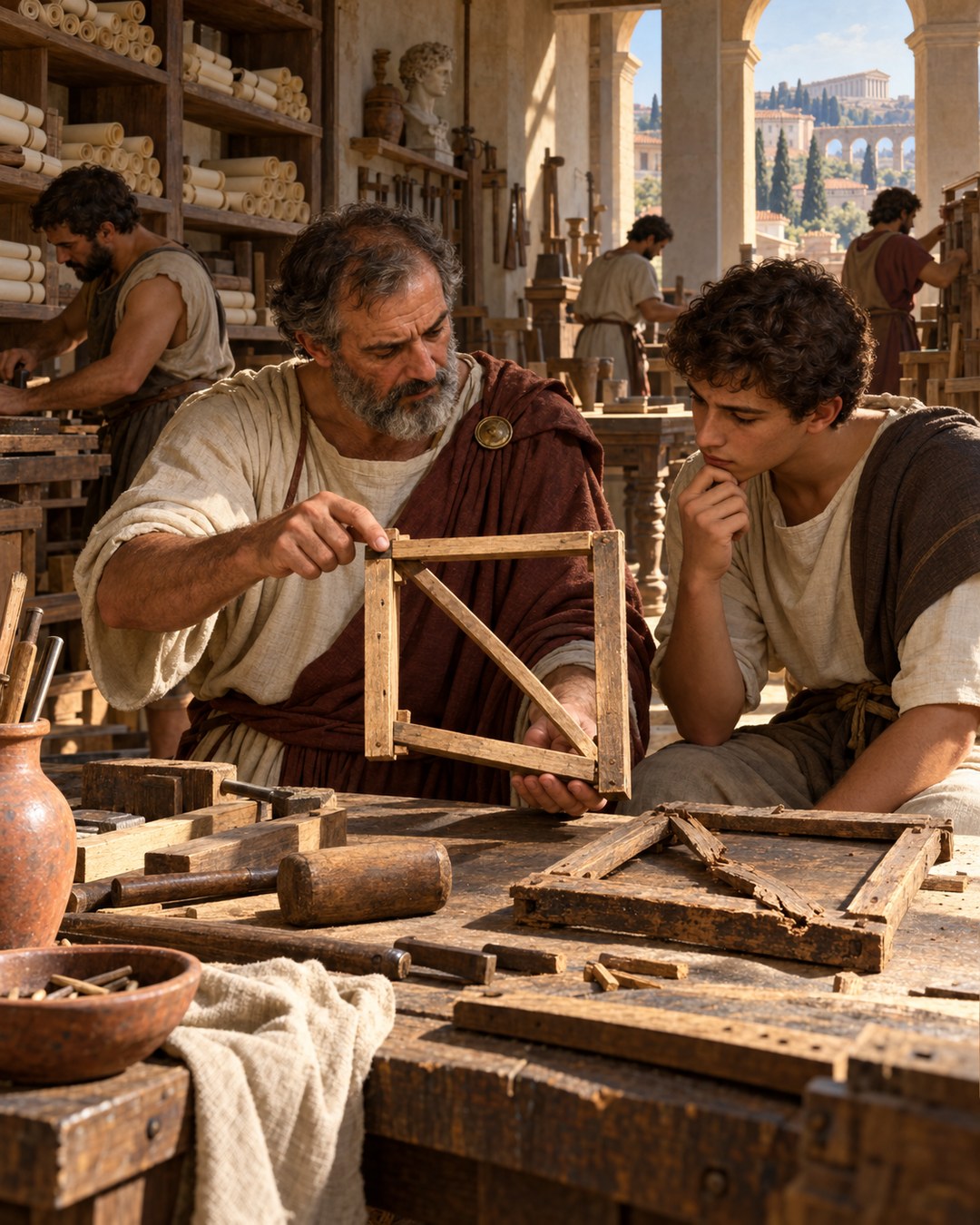
A Roman comedy gave Wisdom two parents. Experience was the father; Memory was the mother. Aulus Gellius thought the genealogy more than a graceful line. It explained why exposure to life does not automatically make a person wise, and why remembered rules can remain empty.
Experience supplies the encounter. Memory prevents its lesson from vanishing. Their daughter is judgment: the ability to bring a retained pattern to a new human problem without mistaking either novelty or repetition for understanding.
The poet Afranius compressed that theory into a stage verse. Gellius unfolded it into a warning about books, teachers, and philosophers whose costume and speech outran their conduct.
A comic genealogy divided learning into two jobs
Gellius found the thought in Afranius’s Roman comedy The Chair. The speaker calls Experience a father and Memory a mother, then names their child in two cultural vocabularies: Sophia in Greece and Wisdom at Rome.
The family image assigns different work to each parent. Experience exposes a person to acts and events. It provides resistance, surprise, consequence, and the difference between an imagined situation and one that has actually unfolded.
Memory keeps those events from remaining isolated. Without retention, each crisis arrives as if nothing comparable had happened before. Repetition increases age, but not necessarily judgment.
Memory without experience has the opposite weakness. A student may preserve maxims, definitions, and examples supplied by others without knowing where they bend under pressure. The storehouse is full, but its owner has not tested the tools.
The child therefore resembles neither parent alone. Wisdom appears when a remembered event can inform a later choice and when a new event can revise what memory had made too simple.
That mechanism differs from Castricius testing whether Gracchus’s beautiful cadence carried a defensible thought. There the danger is sound without substance in one sentence. Afranius asks how substance accumulates across a life.
Gellius did not throw the books away
Gellius says that someone who wants wisdom in human affairs does not need books alone, or instruction in rhetoric and dialectic alone. The limiting word matters. He is not condemning reading while writing a book full of reading.
Books can carry encounters across distance and time. Rhetoric can teach how claims are arranged. Dialectic can expose contradiction. None of them, however, guarantees that a student recognizes the human weight of a decision when its variables are no longer neatly named.
Gellius asks for intimate acquaintance with real life and for testing. That language makes the learner active. Events are not decorative anecdotes attached to a rule; they are occasions on which confidence, motive, and consequence can be compared.
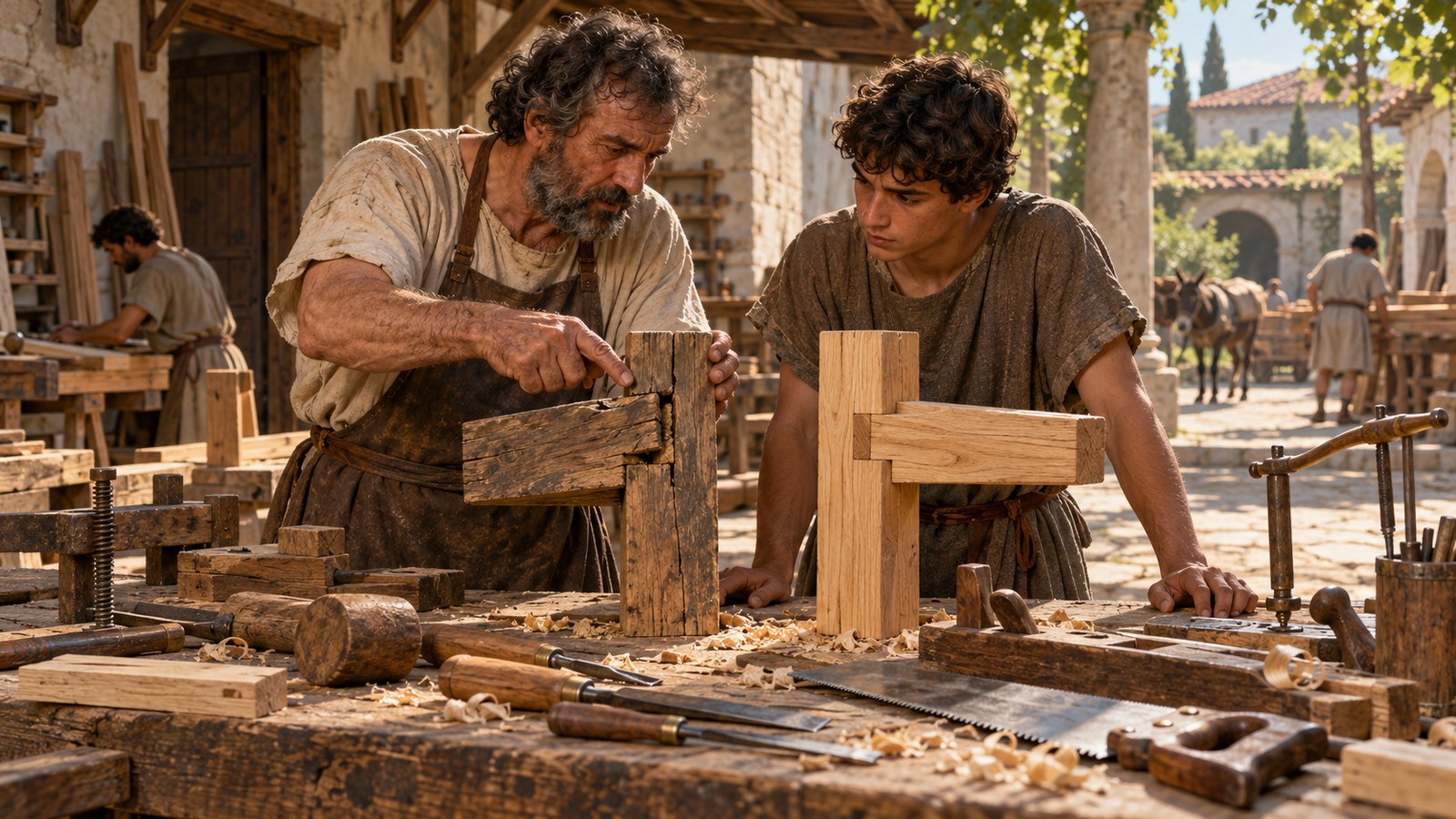
He then requires acts and events to be fixed firmly in memory. An experience that leaves no usable trace cannot guide the next judgment. The learner must notice what happened, preserve the sequence, and resist reshaping it into a flattering story.
This is especially important in human affairs because outcomes rarely isolate one cause. Memory must retain context, not only a slogan extracted after the fact.
Gellius’s own notebooks enact that discipline imperfectly but deliberately. He gathers conversations, readings, and observed disputes so that an encounter can remain available beyond its moment.
A farce or dream could imitate instruction
The sharp edge arrives when Gellius contrasts actual experience with representations built from vain words and fantasies. Such teaching can resemble a farce or a dream: coherent while it lasts, persuasive within its own scenery, and unable to survive contact with the waking problem.
A farce is not false merely because it is staged. Afranius’s own comedy supplies the chapter’s true insight. The distinction concerns whether performance directs attention back toward life or becomes a substitute for testing it.
Rhetoric is vulnerable because fluency can simulate command. Dialectic is vulnerable because a clean distinction can omit the disorder that made the real choice difficult. Books are vulnerable because the reader may borrow conclusions without acquiring the observations that supported them.
Experience is vulnerable too. A person can pass through the same mistake repeatedly and remember only grievance. That is why Afranius gives Wisdom two parents. Events must be retained accurately enough to challenge the person who lived them.
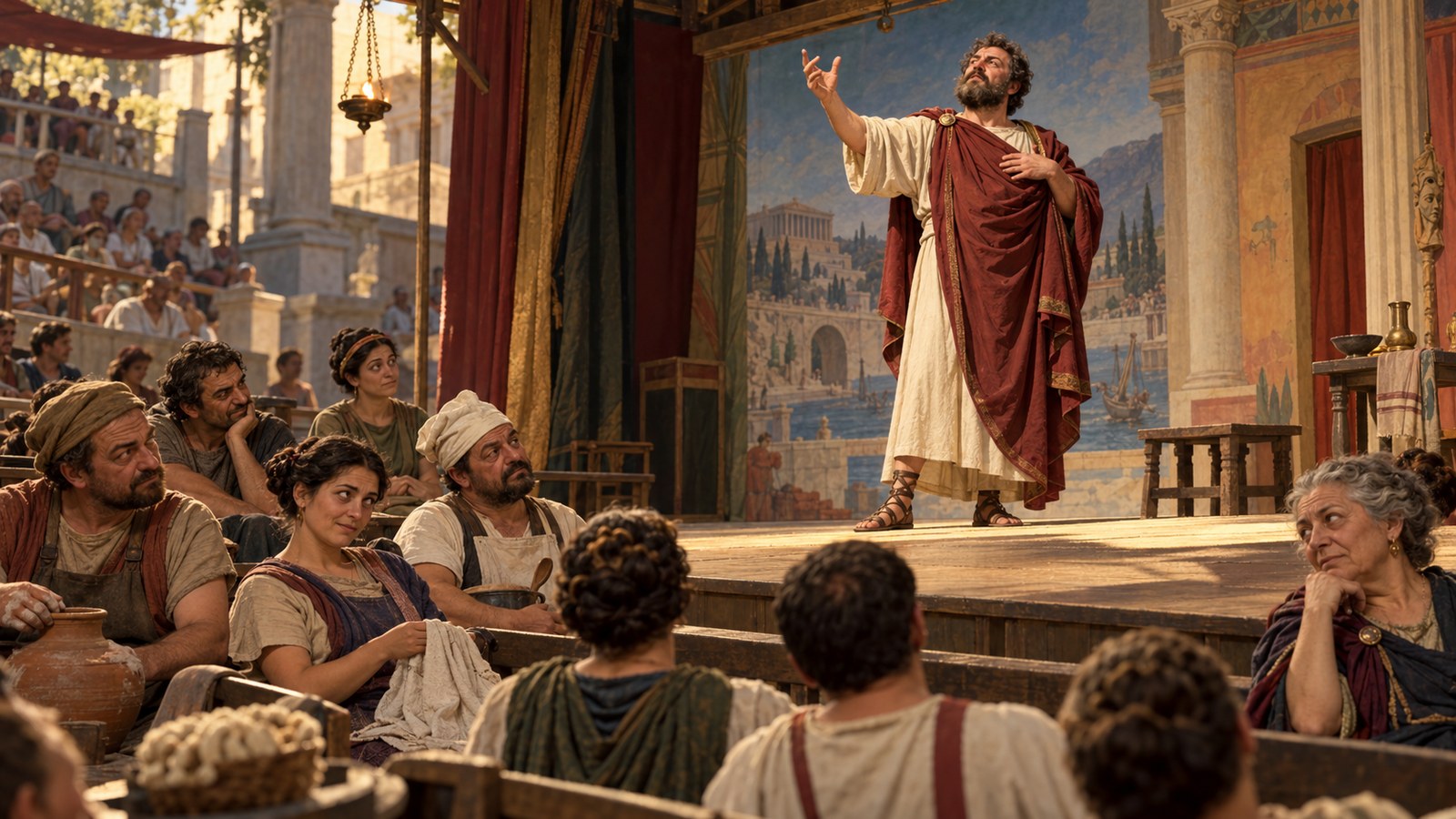
The metaphor therefore avoids a simple opposition between school and world. School can help memory organize experience. Drama can reveal a pattern. A teacher can supply names that make an unnoticed mechanism visible. Failure begins when representation refuses correction from events.
That is why the chapter can praise a line from comedy while attacking instruction that behaves like theatre. Genre does not decide truthfulness; the relation between words and tested life does.
Pacuvius moved the test from knowledge to character
Gellius adds a verse by Pacuvius: he hates base men who preach philosophy. His friend Macedo valued it so highly that he thought it should stand over the doors of every temple.
The line changes the question. Afranius asks how wisdom is acquired. Pacuvius asks what happens when the appearance of wisdom is used by someone whose conduct remains vicious.
Gellius describes idle, lazy people disguised by beard and cloak. Their external marks identify a philosophical role, while tricks of tongue and words supply its sound. The costume and performance can persuade an audience before character is examined.
Macedo’s imagined temple inscription would make every entrant pass under the warning. Philosophy is not authenticated by the uniform of a philosopher or by eloquence against vice. The speaker’s own habits remain part of the evidence.
This concern belongs beside Gellius’s refusal to let Seneca’s sharp literary verdict replace a demonstrated reading. In both cases, verbal force can create an impression of authority faster than the underlying judgment is tested.
Afranius offers a constructive answer. Experience tests the claim outside performance; memory keeps the test from being forgotten when the next impressive speaker appears.
The result is not hostility to expertise. A person may need teachers precisely because individual experience is narrow and memory is unreliable. But borrowed learning should enlarge observation rather than excuse the learner from it.
Gellius’s phrase “human affairs” also limits the theory. He is discussing practical judgment among changing people and circumstances, not claiming that every form of knowledge must be rediscovered through personal trial.
The genealogy remains memorable because it refuses a single source of wisdom. Age alone is insufficient. Reading alone is insufficient. Experience without reflection can harden error, while memory without encounter can preserve empty formulae.
There is a further discipline hidden in the parental image. Neither parent can claim the child alone. Someone proud of long experience must admit dependence on accurate recollection; someone proud of learning and memory must admit dependence on contact with consequences. The metaphor checks two kinds of vanity at once.
It also gives forgetting an ethical cost. To lose a useful event is not merely to misplace information. It can leave another person exposed to a mistake that should already have taught caution. Conversely, remembering badly can make an accidental success look like a reliable method. Wisdom requires memory that remains answerable to what actually occurred.
Wisdom is the daughter because it comes after both operations. Something happens; the mind keeps it; a later choice draws upon it without merely copying it. That sequence turns a comic line into a disciplined account of learning.
Afranius placed the account on a stage. Gellius carried it into a notebook. Macedo wanted a related warning over temple doors. Each setting tests whether words can survive beyond their first performance—and whether an audience remembers enough to use them.
Sources
Aulus Gellius, Attic Nights 13.8, quoting Afranius and Pacuvius and discussing practical wisdom.