
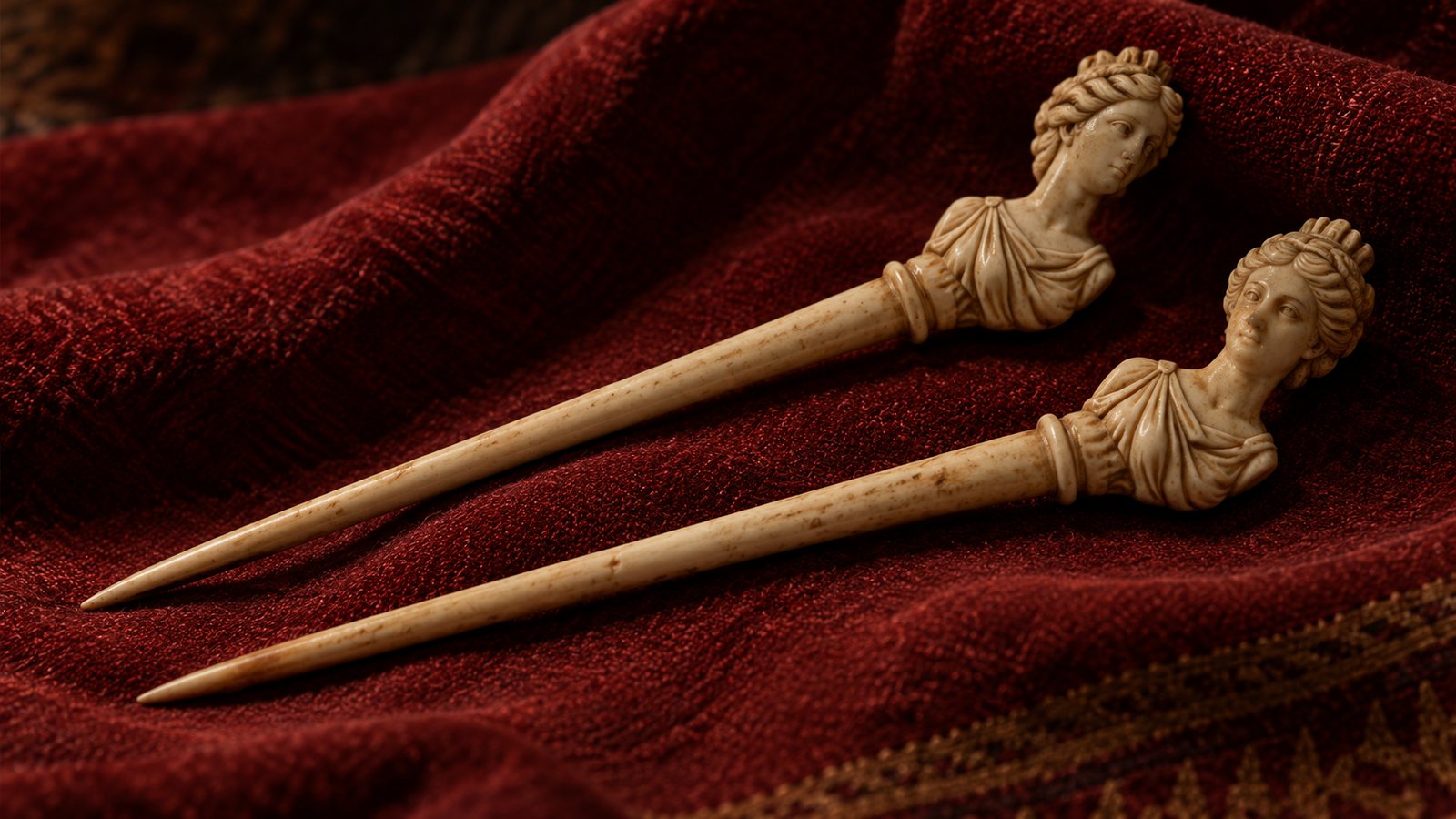
A bone hairpin from Roman London turns fashion into a chain of imitation. The pin is 200.5 millimetres long. Its carved head shows the bust of a wealthy Roman woman, perhaps even an empress, with modelled drapery, arranged hair, and an imperial diadem. The hairstyle belongs to the Flavian world of AD 69–96, when high fronts and tiers became especially prominent. Yet the pin was not simply a portrait to be looked at. It was made to support and ornament the kind of elaborate hair it depicted.
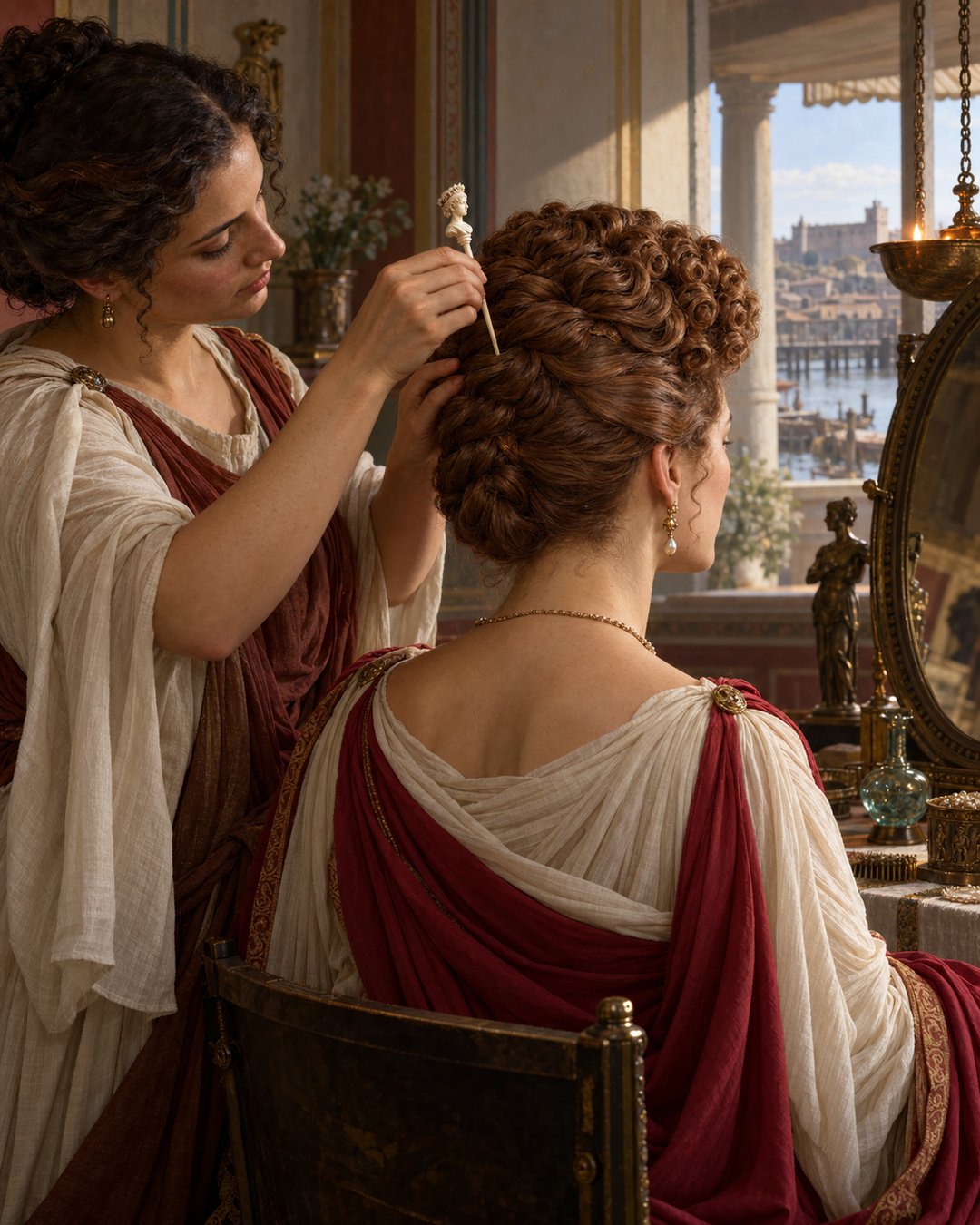
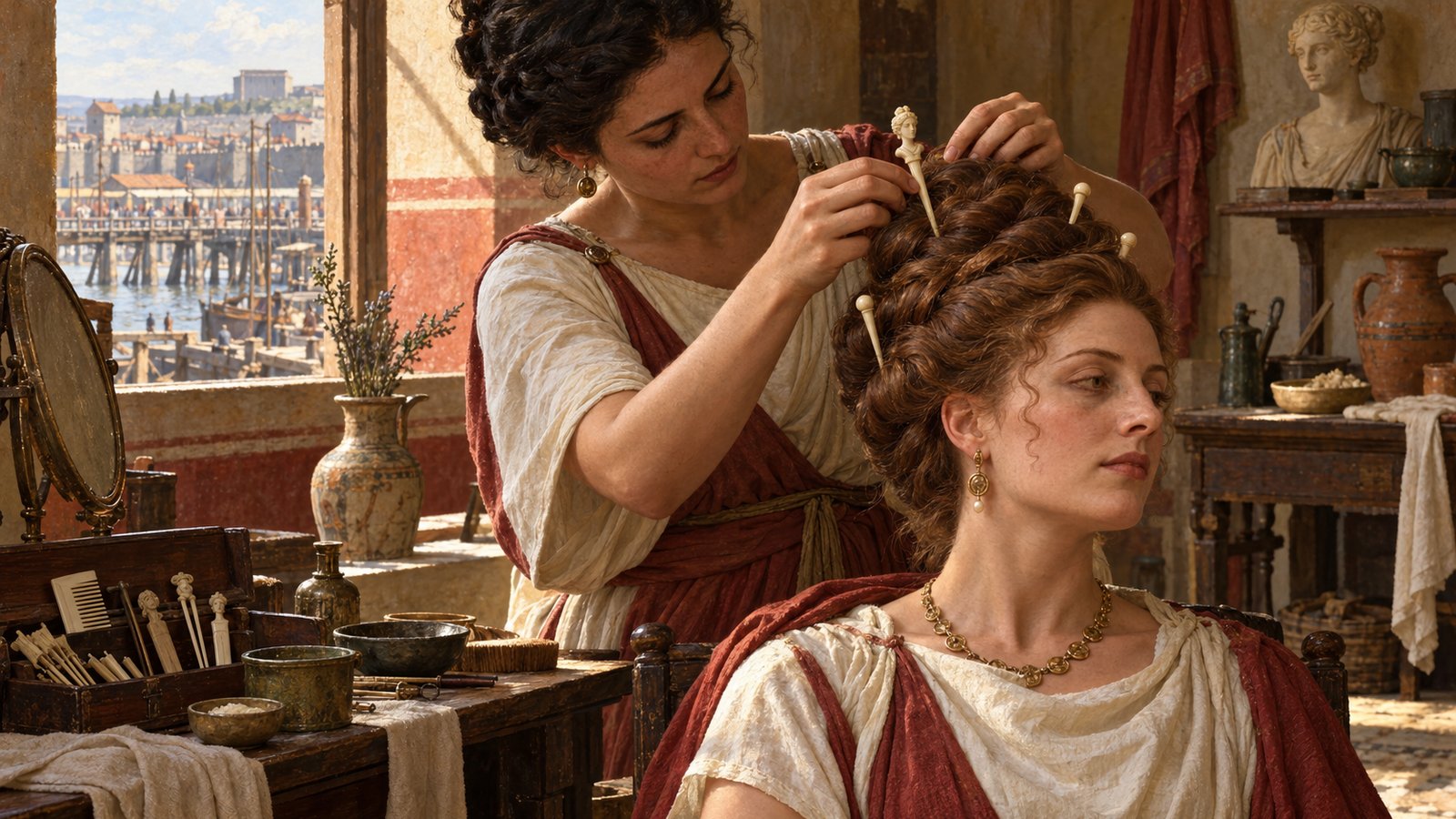
That creates a remarkable loop. A woman placed the pin inside a constructed hairstyle. At the top of the pin, another woman wore a carved version of an imperial hairstyle. The accessory both held the arrangement together and supplied a tiny model of the prestige the wearer hoped to evoke.
A two-hundred-millimetre pin had structural work to do
The London Museum records the object’s overall length as 200.5 millimetres. The head is 18.7 millimetres wide, while the shaft reaches a maximum width of 6.3 millimetres. Those proportions separate display from support. The broad carved head offered a visible surface. The long, much narrower shaft could pass into hair and help secure it.
The catalogue calls the design elegant, but elegance did not cancel mechanics. High fronts and tiered arrangements needed support. Hair had to be gathered, positioned, and kept from collapsing. A long pin could cross through a substantial section of that arrangement. Its head then remained visible as ornament and as a stop that prevented the whole object from disappearing into the hair.
The material also shaped the result. Bone could be cut into a slender shaft and carved at the head. On this example, the carver modelled drapery as well as hair and added a diadem. The same piece therefore moved from plain functional geometry at one end to miniature portrait sculpture at the other.
This is different from a small clasp that merely disappears while doing its job. The pin announced its presence. Its useful length was hidden within the hairstyle, while the carved bust made the act of fastening visible as fashion.
The portrait carried an imperial hairstyle without naming its owner
The museum describes the carved woman as wealthy and says she may be an empress. That “possibly” matters. The diadem and elaborate hair create imperial associations, but the record does not attach a secure personal name. The object offers a social type and a visual claim rather than a confirmed portrait.
That ambiguity may have increased its usefulness. A named portrait ties an object to one individual. A recognisably elite woman with a diadem could carry a broader promise of status, taste, and proximity to the imperial centre. The owner did not need to become a specific empress. She could participate in an imperial visual language.
The Flavian date narrows that language. The museum places the pin around AD 69–96 and notes that high-fronted, tiered styles were most common in that dynasty. The date is not floating decoration. It links the shape carved on the head to a period when that arrangement was especially legible.
A related Lost Eagles piece on Roman tweezers and personal grooming follows a tool that made the fingers more precise. This pin solved a different problem. It did not narrow a grip; it carried tension and support through a mass of hair. Together, such objects show grooming as physical work performed with purpose-made implements.
London copied fashion through objects, not only images
The catalogue says women throughout the Roman Empire would have hoped to emulate elaborate imperial hairstyles. The hairpin makes that movement concrete. A fashion associated with the imperial court did not have to travel only through a statue or coin. It could be reproduced in the arrangement of hair, assisted by an object that displayed the same arrangement in miniature.
The museum further notes that many hairpins like this one would have supported and ornamented these styles. The plural matters. A complicated coiffure was not necessarily the achievement of a single pin. Pins could work as a set, distributing support while placing visible accents around the arrangement.
London was far from Rome, but the object should not be read as a weak provincial echo. Its head required a carver capable of modelling hair, clothing, and a diadem at a width under 19 millimetres. Its shaft had to remain long and usable. The maker joined recognisable imagery to a working personal object.
The museum identifies a near-identical piece in the British Museum. It suggests that both probably came from the same workshop in Roman London. That comparison changes the object from an isolated curiosity into evidence for repeated production. A workshop was not merely copying an imperial look once. It may have been turning that look into a local product.
A near-identical pin reveals the workshop behind the wearer
Near-identical objects do more than confirm a fashion. They expose decisions made before the wearer ever arranged her hair. A craftsperson selected bone, shaped a long shaft, reserved enough material for the bust, and repeated a design closely enough for modern cataloguers to recognise the relationship.
The pair therefore connects three levels of Roman life. At the imperial level stood the visual prestige of a diadem and Flavian coiffure. At the workshop level stood the repeatable pattern and the skill needed to carve it. At the personal level stood the wearer, whose hair provided the object’s practical setting.
This chain is more precise than saying that Roman women simply “followed fashion.” Fashion required transmission, materials, labour, and daily assembly. The pin is one device through which all four met. Its portrait communicated the desired look. Its bone body made the image portable. Its shaft helped construct the look on an actual head. Its likely workshop counterpart shows that the design could be made again.
Another Lost Eagles article about a garment associated with conspicuous Roman style shows how textile and reputation could become inseparable. The hairpin adds another medium. Clothing was not the only crafted surface on which status appeared; bone placed it directly into the architecture of the hair.
The pin joined portrait, support, and aspiration
The object has no named owner in the museum record. We do not know whether she was wealthy, whether she wore the latest style successfully, or whether she valued the carved bust for imperial association, workmanship, or both. The record does not need an invented biography to make the pin vivid.
Its measurements and carving already explain its double life. The narrow shaft served the hairstyle. The wider head served the viewer. The depicted woman wore the status markers that the real wearer could reproduce around the pin. Function and image did not merely coexist; each completed the other.
That is why the diadem is more than decoration. It made hierarchy small enough to be handled, purchased, inserted, and worn. The imperial centre appeared at the end of a 200.5-millimetre piece of bone, while the hidden shaft did the ordinary work of keeping hair in place.
The pin’s date also keeps that aspiration historical. It belongs to the Flavian period, not to a timeless category of “Roman glamour.” High fronts and tiers rose, spread, required maintenance, and eventually changed. The object captures a fashion while it still demanded the right tools.
Seen whole, the hairpin is a mechanism of cultural movement. An elite hairstyle became a carved motif. A London workshop repeated it. A long shaft carried it into a living arrangement of hair. A woman wore both the structure and the image at once. The object did not merely reflect fashion after the fact. It helped fashion happen.
Sources
London Museum, “Pin, hairpin” collection record.