
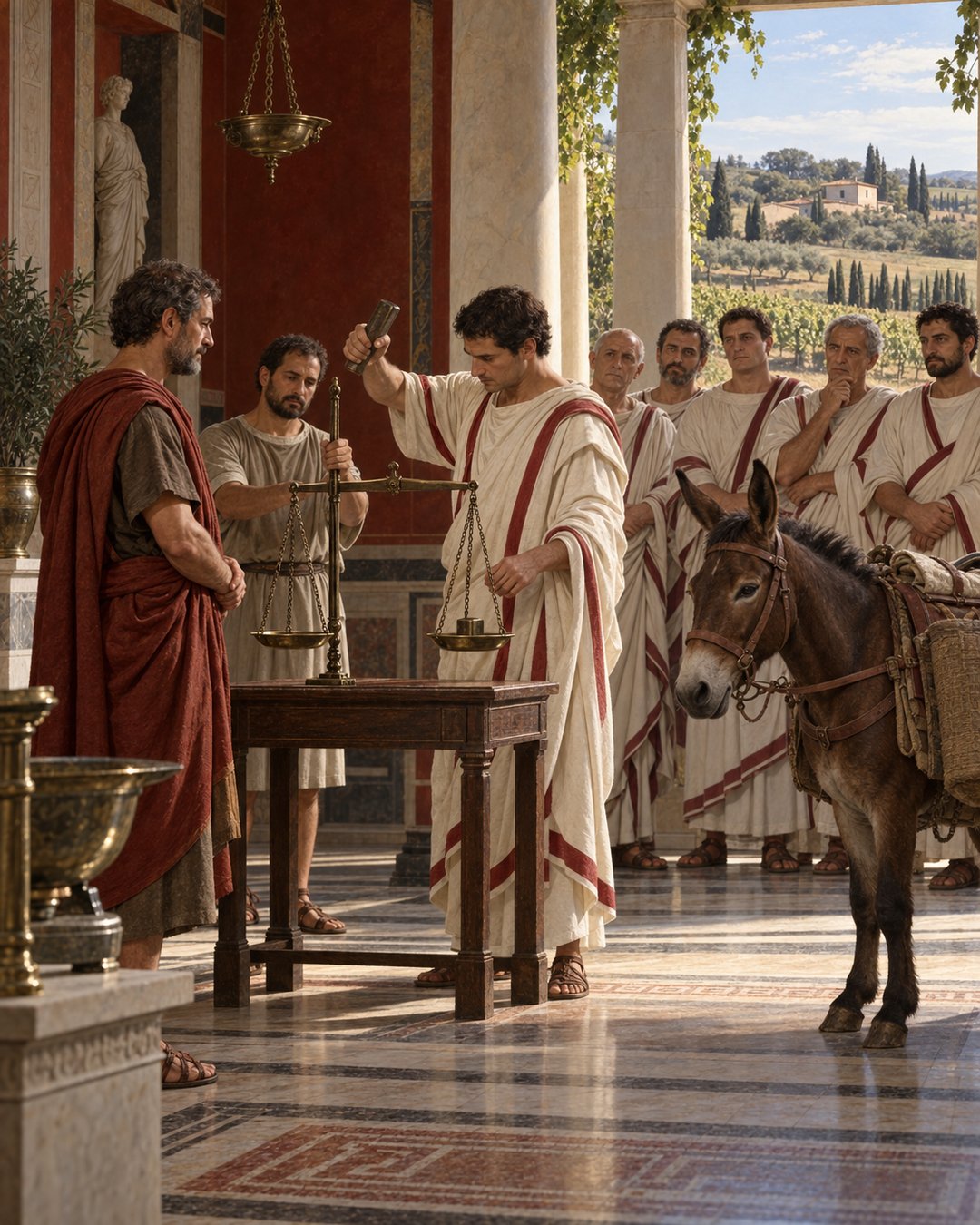
A buyer raised a bronze ingot beside a scale while five witnesses watched.
The metal was not the price in any ordinary market sense. The strike, claim, witnesses, and balance formed a legal machine for moving ownership.
Gaius preserved its operating instructions because Roman property did not all travel by the same route.
Ownership Began with Classification
Before anyone chose a ceremony, the thing itself had to be classified.
Gaius separates property into what his translation calls mancipable and non-mancipable things. The distinction did not simply follow value, size, or usefulness.
Italian land and houses belonged to the mancipable group. So did rustic servitudes over Italian soil: rights connected with routes or water across another holding.
Oxen, horses, mules, and asses entered the same class because they were familiar draught and transport animals. Their legal treatment joined fields, movement, and agricultural power.
Elephants and camels did not join them, even though people could train those animals for carrying or pulling. Gaius explains the exclusion historically: Romans had not known them when the classification was established.
The list therefore carried an old social map into later transactions. It marked the assets around which an Italian farming household and its routes had once been imagined.
That map was not a universal inventory of important property. Clothes, gold, and silver could stand outside the formal class even when an individual piece was costly.
The distinction mattered because classification selected the transfer method. An owner could not assume that putting a valuable object into a buyer’s hands always completed the same legal change.
Roman law often made a physical act answer a narrowly framed question. One clod could represent a distant field when litigants had to bring disputed ground into a courtroom form. Mancipation likewise made an abstract change of title visible through controlled objects and gestures.
Five Witnesses Turned a Sale into a Legal Act
Gaius calls mancipation an imaginary sale peculiar to Roman citizens.
Its cast was exact. At least five witnesses had to be adult Roman citizens. A sixth participant of the same standing served as balance-holder and held a bronze scale.
The recipient held a bronze ingot. He pronounced a claim that the property belonged to him by Quiritary right and that it was purchased through the ingot and bronze scale.
He then struck the scale with the ingot and handed the metal to the transferor as though it were purchase money.
The form compressed several assurances into one scene. The parties were identifiable. A group could remember the event. The recipient stated the kind of ownership claimed. The balance and ingot supplied a recognized action rather than an invisible intention.
Gaius traces those objects to an older currency world. Bronze had served as money before gold and silver became ordinary media of exchange, and value depended on weight rather than a count of coins.
The ceremony kept the scale after everyday payment had changed. What once helped measure value survived as a device for validating title.
This persistence did not make the act empty. A remembered form could settle whether the required route had actually been used.
That evidentiary function explains the witnesses. They did not merely decorate the buyer’s statement. Their presence made the transfer a shared event that could later be described.
The ritual also limited improvisation. A private bargain might contain many promises, but recognized ownership moved through a sequence that other Romans knew.
Presence Was Required for Animals, Not Land
The form could convey people held in slavery, free persons in legal transactions recognized by Gaius, draught animals, and mancipable Italian land or houses.
Movable persons and animals had to be present. The recipient needed to take hold of the object being mancipated, and Gaius connects the name of the process with that manual grasp.
An ox or mule therefore made the legal act stubbornly physical. The animal had to be brought under control, its body placed within the ceremony, and the transfer performed around it.
Land and buildings were treated differently. They could be mancipated at a distance.
That exception avoided an impossible requirement. Five witnesses, a balance-holder, buyer, and seller did not have to stand on every farm or beside every house whose title changed.
The ceremony represented the legal transfer without pretending that the land could be held in one hand.
Roman property rules repeatedly converted material complexity into a bounded act. Even paint placed on another person’s board raised a precise question about which material controlled ownership. Here the question was procedural: which thing required grasping, and which could be transferred while absent?
The answer depended on the asset category rather than on a seller’s convenience.
Provincial land revealed another boundary. Gaius says stipendiary and tributary estates could pass by delivery. Their route differed from that of Italian soil even when both were productive landed property.
Geography was therefore built into conveyancing. Two farms could support similar work while belonging to different legal classes.
Delivery and the Praetor Offered Other Routes
Non-mancipable corporeal things could pass by informal delivery if the person handing them over was owner and the delivery served a sale, gift, or another valid cause.
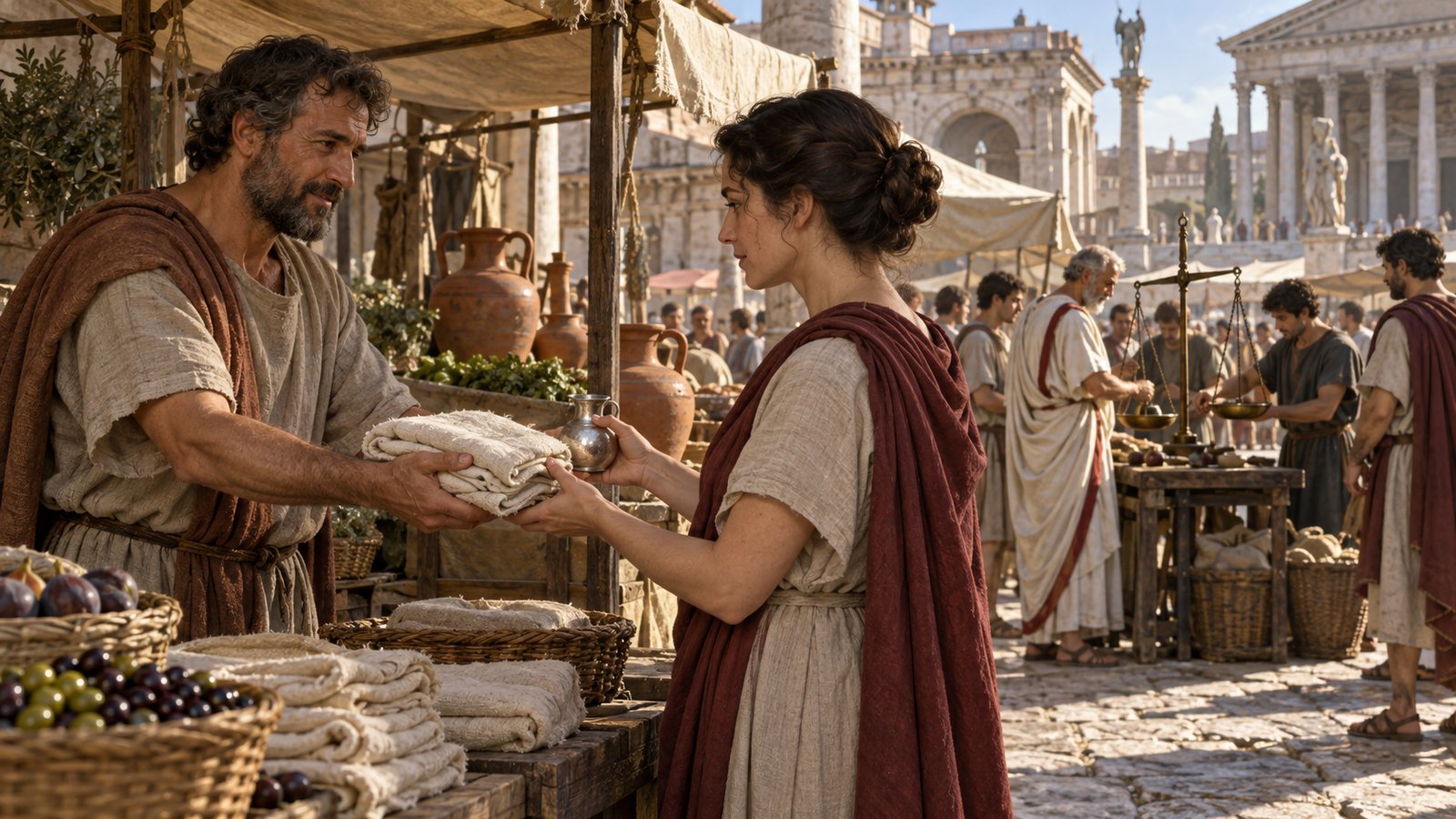
Gaius names clothes, gold, and silver. Their ownership could move with possession without five witnesses and a struck scale.
“Informal” did not mean causeless. The handover still depended on an owner and a reason for transfer. It meant that the special mancipation apparatus was unnecessary.
A further route used surrender before a magistrate, or in iure cessio.
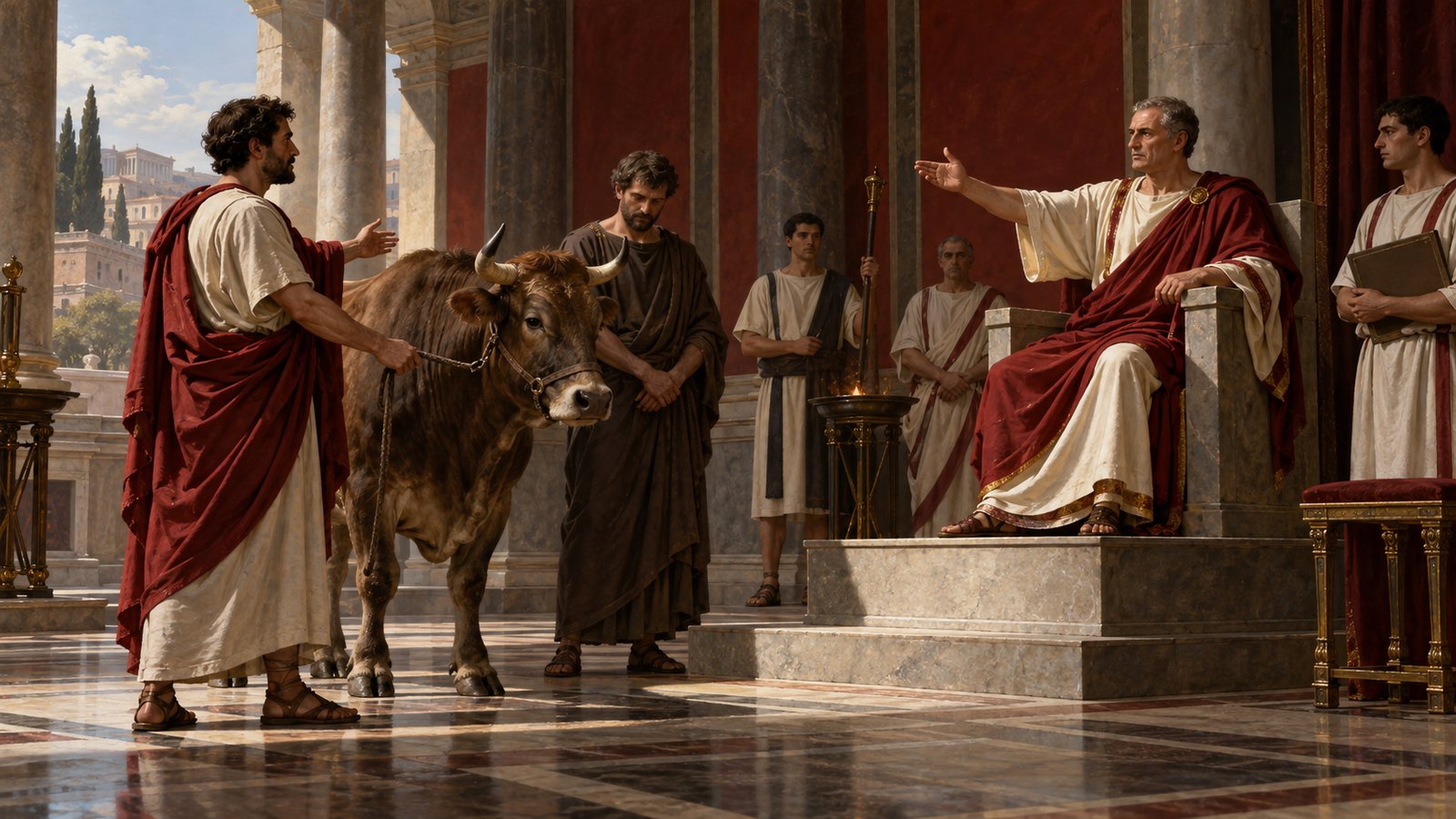
This procedure borrowed the shape of a lawsuit. Before a Roman magistrate, such as a praetor, the recipient grasped the object and declared Quiritary ownership.
The magistrate asked whether the other party made a counterclaim. If that party disclaimed or remained silent, the magistrate awarded the thing to the claimant.
The transaction produced agreement by staging a dispute that the former owner chose not to pursue.
Gaius says this surrender had the same effect as mancipation for mancipable property and could even occur before a provincial governor.
Yet he also explains why people generally preferred mancipation. Friends could help complete it privately, avoiding the greater trouble of going before a praetor or provincial president.
Choice existed, but it was structured choice. The owner first identified the class of property, then selected a legally sufficient route, then performed the acts that route required.
The bronze strike makes that system memorable because it joins law to sound. Witnesses could see the ingot, hear it meet the scale, and hear the ownership claim.
Roman conveyancing was not one ceremony imposed on every exchange. It was a set of channels. A folded cloth might pass from hand to hand; an ox summoned witnesses; a formal surrender turned an uncontested claim into a magistrate’s award.
The roles inside mancipation also distributed responsibility. The buyer spoke and struck the scale. The transferor accepted the ingot. The balance-holder maintained the instrument. Five qualified witnesses supplied a public memory without requiring a magistrate to preside.
That arrangement explains Gaius’s practical comparison. A praetor could produce the same effect through a claim and uncontested award, but a household could gather friends more easily than it could organize an appearance before public authority. The older-looking ceremony survived partly because it was portable.
Its portability had limits. Witnesses had to possess the right civic status and age. Animals had to be brought into the act. The declared claim had to fit the ownership sought. A shortcut that omitted the defining form did not become sufficient merely because buyer and seller agreed on price.
Ownership moved when the material act matched the legal category.
Sources
Gaius, Institutes, books 1–2.