
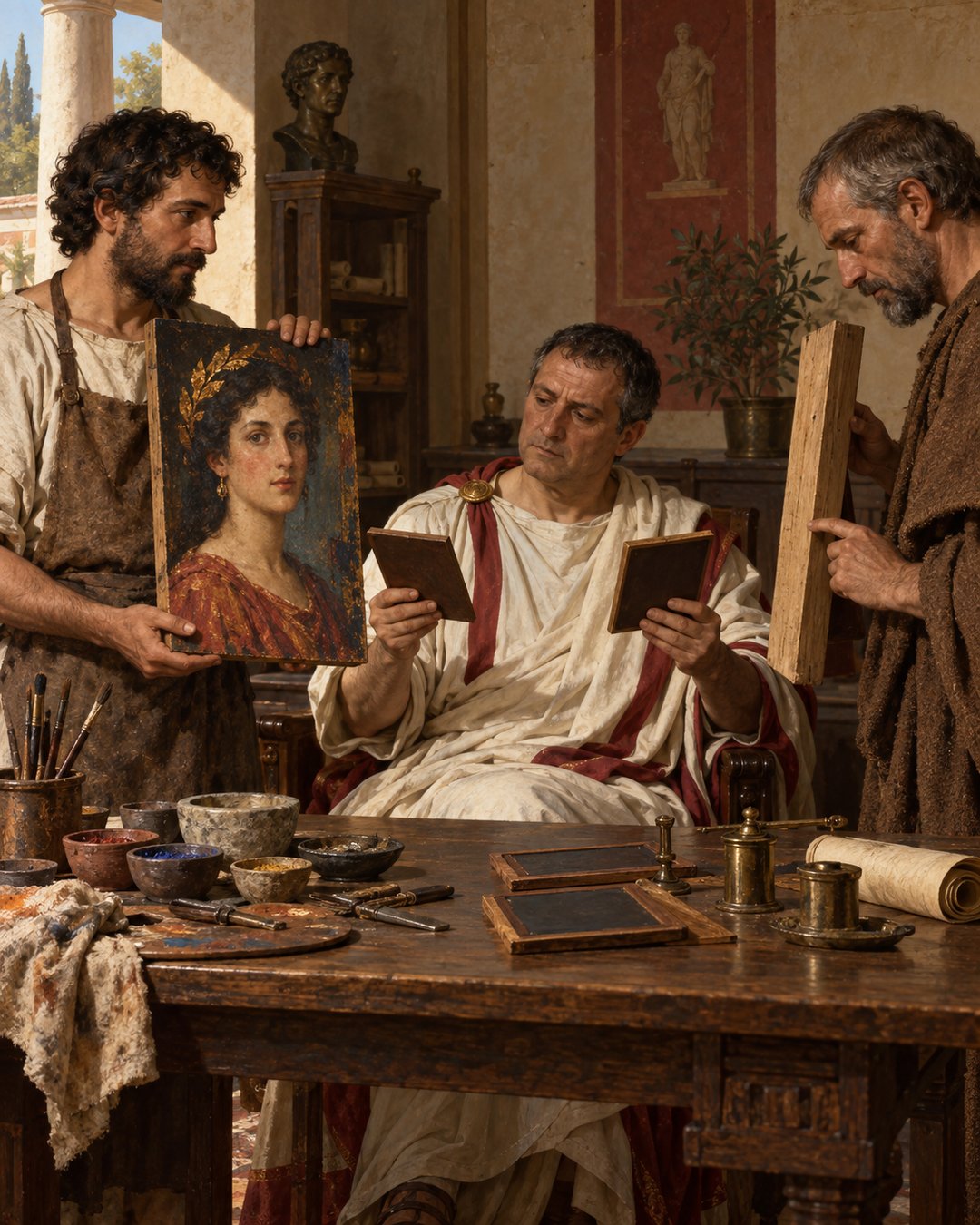
The letters could be gold and still lose to the parchment.
Gaius says that writing placed on another person’s paper or parchment became the material owner’s property. The letters were accessory to the sheet beneath them. A painted image, however, could produce the opposite result: the support was treated as accessory to the painting.
The jurist himself found the contrast difficult to justify. Yet ownership could not remain permanently divided after pigment and panel became one object. Law needed a dominant thing, an owner and a remedy for the contribution that the ownership rule pushed aside.
That is why Gaius moves quickly from doctrine to possession, payment, good faith and theft. Naming the owner was only the first half of the problem.
One Object Could Contain Two People’s Claims
A painted panel joined at least two inputs. Someone supplied the wooden support or canvas. Someone else supplied pigments, labor and the image. Once the paint dried, neither contribution could simply be lifted away and returned in its original condition.
Roman property analysis repeatedly encountered that physical problem. Building materials became a house on someone else’s land. Seed became a crop. Grapes became wine, olives became oil and timber became furniture or a ship. Work changed the thing while prior ownership did not vanish from memory.
The need for a single legal answer created pressure. If every contributor retained ownership of a microscopic portion, ordinary recovery and sale would become nearly impossible. A rule of accession instead asked which element should be treated as principal and which as accessory.
That choice did not describe nature. Wood did not announce that it legally served paint, and writing did not physically belong more to parchment than pigment did to a panel. Doctrine selected a hierarchy so that courts could identify who recovered the complete object.
Gaius’s examples are valuable because he does not hide the strain. They preserve a legal mind comparing similar combinations and admitting that the resulting line was not perfectly rational.
Gold Writing Still Followed the Sheet
For writing, the underlying material controlled ownership. If someone inscribed words on another person’s paper or parchment, the finished item belonged to the owner of the sheet. Gaius emphasizes the rule by making the letters gold.
Material value alone therefore did not decide. Gold might cost more than a modest sheet, but the writing remained legally accessory to the writing surface. The book or document was classified through its paper or parchment.
This legal abstraction sits beside the physical process explored in Roman images built into wet plaster. In both cases, a mark gained permanence through a support. Yet the law did not have to value every support in the same way.
The building example immediately before the writing rule supplies a useful scale comparison. A structure erected on another person’s ground followed the soil, while a good-faith builder could resist an uncompensated claim. Paper and gold letters compress the same pattern into something held in the hands: one component determines title, but the expense added by someone else remains visible to the law through a defense based on fraud.
The rule also did not permit the sheet owner to collect another person’s work without consequence. If the owner sued for the written material but refused to compensate for the writing, the defendant could meet the claim with a plea of fraud.
Ownership and immediate recovery were thus separated. The plaintiff might hold title under the accession rule while still behaving unfairly by demanding the enriched object without payment.
Painting Pulled the Support in the Other Direction
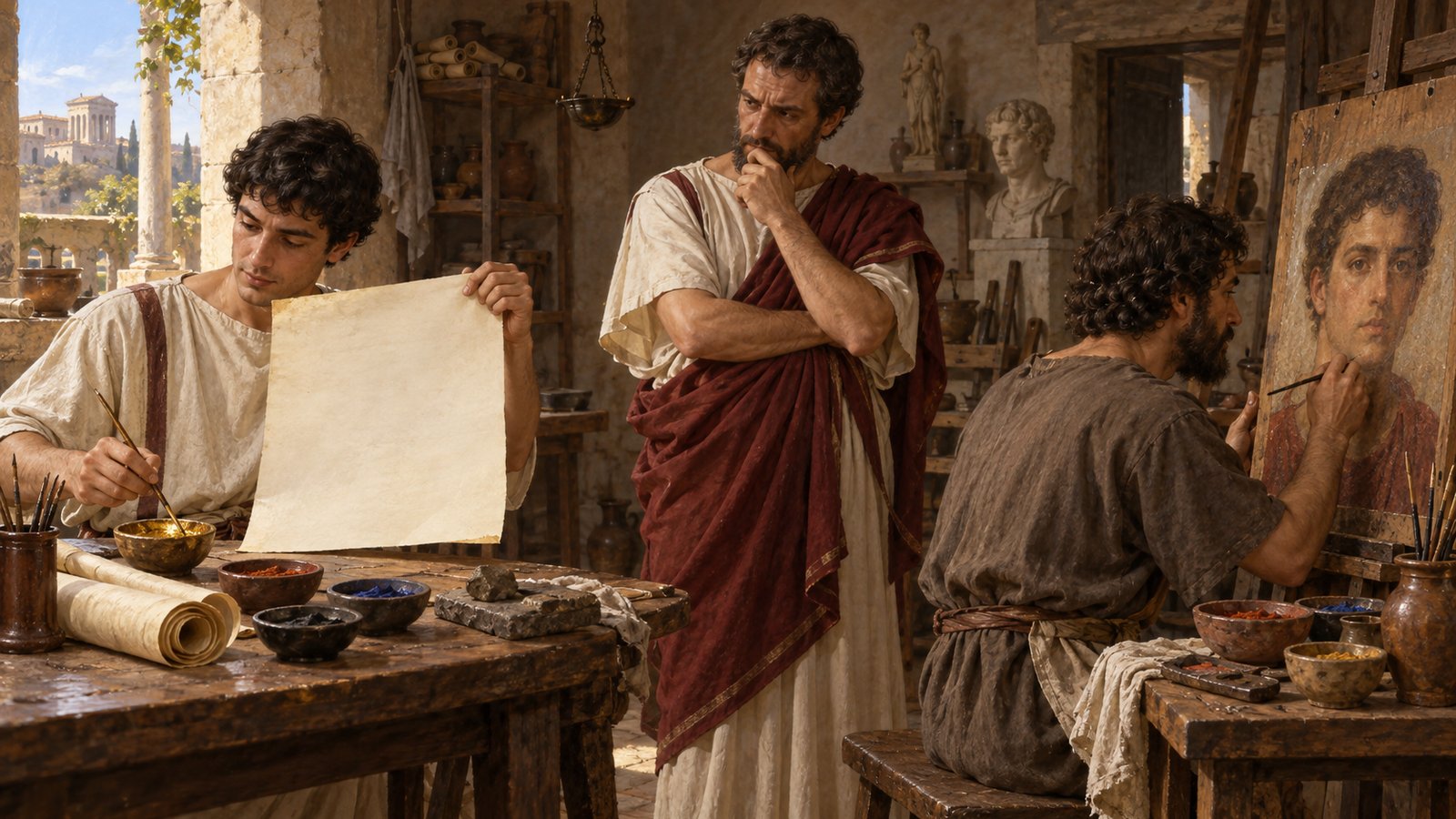
Gaius then changes course. When one person painted a portrait on another person’s canvas or panel, the support was held to be accessory to the painting. The image, not the bare material, defined the completed thing.
The contrast gave artistic transformation unusual force. A blank panel could be replaced in a way that a finished portrait could not. Pigment and skill had converted ordinary support into a singular object recognized by its image.
Ancient stories about painterly illusion help explain the cultural intuition, even if they do not prove the legal rule. In the contest where painted grapes deceived birds and a curtain deceived Zeuxis, value resides in the represented surface. Viewers remember what the painter made them see, not the timber behind it.
Still, Gaius says the difference from writing scarcely rested on sufficient reason. A magnificent manuscript could transform parchment, and a poor painting could diminish a fine board. The categories were workable, not philosophically airtight.
His candor matters. Roman law appears here not as a timeless answer embedded in the object but as an inherited distinction a jurist could report and question in the same breath.
The image rule also depended on completion. Loose pigment beside a board had not yet become a portrait, just as grapes beside a jar had not become wine. Transformation gave the dispute its force because returning each input in its earlier form was no longer practical. The law named the composite by the feature it treated as dominant, then dealt with the displaced value through payment and remedies.
Possession Determined Which Remedy Came First
Once painting carried the support into the painter’s ownership, possession shaped the dispute. If the material owner held the portrait and the painter claimed it without offering payment for the support, the possessor could use the plea of fraud.
If the painter possessed the work, the former owner of the support had an equitable action. But that claimant, too, had to reckon with value. Unless payment for the painting was offered, a bona fide possessor could resist through the same fraud principle.
The arrangement did not split the panel back into fractions. Instead it paired a clear ownership rule with financial conditions. One person received title to the whole; the other could stop an uncompensated recovery or seek the value of a contribution.
Good faith narrowed the protection. Gaius’s language distinguishes the person who innocently created or possessed the combined object from someone who simply stole material. The law could tolerate an accidental collision of ownership and labor more readily than deliberate taking.
That structure prevented possession from becoming a windfall. Holding the picture mattered procedurally, but neither painter nor board owner could rely on possession alone while ignoring what the other had supplied.
Theft Survived the Transformation
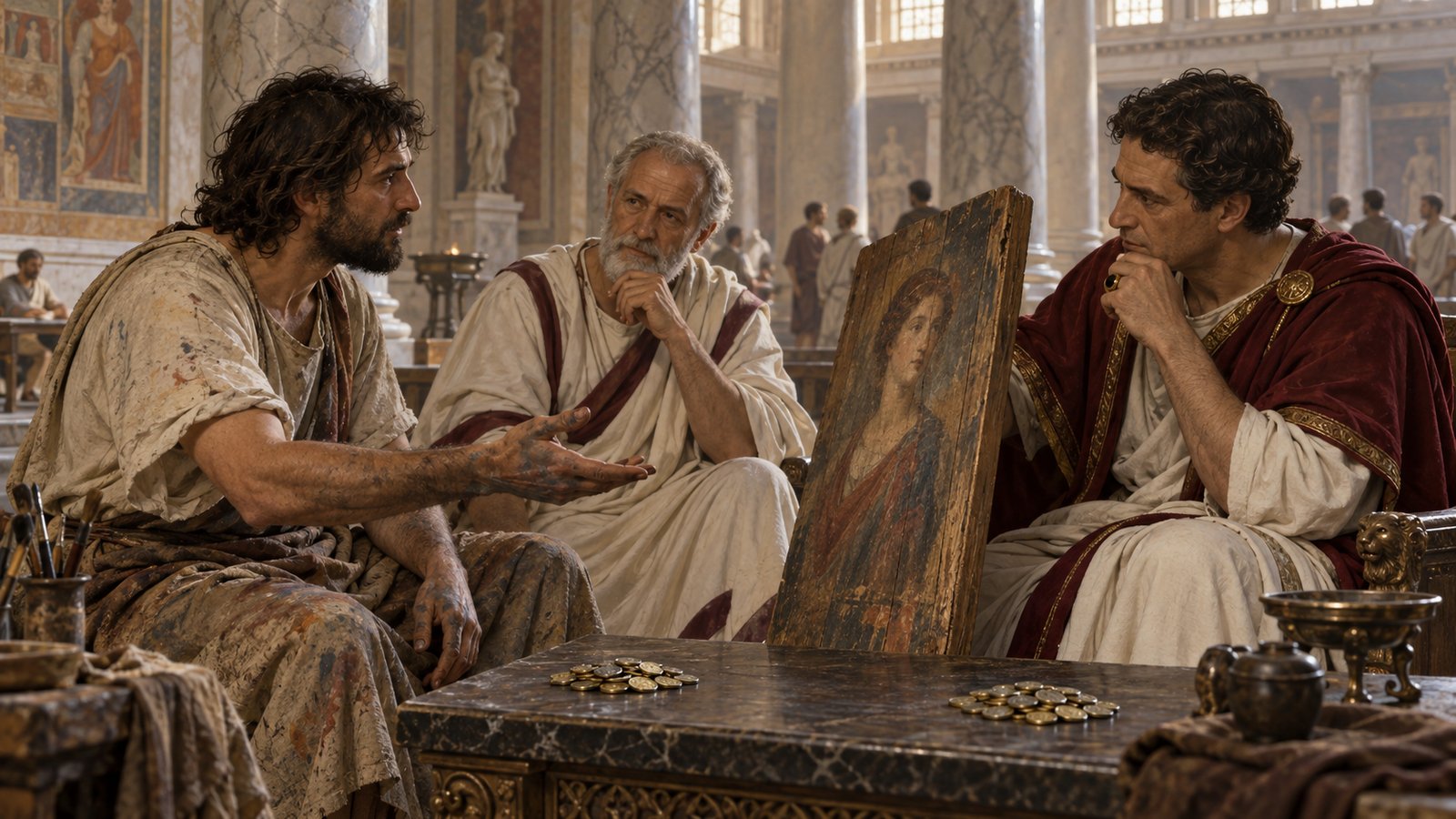
Gaius closes the painted example by preserving an action for theft when the painter or another person purloined the support. Artistic transformation did not clean stolen material of its history.
This boundary is crucial. Without it, a thief might improve another person’s board and acquire the whole object through the very labor chosen to disguise the taking. Accession answered ownership of an inseparable product; it did not authorize the initial removal.
The next section broadens the puzzle to wine, oil, grain, metal vessels, ships, chests, chairs, clothing, mead and medicines. Different schools argued over whether substance or maker should control. Painting was one sharp edge of a much larger dispute about production.
Those examples reveal why no answer could remain confined to elite art. A farmer, metalworker, shipwright, fuller or drug preparer could all transform material supplied by someone else. If substance always prevailed, makers risked losing labor inside the finished product. If making always prevailed, owners risked losing valuable material to anyone capable of changing its form. The argument over a portrait panel exposed a tension spread across ordinary production.
Gaius also preserves multiple kinds of claim rather than forcing every grievance into ownership. Theft addressed the wrongful taking. An equitable action addressed the material owner’s position when the painter possessed the work. A fraud plea blocked recovery without compensation. These routes let conduct and value matter even after accession had supplied one answer to the narrower question, “Whose complete object is this?”
The physical world kept forcing Roman lawyers to decide when a thing remained itself. A tree became timber, timber became a panel and a panel became a portrait. At each stage, names and owners could shift even though the material never disappeared.
Gaius offers no perfect universal formula. He gives rules, objections and remedies. The finished painting belonged somewhere, but justice required looking past the owner’s name to the board, labor, possession and conduct that produced it.
Sources
Gaius, Institutes 2.73–79.