
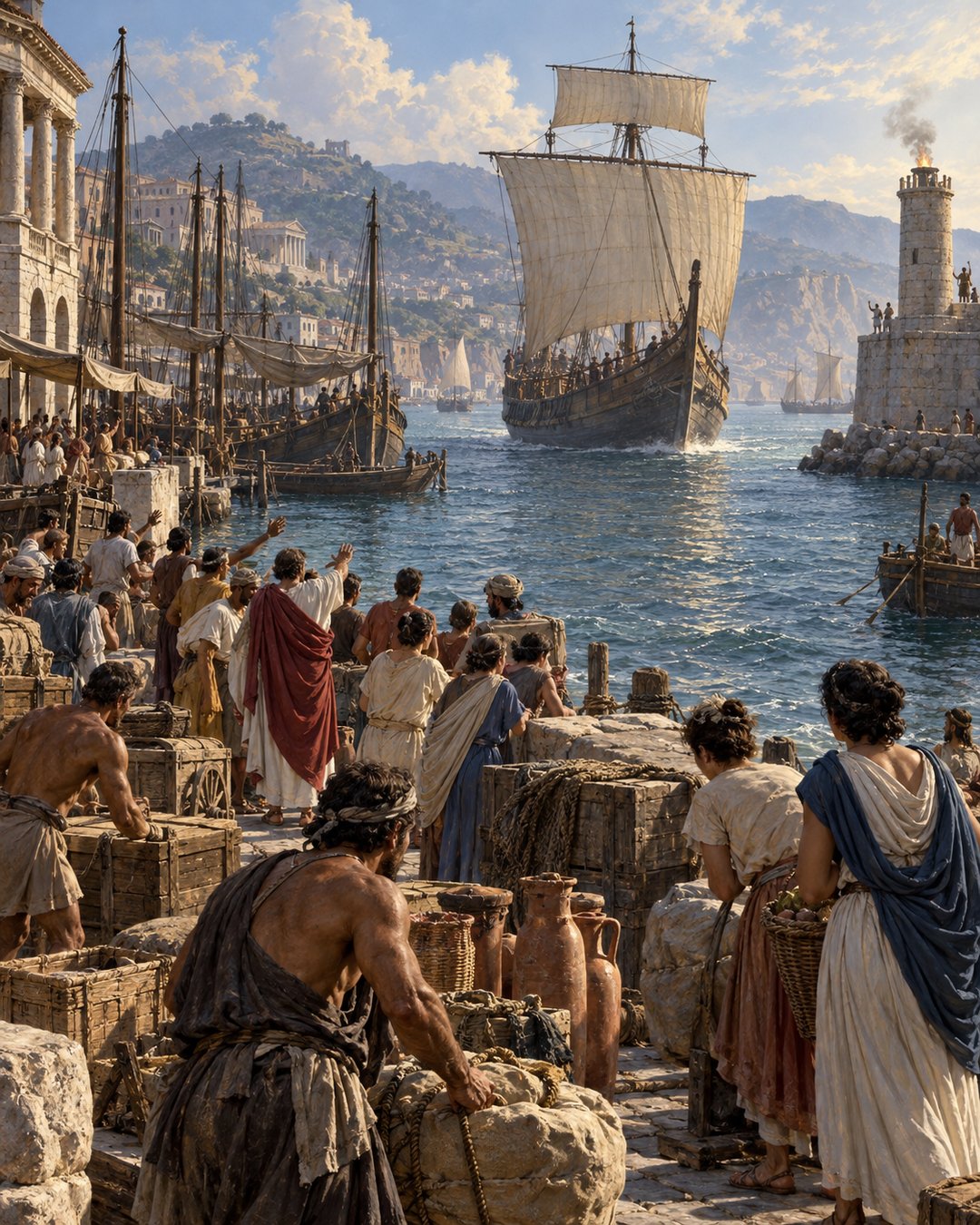
The message reached Puteoli as a patch of canvas above the horizon.
Seneca watched Alexandrian ships approach the Campanian coast and identified them as advance vessels sent to announce a fleet. People on the docks knew them before they came alongside. Among a crowd of ships, their sail trim gave them away.
Ordinary vessels near the coast were required to lower their upper canvas and continue under the mainsail. The Alexandrian mail-boats alone kept topsails spread. High above the hull, one remaining sail became a public signal.
The harbor crowd did not need a written notice. Rigging, regulation and a clear sightline turned arrival into news while the ship was still at sea.
Advance Boats Made a Fleet Visible Before It Arrived
Seneca does not begin with the main body of ships. He begins with vessels sent ahead. Their purpose was announcement: the larger fleet was coming, and the Campanian shore could prepare for its arrival.
That lead time had practical value. Harbors concentrated pilots, laborers, warehouse interests, officials, merchants and people waiting for correspondence. A fleet arriving without warning would demand sudden coordination; an advance boat converted surprise into expectation.
The source calls them mail-boats, which joins fleet movement to information. Seneca expected letters from friends. Other people on the waterfront would have had their own reasons to care: business, family, prices, work or simple curiosity.
The signal therefore arrived in stages. First came a recognizable hull and sail plan. Then the advance ship reached the quay. Letters and spoken reports moved ashore. Finally the fleet itself followed.
The order matters because the first vessel did not have to carry every ship, cargo or person whose arrival it announced. It carried enough information to change behavior on land. The larger event remained beyond the horizon, but the harbor could begin allocating attention to it. A small advance craft multiplied its value by separating warning from the full burden that followed.
This sequence made the mail-boat more than a fast merchantman. It was the visible leading edge of a much larger movement not yet present in the harbor basin.
A Topsail Carried Speed Farther Out at Sea
Seneca pauses to explain the rig. Upper canvas helped drive a vessel quickly, because wind higher above the water could supply greater force. A topsail added area where the moving air was useful.
More canvas was not always safer. When the breeze strengthened beyond comfort, sailors lowered their yards. Seneca notes that wind had less force close to the water. Reducing the height of the working sail could reduce strain on hull, mast and rigging.
The observation places the signal inside real seamanship. The Alexandrian boats were not decorated with an arbitrary badge. They remained identifiable through equipment that affected speed and had to be managed in changing wind.
Keeping the upper sail spread required a continuing judgment, not merely permission. The crew watched wind strength, maintained the yard and controlled lines while preserving the silhouette expected ashore. Too little canvas weakened the advantage of the advance vessel; too much in a hardening breeze increased the load that Seneca says sailors answered by lowering their gear. The recognizable shape emerged from skilled adjustment rather than from a static emblem nailed to the mast.
The ropes involved in that decision belonged to a larger system. The process explored in Roman ropework that distributed force across a ship helps explain what the short passage assumes: yards and sails moved only because many fibers, lines and practiced hands acted together.
A raised topsail was therefore both image and action. Sailors had set it, trimmed it and accepted the load. Viewers ashore saw the result as a clean shape, while the crew experienced it as pressure running through mast and rope.
Coastal Rules Created the Contrast
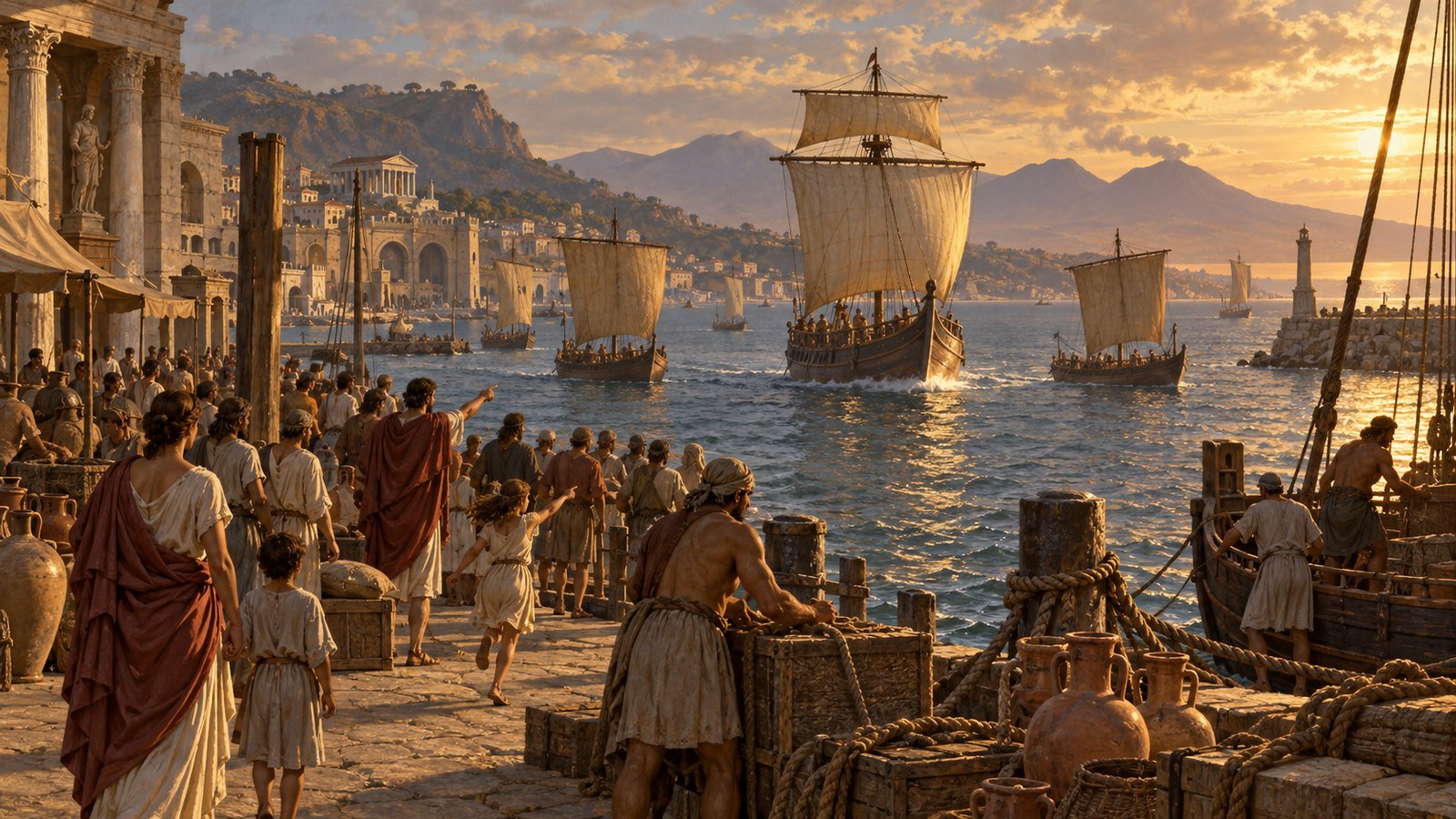
The mail-boats became conspicuous because neighboring ships behaved differently. Seneca says that after vessels made Capreae and a headland associated with Pallas, ordinary craft were required to be content with the mainsail.
That instruction flattened the visual field. Upper yards came down and high canvas disappeared. Against those lower rigs, an Alexandrian topsail could be distinguished even when the harbor approach was crowded.
The privilege effectively reserved a piece of sky. It allowed the advance boat to preserve both speed and recognition where other vessels reduced sail. A regulation written for navigation or status became a communications standard visible from land.
Recognition worked because the sign was relational. A topsail alone might identify nothing on open water, where Seneca says ships commonly used upper canvas. Near the coastal threshold, however, every lowered neighboring rig sharpened the exception. The same sail changed meaning as the vessel crossed into a zone governed by a different expectation.
Uniform behavior made the exception readable. Had every captain chosen a different coastal rig, one topsail would carry little meaning. Because others lowered theirs, the permitted sail identified a class of vessel.
The headland also provided a threshold. Outside it, ships behaved as conditions required at sea. Inside it, the approach generated a controlled silhouette. Geography, rule and rig combined to tell observers that the Alexandrian messenger had entered the final leg.
The Waterfront Read Ships before It Heard Them
Seneca describes people bustling and hurrying toward the water. Their movement began with recognition, not with a messenger shouting on the quay. Sail trim had already changed the crowd’s behavior.
Harbor literacy was distributed unequally, but this cue was simple enough to circulate. Sailors understood the mechanics. Dockworkers knew the routine. Residents learned what others pointed at. Repetition could teach the whole waterfront to associate high upper canvas with incoming Alexandrian news.
Puteoli was a place where unusual cargoes and difficult unloading met dense audiences. Another episode from the same harbor shows elephants backing toward a gangplank because the transfer from ship to land demanded specialized handling. The mail-boats reveal an earlier moment: before cargo handling began, the sea itself presented a recognizable operational pattern.
Distance made the visual code valuable. A human voice could not carry from the outer water. A letter remained closed aboard. Canvas rose above spray, hulls and the heads of the crowd.
The crowd’s response also shortened the final distance for information. People were already gathering where the boat would land, so questions, letters and reports could begin moving as soon as contact was possible. The topsail did not reveal the contents of any message. It synchronized attention, bringing receivers to the waterfront before the physical packets and speakers arrived.
The signal was also public. No official had to decide who could know first once the topsail entered view. Anyone with the sightline and learned association could read it.
Seneca Turned Harbor Excitement into a Personal Test
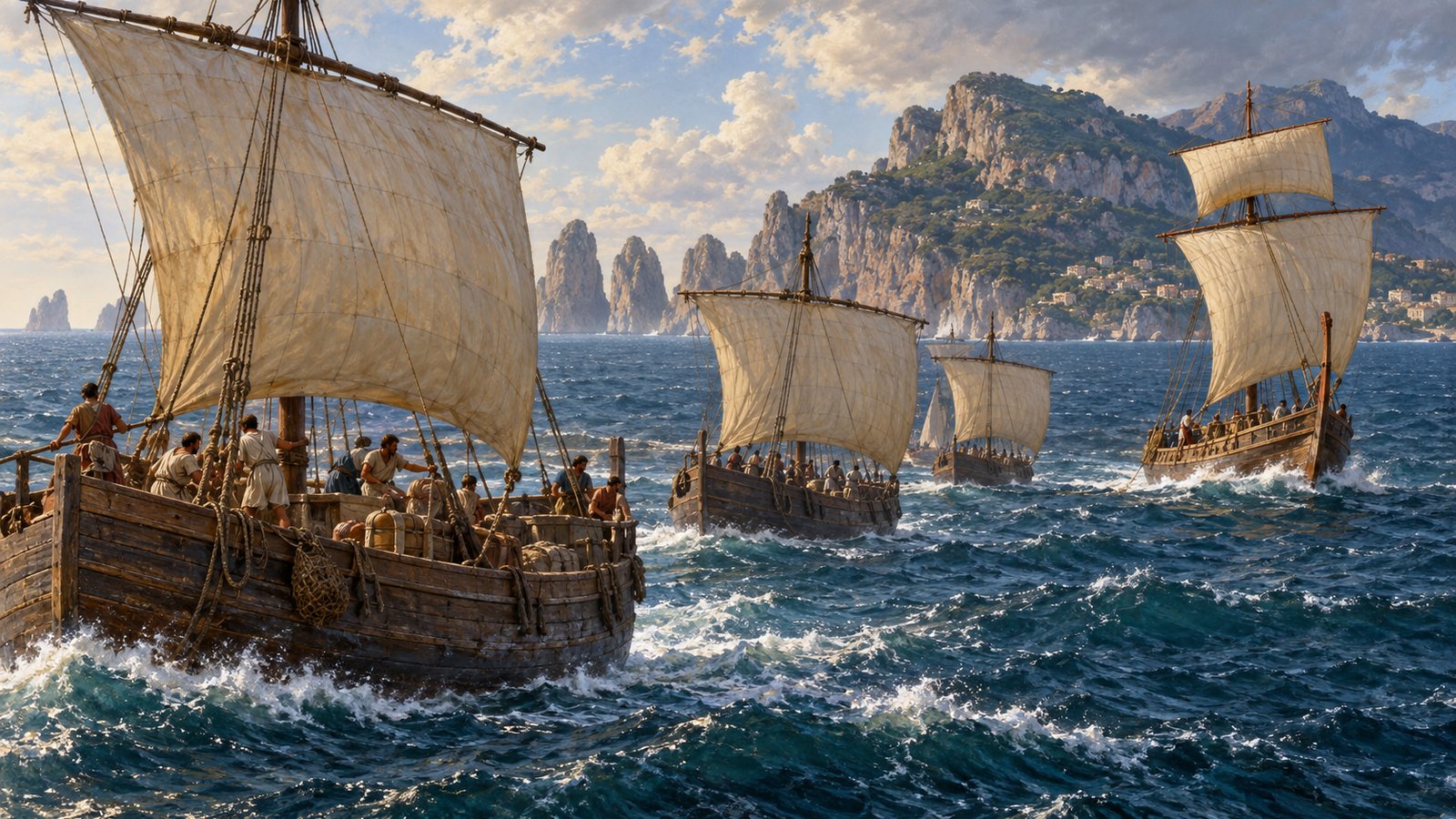
The letter quickly moves from the ships to philosophy. While others hurried toward the water, Seneca took pleasure in not rushing for his correspondence. He expected news from friends but claimed freedom from anxiety about gains and losses.
That reaction depends on the excitement being genuine. The scene supplies a strong ordinary pull: recognized mail-boats, a crowd in motion and letters approaching from abroad. Seneca uses his stillness against that background to test detachment.
His philosophical argument should not erase the harbor evidence that makes it work. People cared because ships connected distant affairs to local lives. The topsail condensed absence, expectation and material arrival into one visible moment.
Seneca mentions his own gains and losses precisely because correspondence could alter how a recipient understood affairs abroad. His refusal to hurry was meaningful only in a culture where approaching letters ordinarily justified urgency. The advance boat carried no guarantee of good news, but its recognized rig announced that uncertainty was about to end.
The mail-boat was fast, but its greater achievement in the passage was temporal. It let Puteoli experience the fleet before the fleet occupied the harbor. News and ships travelled together, separated by a deliberate interval.
Seneca watched others run and chose not to join them. Yet even his refusal began with successful communication. He knew what the canvas meant. The raised topsail had already delivered its first message.
Sources
Seneca, Moral Letters to Lucilius 77.1–3.