
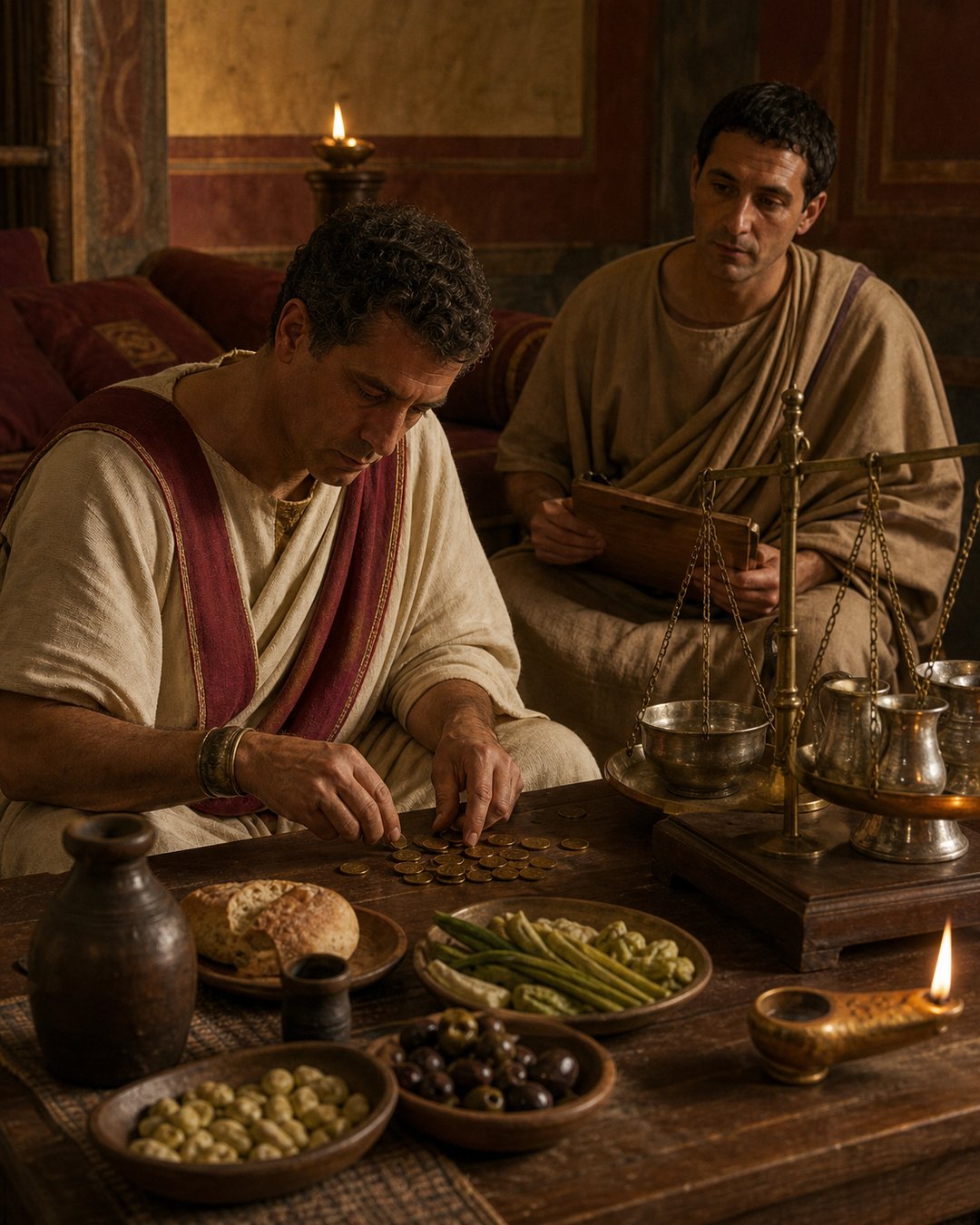
A Roman host could face a different dinner limit simply because the calendar had changed. In Aulus Gellius’s catalogue, one law permitted one hundred asses on named festival days, thirty on ten additional days each month, and only ten on ordinary days. Another made room for a wedding. An older decree counted silver by the pound and rejected foreign wine.
These were not variations on a single neat prohibition. They were attempts to divide acceptable hospitality from dangerous display with numbers, ingredients, dates and relationships. Bread and vegetables might sit outside one ceiling. Dried meat could be weighed. A magistrate’s choice of dining companion could become a legal concern even when the cost of his plate was not the only issue.
Gellius assembled this material as a lesson in ancient frugality, but his sequence also records repeated failure. Rules rusted, became illegible and were forgotten. New ceilings followed old ones. Some were higher, some targeted different parts of the meal, and one later edict reportedly raised a festival allowance to two thousand sesterces in the hope of containing luxury within a larger boundary.
The result is a history of regulation written across the dining table. Rome tried to make moderation visible in bronze coins, native wine, measured meat and the social map of who could accept whose invitation.
A festival oath counted coins, wine and silver
Gellius begins with both household custom and public force. Early moderation in food and entertainments, he says, rested on training at home but also on penalties and numerous laws. The pairing matters. A dinner was a domestic event, yet elite hospitality could display rank, obligation and wealth before a politically connected audience.
His first detailed example came from the Miscellanies of Ateius Capito. Gellius reports an old decree passed in the consulship of Gaius Fannius and Marcus Valerius Messala. It concerned leading citizens who “interchanged” during the Megalensian games—that is, who took turns hosting one another.
The hosts were to swear before the consuls in set terms. Their spending on each dinner could not exceed one hundred and twenty asses, although vegetables, bread and wine were placed beyond that figure. The decree then distinguished the wine itself: native wine was permitted, foreign wine was not. Finally, it limited the silverware used at table to one hundred pounds.
Expense, origin and weight therefore worked together. The host was not merely told to be modest. He had to fit a ceremonial meal into a rule that separated basic produce from counted outlay, local drink from imported drink, and useful vessels from a mass of silver large enough to become spectacle.
The oath also put enforcement at a civic threshold. These citizens promised compliance before consuls, then carried that promise into one another’s dining rooms. The law followed the political class home without pretending that every item on the table could be treated alike.
Roman food could carry messages before anyone tasted it. Trimalchio’s deceptive dishes turned a fictional banquet into theatre; Gellius’s decree reveals the opposite anxiety, in which the weight, source and price of a real elite meal had to be made governable.
The calendar gave one appetite three prices
The Fannian law sharpened the calendar. According to Gellius, it allowed one hundred asses a day at the Roman and plebeian games, at Saturnalia and on certain other named occasions. Ten additional days in each month carried a limit of thirty asses. All remaining days allowed only ten.
This graduated scale recognized that public time changed the expected size of private hospitality. A festival could support a larger table without making the same outlay acceptable every morning. The rule did not establish one permanent definition of excess. It priced occasion.
Gellius pauses to correct readers of the poet Lucilius. Some commentators, he says, had treated the “paltry hundred” associated with Fannius as a regular daily allowance. They had missed the architecture of the law. One hundred applied only on specified holidays; thirty and ten governed the other classes of day.
That correction is more than antiquarian fussiness. If the highest ceiling is detached from its festival, a tiered system looks like a single generous allowance. Restoring the month’s ordinary days restores the intended restraint. Most dinners lived at the bottom of the scale, while exceptional civic occasions temporarily widened it.
The Licinian law rearranged the same problem. It retained one hundred asses for designated days, allowed two hundred for weddings and set thirty for other days. A wedding thus became its own legal category, neither an everyday meal nor merely another festival.
The law also distinguished foods. It fixed weights for dried meat and salted provisions but allowed unrestricted products of earth, vine and orchard. A table could be abundant in one direction while tightly measured in another. Cost alone did not define luxury; the source and kind of abundance mattered.
Old limits rusted while new laws changed the target
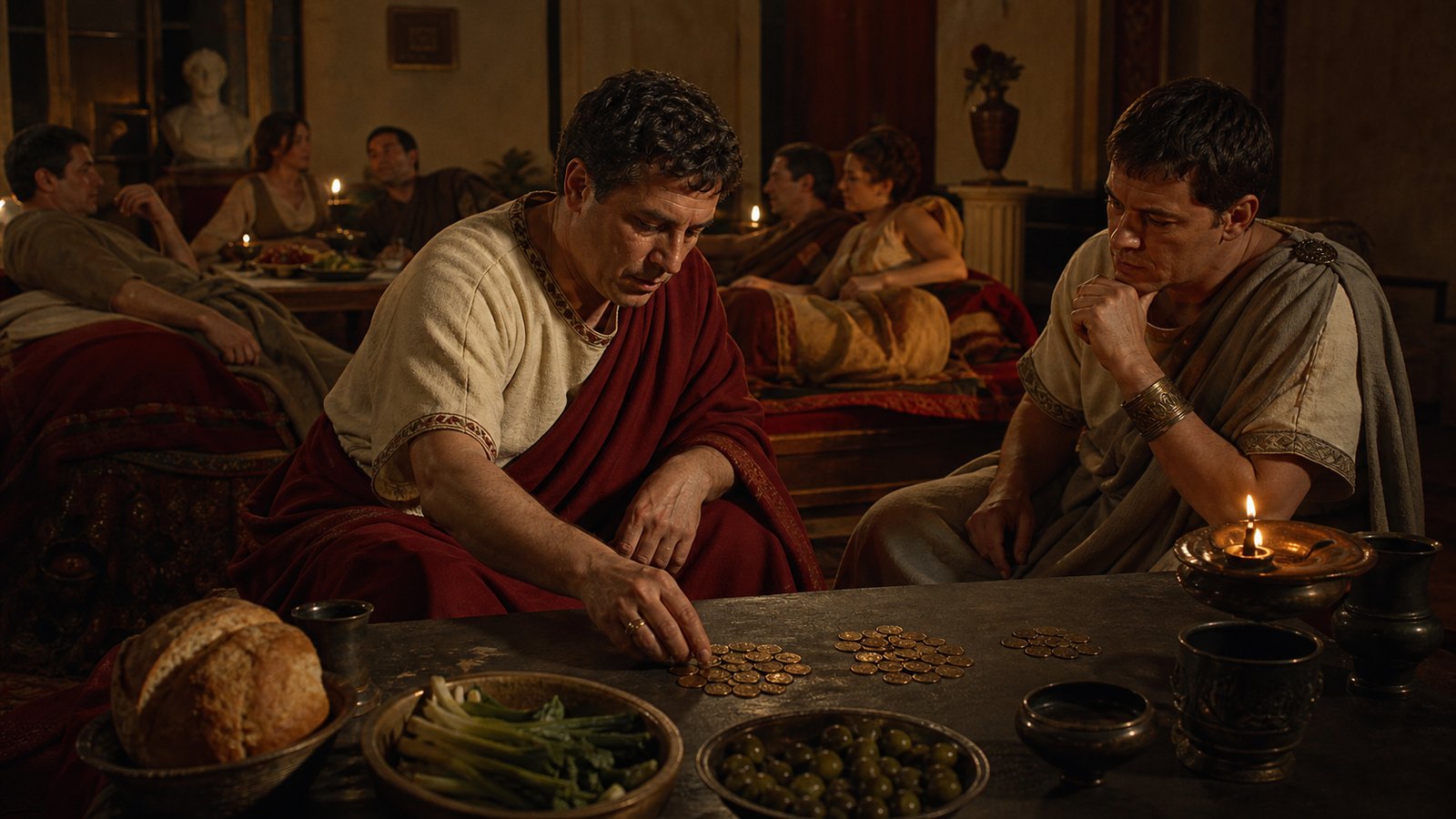
Gellius’s catalogue does not present regulation as a smooth march toward discipline. He says the earlier laws became illegible from rust and slipped from memory while wealthy men poured family fortunes into dinners. The physical image is striking: restraint remained somewhere on damaged legal material while the banquet continued without it.
Under Sulla, another schedule appeared. The Kalends, Ides and Nones, days of games and certain regular festivals received a ceiling of three hundred sesterces. Other days were held to thirty. The denominations and amounts had changed, but the recurring technique remained familiar: identify exceptional dates, price them separately, and leave ordinary time under the narrower rule.
Other laws moved away from a pure spending cap. The Aemilian law, Gellius says, restricted the kind and quantity of food rather than the total expense. This resembles the Licinian distinction among products, but the emphasis is clearer. A lawmaker could police what and how much arrived instead of trying to reconstruct every purchase.
The law of Antius reached beyond food. It prevented a magistrate or magistrate-elect from dining out except at the homes of specified persons. Here the political danger lay in the invitation itself. A meal joined host and officeholder in a setting of generosity and obligation; restricting the permissible host narrowed that relationship before any costly dish appeared.
That concern fits a society in which objects and gestures announced status. the toga made civic position visible through dress. Dinner regulation tried to do something less visually tidy: constrain status competition inside rooms where money, imported taste, silver and access to office could reinforce one another.
None of these rules should be collapsed into evidence that Romans normally obeyed every ceiling. Gellius supplies a literary catalogue, not inspection records. His own remark about rust and forgetfulness says why another statute could follow. Repetition shows that lawmakers kept returning to the table; it does not prove that the table stayed fixed.
Augustan ceilings made weddings the largest exception
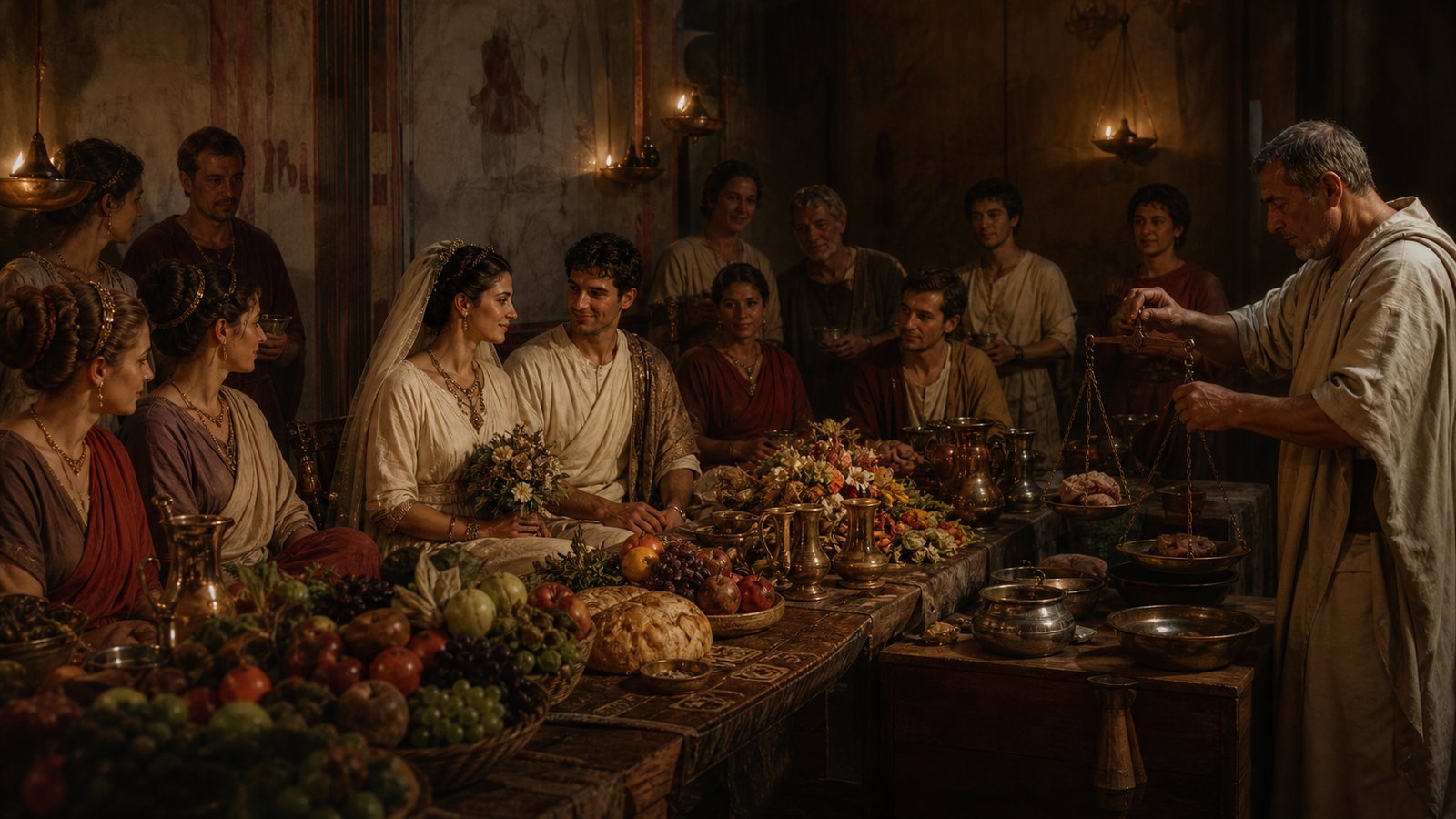
The Julian law under Augustus created another graded scale. Gellius gives two hundred sesterces as the working-day limit. The Kalends, Ides, Nones and certain holidays allowed three hundred. Weddings and the banquets following them reached one thousand.
The largest exception therefore belonged to a social transition, not an ordinary appetite. A wedding assembled households and demanded hospitality beyond a normal day, but the law still translated that expectation into a number. Permission remained bounded even where ceremony justified a much larger expense.
Gellius then reports an edict whose author he cannot remember exactly—either the deified Augustus or Tiberius. On various festal days it raised the allowance from three hundred sesterces to two thousand. His explanation is deliberately paradoxical: the higher figure was intended to restrain the rising tide of luxury at least within those limits.
A ceiling can lose force when common elite spending moves far beyond it. Raising the number may look like surrender, yet within the logic Gellius records it was an effort to rebuild an enforceable edge. The law admitted that the smaller figure no longer contained the practice and substituted a larger boundary rather than abandoning measurement.
Across the catalogue, Roman dinner laws repeatedly ask what kind of difference should matter. Is tonight a working day, festival or wedding? Is the wine native or foreign? Is the food salted meat or produce from field, vine and orchard? How much silver is visible? Is the guest a magistrate, and who is hosting him?
Those questions turn “luxury” from a moral slogan into a set of administrative choices. Every exemption creates a category; every category creates a route around a simpler rule. Gellius preserves both the ingenuity and instability of the effort. Rome could count the asses, weigh the silver and mark the date, but it had to legislate the dinner again when the old distinctions no longer held.
Sources
Aulus Gellius, Attic Nights 2.24