
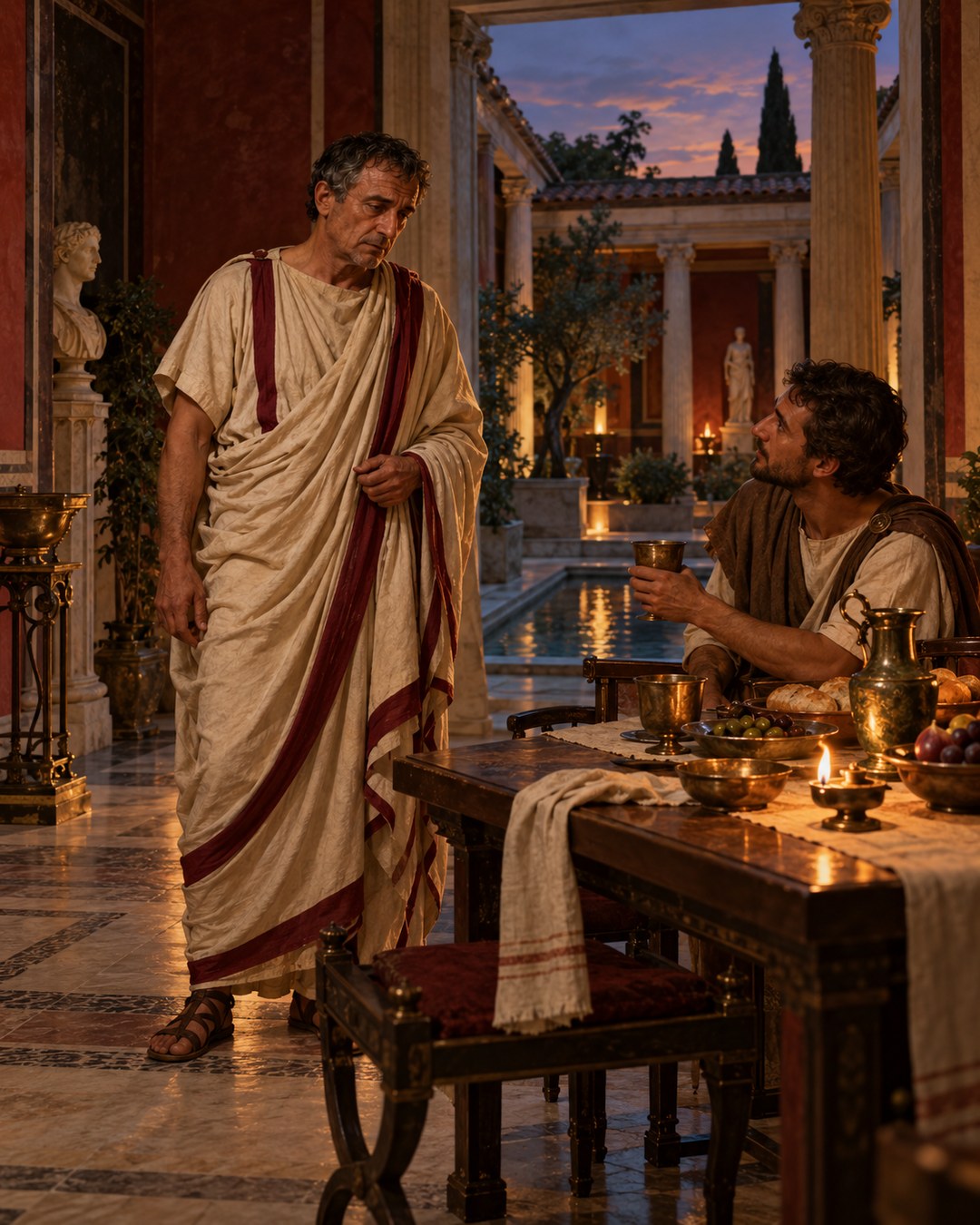
After a day in the Senate-house or the Forum, Geminus Servilius did not need another public performance. Ennius’s surviving portrait gives him a companion who could absorb unfinished thoughts, distinguish what should be repeated from what should disappear, and speak little without becoming empty company.
Aulus Gellius treasured the passage as if it were a compact law of friendship. Its details are practical rather than sentimental. The two men shared food and talk. Servilius returned tired from public business. He tested ideas aloud, including thoughts he had not approved. The friend answered with knowledge, restraint and discretion. Unequal rank remained real, but the relationship worked because conversation could become private shelter from the day’s noise.
The friendship began after public work
Ennius places Servilius in motion from public space to private company. He comes from the sacred House or the broad Forum after spending the day directing great affairs. The poem does not imagine friendship as escape from responsibility. It begins when responsibility has exhausted him and he needs a different kind of attention.
The companion is therefore described partly by timing. He is present after decisions, arguments and appearances have accumulated. Servilius can share both board and speech with him. A meal creates duration; conversation gives the day a second hearing. The value lies neither in a grand banquet nor in a crowd of clients, but in one person who can receive the residue of public work without turning it into another contest.
Roman elite mornings could make access itself a visible hierarchy, as in the nobleman’s front door as an entrance to public business. Ennius moves to the quieter end of that cycle. His companion matters when the public threshold has been crossed in reverse and the officeholder needs to speak without an audience.
Great matters and small ones used the same listener
Servilius spoke freely about matters great and small. That pairing prevents the friend from becoming only an adviser for emergencies. A person trusted only with crises may remain a specialist. Ennius’s figure can receive the important issue and the trivial irritation because neither threatens his balance.
The poem sharpens the point by saying Servilius confided thoughts approved or not approved. This sounds like thinking before judgment has hardened. Not every sentence is a policy. Some ideas are provisional, doubtful or emotionally colored. A safe companion does not mistake an unfinished thought for a declaration.
That capacity gives private conversation a role in judgment. Servilius can examine his own reactions in speech. The friend’s trustworthiness allows uncertainty to be expressed without immediately acquiring a public life. Ennius does not tell us that the companion always agrees, and Gellius does not turn him into an invisible magistrate. His service is first to make honest reflection possible.
Measured speech mattered more than constant speech
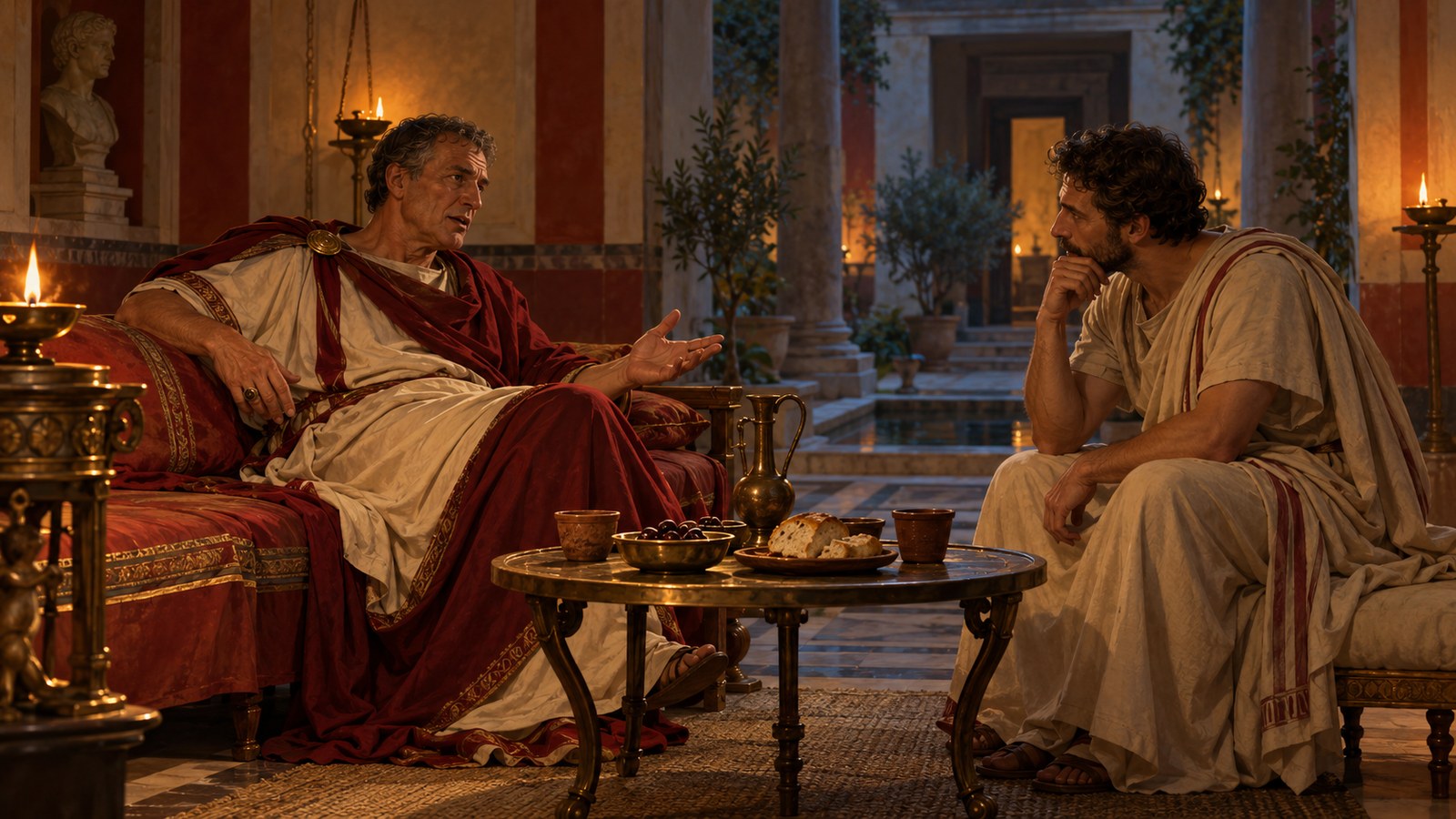
Gellius’s list praises tact, courtesy, modesty, fidelity, restraint and propriety in speech. The poem calls the man cultured, loyal, agreeable, learned and eloquent, then adds that he spoke little and fittingly. Eloquence here is not measured by volume. It includes the judgment to leave space around another person’s words.
The companion causes no thoughtless or malicious suggestion. That negative description is important. Advice can fail because it is ignorant, but it can also fail because it is careless or designed to wound. Ennius’s friend protects conversation from both defects. He is not merely entertaining enough to lift Servilius’s mood. He is safe enough to hear what power normally has to guard.
Restraint also keeps the relationship from collapsing into flattery. A flatterer fills silence with agreement and makes every thought sound complete. The companion who speaks little and appropriately can preserve distinctions: large from small, settled from unsettled, useful disclosure from dangerous repetition.
Memory supplied context, not display
The friend knew ancient lore, customs old and new, and the laws of human beings and gods. This learning widened the field in which Servilius could test a problem. A current dispute might resemble an older custom; a public choice might touch ritual as well as civic expectation. Knowledge becomes valuable because it supplies proportion.
Ennius does not stage a lecture. The learned man remains concise and obliging. His memory is available without being imposed. That combination explains why Gellius compared the passage with philosophical rules about duties. It joins information to conduct. Knowing old practice is not enough if the knower cannot judge when to speak.
The wider Roman order placed wards, guests and clients within demanding relationships, explored in the hierarchy that could place obligations before kin. Ennius’s fragment is narrower and more intimate. It asks what habits let one friend of lower rank become genuinely useful to a superior without pretending that rank has vanished.
A secret completed the portrait
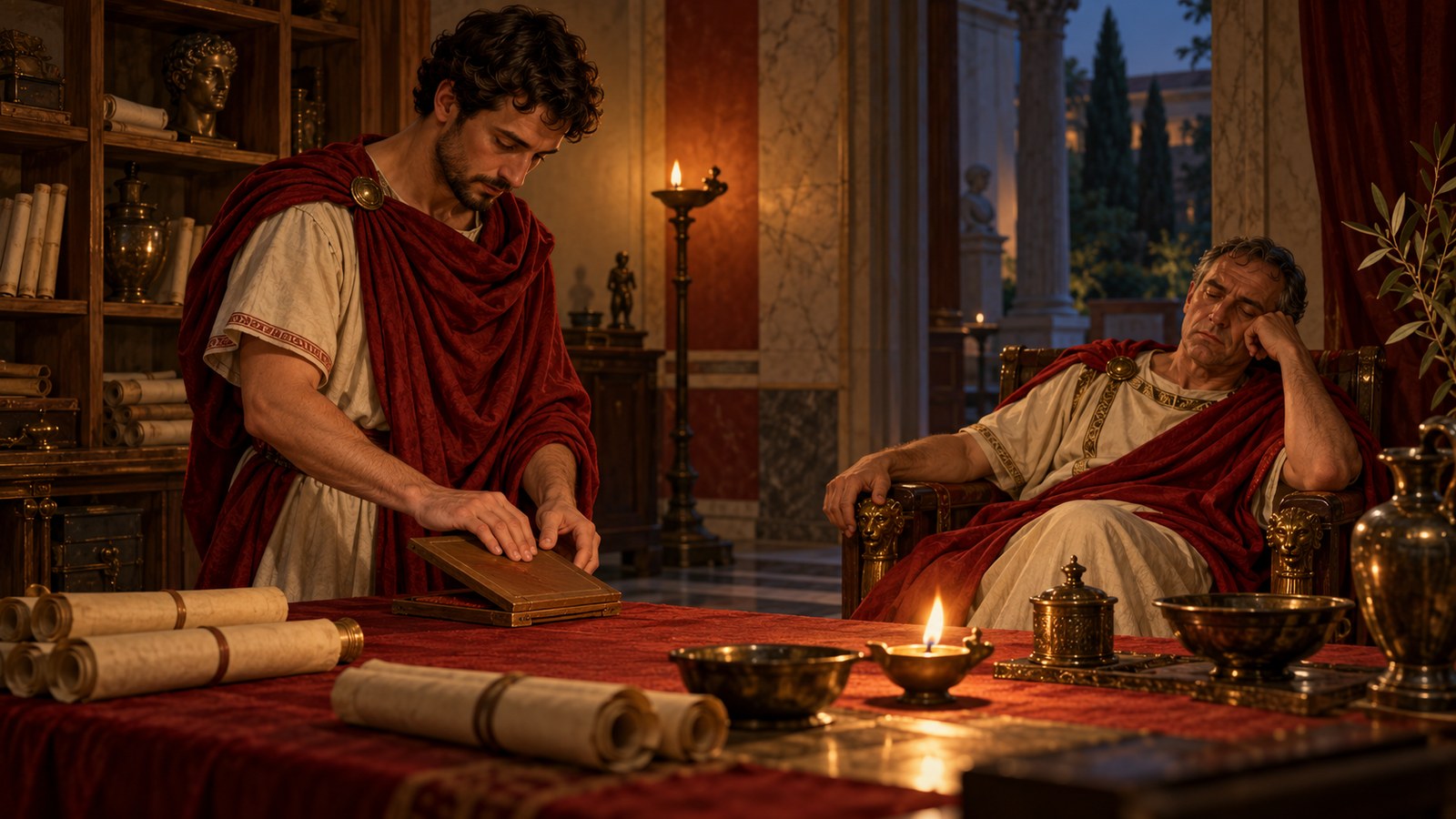
The final test is transmission. The friend told what he had heard with due prudence or kept it to himself. Gellius had already emphasized scrupulousness in guarding a secret. Together those statements describe active discretion. Silence is not automatic, and repetition is not automatic. The companion judges what each piece of knowledge can bear.
Gellius admired the lines for their antiquity and lack of affectation. He wanted them read repeatedly and remembered like sacred laws of friendship. Lucius Aelius Stilo reportedly went further, saying that Ennius had described his own character. If so, the poet’s catalogue was also a self-portrait embedded inside another man’s story.
Whether or not Stilo’s identification is accepted, the portrait works because its parts reinforce one another. Shared meals create room for speech. Modesty limits ego. learning supplies context. Few fitting words reduce noise. Fidelity keeps unfinished thoughts from escaping. What looks at first like praise becomes a working design for trust.
The poem’s social inequality should not be erased. Gellius explicitly frames the subject as the conduct of an inferior toward a friend of higher rank and fortune. The lower-ranking man carries a demanding burden of tact. Yet Ennius gives him qualities that are not servile. Learning, judgment and control over speech make him a participant in reflection rather than a decorative dependent.
Shared food also keeps the relationship embodied. Servilius does not summon a catalogue of virtues in the abstract; he calls on someone with whom he has repeatedly eaten and talked. Repetition has tested the companion’s behavior. A secret kept once might be luck. A pattern of fitting speech across great and small matters becomes character.
Gellius’s enthusiasm tells us how a later reader used the fragment. He did not preserve it only as evidence for Ennius’s old vocabulary. He treated the lines as instruction, comparable to philosophical writing on duty. The antique language had practical force because the conduct remained recognizable: listen without malice, know enough to give context, and decide carefully whether heard words should travel.
The portrait therefore offers no formula for equality and no claim that every patronal relationship was intimate. It captures one imagined friendship under the conditions of rank. Its achievement is to make the quieter person indispensable without pretending he held the greater office.
Servilius’s companion is not memorable because he dominates a scene. He is memorable because he lets another man set down the weight of public life without losing control of what has been said. Ennius built friendship from habits quiet enough to disappear in practice—and precise enough for Gellius to preserve.
Sources
Aulus Gellius, Attic Nights, 12.4, quoting Quintus Ennius, Annals, book 7.