
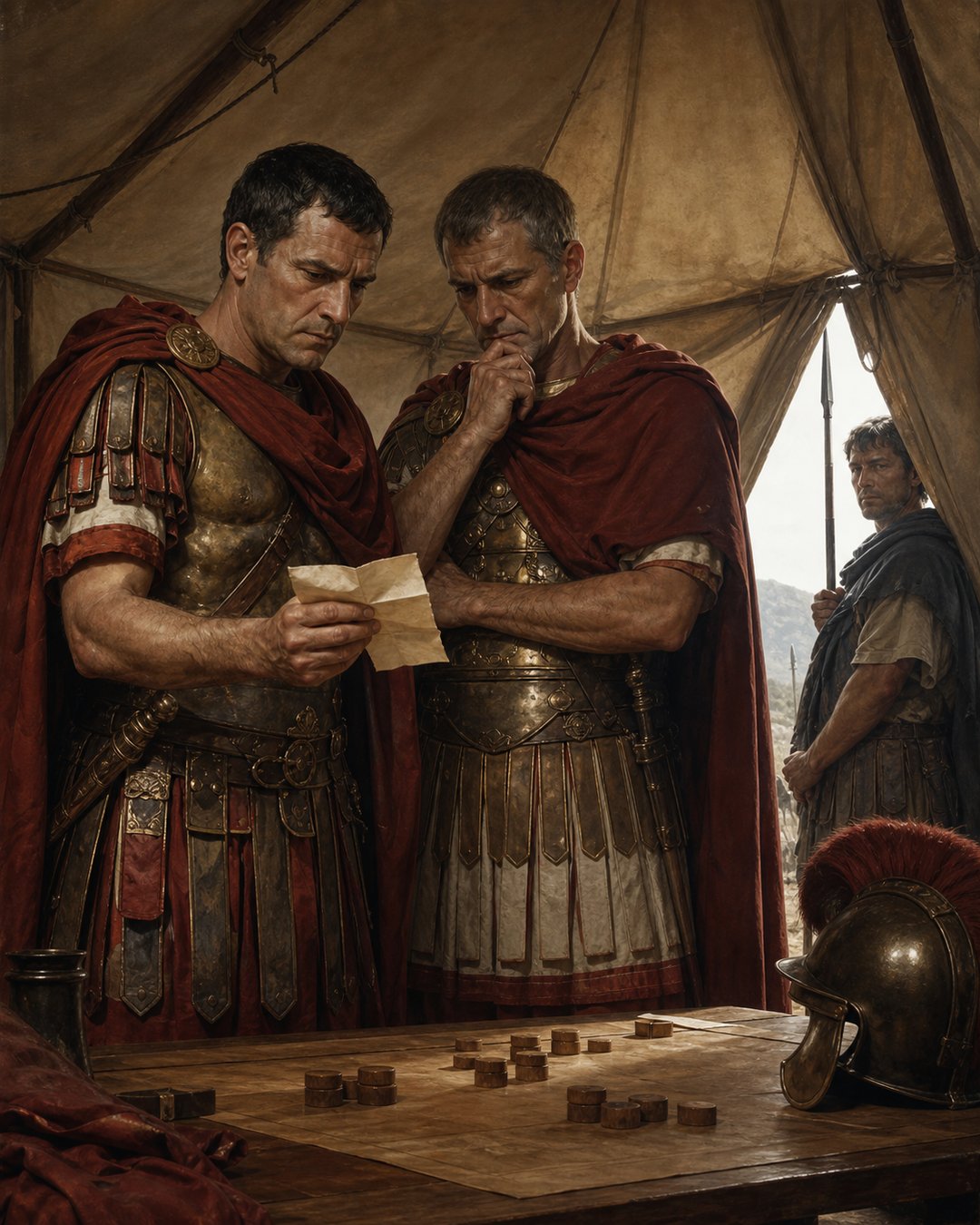
The offer arrived in a Roman camp as a letter from the other side. Pyrrhus’s own physician promised the consuls that he could kill the king with poison. In exchange, he wanted a reward for ending the war without exposing Roman soldiers to another battle.
Plutarch places Caius Fabricius in the consulship when the messenger appeared. Fabricius did not keep the proposal as a hidden advantage, negotiate the price or merely refuse. He brought his colleague Quintus Aemilius to the same judgment, and the two consuls sent Pyrrhus a warning with all speed.
The decision is often reduced to a clean example of Roman honour. Plutarch’s sequence is more exacting. The consuls stated that they were not protecting Pyrrhus for his own sake. They were protecting Rome from a story in which treachery finished a war that Roman courage could not. When Pyrrhus answered with released prisoners, they refused to remain indebted and released an equal number in return. Mercy, reputation, reciprocity and continued hostility all had to be kept separate.
The physician tried to sell Rome a missing battle
The proposed bargain removed uncertainty from the most dangerous part of war. No formation had to hold, no cavalry had to find room, and no soldier had to meet Pyrrhus’s army in the field. A person already close to the king claimed he could reach the one body on which the enemy command depended.
Plutarch says the physician would “take the king off” by poison if the Romans paid him. The requested reward matters. This was not a defector warning Rome of an imminent danger or a servant acting from spontaneous loyalty. The physician treated access as a commodity. He offered the consuls an outcome and expected them to purchase it.
Ending the war “without further hazard” made the temptation explicit. Roman commanders were responsible for men who would be wounded or killed if operations continued. Refusal therefore carried a cost beyond personal virtue. Fabricius could not reject the offer without accepting that the next legitimate outcome might demand another march and another battle.
The choice differs from Hannibal’s later use of poison when capture closed around him. There the poison belongs to the defeated commander’s final control over his own body. Here it is a service offered by an insider to the opposing state, before the contest has reached its military end.
Two consuls turned refusal into a joint act
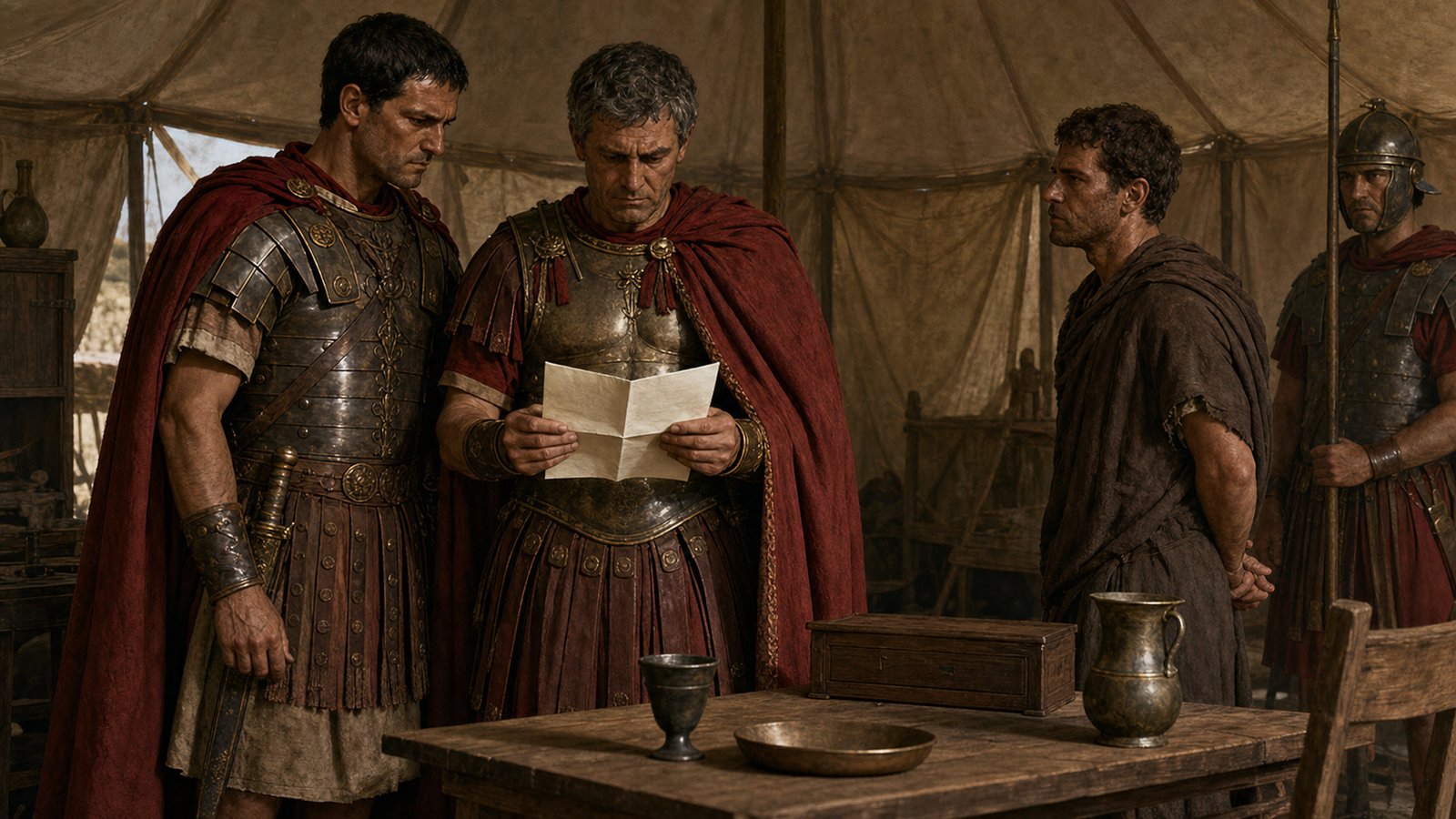
Fabricius reacted with indignation, but Plutarch does not leave the decision as one famous man’s private gesture. He persuaded his colleague to feel the same way. The warning went out in both names: Caius Fabricius and Quintus Aemilius, consuls of Rome, addressed King Pyrrhus.
That joint authorship gave the message institutional weight. If Fabricius alone had tipped off the king, the episode could look like personal admiration crossing enemy lines. With both consuls attached, Rome’s field command took ownership. The physician’s secret channel was answered by a declaration from the magistrates responsible for conducting the war.
Speed reinforced that conversion. Plutarch says the warning was sent at once, so the consuls did not leave the offer resting in camp while they considered how events might develop. Delay could have preserved deniability while allowing the physician to act. Dispatching the letter closed that possibility and gave Pyrrhus the practical chance to test the people nearest him. The decision became useful to its enemy precisely because Rome refused to keep the danger in reserve.
The letter opened with an insult as well as a warning. Pyrrhus, it said, was a poor judge of friends and enemies. The Romans fighting him claimed to be honourable and just, while the people he trusted were unjust and base. The categories sound self-serving because they are. The consuls used the plot to describe what kind of enemy Rome wanted Pyrrhus to believe he faced.
Plutarch’s Roman virtue is therefore argumentative. Fabricius does not simply perform a good deed and wait for history to notice. The consuls write the meaning of their action into the warning. They expose the physician and simultaneously make a claim about Roman identity.
Infamy mattered because victory needed an owner
The consuls denied that affection for Pyrrhus moved them. They wanted to prevent his ruin from bringing infamy upon Rome. Specifically, they feared that people would say the Romans had ended the war by treachery because they could not end it by valour.
This concern reaches beyond the manner of one death. A poisoned king could leave the military outcome open to rival explanations. The physician could claim he ended the war. Pyrrhus’s allies could claim Rome bought betrayal. Roman commanders could take the territory while losing control of the story that justified their success.
Open battle did not guarantee fairness, and ancient warfare contained ambush, deception and brutal pressure. The line drawn here was narrower. A paid servant’s private access should not replace the public contest between armies. The consuls wanted any decisive result to remain attributable to Roman command and Roman force.
That insistence resembles the discipline behind the battlefield system that turned ten torches into transmitted letters. In one case, commanders try to preserve authorship by making orders move through a controlled signal. In the other, they reject an outcome delivered through a channel they cannot honourably own.
Pyrrhus answered the warning with prisoners
Pyrrhus investigated, obtained proof and punished the physician. He then sent Roman prisoners of war back as a return for the warning. The gesture recognized that the consuls had preserved more than his military position. They had preserved his life against danger inside his own circle.
The prisoners made gratitude concrete. Men who had been removed from Roman strength now crossed back from captivity. Pyrrhus also sent Cineas once more to negotiate peace. The warning had briefly created a diplomatic opening inside an unfinished war.
Rome refused to accept the released men as a free favour from an enemy. It also refused to treat them as payment for declining to commit an injustice. Either interpretation would have left the consuls owing Pyrrhus something: gratitude for generosity, or compensation for their own decency.
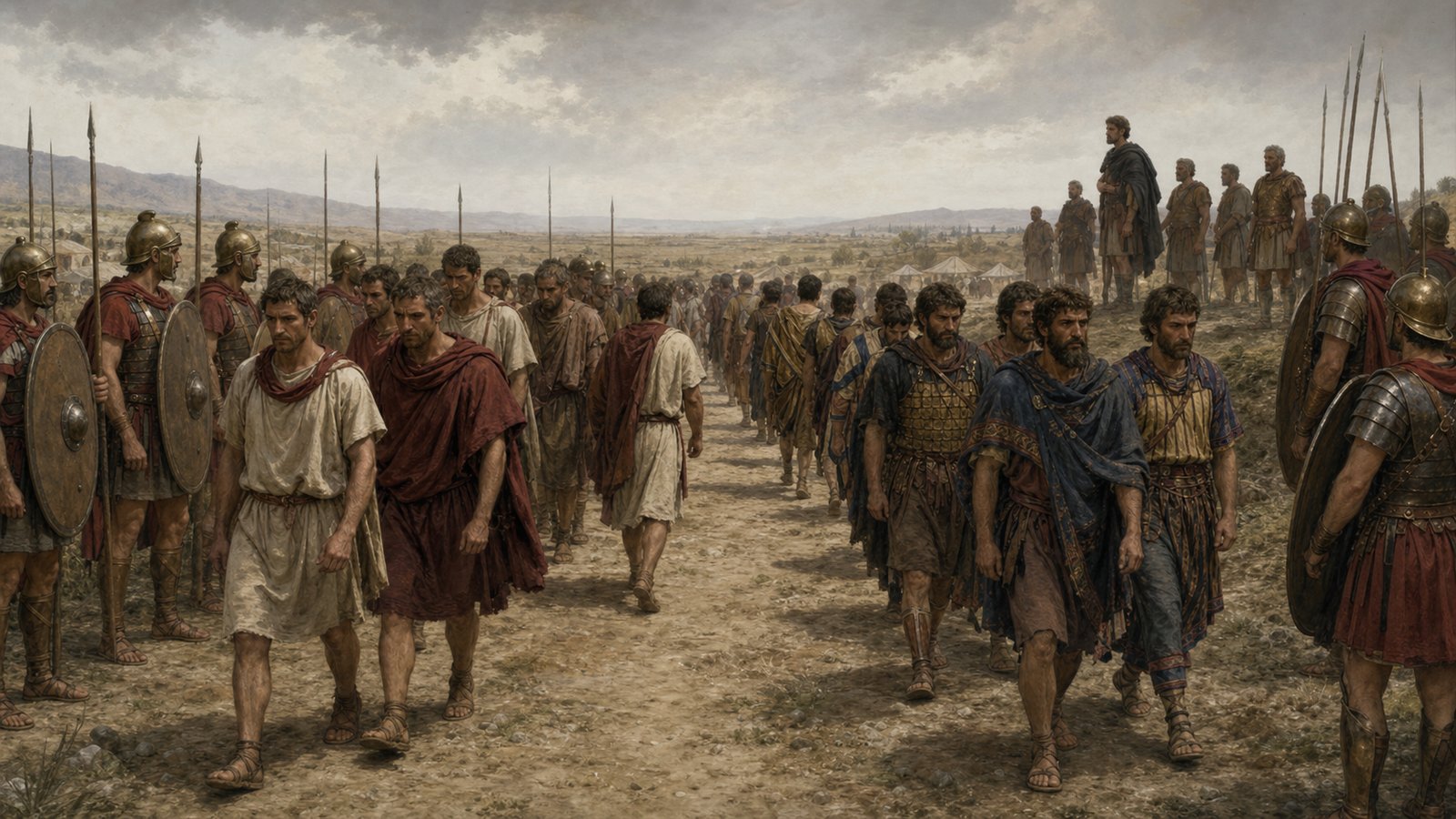
The answer was exact reciprocity. Rome released an equal number of Tarentines and Samnites taken on Pyrrhus’s side. Equality cancelled the imbalance. The returned Romans came home, but Pyrrhus could not turn their release into leverage over the peace terms.
The warning did not soften Rome’s condition for peace
After matching the prisoner release, the Romans would hear nothing about friendship or peace until Pyrrhus removed his arms and army from Italy. He was to sail back to Epirus on the ships that had brought him. The consuls had saved the enemy king without accepting the enemy’s political objective.
This is the hardest part of the episode to fit into a simple moral anecdote. The warning was genuine. So was the refusal to compromise. Fabricius could reject secret murder and still demand strategic withdrawal. Plutarch’s Romans separated conduct from settlement: a boundary on means did not require generosity about ends.
The sequence closes every route by which the physician’s offer might distort the war. Rome would not buy the killing. It would not silently benefit from the plot. It would not keep Pyrrhus’s grateful gift without matching it. It would not exchange its warning for an easier peace. Each response stripped away a possible private obligation.
Fabricius’s letter thus protected a public result. Pyrrhus remained alive to command, negotiate or fight; the prisoners were balanced; and the original dispute remained to be decided openly. The war continued, but Rome had denied a physician the power to define how it ended.
Sources
Plutarch, Life of Pyrrhus, 21.