
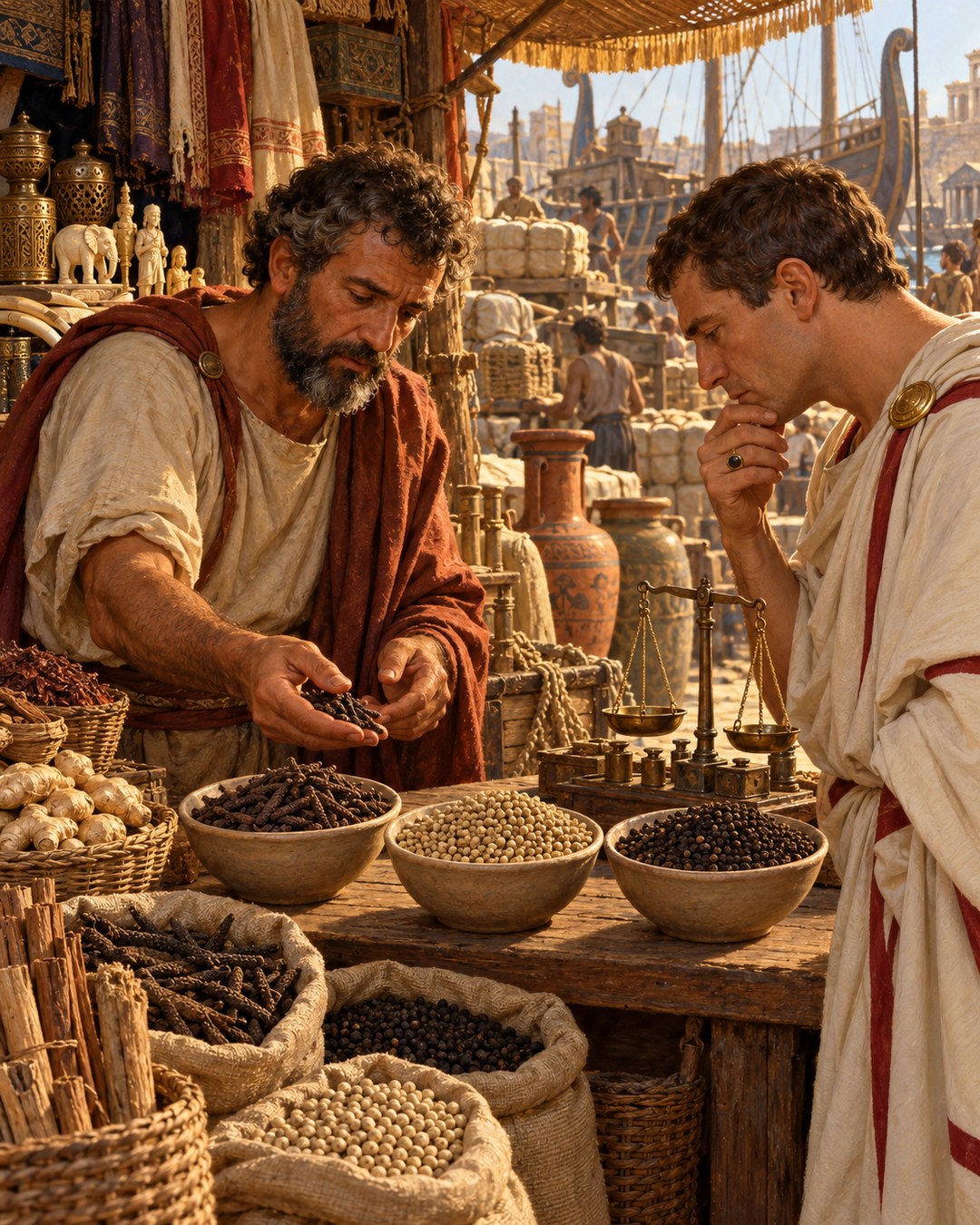
The most expensive pepper in Pliny the Elder’s list was also the easiest to fake. Long pepper cost fifteen denarii per pound and could be extended with Alexandrian mustard. White pepper cost seven; black pepper cost four. Juniper berries offered another imitation because they could take on pepper’s pungency.
Those prices turn a familiar seasoning into a problem of recognition. Buyers needed to distinguish products created at different stages of ripening and drying, then decide whether heat, colour, shape, and weight belonged to pepper or to a cheaper addition.
Natural History 12.14 mixes observation with mistakes about the plant and its geography. It should not be treated as modern botany. Read as evidence for Roman commodity knowledge, however, it shows a market trying to classify an imported spice while sellers had several ways to exploit that classification.
One pod became long, white, or black pepper
Pliny compares the pepper tree’s appearance with juniper. He says its seeds sit inside small pods resembling those of a kidney bean. The moment of harvest then changes what enters the market.
Pods picked before they opened were dried in the sun to make long pepper. If left to ripen, they opened and revealed white pepper. Continued exposure to the sun wrinkled the product and changed its colour.
The sequence matters because the market names do not necessarily imply three unrelated plants. In Pliny’s account, timing and treatment divide products from one reproductive cycle. A trader who understood the stages could attach different expectations and prices to each form.
Weather could interrupt the sequence. Damaged seeds rotted until only husks remained. Pliny calls these bregma, explains the name as “dead,” and characterizes the material as very light, pale, and intensely pungent.
Lightness is not automatically a virtue in goods sold by weight. A powerful taste might persuade a buyer that a sample was strong, while empty material altered the relation between bulk and usable spice. Pliny does not provide an inspection protocol, but his descriptors identify the sensory problem.
This stage-based chain differs from the long transport story Romans told about cinnamon. Cinnamon’s narrative magnified distance and intermediaries. Pepper’s chapter lingers over the same plant becoming several saleable forms before and after drying.
Fifteen, seven, and four denarii priced visible differences
Long pepper headed Pliny’s table at fifteen denarii per pound. White pepper stood at seven and black at four. The spread gave substitution an immediate incentive: a small amount of cheaper material could be profitable if it survived the buyer’s inspection.
Pliny says black pepper had the more agreeable flavour, while white was milder than the other principal forms. Price therefore did not map simply onto pleasantness or strength. Scarcity, processing, fashion, and recognition could pull value in different directions.
Ginger appears because some people confused it with the pepper tree’s root. Pliny rejects that identity. He describes ginger as a small cultivated plant with a white root in Arabia and Troglodytica, highly pungent but quick to decay.
Its quoted price was six denarii per pound. That placed it below white pepper and far below long pepper, but above black pepper. A Roman spice seller was not handling one undifferentiated class of heat. Each named material carried a different story, shelf problem, and price.
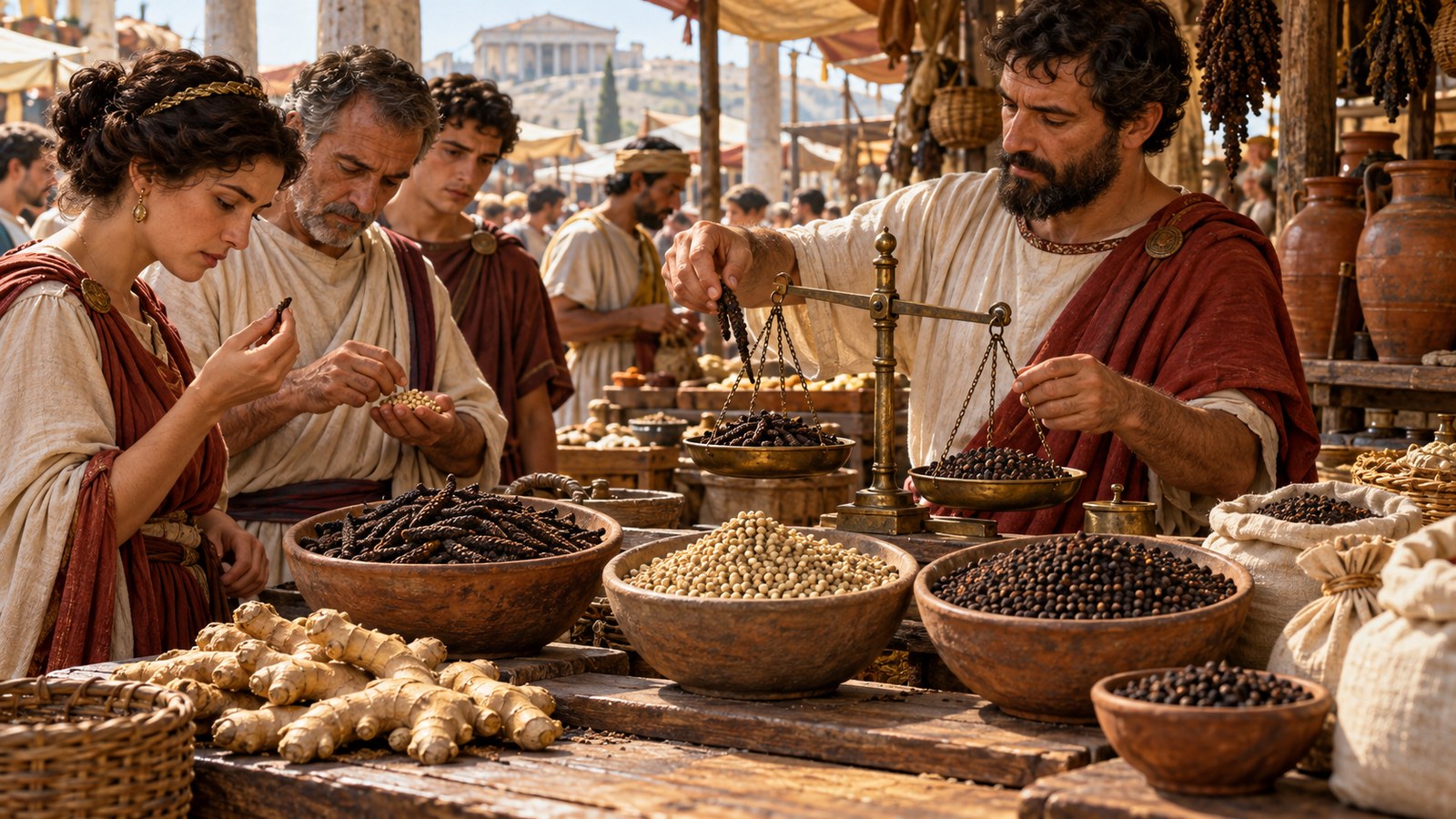
Pliny marvels that pepper became fashionable without sweetness or visual beauty. Its recommendation was pungency, and Rome imported it from India for that sensation. His moral surprise is part of the evidence: demand had become ordinary enough to require an explanation.
The complaint should not erase consumers’ agency. Pungency changes aroma, appetite, and the experience of a dish even when it offers no bright colour. Pliny’s inability to admire the reason for demand does not mean Roman cooks and diners lacked one.
The comparison with precious metal is deliberate. Pepper and ginger grew wild in their countries of origin, he says, yet Romans bought them by weight as if they were gold or silver. Distance and exchange converted an abundant local plant into a measured luxury elsewhere.
Mustard and juniper attacked different points of inspection
Long pepper was especially vulnerable to Alexandrian mustard. The adulterant did not need to reproduce every botanical feature if the traded product had already been dried, broken, or judged mainly by heat. It needed to pass within the seller’s chosen presentation.
Other pepper could be mixed with juniper berries. Pliny says juniper had a remarkable ability to assume pepper’s pungency. That is a sensory fraud: the substitute borrows the quality a tasting buyer expects to confirm.
He also mentions multiple methods of adulterating weight without detailing each one in this chapter. Goods priced per pound invite manipulation wherever moisture, filler, containers, scales, or mixed material can change what the payment actually buys. Only the general warning is sourced here; particular tricks should not be invented.
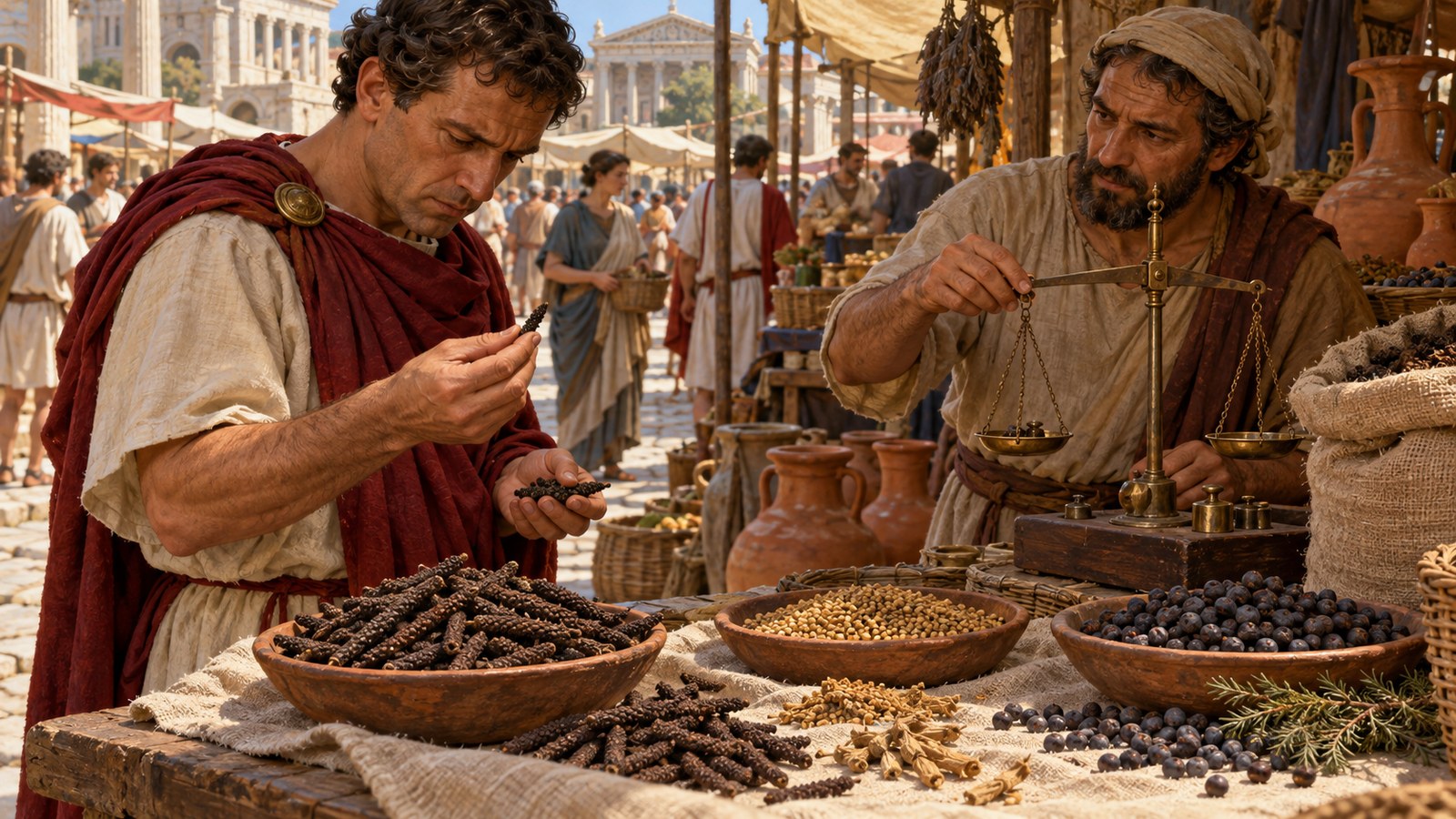
The problem resembles the controls surrounding other valuable aromatics. Frankincense workers at Alexandria were searched and sealed into protective work clothing, an attempt to control theft inside processing. Pepper adulteration operated at another boundary: the buyer had the product in front of him but could not be certain what had been mixed into it.
Names could help and mislead at once. “Long,” “white,” and “black” describe visible forms, but resemblance makes names portable. If mustard can enter long pepper and juniper can imitate pepper’s bite, the label becomes a claim that still needs testing.
Pliny’s chapter does not identify a state spice inspector or a universal remedy. It preserves market literacy instead: know the stages, compare the forms, remember the prices, and recognize that pungency itself can be counterfeited.
A Roman spice jar held a chain of distant decisions
Before sale, someone chose when to harvest a pod. Someone dried it long enough to change texture and colour. Weather could spoil the seed. Transport carried the product from India toward buyers who knew it mainly after those transformations.
At the far end, price condensed that history into a number per pound. Fifteen, seven, four, and six denarii made unlike substances comparable on a merchant’s scale. The numbers also told dishonest sellers where the largest margin might lie.
Pliny’s botanical inaccuracies do not cancel the commercial structure he records. Ancient merchants could classify products effectively without possessing modern taxonomy. They needed categories that worked for buying, cooking, storage, and argument.
The chapter’s strongest evidence comes where categories meet failure. Bregma is a failed seed turned into a named market object. Mustard enters the most expensive pepper. Juniper borrows pungency. Weight itself becomes suspect. Each case reveals what buyers valued because fraud imitates valued traits.
There is also a tension between wild growth and measured sale. Pliny imagines pepper abundant where it originates, then compares its Roman purchase to precious metal. The value was not contained in the berry alone. It accumulated through harvest, drying, survival, distance, scarcity, and the trust required at the scale.
That trust could never rest on appearance alone. Long pepper might carry mustard; a pepper-like berry might be juniper; a pale light seed might be weather-damaged husk. Smell and taste helped, but the source warns that substitutes could capture those signals too.
Roman pepper was therefore both ingredient and information problem. The spice reached the table only after a buyer accepted a story about plant, form, origin, and weight. Pliny’s prices show how much that story could be worth.
Sources
Pliny the Elder, Natural History 12.14.