
A woman on Naxos heard good news and stopped breathing. An elderly poet won a prize and died in celebration. Three Olympic champions crowned their father, who collapsed under their embraces. A Roman mother saw the son she had mourned after Cannae walk home alive—and the reversal killed her.
Aulus Gellius placed these four stories together under a startling proposition: great, unexpected joy could cause sudden death. He imagined the life-bearing breath unable to withstand the force of an emotion both powerful and unfamiliar.
The collection is not a modern clinical case series. Gellius gives no symptoms detailed enough for retrospective diagnosis, and his examples came through philosophy, biography, athletic tradition, and Roman annals. Their value lies elsewhere. They show an ancient reader organizing emotion as a bodily event, and treating surprise—not sorrow alone—as a shock with weight, speed, and consequence.
Polycrita’s news supplied the shortest case
The first example is almost brutally compressed. Gellius says Aristotle related that Polycrita, a woman of high rank on the island of Naxos, suddenly and unexpectedly heard joyful news. She breathed her last.
No content for the news survives in Gellius’s account. He does not name the messenger, describe the room, or provide the interval between hearing and death. Supplying a political rescue, family reunion, or military victory would turn a narrow report into invention.
What mattered to the compiler was the pattern carried by the verbs. The news arrived suddenly. Its meaning was joyful. The hearer had no time to accommodate the change. Breath ended at the moment of recognition.
Polycrita’s rank and island origin identify her, but do not explain her death. She enters the chapter as an authority-bearing example attributed to Aristotle. The source name lets Gellius begin with philosophical prestige before moving into stories richer in public spectacle.
The phrase “breathed her last” also fits the explanation announced above the examples. For Gellius, the vital breath could be stifled when an unusual emotion exceeded what it could endure. The short report and the physiological frame reinforce one another.
That framing should not be mistaken for a medical conclusion acceptable today. Sudden death can have many causes, and these literary narratives provide too little evidence to choose among them. The historical claim is that Gellius and his transmitted authorities believed emotional shock could act physically and immediately.
A poet’s prize made private surprise public
Philippides offered a second version of the pattern. He was a comic poet of considerable reputation and already advanced in age when he unexpectedly won a contest among poets. Gellius says he rejoiced intensely and died suddenly in the midst of that joy.
The contest gives this death a public measure. Victory was not merely pleasant information; it reversed uncertainty through an announced judgment. A poet waiting among rivals moved in one moment from suspense to recognition.
Age is the only vulnerability Gellius names. He does not describe a known illness or a previous collapse. The point is not that Philippides laboured anonymously until one fatal success. Gellius calls him reputable. Even an established figure could encounter a prize as an overwhelming surprise.
The story also joins creative competition to bodily consequence. A result produced by judges entered the winner through sound, crowd response, and status. Celebration was social, but the decisive limit appeared inside the aging body.
Roman readers were familiar with performances in which emotion was carefully made. Polus used the urn holding his own son’s ashes while playing Electra, bringing personal grief into a theatrical role. Philippides’s story moves in the opposite direction: the public machinery of a contest produced a private physical shock.
Gellius does not pause to moralize about ambition. He does not blame the poet for wanting the prize or suggest that joy itself was indulgent. The relevant features are age, unexpected victory, exceptional intensity, and sudden death.
Three crowns closed around Diogoras
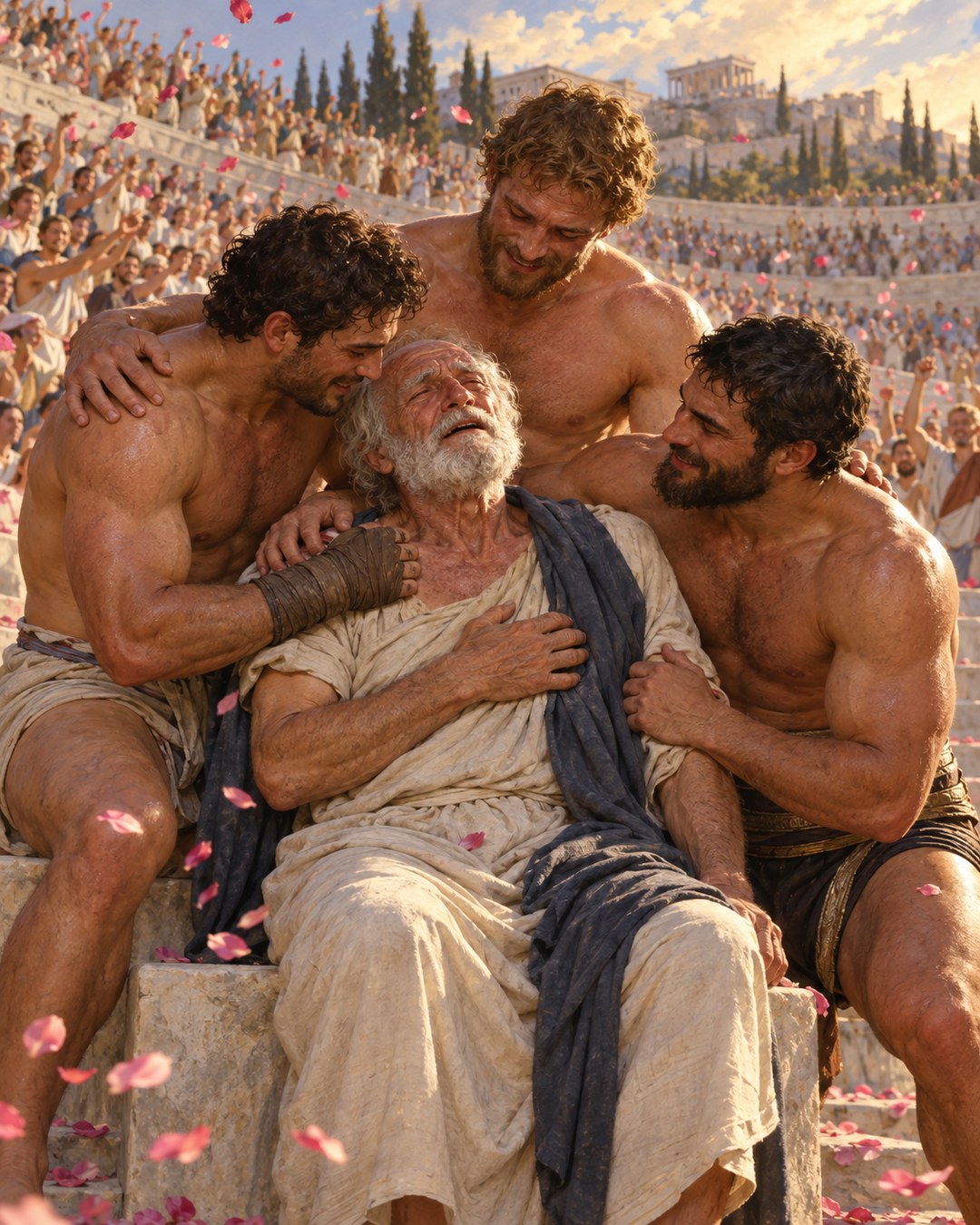
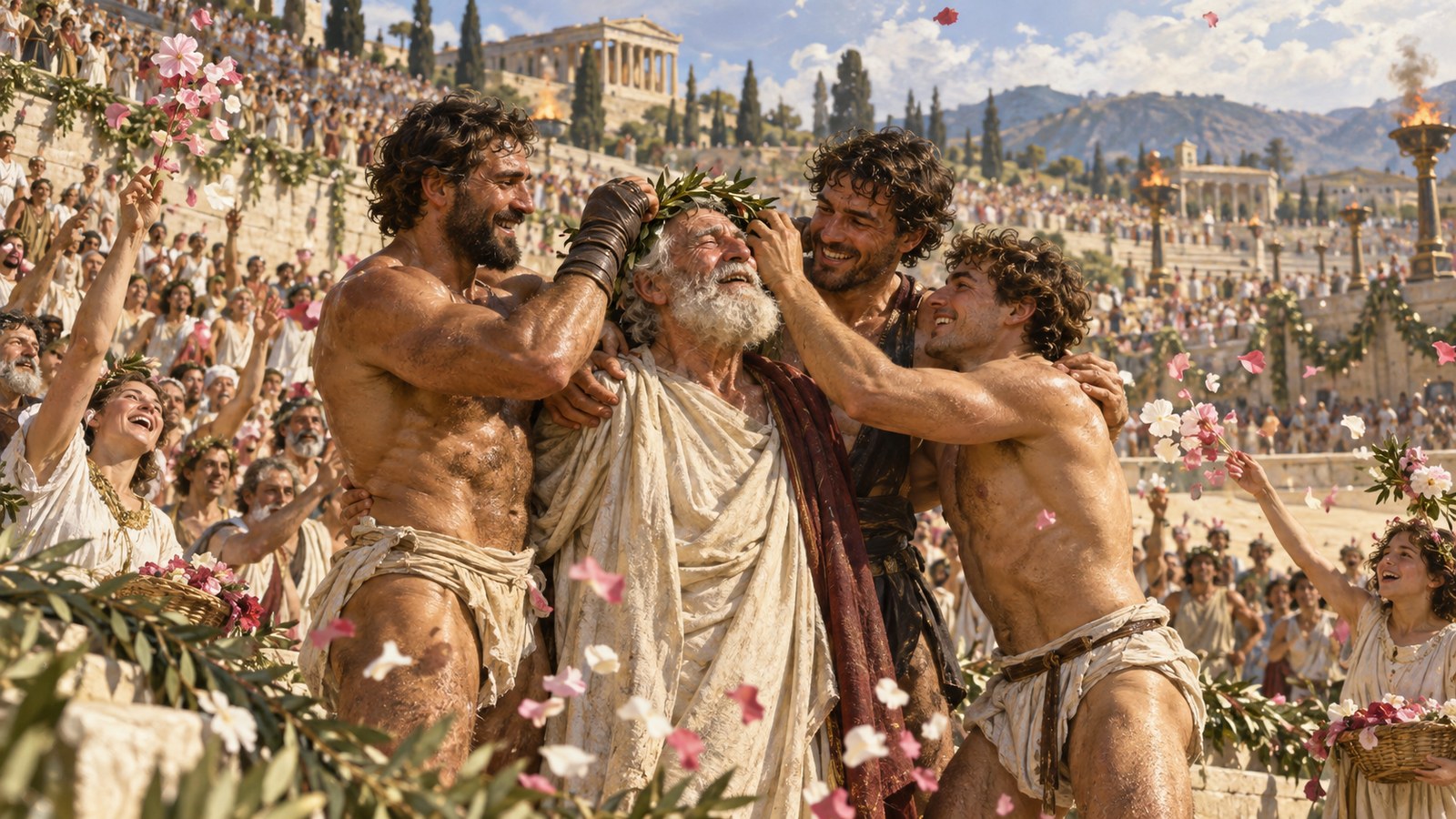
The third story is the chapter’s most elaborate scene. Diogoras of Rhodes had three young sons who competed in different combat sports. One was a boxer, another a pancratist, and the third a wrestler. All three won at Olympia on the same day.
The sequence multiplied a single father’s joy. Each son had survived a separate contest and received a crown. The victories then converged in the stadium. The sons embraced Diogoras, placed their crowns on his head, and kissed him.
The crowd completed the pressure of the moment. People congratulated the father and showered him from all sides with flowers. Honour became tactile: crowns pressed down, arms enclosed him, kisses reached him, and blossoms crossed the air before the eyes of the assembled spectators.
There, amid the embraces, Diogoras died. Gellius locates the death in the stadium and before the people. Unlike Polycrita’s nearly contextless news, this account expands joy into a datable kind of public scene with named sports, three victors, physical contact, and collective acclaim.
The ancient explanation turns accumulation into force. One victory might have been great happiness. Three victories on the same day, delivered by sons who transferred their crowns to their father while a stadium acclaimed him, became an emotional load too large for the breath to bear.
The scene’s beauty helped preserve it, but beauty does not verify its physiology. Gellius reports a widely known story. His arrangement asks readers to see the same mechanism in a Naxian message, a poetic result, and an Olympic climax despite their very different settings.
Cannae reversed grief without warning
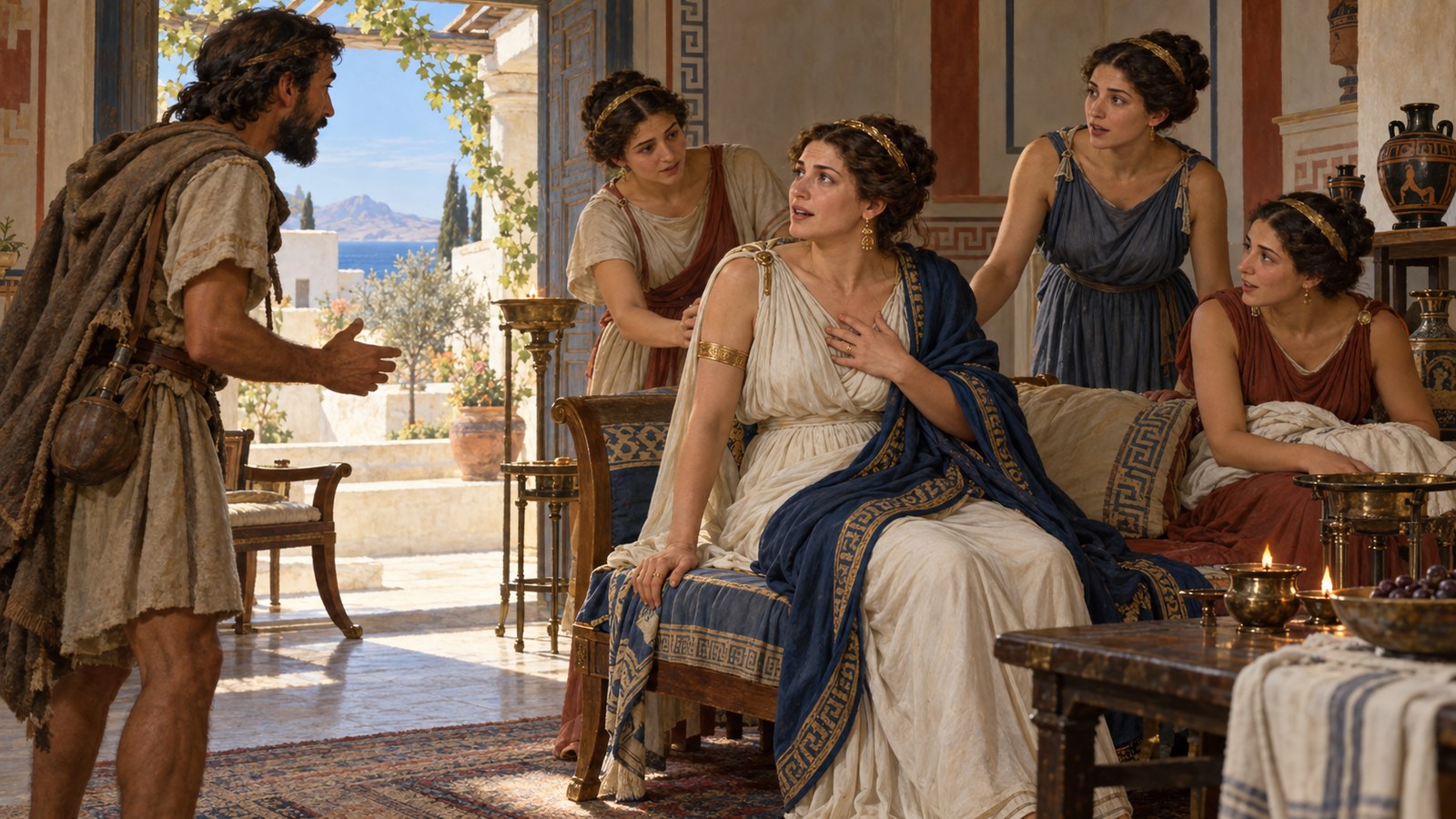
Gellius’s final example came from Roman annals and began with catastrophe. The Roman army was cut to pieces at Cannae. An aged mother received a message that her son had died in the battle, and grief overwhelmed her.
The report was false. Not long afterward, the young man returned from the battle to Rome. The mother who had reorganized her world around his death suddenly saw him alive.
Gellius reaches for violent language to describe the change. Unexpected joy descended as a flood, a shock, and almost a crash. The emotion did not gently cancel grief. It arrived with the force of one reality striking and replacing another.
The Cannae setting gives the mistaken report credibility. After such a defeat, death news did not need to seem improbable. The mother’s sorrow rested on the public scale of Roman loss as well as on a personal message.
Her son’s return also distinguishes this story from the Cannae prisoners who came home only to honour their promise and return to Hannibal. Gellius’s mother did not face an ethical debate over survival. She faced the instant sensory contradiction of a living body where she expected permanent absence.
The four stories now form a progression. Bare news kills Polycrita. A judged victory kills Philippides. Three crowned sons and a stadium surround Diogoras. A battlefield casualty report is overturned at a Roman doorway. Different paths produce the same sudden transition from uncertainty or grief into extraordinary joy.
Gellius preserved them as evidence for a body vulnerable to emotion. A modern reader should preserve the boundary of that evidence in turn. We can describe his theory, his sources, and the narrative details he selected without diagnosing four dead people across centuries.
His chapter still reveals something precise. Romans did not imagine emotion as weightless commentary added after events. News, victory, touch, and recognition could enter the body as forces. In these traditions, joy was not sorrow’s harmless opposite. When it arrived without warning, it could strike just as hard.
Sources
Aulus Gellius, Attic Nights, 3.15.