
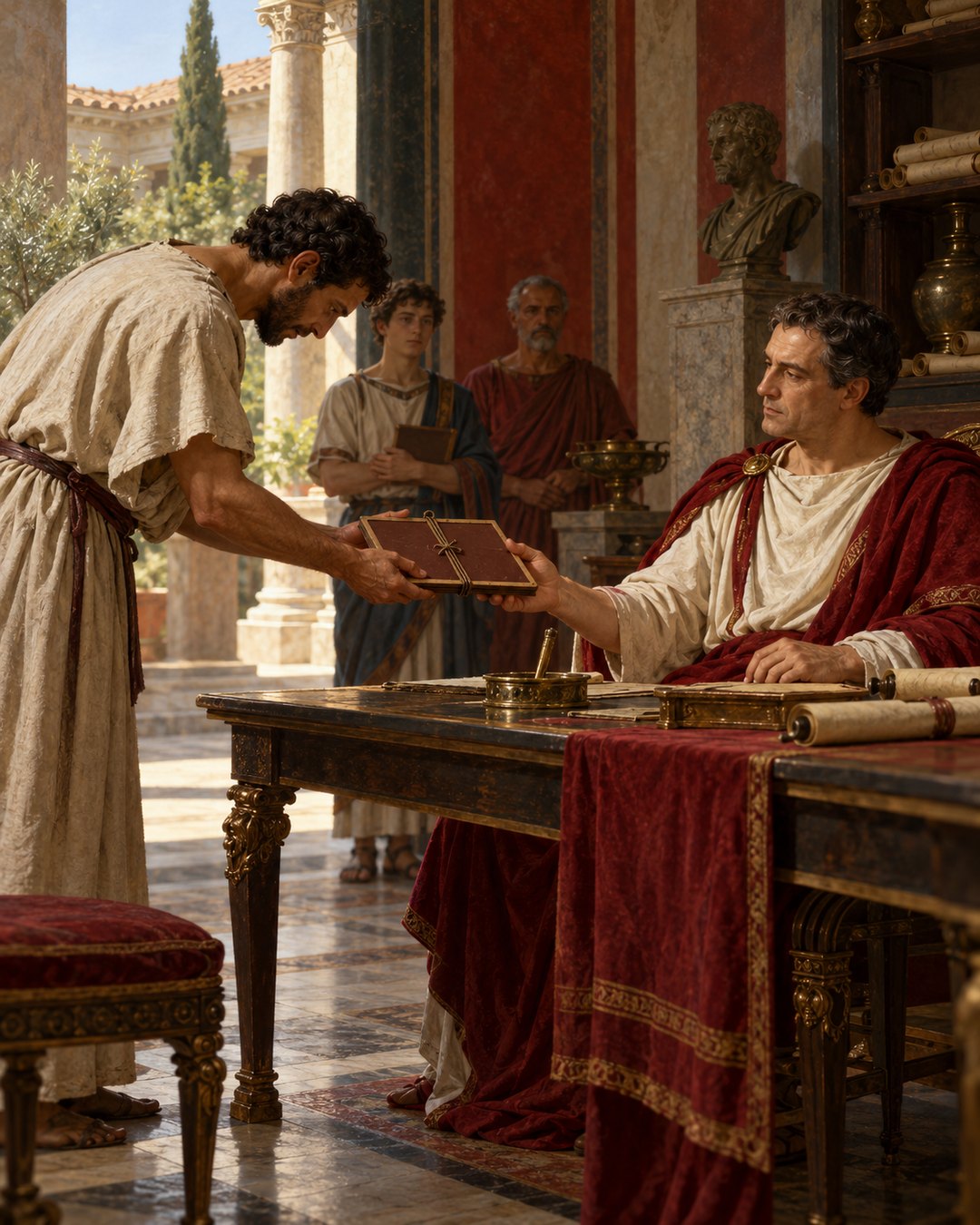
Illness had moved through Pliny the Younger’s household, and some of the people serving him died young. Writing to Paternus, he tried to name two consolations. He had granted freedom generously, he said, and he allowed enslaved people to make wills that he preserved like legal documents.
The second practice sounds startlingly formal. Instructions were submitted. Property could be divided. Donations and bequests could be left to other members of the household. Pliny claimed to carry out the requests as if he were obeying an order. Yet the document’s force ended at the edge of his house. The will worked because the master chose to honour it, not because the enslaved testator possessed ordinary civic standing.
Death made Pliny describe his household rules
The letter begins with loss rather than legal theory. Pliny told Paternus that illness among his household servants had caused several deaths at an early age. He was greatly upset. The arrangements he described entered the letter because he was searching for something that could ease grief.
He offered two consolations while insisting that neither matched the size of the pain. First, he had been generous in giving people their freedom. Those who died after manumission did not, in his view, die altogether immaturely. Freedom altered how he interpreted a life cut short.
That claim belongs to Pliny’s self-portrait as much as to the people who died. The letter lets him appear as an owner who had not waited until every benefit of service was exhausted before granting liberty. It does not tell us the names of the dead, when they were freed or what they wanted. Their lives are filtered through his account of his own conduct.
Public manumission could create a recognized change of status, as the ceremonies in the account of Roman freedom made before civic authority show. Pliny’s second consolation operated differently. It imitated law without moving the testator outside enslavement.
The will entered a private archive
Pliny said he allowed enslaved people to make wills “as it were” valid. That qualification carries the legal tension. He did not claim that the documents possessed normal testamentary force. He preserved them as though they were strictly legal records.
Preservation mattered. A request spoken at a bedside could be forgotten, narrowed or disputed. A document kept by the owner could outlast the person who made it and guide the later distribution. Pliny presents himself not merely permitting the writing, but maintaining the record.
The people in his household could place commissions and requests before him as they pleased. He then claimed to execute them as if obeying an order. The reversal is rhetorically powerful: the enslaver casts himself as the obedient party after death. But he remained the person who defined the practice, held the documents and supplied enforcement.
That structure should not be confused with equal legal power. A private promise by the most powerful person in the household could produce real transfers. It could also remain dependent on his memory, willingness and interpretation. Pliny’s phrase “as though” acknowledges the imitation even while praising its effect.
Property could move, but only inside the house
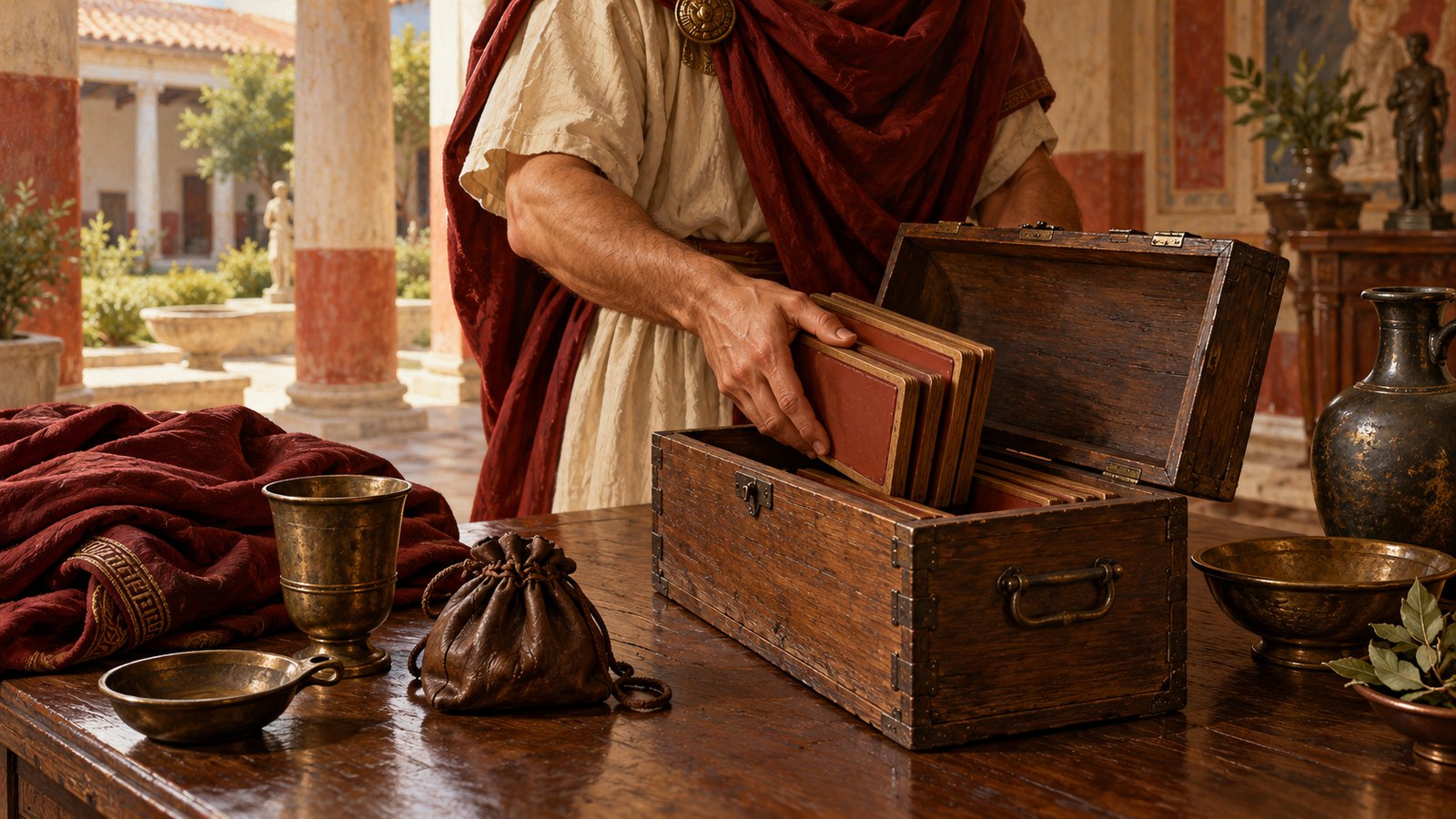
Within the arrangement, enslaved people could divide their property and leave donations and bequests. The statement recognizes a sphere of possession inside the household. Objects or savings could be associated with one person strongly enough for that person to direct where they went.
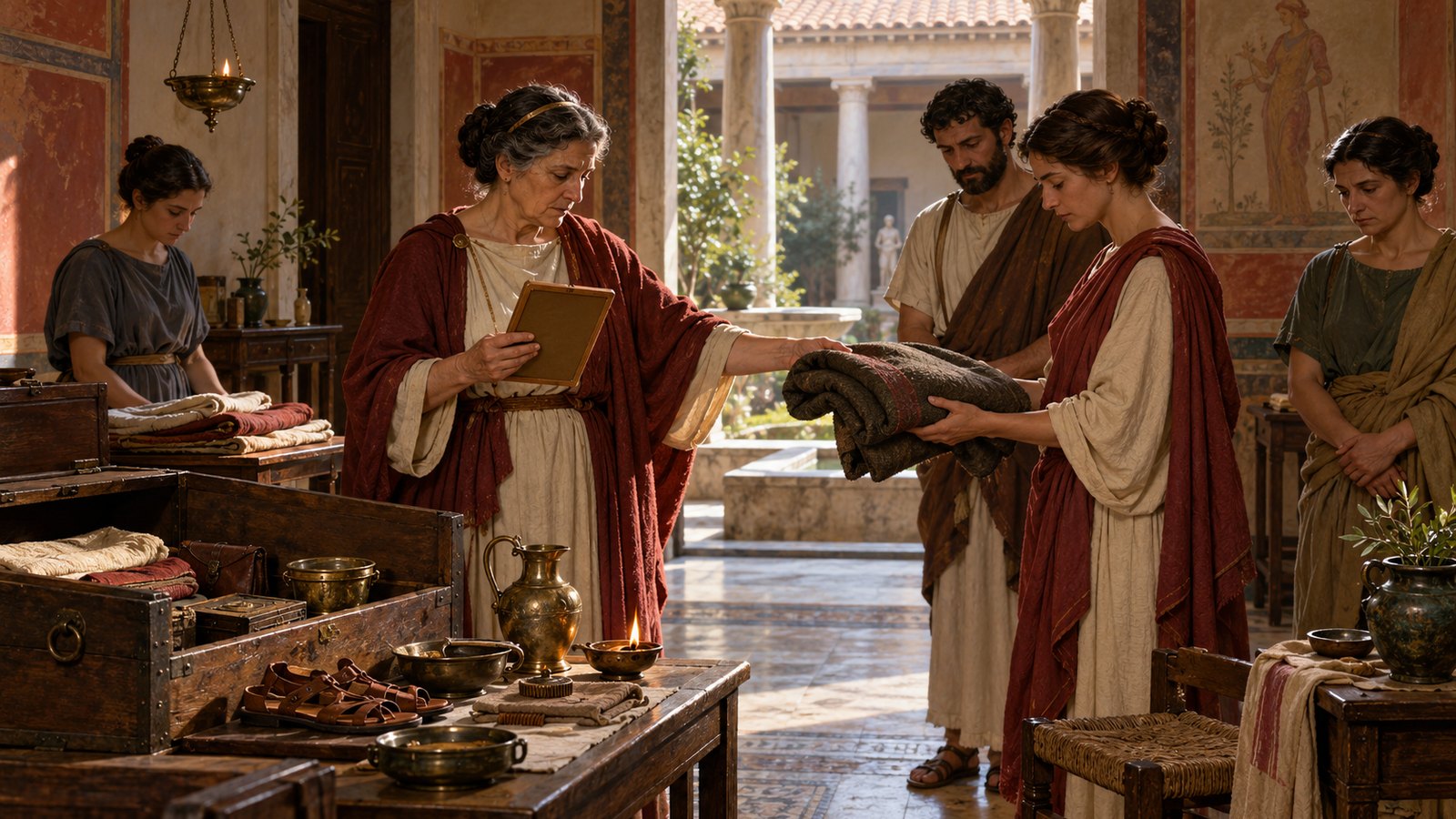
Pliny imposed a boundary: beneficiaries had to belong to his household. The instruction could redistribute within the house but not carry property freely into the wider civic world. His explanation was blunt. For enslaved people, the master’s house took the place of commonwealth and state.
The comparison makes the household sound complete, but it also reveals confinement. Civic institutions normally supplied rules, witnesses and enforcement beyond one person’s discretion. Here, the master’s domain substituted for them. The same authority that allowed a bequest also fixed its permitted destination.
A formal owner’s will could produce a different kind of legal complication. In the case of an enslaved steward named as a child’s guardian, written testament and status collided in public law. Pliny’s household wills avoided that collision by remaining internal and being fulfilled through his own command.
Mercy did not remove mastery
Pliny connects the wills to common humanity. The same feeling that led him to grant indulgences, he said, left him shattered by the deaths. He did not wish to become harder. He contrasted himself with people who treated a servant’s death as a simple financial loss and then congratulated themselves on their wisdom.
His condemnation is morally clear within the letter: reducing a dead person to money was not humanity. He argued that a true person feels pain, struggles with it and still admits the need for consolation. Emotional control did not require emotional absence.
At the same time, the humane practice remained paternal and unequal. Pliny calls the ability to make internal wills an indulgence. He could grant it because he possessed the power to withhold it. The beneficiaries remained limited to his household, and the validity of every document ran through him.
Both truths belong in the reading. The wills could matter deeply to people deciding who received their possessions. Honouring them was better than erasing those decisions. But private generosity did not turn dependence into a right. It made one household less harsh while leaving its hierarchy intact.
The letter made grief part of reputation
Pliny closes by worrying that he has written too much, then admitting it was still less than he wanted. He finds a kind of pleasure in grief when tears fall beside a friend willing to excuse or approve them. Paternus becomes the reassuring companion even at a distance.
The closing tells us why the account is so polished. This is not a neutral household register. It is a literary letter in which Pliny interprets his emotions, conduct and social role for another elite reader. The dead remain unnamed while his response receives careful definition.
That imbalance limits the evidence, but does not make it empty. The letter preserves a mechanism: instructions written by enslaved people, retained by an owner, restricted to household beneficiaries and executed through private authority. It also preserves the language by which an owner defended the mechanism—as consolation, generosity and humanity.
The documents looked like wills and were kept like law. Their actual jurisdiction was one Roman house. Pliny could say he obeyed the dead, but the power that made obedience possible was still his. That is what makes the arrangement both consequential and incomplete.
The household limit also shaped memory after death. A person could direct possessions toward companions who shared the same domestic world. Those choices could preserve attachments that the formal status of enslavement refused to recognize as independent civic relationships. Pliny’s archive gave the choices duration, even as his authority confined them.
His letter never lets us hear the wording of a single will. We do not know whether one person left clothing, savings or another object, nor whether a recipient welcomed or contested a gift. The surviving evidence is the owner’s summary. Responsible reading has to keep that silence visible rather than inventing the contents that would make the practice more vivid.
What remains concrete is the chain of action Pliny wanted Paternus to admire: a household member made instructions, the master preserved them, beneficiaries remained inside the house, and the master executed the transfer. The chain could honour intention. It could not free intention from mastery.
Sources
Pliny the Younger, Letters, 8.16.