
News reached Pliny that Silius Italicus had stopped eating and died at a villa near Naples. An incurable tumour supplied the immediate cause. Once the former consul decided that illness had made life intolerable, Pliny says, nothing could move him from the decision.
The death opens a letter that refuses to make Silius simple. Under Nero he had acquired the reputation of a willing informer. Later he behaved with prudence among the friends of Vitellius, returned with honour from governing Asia, and used retirement so well that Pliny believed it had covered the stains of youth.
Books, visitors, new villas, public readings, portrait busts, and Virgil’s tomb fill the second half of the account. Silius’s most disciplined observance was not attached to himself. Near Naples, he kept Virgil’s birthday more carefully than his own.
An incurable tumour turned biography into a final decision
Pliny gives the death before the career. Silius starved himself at a property near Naples because of an incurable tumour. The letter does not describe treatment, symptoms, or a physician’s debate. It emphasizes resolve.
Until that illness, Pliny calls him prosperous and happy, with one exception: the younger of his two children had died. The elder survived him, prospered, and reached consular rank.
Those family details prevent the decision from appearing as the end of an isolated man. Silius had lost a son and left another son established within the same status system that had shaped his own career.
The method of death also alters the pace of the obituary. Starvation is not an instant event. Pliny presents it as a choice sustained against time, matching his claim that Silius could not be shaken after resolving upon it.
We should keep the evidence inside the letter’s limits. Pliny tells Caninius Rufus what the death meant to him; he does not give Silius’s own written account of motive. “Ill-health was the cause assigned” is the correspondent’s framing.
The scene belongs beside, but does not duplicate, Pliny’s reflections on Verginius Rufus and delayed commemoration. Both letters turn an elite death into a test of what survives, but Silius’s obituary is dominated by revision of a reputation formed under several regimes.
Pliny moves backward from the villa because the final act alone cannot explain why this life deserves notice. The old man near Naples was also a figure from Nero’s political world, the last surviving consul appointed by that emperor.
Nero’s stain did not vanish; later conduct was placed against it
Pliny states the damaging allegation directly. During Nero’s reign, Silius hurt his reputation because people believed he had voluntarily informed against others.
The wording matters. Pliny reports what was thought, but he does not erase the stain as a malicious invention. Instead, he builds a later record that can be weighed against it.
Silius behaved prudently and courteously as one of Vitellius’s friends. Then he governed Asia and returned, in Pliny’s phrase, covered with glory. Political survival and provincial office become stages in a moral chronology.
Retirement performs the most work. Pliny says the admirable use of later life obliterated the marks left by youthful activity. That is his judgment, not a neutral audit, but it reveals the standard he applies: withdrawal could become constructive if filled with study, sociability, and measured public presence.
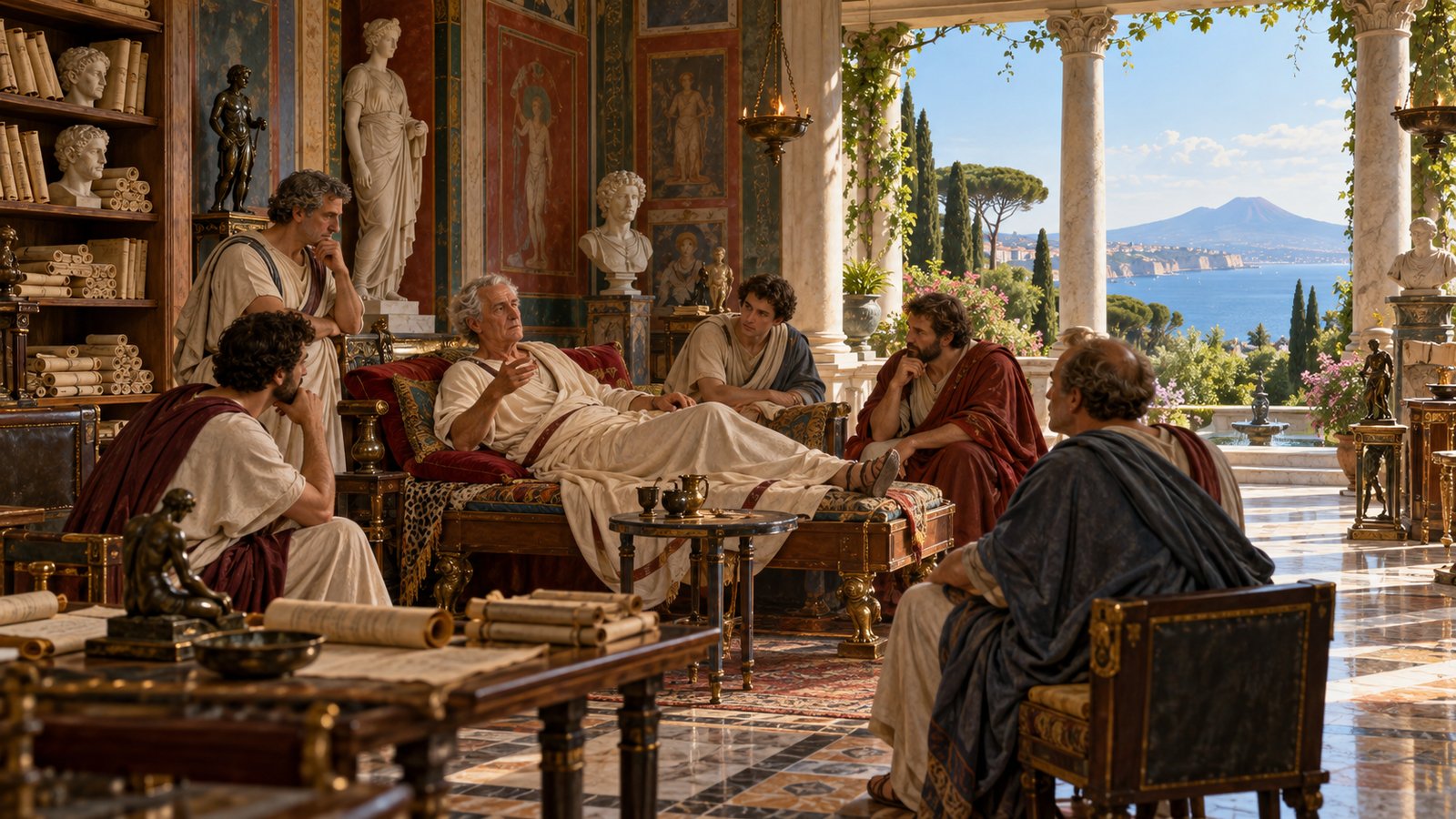
Silius ranked among leading men while holding no post. Visitors still paid respect and sought his company, yet Pliny says he aroused no envy. Influence without current office is the balance the letter admires.
Much of this life occurred from a couch. The room nevertheless remained full, and Pliny distinguishes the company from casual callers. Learned conversation made physical stillness socially active.
When Silius was not talking with visitors, he composed. Pliny’s praise has an edge: the verses displayed abundant effort rather than genius. Friendship with letters did not require pretending every poem was inspired.
Silius sometimes presented his work for general criticism through public reading. The former governor and consul exposed verses to judgment, replacing command with revision.
New villas competed with old ones, but Virgil remained fixed
Age eventually drew Silius out of Rome and into Campania. Pliny says he did not stir even when a new emperor came to power. He praises both sides of that absence: the emperor for allowing such liberty and Silius for daring to use it.
The quiet was not austere. Silius had a reputation as a passionate buyer of beautiful objects. He owned several villas in the same region and neglected an older property when a newer purchase captured his attention.
Restlessness therefore survived retirement. He could leave the capital and public office without losing appetite for acquisition.
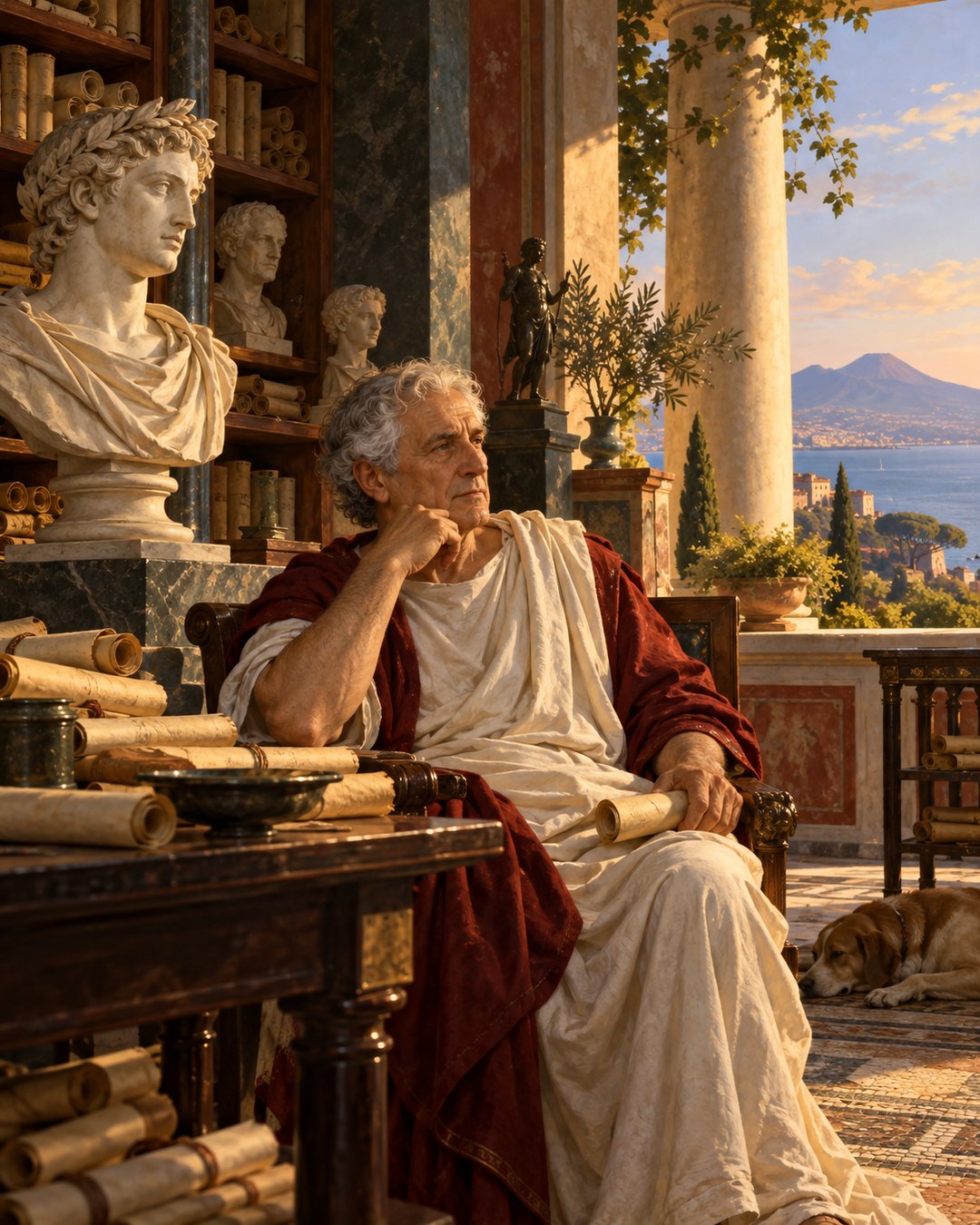
Each house held quantities of books, statues, and portrait busts. Pliny says Silius did more than keep them nearby; he treated them with a form of veneration.
One figure stood above the collection. Virgil’s portraits received special honour, and Silius observed the poet’s birthday more scrupulously than his own.
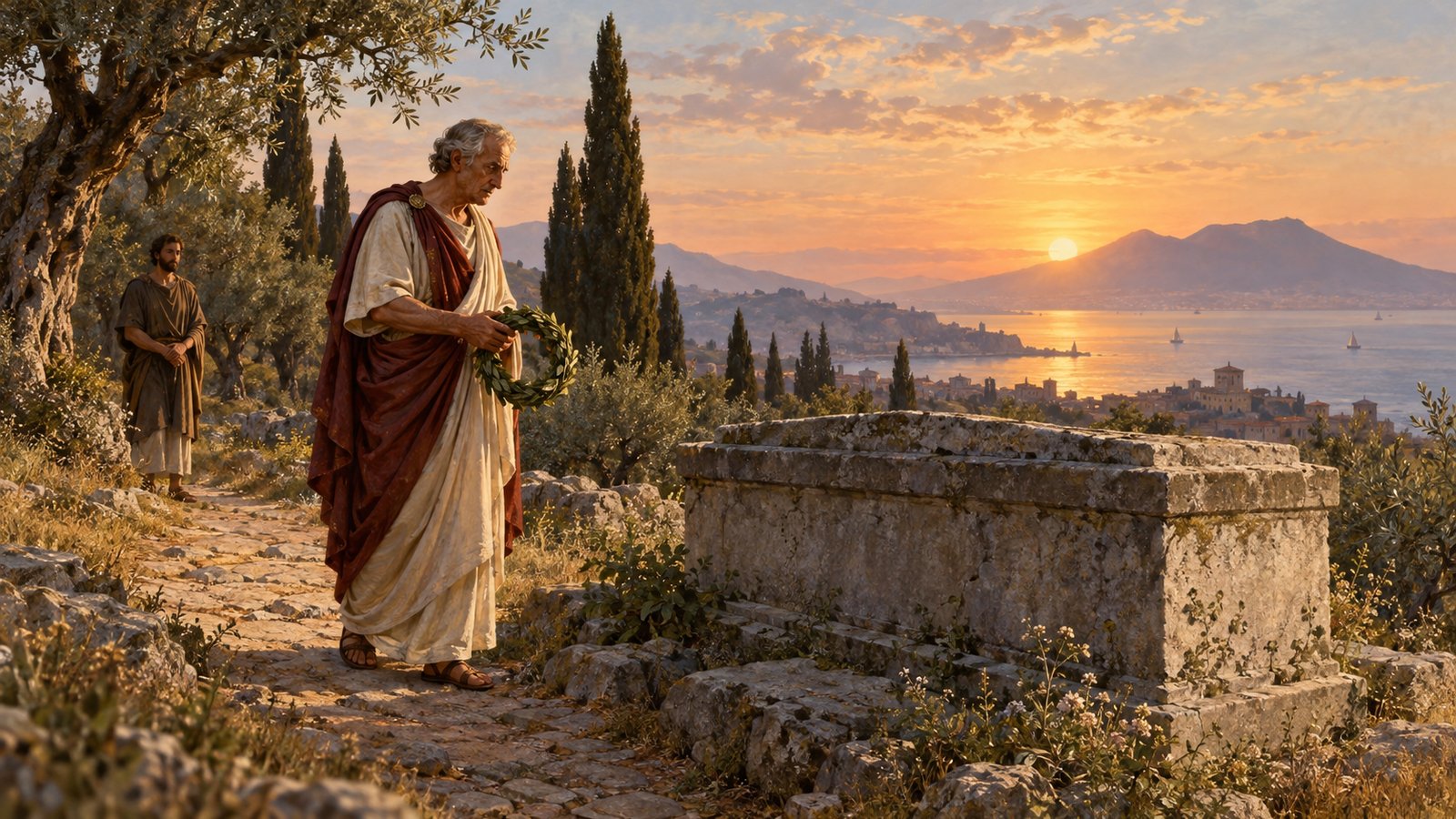
Near Naples, he approached Virgil’s monument as though it were a temple. The language turns literary admiration into repeated movement through real space: villa, road, tomb, return.
This devotion complements the routines through which Pliny accumulated reading time. Pliny organizes books around a daily schedule; Silius organizes part of retirement around a dead poet’s image, birthday, and burial place.
The contrast with his properties is striking. Villas could become old as soon as another was purchased. Virgil did not lose priority when a new statue arrived.
Pliny’s portrait is not a modern inventory of Silius’s art. It shows what the correspondent selected to characterize desire: multiplicity in houses and objects, constancy in literary reverence.
Seventy-five years closed one living link to Nero’s consulships
Silius completed his seventy-fifth year in Campania. Pliny describes his health before the tumour as delicate rather than weak, another of the letter’s careful distinctions.
His age mattered politically as well as personally. Silius was the last surviving consul appointed by Nero, and Nero had died during Silius’s own consulship.
One death therefore removed the final living member of a defined sequence of officeholders. Pliny uses that fact to make imperial history feel unexpectedly near and then suddenly empty.
He remembers an observation by Lucius Piso: Piso had lived to see a senate containing nobody upon whom he had called to speak during his consulship. Even a large governing body could turn over within one lifetime.
Pliny then recalls the tears of Xerxes while surveying an army destined to disappear. The scale changes from one former consul, to a senate, to thousands of soldiers, but the conclusion remains the speed with which a human multitude vanishes.
The letter ends by urging study and a memorial of having lived. That exhortation explains why Silius’s poetry matters even after Pliny has denied it genius. Careful work can still answer mortality when greatness is unavailable.
Silius’s life, as Pliny arranges it, does not become innocent through age. The Neronian accusation remains in the paragraph. Nor does cultivation make him perfectly measured; he keeps buying villas and abandoning his attention to older ones.
What changes is the setting in which he is judged. Informing, imperial friendship, and provincial office yield to conversations, manuscripts, criticism, collections, and a yearly walk toward Virgil’s tomb.
That mixture gives the birthday detail its force. Silius did not need to present himself as the greatest poet in the room. By keeping Virgil’s day better than his own, he chose the literary memory against which he wanted his final decades to be read.
Sources
Pliny the Younger, Letters, 3.7.