
Rome’s calendar did more than name a date. In Aulus Gellius’s account, three repeating boundaries—the Kalends, Nones and Ides—cast a shadow over the day that followed each of them. The rule did not arrive as an abstract claim that certain numbers were unlucky. It was presented as an institutional answer to remembered military failure.
Gellius found the explanation in Verrius Flaccus, then carried his reader through a Senate debate, the defeat at the Allia and a ruling by the pontiffs. He also preserved an awkward limit to the evidence. Romans avoided another set of dates, the fourth day before those same monthly boundaries, but Gellius could not find a religious explanation for that practice. The result is unusually revealing: one taboo comes with a chain of decision-making, while the other survives as an observed habit attached to a famous defeat.
The day after was not a holiday
Gellius begins by correcting ordinary speech. People commonly called the days immediately after the Kalends, Nones and Ides “holidays.” Verrius Flaccus, he says, gave them a more exact and less comfortable description: they were ill-omened. The distinction matters because a holiday can sound like a positive interruption of work. An ill-omened day instead marks restraint. It tells a magistrate that a recurring point in the month is unsuitable for a specific public act.
The monthly pattern is precise. The Kalends opened the month; the Nones and Ides were its other named internal markers. Gellius is not describing every day near them. His first rule concerns the dates immediately following each boundary. A reader interested in how Romans defined the civil day itself can compare the dispute over midnight and Roman day-counting. Here, however, the mechanism is not timekeeping alone. It is memory assigned to a position in the calendar.
That recurring position made an old disaster operational. Instead of preserving the Allia only as an anniversary, the rule treated a structural feature of every month as a warning. Three named boundaries produced three following days on which offerings for military action were not proper. The calendar repeatedly brought the decision back into view.
Lucius Atilius turned memory into a Senate question
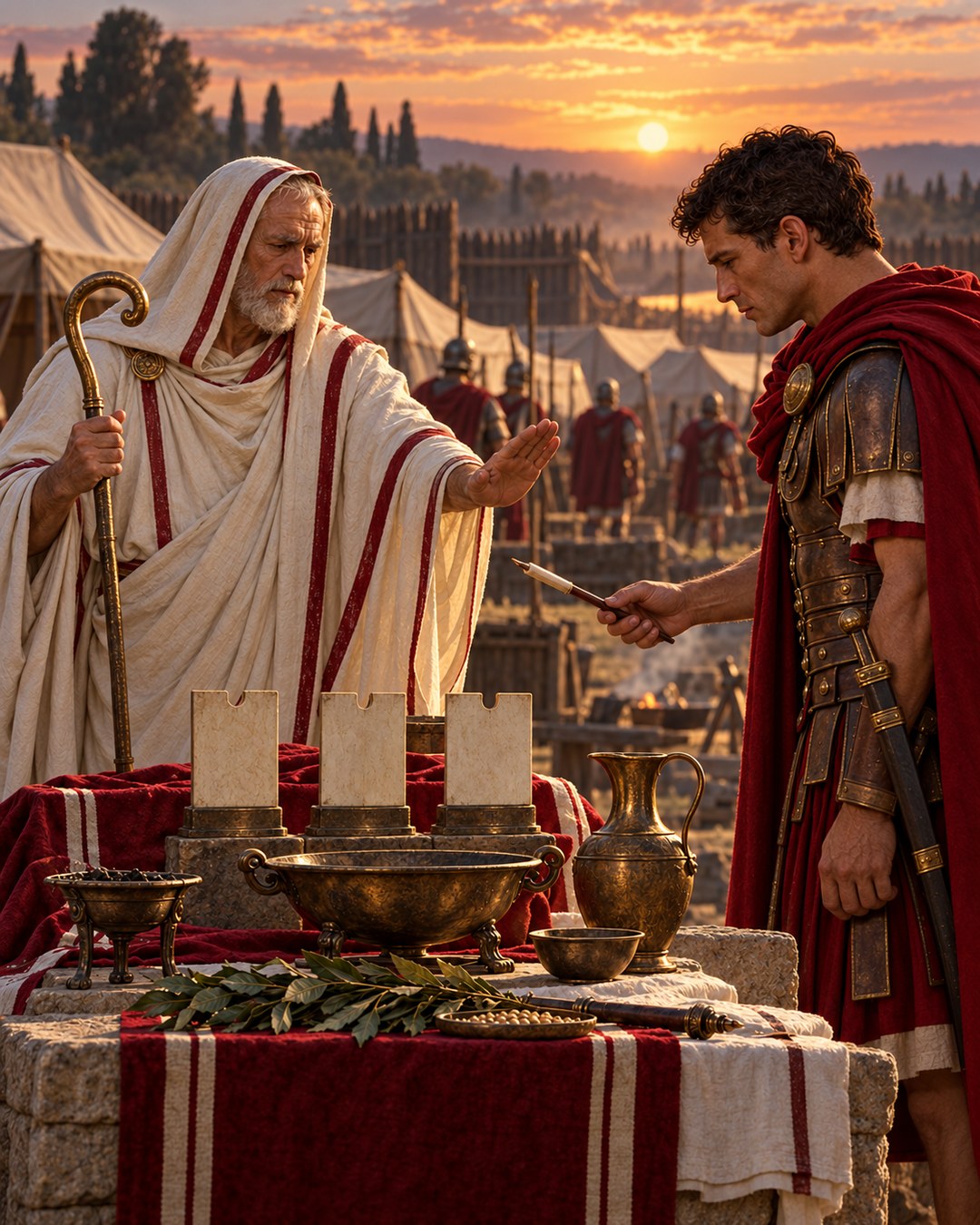
The explanation begins after Rome had been recovered from the Senonian Gauls. Lucius Atilius spoke in the Senate about Quintus Sulpicius, a tribune of the soldiers. Before fighting the Gauls at the Allia, Sulpicius had offered sacrifice in anticipation of battle on the day after the Ides. Gellius then gives the remembered sequence without softening it: the Roman army was cut to pieces, and three days later the city was taken apart from the Capitol.
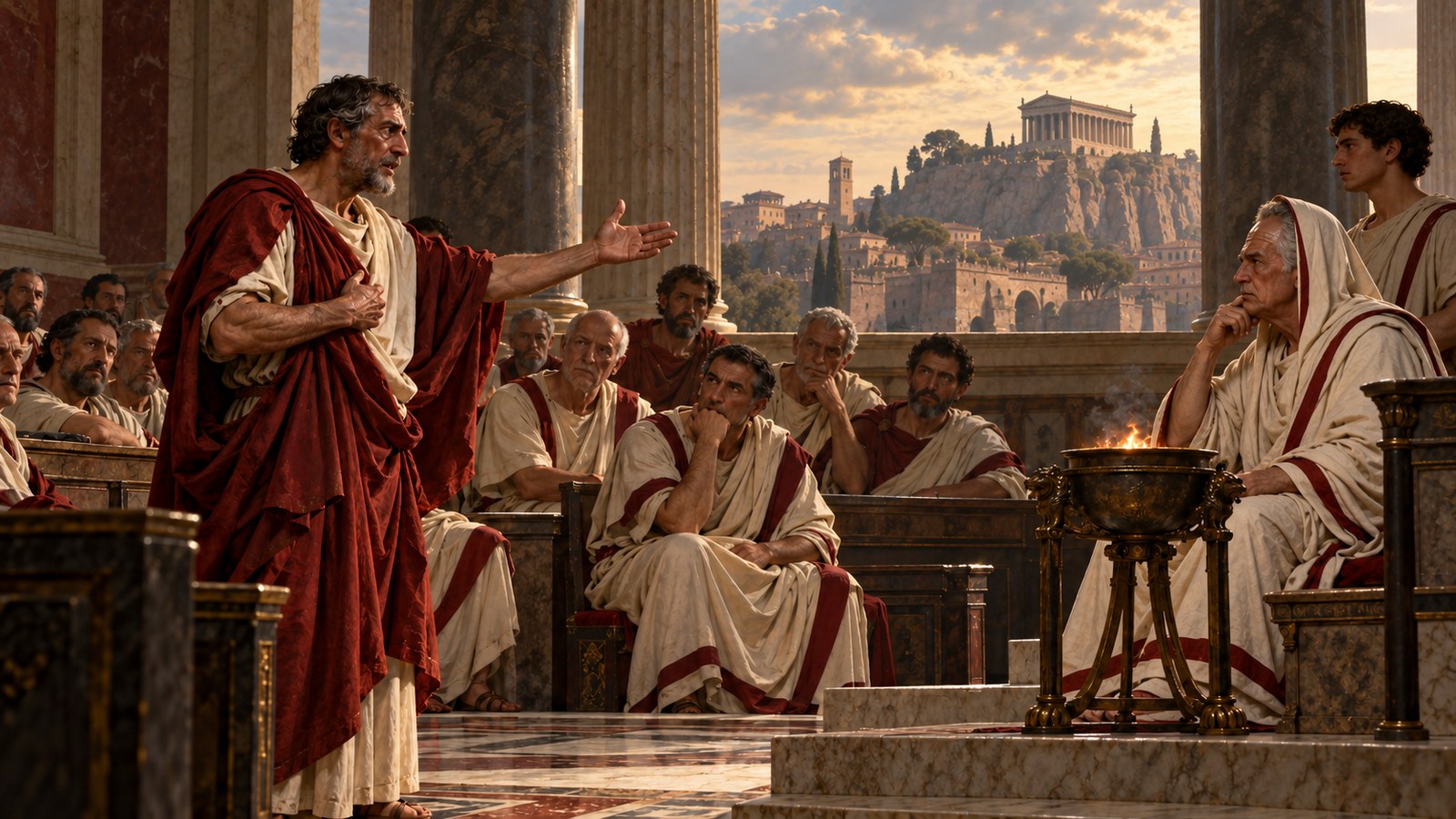
The scene carries the weight of a public recollection rather than a private omen story. Atilius did not merely say that Sulpicius had chosen a bad date. He placed the sacrifice, battle and capture in sequence before the Senate. Other senators then added that they remembered comparable cases. When a Roman magistrate sacrificed for a coming war on the day after a Kalends, Nones or Ides, they said, disaster followed in the next battle.
Those recollections supplied a pattern, but they did not themselves settle the ritual rule. The Senate referred the matter to the pontiffs. The priestly decision was that an offering would not properly be made on those days. Authority therefore moved through several hands: military memory was voiced by a senator, reinforced by other senators, referred by the Senate, and formalized by the pontiffs.
Gellius does not name the additional battles recalled by the other senators, and he does not claim that they submitted a written catalogue. His evidence is narrower: several senators said they remembered the same sequence, and that testimony was enough for the Senate to ask the pontiffs what should be done. The surviving passage records the route from recollection to ruling without supplying details that its author did not preserve.
The Allia became a recurring restriction
Gellius’s sequence shows how historical memory could become a limitation on future action. The defeat was not erased, and it was not left as a story whose only lesson was courage or blame. Its remembered timing helped define when a magistrate should not make a war-related offering. That is a narrower result than a complete ban on public life, but it is more concrete than a vague reputation for bad luck.
The Capitol’s survival also remained inside the story. Gellius says the city was taken three days after the army’s destruction, except for the Capitol. His account therefore holds collapse and survival together. Another Lost Eagles article follows Fabius Dorso’s ritual journey through the Gallic occupation; the present episode focuses on what Roman institutions later did with the memory of that crisis.
The decision did not claim that every action on those dates must fail. Its wording concerned whether offerings were properly made. That distinction keeps the evidence in proportion. Gellius reports a ritual restriction justified by military recollection, not a universal theory that the dates themselves mechanically caused defeat.
A second taboo had thinner evidence
Gellius next turns to the fourth day before the Kalends, Nones and Ides. Many people, he says, also avoided those dates as ill-omened. Yet the evidentiary chain immediately changes. There is no Senate debate, no series of remembered campaigns and no pontifical decree in the passage. Gellius explicitly says that he found no recorded religious reason for the observance.
He did find one historical coincidence. Quintus Claudius Quadrigarius wrote that the enormous slaughter at Cannae occurred on the fourth day before the Nones of August. The editorial note identifies that battle date as 2 August 216 BC. This gave Gellius a famous disaster tied to the avoided position, but he did not pretend that one item supplied the missing religious explanation.
That admission is as valuable as the fuller story about the days after the monthly boundaries. Gellius distinguishes what his books could explain from what they could only attest. The first observance had named speakers, a referral and a ruling. The second had widespread avoidance and a remembered catastrophe, but not a documented reason. Both belonged to Roman calendrical practice; they did not rest on equally recoverable foundations.
What the calendar preserved
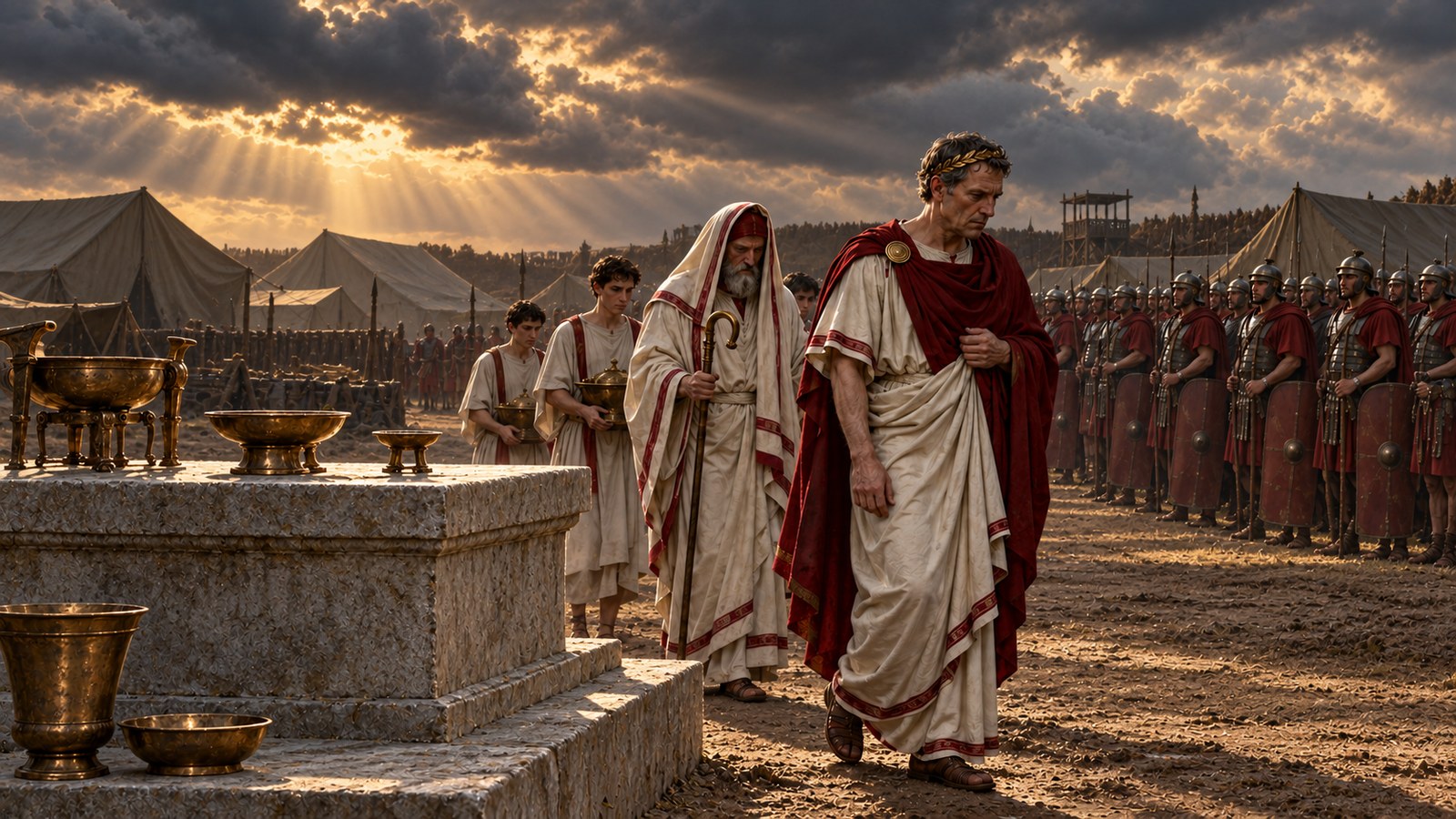
The most striking feature of the passage is not superstition in the abstract. It is the conversion of remembered sequence into recurring procedure. Sulpicius offered sacrifice after the Ides; the army was destroyed at the Allia; Rome was taken three days later; senators recalled other failures; pontiffs ruled on future offerings. Each link gives the prohibition a place inside civic decision-making.
At the same time, Gellius refuses to make every taboo look equally documented. His discussion of the fourth day before the Kalends, Nones and Ides ends with uncertainty. Cannae offers a memorable association, not a complete explanation. That contrast prevents the calendar from becoming a flat list of forbidden dates. It shows one rule with an institutional history and another custom whose rationale was already difficult to recover.
Roman time in this passage was therefore layered. It measured the month, carried the memory of defeats and set boundaries around ritual preparation for war. Every return of the Kalends, Nones and Ides also brought the following day back. The calendar made the past recur—not by replaying the battle, but by repeating the restraint that Romans said the battle had taught them.
Sources
Aulus Gellius, Attic Nights, 5.17. Modern date note in the LacusCurtius edition.