
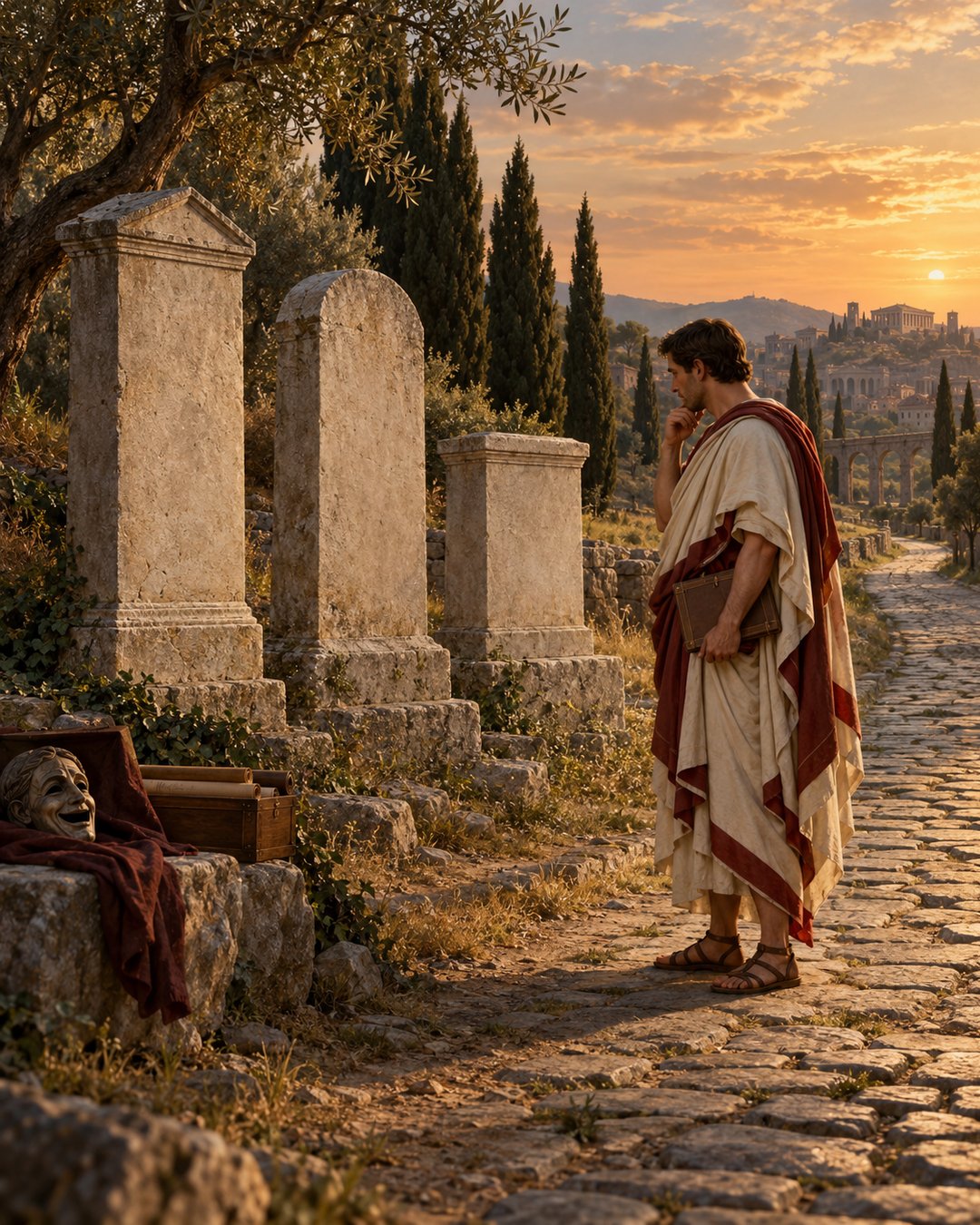
Naevius imagined that the gods themselves might weep because Rome, after his death, had forgotten how to speak Latin. Plautus made Comedy, the abandoned stage, Laughter, Play, Jest, and every rhythm mourn together. Pacuvius asked one hurried young man to stop, read a few words, learn whose bones lay under the stone, and go well.
Aulus Gellius copied these three epitaphs together. He says they were believed to have been composed by the poets for themselves, and he valued each as appropriate and graceful. Yet their grace does not sound alike. One poet leaves a crisis in the language. Another empties the theatre. The third borrows only a moment from a stranger.
The tiny poems therefore preserve more than names. Each turns the grave into one last literary genre and asks what kind of absence a writer can plausibly claim.
Naevius made one death a disaster for Latin
Gellius introduces Naevius with an edge. The epitaph, he says, is full of pride in a Campanian manner. That comment guides the reader before the poem begins: its scale is meant to feel audacious.
The opening raises the mourners above ordinary humanity. Immortals themselves could rightly lament a mortal. The paradox gives Naevius’s death cosmic attention, but the poem does not leave the justification vague. He has been handed over to Orcus, the realm of death, and something unique has gone with him.
The final claim is linguistic. After Naevius vanished, Romans forgot how to speak the Latin tongue. The line does not merely say that a good writer died. It makes his command of language so central that the community becomes verbally diminished without him.
As autobiography, the boast is compressed to an extreme. No offices, dates, family, patron, or list of plays appears. Naevius chooses the medium itself—Latin speech—as the measure of loss. Readers who understand the epitaph must use the language it says Rome has forgotten.
That contradiction keeps the boast alive rather than disproving it. Every later copy proves that Latin survived, yet it also gives Naevius another speaker. Gellius can tease the pride and still preserve the lines because their excess makes the voice memorable.
The effect differs from Gellius’s close comparison of Menander and Caecilius. There he tests literary quality by placing passages beside one another. Here, the dead poet supplies his own impossible review: without him, the language itself has failed.
Plautus emptied an entire theatre into mourning
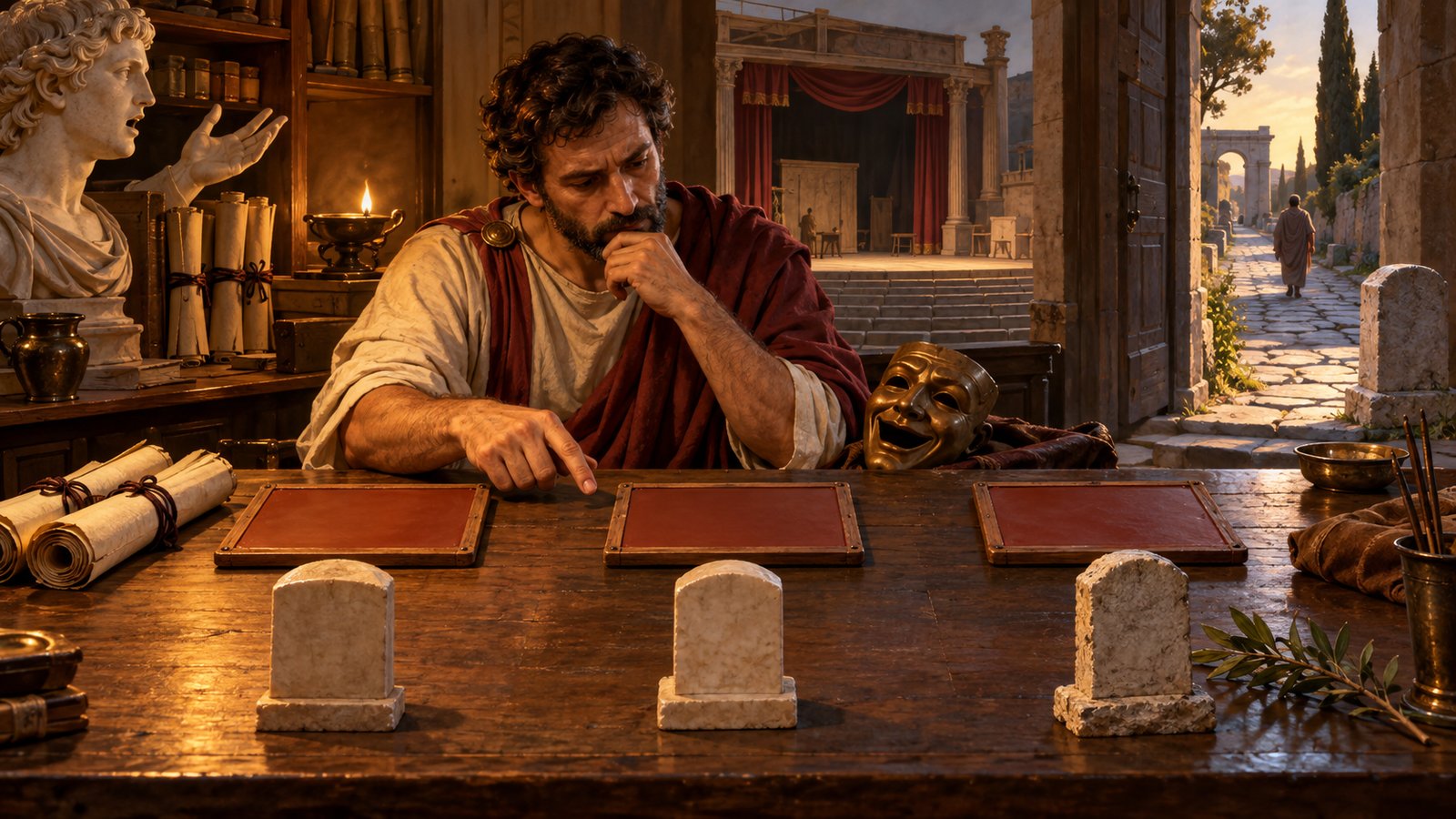
Plautus’s epitaph moves from language to performance. Comedy mourns after his death, and the stage stands deserted. The image treats theatrical life as if it had lost the person who animated it.
The poem then gathers a peculiar funeral company. Laughter, Play, and Jest weep together. Metres—identified as countless or innumerable in the translation—join them. Abstract qualities become actors in their own short scene.
This personification suits a comic dramatist because the mourners carry the tools and effects of comedy. Laughter is what an audience gives back. Play and jest describe modes of action. Metre supplies the patterned language through which actors move. Plautus does not need to name individual plays when the entire apparatus comes to his grave.
The deserted stage adds a physical absence. Naevius’s Romans lose fluency, but Plautus’s theatre loses occupancy. The poem lets the reader look at an empty performance space and then fills it with invisible mourners.
Its grief also contains a joke-like reversal. Laughter weeps. Comedy performs tragedy. The emotional contradiction allows the epitaph to honour a comic writer without abandoning comic ingenuity at the boundary of death.
Gellius preserves the poem in prose discussion, far from an actual performance. Even so, its little cast travels. A reader can supply Comedy, Stage, Laughter, Play, Jest, and Metre in sequence, making the epitaph a miniature roll call after the playwright can no longer summon actors.
Pacuvius asked haste for only a few words
Gellius marks a change before quoting Pacuvius. This epitaph, he says, shows modesty. Its first figure is not a god or a personified art but a young man passing by in a hurry.
The dead poet acknowledges the stranger’s momentum. Although you are in haste, the voice says, this little stone asks you to stop. The request is limited by its own awareness that attention costs time.
Pacuvius promises brevity. He asks the passer-by to read a very short message, then names himself and says that his bones are covered by the stone. The declaration gives the monument its minimum task: connect body, name, and place.
The ending releases the reader. Pacuvius wishes the young man well. He does not claim that poetry died, that theatre emptied, or that supernatural mourners arrived. The stranger can continue along the road after completing one small act of recognition.
Yet this modesty is also carefully literary. Direct address creates a scene with two roles: the dead speaker and the moving reader. Haste gives the scene tension; the promise of few words resolves it. The farewell closes the encounter with social courtesy.
Pacuvius appears elsewhere in the story of the older playwright hearing Accius read Atreus. That anecdote makes literary judgment a conversation between generations. The epitaph makes it a conversation between the buried poet and an unnamed younger traveler.
Gellius made contrast part of the memorial
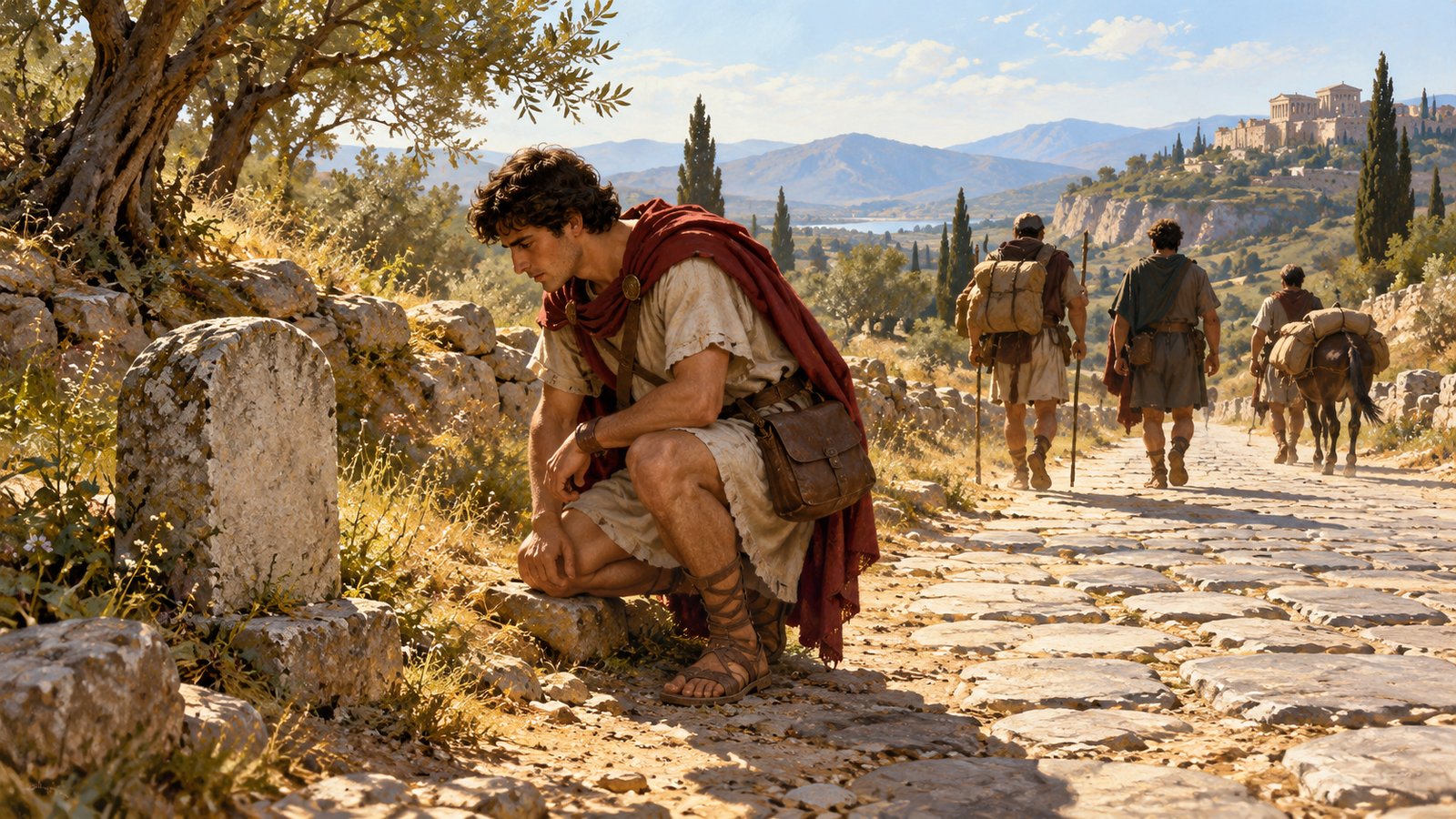
Any one epitaph could have survived as an isolated curiosity. Gellius instead arranges three. The grouping makes the reader hear differences in volume and posture.
Naevius speaks through the loss of Latin. Plautus stages collective mourning by comedy and its companions. Pacuvius points to a little stone and asks for a little time. All three claim remembrance, but each defines the proper scale differently.
Gellius’s own labels are part of that comparison. He calls the poems graceful and fitting, identifies pride in Naevius, and emphasizes modesty in Pacuvius. He does not flatten them into one model of a good epitaph.
The claim of self-composition should remain attached to his framing: these were epitaphs said to have been written by the poets themselves. The chapter records a tradition, not a signed drafting session at each man’s bedside. Its historical value lies partly in what later readers believed suited each author.
That belief can outlast questions of literal authorship. Naevius was remembered as someone who could boast on behalf of Latin; Plautus as the person whose death made comedy mourn; Pacuvius as a writer whose restraint fit a roadside exchange.
The grave compresses reputation because stone and passing attention are limited. Gellius expands it again by copying the words into a book. The hurried traveler no longer has to find one monument. Three dead voices now share the same page, still competing over how long a living reader should stop.
The sequence also changes the reader into the judge that no monument can appoint. Naevius asks whether artistic confidence may encompass a whole language. Plautus asks whether a genre can mourn its maker without ceasing to entertain. Pacuvius asks whether restraint can secure remembrance more effectively than grandeur. Gellius gives no final ranking. By preserving pride beside modesty, he allows style itself to become evidence about reputation: not a census of actual fame, but three sharply different answers to the same material limit of a name, a stone, and a departing audience.
Sources
Aulus Gellius, Attic Nights, 1.24.