
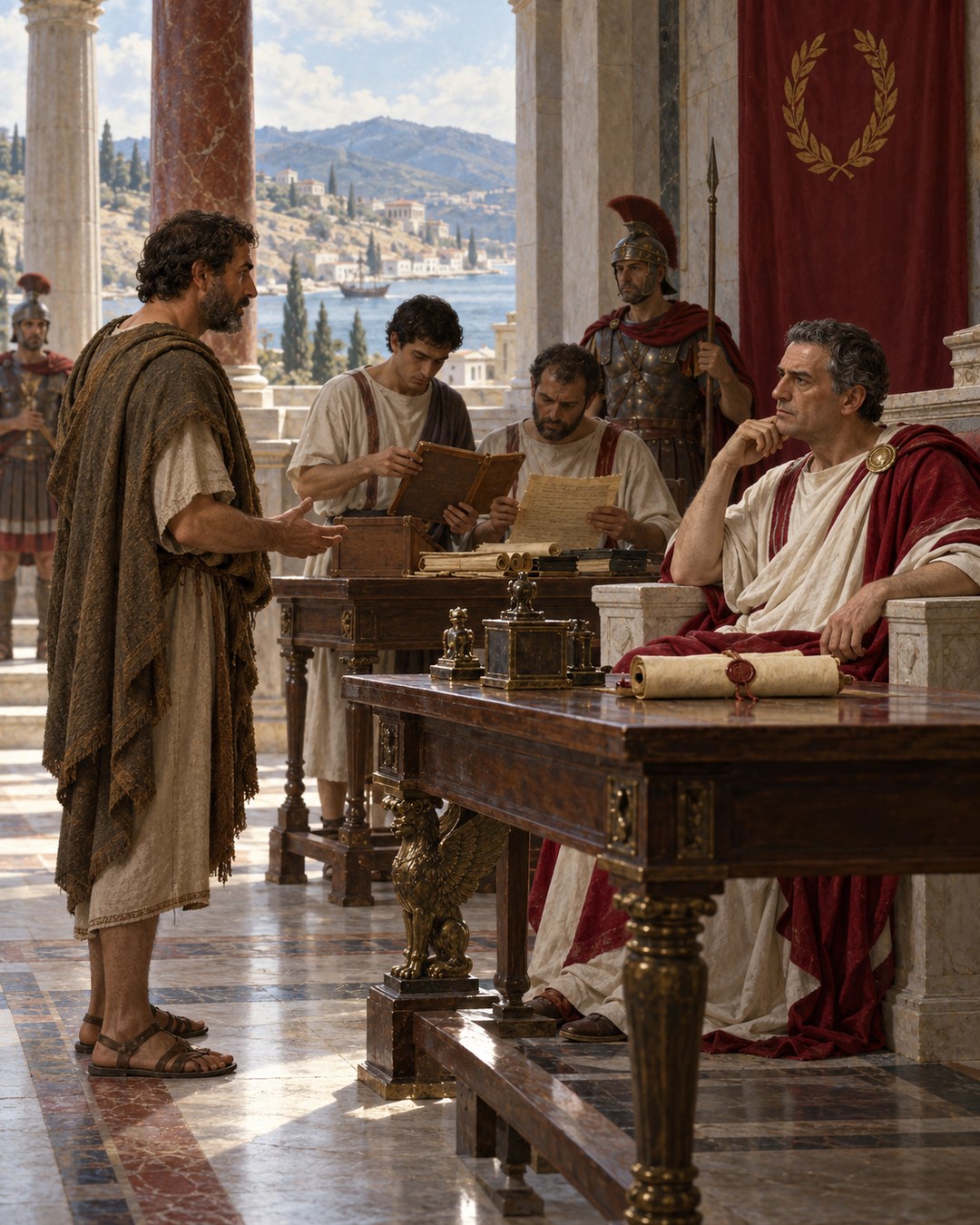
A household that raised an abandoned child could not send a bill when that child claimed freedom. Trajan’s answer to Pliny is direct: people exposed by their parents, preserved by others, and educated in servitude despite free birth were to have their freedom claims allowed. They did not have to repay the money spent maintaining them.
The ruling came after an unusually careful documentary problem. Pliny had been shown an alleged edict of Augustus and letters attributed to Vespasian, Titus, and Domitian. Some copies were corrupt; some were of doubtful authenticity; none gave him a rule he trusted for Bithynia.
The exchange reveals Roman administration at the point where private expenditure collided with legal status. Care had cost money, but Trajan refused to turn that cost into ownership or a ransom. Free birth was not cancelled by abandonment, years of servitude, or another household’s accounts.
A provincial case arrived without a trustworthy rule
Pliny describes the status and maintenance of deserted children as a considerable question involving the whole province. The phrase suggests more than one disputed household. Governors needed a principle that could decide repeated claims rather than a favour granted to a single petitioner.
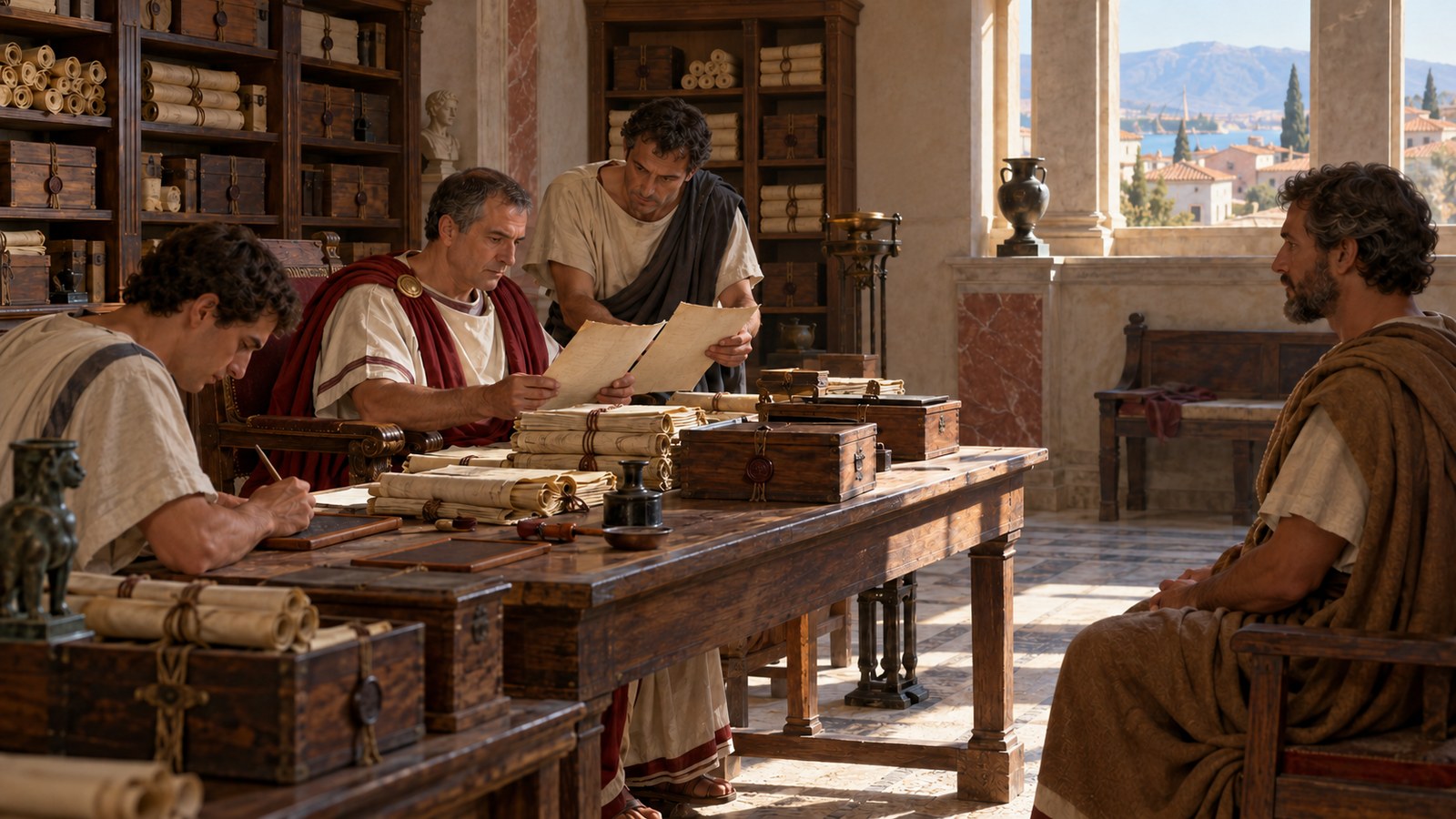
His difficulty was not the total absence of documents. It was an excess of documents that did not securely govern the case before him. An edict associated with Augustus concerned a woman named Annia. Letters of Vespasian and Titus addressed Sparta and Achaea. Domitianic letters named other officials and communities.
Geography and jurisdiction mattered. A decision sent to one province or city could not automatically be stretched across the empire. Pliny searched both general and particular constitutions but found nothing he believed applied to the Bithynians.
He also doubted the copies themselves. They were not correct, he wrote, and some were of questionable authenticity. Rather than reproduce uncertain texts for the emperor, he assumed true copies could be checked in the imperial archives.
That caution matters because Roman government often moved through written answers. A damaged or fabricated letter could acquire authority when copied into a new dispute. Pliny paused the chain instead of allowing a plausible-looking precedent to decide a person’s status.
The same governor could use documents to protect local arrangements, as in the treaty privilege Trajan recognized at Amisus. Here documentary uncertainty prevented that route. The archive could guide law only when the text and its scope were sound.
Rescue, upbringing, and servitude had become entangled
Trajan defines the affected people through three stages. Their parents had exposed them. Other people had preserved them. They were then educated in a state of servitude even though they had been born free.
Each stage carried a different moral and legal weight. Exposure placed an infant in mortal danger. Preservation saved a life. Upbringing required food, shelter, and labour from a household. Servitude, however, converted dependence into a claim over the person who had survived.
The emperor did not deny the cost of maintenance. His wording acknowledges money advanced over years. The issue was whether those expenses created a debt strong enough to block freedom. If repayment were required before release, a claimant without property could remain enslaved indefinitely despite a recognized free birth.
That mechanism would turn rescue into purchase after the fact. The household could name the price of upbringing, while the person whose labour had already benefited that household might have no independent funds with which to pay it. A formal right would exist but remain unusable.
Trajan broke that mechanism by separating status from reimbursement. The people had been preserved by others, but they had not thereby become legitimate property. Maintenance explained the household’s grievance; it did not decide the freedom claim.
Bithynia could not borrow every imperial answer
Trajan agreed that no universal regulation from his predecessors covered all provinces. He knew of Domitianic rescripts that ought to be observed where they applied, but Bithynia was not among the provinces named in them.
This is a small but important limit on imperial precedent. A ruler’s earlier reply might be genuine and still fail as authority in a different territory. The question was not merely whether Domitian had addressed exposed children, but whom his answer had legally reached.
Pliny’s request therefore travelled upward because provincial government had reached the edge of its inherited instructions. He did not announce a new general law. Trajan, in turn, gave a solution for the cases before his governor while admitting the fragmented state of earlier regulation.
The exchange shows why imperial administration could be both centralized and uneven. A governor depended on Rome for a decisive answer, yet the trigger was a gap created by province-specific documents. Similar facts could encounter different written histories depending on where a claim was filed.
Records still mattered after the answer. A claimant had to assert free birth; officials had to distinguish exposure from lawful enslavement; and households could contest the facts. Pliny’s concern with authentic copies suggests that proof, not sympathy alone, structured the hearing.
His wider correspondence repeatedly shows money and status entering the same file. In Pliny’s treatment of wills made by enslaved people, household custom gave documentary space to wishes the civil law did not recognize in the same way. The foundling ruling moved farther: it rejected the servile status itself when free birth was established.
The two letters also divide administrative labour. Pliny collected the disputed material, identified its defects, and framed the provincial question. Trajan checked the reach of earlier rescripts and supplied the controlling answer. Neither document alone shows the whole process. The governor’s uncertainty was not failure; accurately locating the uncertainty was what made a defensible imperial ruling possible.
Freedom was not a balance left unpaid
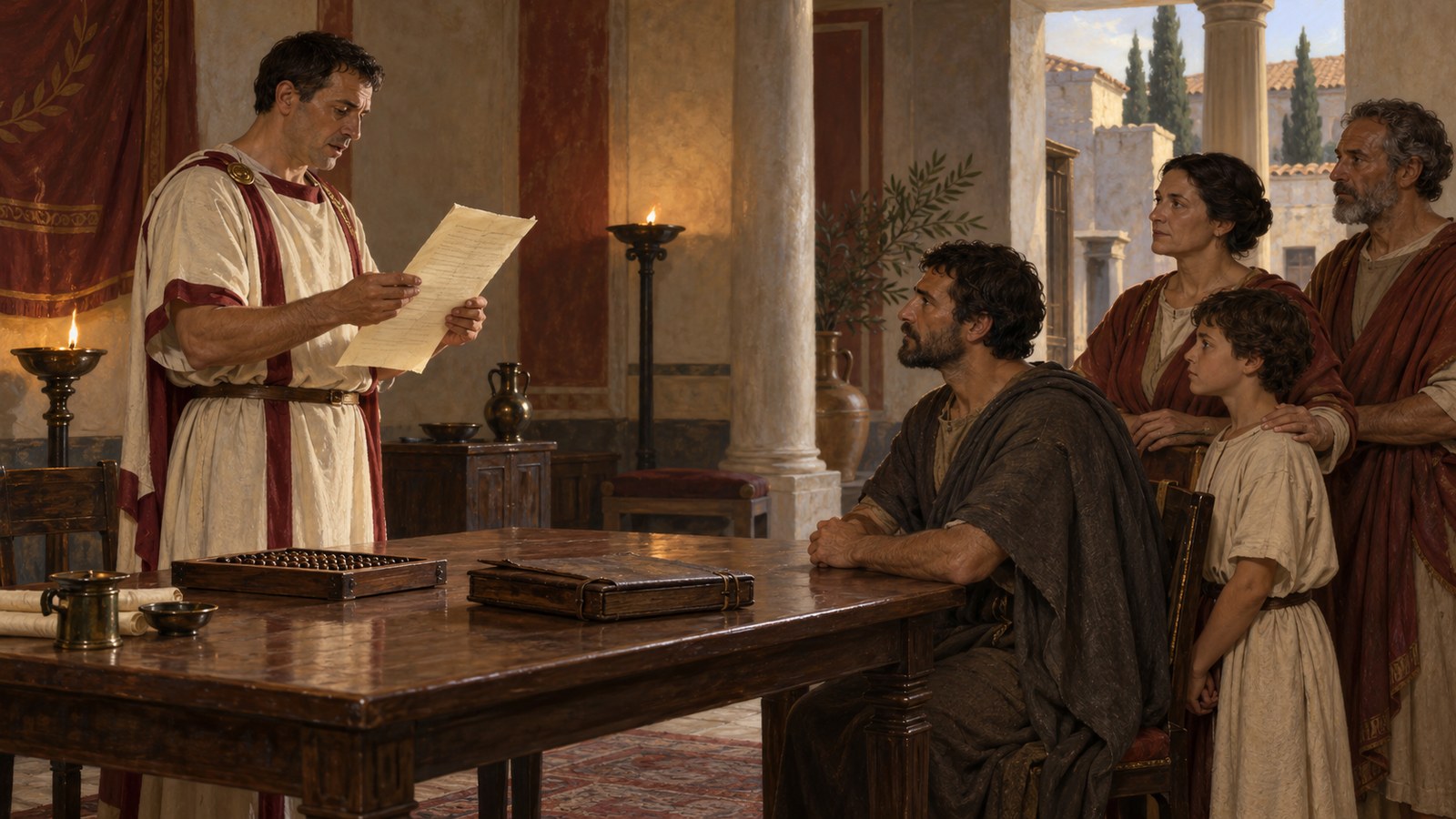
Trajan’s remedy contains two linked commands. Claims to freedom on this footing should be allowed, and claimants should not be obliged to purchase liberty by repaying maintenance. Removing only one obstacle would have left the other intact.
If freedom were acknowledged but conditioned on reimbursement, the household retained leverage. It could delay release while calculating food, clothing, and shelter across childhood. The longer the servitude had lasted, the larger the claimed account could become.
By refusing repayment, Trajan prevented time itself from strengthening the captor’s position. Years of upbringing did not gradually convert free birth into enslavement. Nor did years of expenditure become a lien on the claimant’s body.
The decision should not be romanticized as a broad Roman programme against child exposure or slavery. The letter does not create public support for abandoned children, punish parents, or dismantle the market in enslaved people. It addresses one legal path by which a freeborn person had been kept in servitude.
Its protection also depended on access to a claim. Someone had to know or allege the circumstances of birth, reach an official, and survive whatever proof the proceeding demanded. People without witnesses or records could remain invisible to the principle.
Even within those limits, the rule is sharp. Money spent on a vulnerable child could not be retroactively treated as the price of that child. The household’s account stopped where the claimant’s free status began.
The exchange survives because Pliny asked what his doubtful precedents could not settle and Trajan answered in operational terms. No grand slogan was required. Allow the freedom claim. Do not charge for it. A life maintained in servitude was not an investment to be redeemed by the person who had endured it.
Sources
Pliny the Younger, Letters, 10.71–72.