
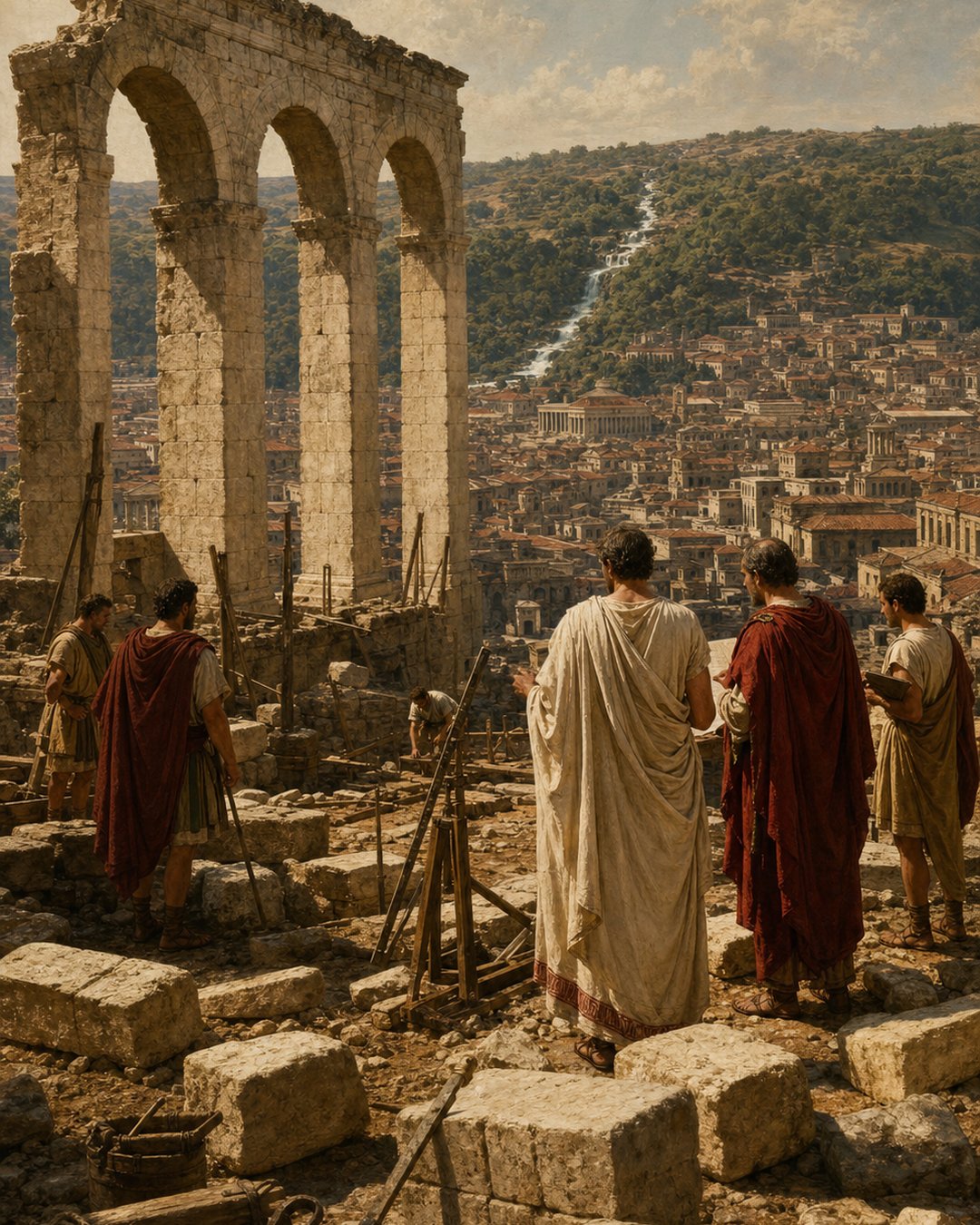
By the time Pliny inspected Nicomedia’s water problem, the city had already paid for failure twice. One aqueduct had consumed 3,329,000 sesterces and stood unfinished, effectively a ruin. A second scheme had raised another two million and had also been abandoned. The combined expenditure did not leave the city with reliable water. It left another bill.
Pliny’s exchange with Trajan is compact, but it exposes several layers of Roman public building at once. A governor had to identify a source, read the topography, judge reusable material, choose cheaper construction where possible and request expertise. The emperor agreed that the water supply must be built. He also insisted that a useful new project could not wash away questions about the old ones.
Two budgets produced no working channel
Pliny opens with figures because the ruins alone cannot show the scale of the loss. Nicomedia had spent 3,329,000 sesterces on the first aqueduct. It was not merely incomplete; Pliny described it as nearly ruinous. The city then levied two million for a second aqueduct and abandoned that undertaking as well.
The letters do not provide a surviving account book, contractor list or annual sequence for either scheme. They do establish a brutal balance: more than five million sesterces had been committed across two attempts, while the need that justified them remained. Nicomedia would have to spend again to obtain water.
This is not the same failure as a channel that functioned badly after completion. Pliny confronted projects that stopped before delivering their public purpose. Each beginning converted money into partial work. Each abandonment made the next proposal harder, because new expense arrived carrying the memory of the previous one.
The problem belongs beside Rome’s wider concern with aqueduct inspection and trustworthy supply, but Nicomedia catches an earlier point in the chain. Before an inspector could police leakage or unauthorized use, the city needed a route that reached its destination at all.
A clear spring changed the proposal
Pliny did not send Trajan only a complaint. He personally visited a spring that he called splendidly clear. From that source, he believed water could be carried into the city along arches, following the intention of the first scheme.
The arcade answered topography as well as appearance. Pliny wanted the supply to reach more than Nicomedia’s low and level districts. A water route held high across uneven ground could serve parts of the city that a line constrained by the easiest terrain would miss.
His letter does not record a measured flow rate, a finished gradient or the spring’s seasonal behaviour. Those unknowns explain why a polished reconstruction would be misleading. What Pliny securely contributes is a governor’s site judgment: the source looked suitable, elevation mattered, and the first scheme’s basic idea of an arched approach remained attractive.
That combination separates planning from wishful repetition. Pliny was not simply asking to restart the last design. He identified what the abandoned work had been trying to solve and then listed the physical evidence that might support a revised attempt.
The ruin became a store of decisions
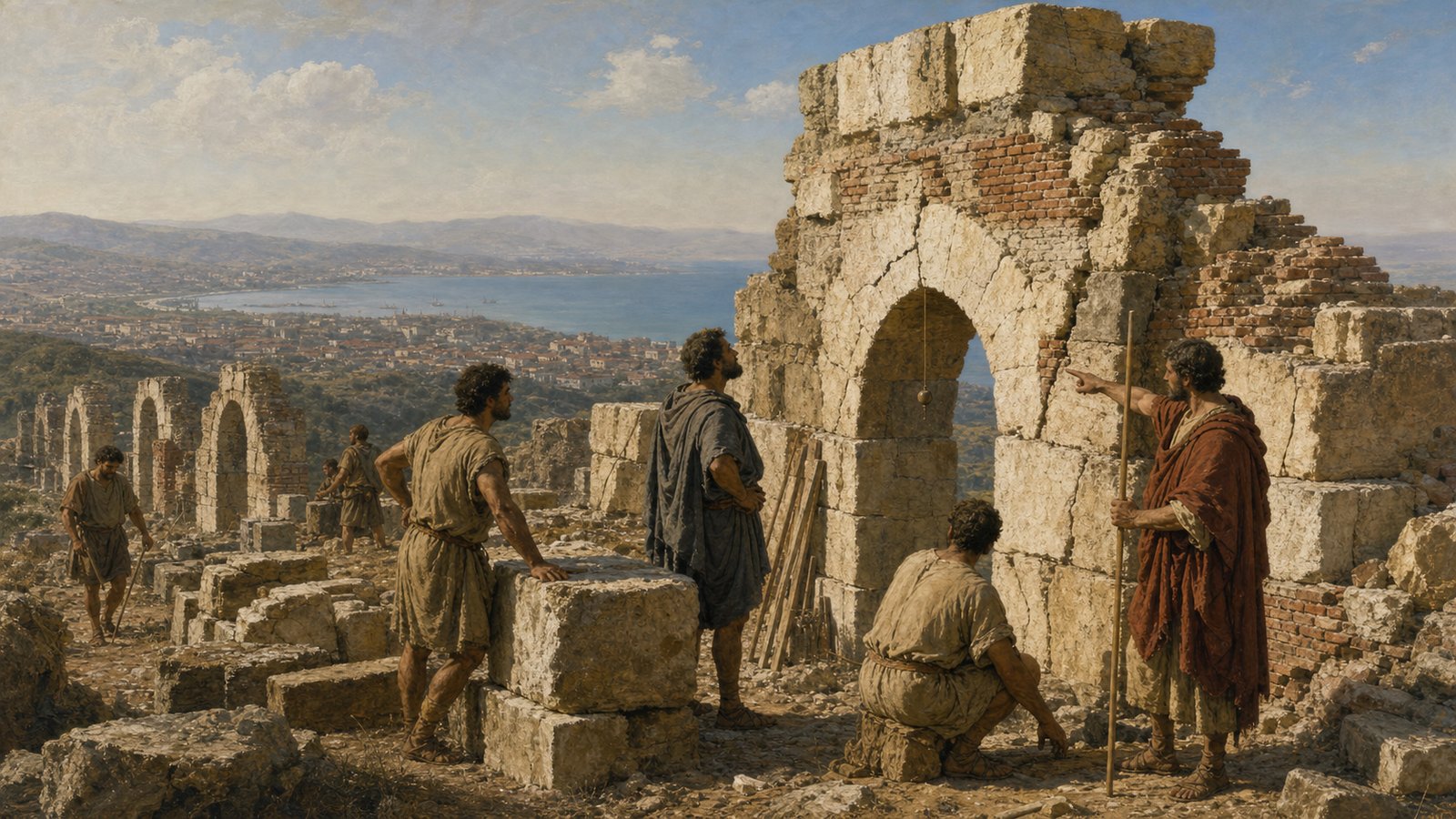
Very few arches were still standing. Yet the first aqueduct had not vanished without remainder. Shaped stone blocks from the earlier construction could, in Pliny’s opinion, be used again. Another portion should be built in brick-faced work, which he considered cheaper and easier to handle.
The distinction shows the ruin being read as inventory. Standing arches might preserve alignment or support. Cut blocks held labour already paid for and could migrate into new masonry. Brick offered a different balance of cost and handling for the work that still had to be created.
Pliny does not tell us exactly where stone should end and brick begin. He makes no claim that every salvaged block was sound. His point is administrative before it is architectural: a third expense should not ignore material sitting on the failed site, and a single prestigious material should not be imposed where a more manageable one could do the job.
The surviving fragments therefore carried two opposite meanings. They were evidence of waste, but they were also assets. Reuse could reduce the new burden without pretending that the earlier management had been acceptable.
Expertise had to arrive before another beginning
Pliny’s first requested action was not a shipment of blocks or an order to hire more labourers. He asked Trajan to send an engineer skilled in this kind of work, or an architect. The purpose was explicit: prevent a repetition of the former failures.
That request marks the limit of the governor’s confidence. Pliny could visit the spring, see the surviving arches, compare stone and brick, and argue for the project’s public value. He did not present himself as the person who should calculate and supervise every technical detail.
The proposed building also had a political face. Pliny called it worthy of Trajan’s reign because it combined public utility with imposing design. Water would serve the population, while an arcade crossing the terrain would make imperial care visible. Usefulness and monumentality were not alternatives in his appeal.
His earlier exchange with Trajan over Nicomedia’s proposed 150-person fire brigade ended with the emperor rejecting a permanent association and preferring equipment plus compulsory help from bystanders. The aqueduct produced a different answer. Trajan accepted the public need, but once again forced Pliny to confront the institutional risks around the solution.
Trajan approved water and ordered an audit
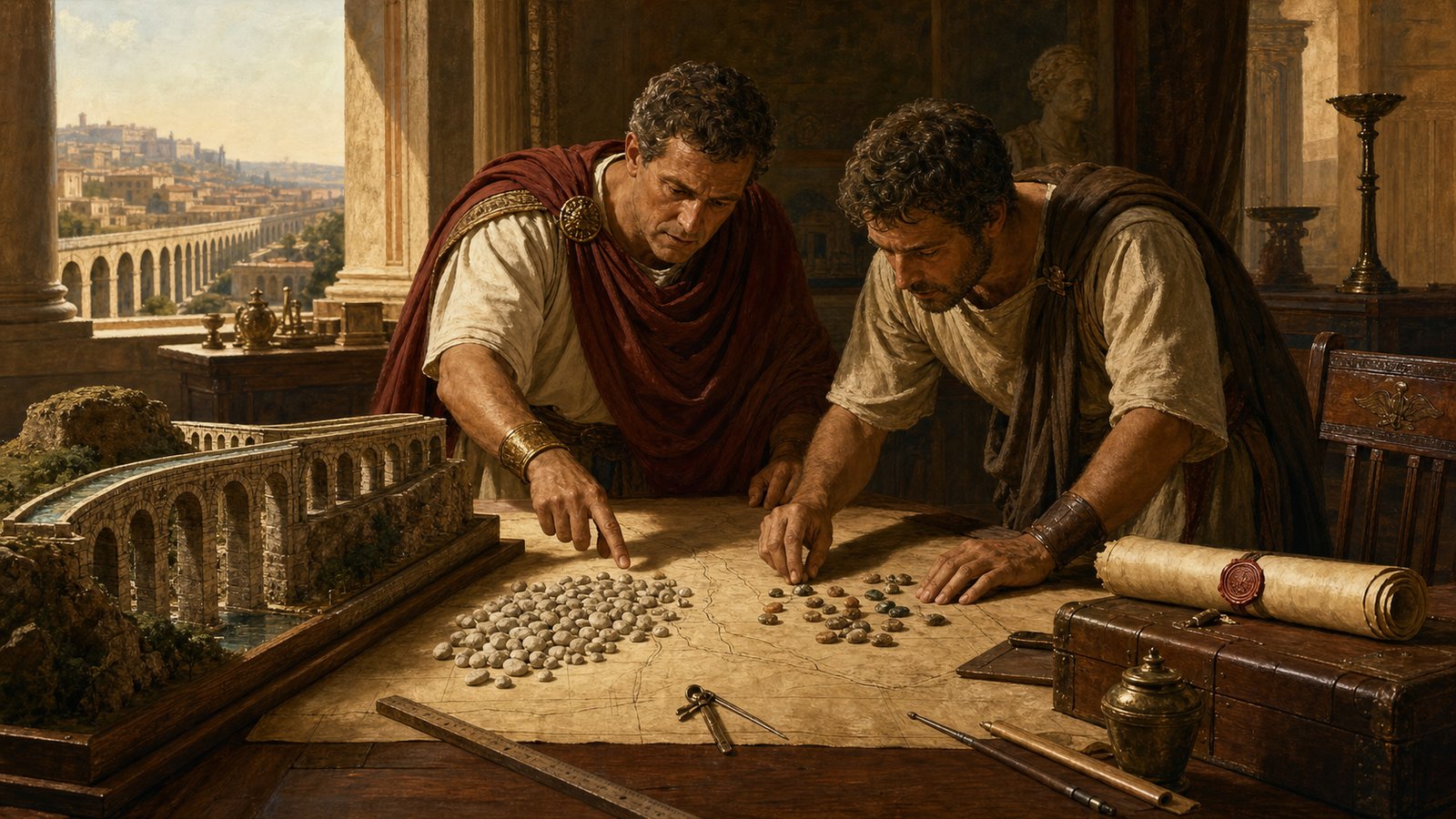
Trajan’s reply begins decisively: Nicomedia must be provided with water. He expressed confidence that Pliny would undertake the work diligently. Approval, however, did not close the file on more than five million sesterces already spent.
The emperor turned diligence backward as well as forward. Pliny had to discover who was responsible for the waste. He also had to ask whether private interests had been served by beginning and then abandoning the projects. The wording makes the sequence itself suspicious. A public building can enrich or favour private people even when it never becomes useful to the public.
Trajan did not announce the culprit in advance, and the surviving exchange here does not provide Pliny’s final findings. It would be wrong to convert the emperor’s question into proof of corruption. The letter establishes an inquiry into responsibility and possible private benefit, not its outcome.
That restraint sharpens the administrative lesson. A failed structure is not self-explanatory. Technical incompetence, poor oversight, competing interests and other causes may leave similar ruins. Trajan required investigation before those possibilities hardened into a convenient story.
Nicomedia’s third attempt carried the weight of the first two. The next aqueduct was asked to do more than carry water. It had to justify another expenditure, salvage usable blocks, choose economical construction, reach districts above the lowest ground and proceed under expertise that the previous schemes had evidently lacked.
At the same time, Pliny had to separate a new public necessity from the desire to move past embarrassment. The city still needed water; that fact did not forgive the waste. The emperor’s answer held both propositions together. Build, and investigate.
The exchange reveals why Roman infrastructure cannot be reduced to arches on a skyline. The visible channel depended on correspondence, accounting, material judgment, professional competence and political suspicion. Even an impressive arcade could begin as columns of figures beside a governor’s description of ruined work.
Pliny found clarity in the spring, not in the project’s history. The water source appeared promising. The human chain that had twice failed to connect it to the city did not. Before Nicomedia could receive a working supply, its governor had to make old stone useful and old decisions answerable.
Sources
Pliny the Younger, Letters, 10.37–38