
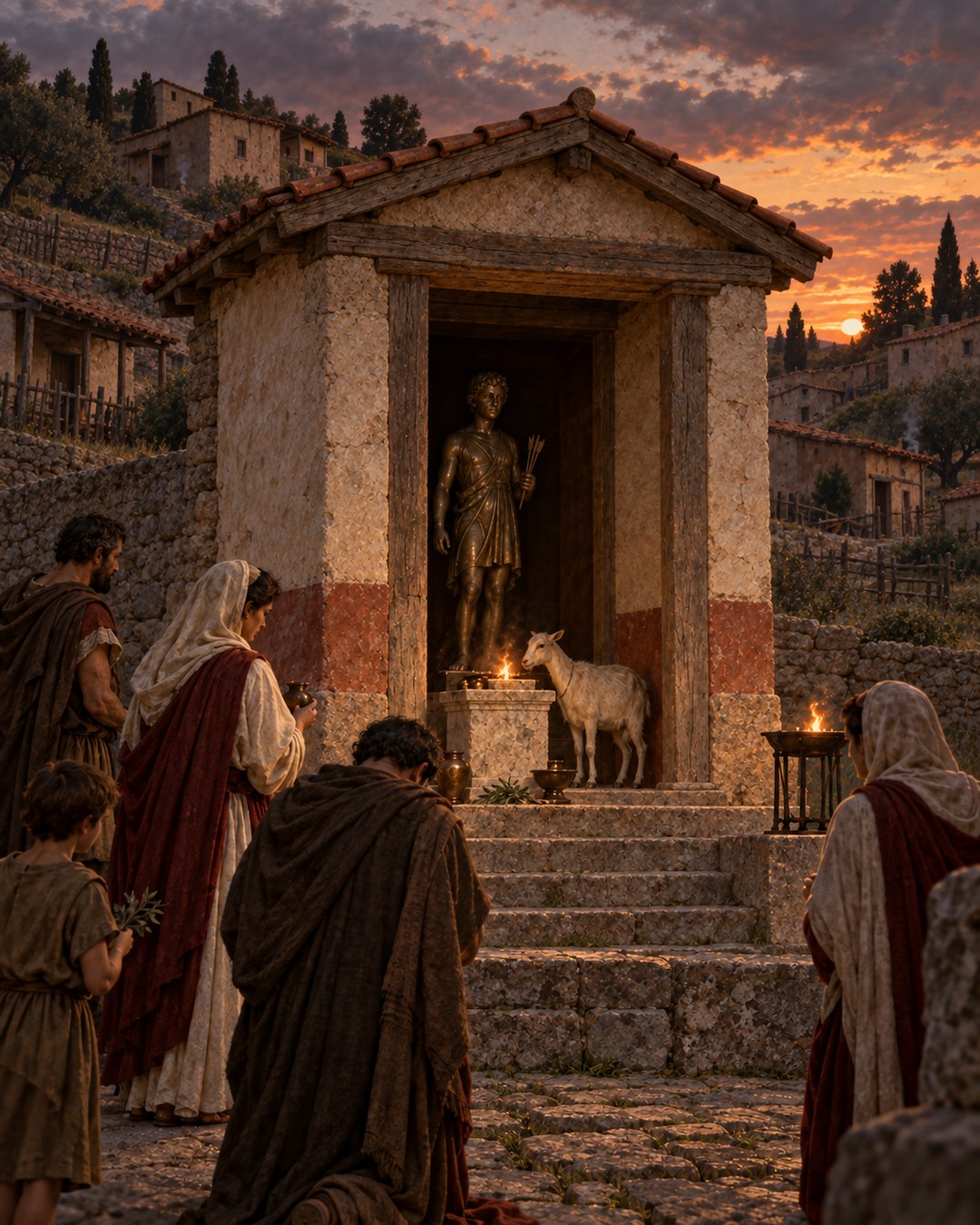
Between Rome’s Citadel and Capitol stood a temple whose god carried arrows. A she-goat belonged to his customary sacrifice. His name was Vediovis, and Aulus Gellius did not introduce him as a source of victory, harvest or healing.
He introduced him through a distinction in religious attention. Some gods were worshipped to gain favor. Others were propitiated so their hostility would not fall on the worshipper.
The temple made danger part of the civic map.
A Divine Name Began with the Power to Help
Gellius starts with words found in ancient prayers: Diovis and Vediovis. To explain the second, he first reconstructs the more familiar language of Jupiter.
He says the ancient Latins derived Iovis from iuvare, to help. The full compound Iovispater, father Jove, was shortened or altered into Iupiter. The linguistic history offered him a model in which a divine title preserved a function.
Other paternal compounds supported the pattern. Gellius lists Neptune-father, Saturn-father, Janus-father and Mars-father. The list matters less as a complete theology than as evidence that Roman speech could bind a god’s name to a relationship of authority and care.
Jove could also be Diespiter, which Gellius understood as father of day and light. Diovis and Lucetius belonged to the same cluster because daylight helped human life. Light was not only a poetic ornament. It made work, movement and safety possible.
Gnaeus Naevius had used Lucetius for Jove in his poem on the Punic War. Gellius therefore joined prayer, archaic poetry and etymology. Each fragment allowed him to hear assistance inside a name whose ordinary force later readers might miss.
The recent account of Nerio becoming both the strength and wife of Mars follows another antiquarian attempt to recover divine function from old language. Vediovis pushed that method toward a less reassuring result.
Vediovis Reversed the Comfort of Daylight
Once help had been placed inside Diovis, Gellius read Vediovis as its contrary. The prefix ve- could deny or diminish. Applied here, it removed the power to help and left a capacity to injure.
Gellius knew the prefix was not mechanically simple. He notes that it could weaken or strengthen a word, making some formations ambiguous. His explanation is an antiquarian argument, not a transparent dictionary rule that every Roman speaker consciously applied.
Yet the uncertainty strengthens the point of his chapter. A divine name had become obscure enough to require comparison with old prayers, unusual words and surviving cult objects. Religion preserved forms after their explanation had become debatable.
Vediovis was therefore not presented as Jupiter with a different festival costume. He occupied the negative side of a conceptual contrast. If one power helped through light, another represented the force from which help was withheld.
That did not make Vediovis unreal or unworthy of ritual. It made careful ritual more urgent. A power able to harm could not be ignored merely because worshippers preferred benevolent gods.
The logic resembles a guarded relationship rather than celebration. Attention recognized danger, established terms and tried to prevent the worst outcome. Propitiation acknowledged that divine agency could be approached even when its expected action was something to stop.
Arrows Gave the Antiquarian Argument a Body
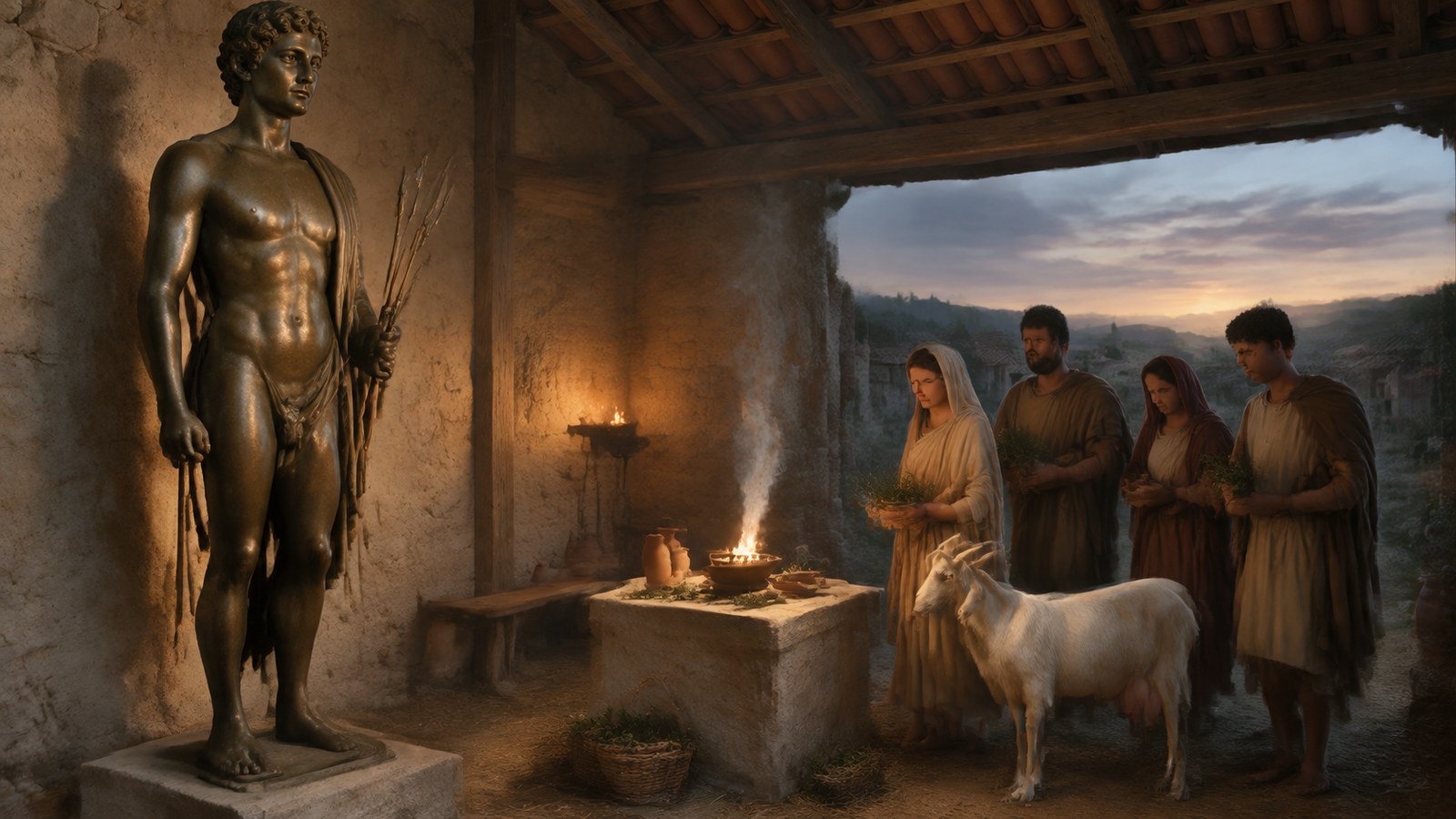
The statue in the temple held arrows. Gellius points to their obvious purpose: they were made to wound. Material form therefore supported the verbal explanation.
An arrow-bearing youthful figure could also look like Apollo, and Gellius says the identification was often made. He does not erase the resemblance. Instead, he uses it to show why cult identity could become uncertain when a statue’s attributes circulated across divine types.
The setting kept Vediovis local. His temple lay between the Citadel and Capitol, in the saddle of the Capitoline complex. A worshipper did not encounter this dangerous capacity at a remote boundary. It stood amid Rome’s political and sacred heights.
That location complicates any easy division between protective center and threatening outside. The power that might injure was housed within the city’s monumental core. Architecture did not neutralize him; it gave Romans a durable place to approach him.
Arrows also made invisible risk legible. Ill will cannot be carved directly, but a weapon held at rest gives it shape. The statue could display capacity without depicting an attack. Worship happened before the arrows flew.
The story of two neighbors crowning the same boundary stone shows ritual stabilizing a line that could otherwise produce conflict. Vediovis’s arrows marked a different threshold: the point before dangerous force became injury.
A She-Goat Turned Fear into a Repeatable Rite
A she-goat was customarily sacrificed to Vediovis, and an image of the animal stood near the god’s statue. The animal connected explanation to repeated practice.
Gellius gives no complete sacrificial script. He does not tell us the precise prayers, participants or calendar sequence in this chapter. Those absences should not be filled with a generic reconstruction of Roman ritual.
The animal image beside the statue also kept the offering visible between ceremonies. A sacrifice vanished into a single occasion; the represented she-goat made the cult’s characteristic exchange part of the sanctuary’s lasting arrangement. Visitor, priest and antiquarian could read statue, weapon and animal together even when no rite was under way.
That visual pairing did not explain itself with certainty. Gellius supplied the interpretation by joining what he saw to old vocabulary. His chapter demonstrates how material religion and learned reading depended on one another: the object preserved a puzzle, while the antiquarian story made its pieces cohere.
What he does preserve is enough to identify a relationship. The sacrifice was customary, the animal specific and the threatening attribute visible. Fear did not remain a private feeling; it was organized through a recognized offering at a fixed sanctuary.
The rite also avoided the impossible demand that worshippers love every divine capacity. Roman religious action could address a power because it was dangerous. Respect did not require pretending the danger was benevolence.
Gellius connects that principle to Virgil’s prayer that unpropitious powers should not obstruct his work. He then names Auruncus and Robigus among beings placated so evil would be turned away from people or crops.
Robigus made the agricultural stakes particularly clear. A community did not need to celebrate crop disease to take ritual precautions against it. The hostile possibility itself justified observance.
Rome Gave Harm a Place before Asking It to Pass By
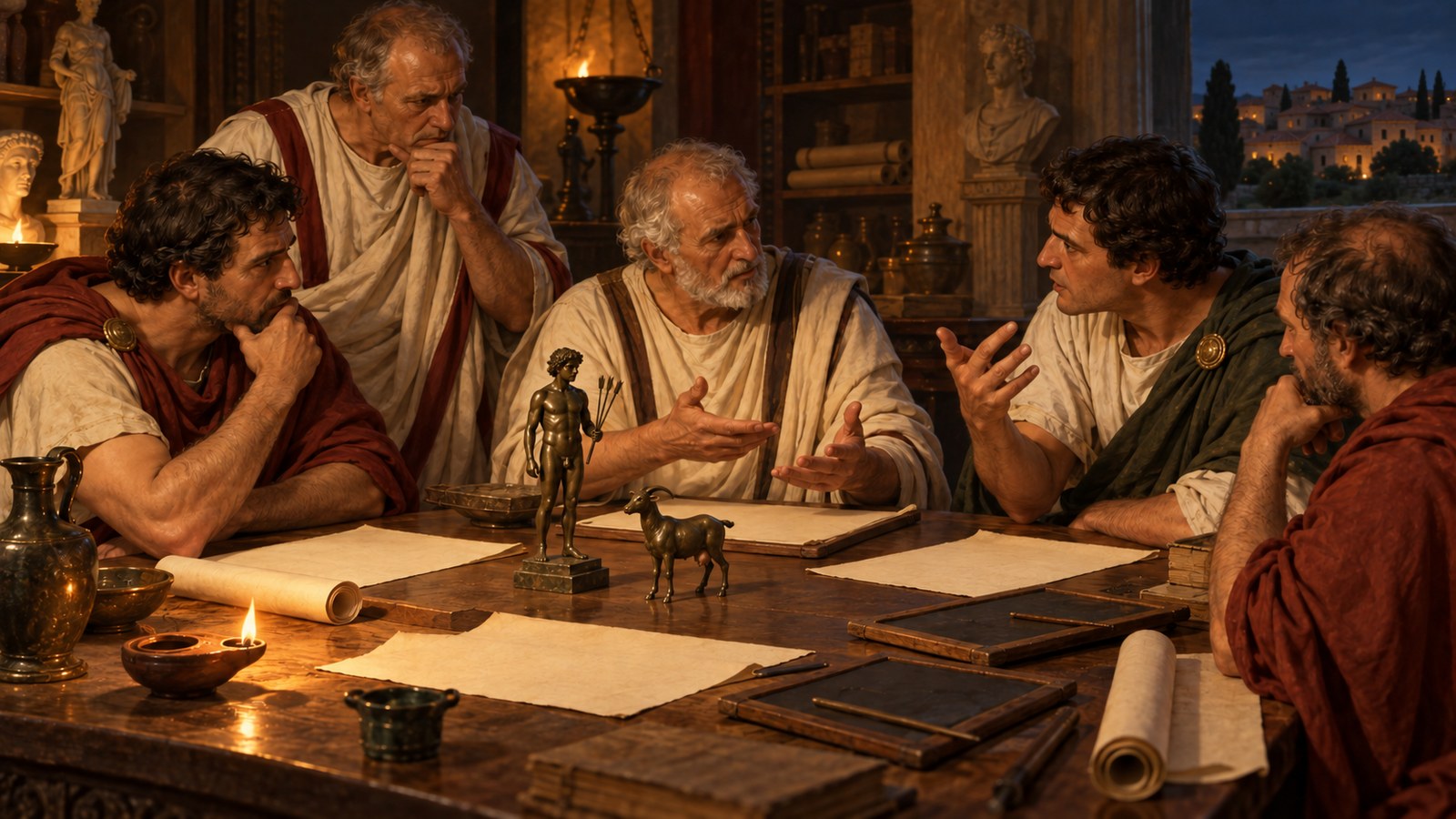
The Vediovis chapter is short, but its method is dense. A name points to help withdrawn. A statue carries arrows. A she-goat stands beside it. A temple fixes the encounter within Rome.
None of those pieces alone proves a complete doctrine. Gellius assembled them as an antiquarian explanation, and modern readers should preserve the difference between his interpretation and a timeless statement of what every Roman believed.
Still, the chapter reveals a practical grammar of worship. Religion was not limited to gratitude for benefits already received. It included managing exposures that no household or city could fully control.
That grammar helps explain why a harmful capacity could be honored without contradiction. Refusing attention would not make the arrows disappear. Ritual created an avenue for acknowledgment, negotiation and hoped-for restraint.
The city’s sacred landscape therefore contained more than reassuring patrons. It housed powers approached with caution, old words whose meanings had blurred, and rites maintained because uncertainty itself could be dangerous.
Vediovis held his arrows in the center of Rome. The worshipper’s request was not that he reveal a hidden kindness. It was that the arrows remain where they were.
Sources
Aulus Gellius, Attic Nights, book 5, chapter 12.