
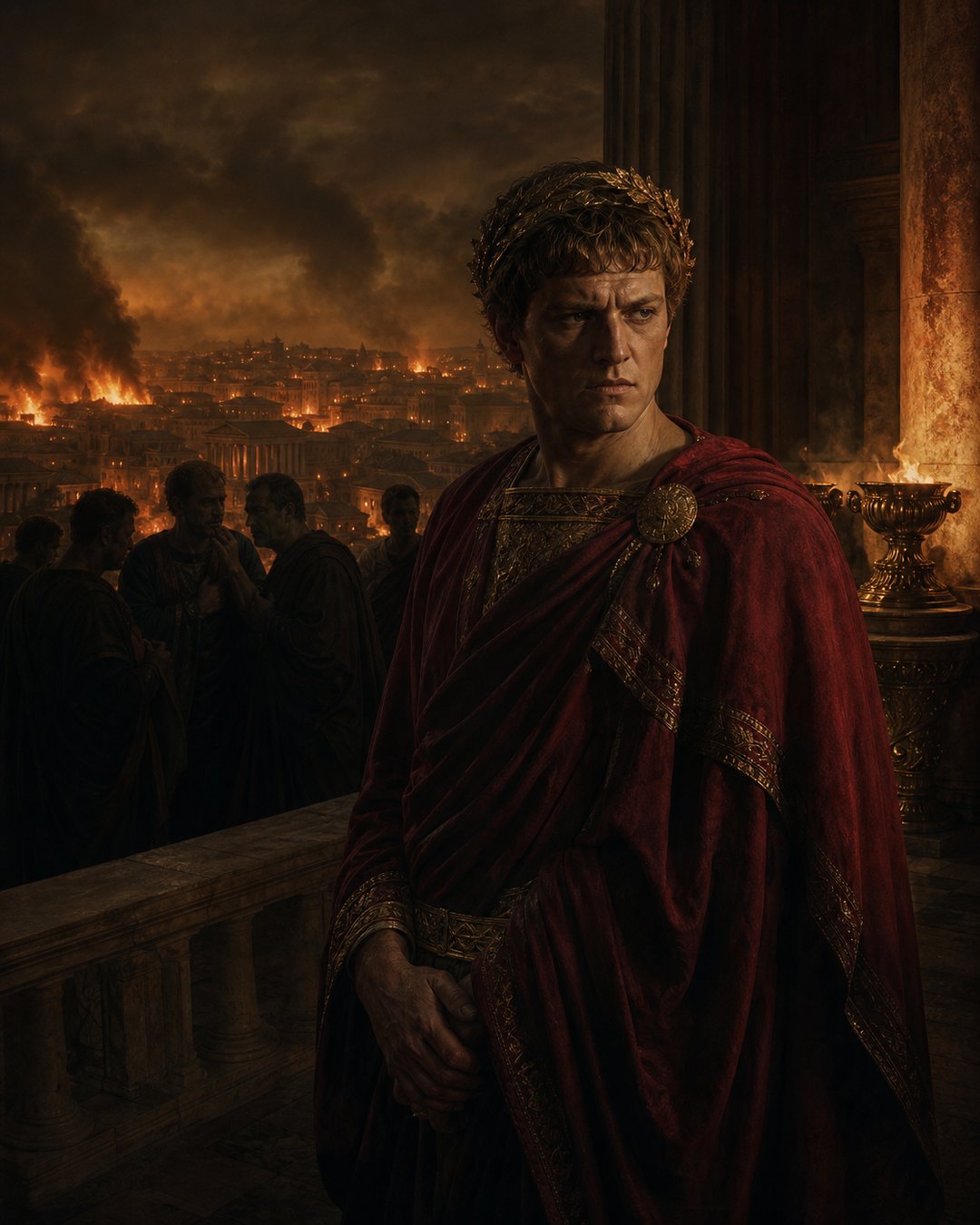
The easiest version of the Great Fire gives Rome a villain before it gives Rome a city. Nero plays his lyre, flames climb the hills, and the emperor becomes a monster in one perfect scene. The problem is that the ancient evidence is messier — and the mess is exactly why the story stuck.
Tacitus, writing with no love for Nero, says the cause of the fire was uncertain. He also says Nero was at Antium when it began, returned to Rome, opened spaces for refugees, lowered the price of grain, and still could not silence the rumor that he had ordered the city burned. That is the part worth sitting with: practical relief did not defeat political suspicion.
A fire needs fuel. So does a rumor.
Rome in 64 CE was built to burn. Dense housing, narrow streets, shops full of oil and timber, and crowded apartment blocks made catastrophe possible without an imperial conspiracy. But Romans did not experience disaster as a building-code problem. They experienced it as a public wound, and public wounds demanded a story.
Nero already looked like the wrong sort of emperor to many elite Romans. He performed, sang, raced, spent money on spectacle, and treated aristocratic dignity as something negotiable. When the city burned, those resentments became useful. A disliked ruler does not need to be proven guilty in order to be believable as guilty.
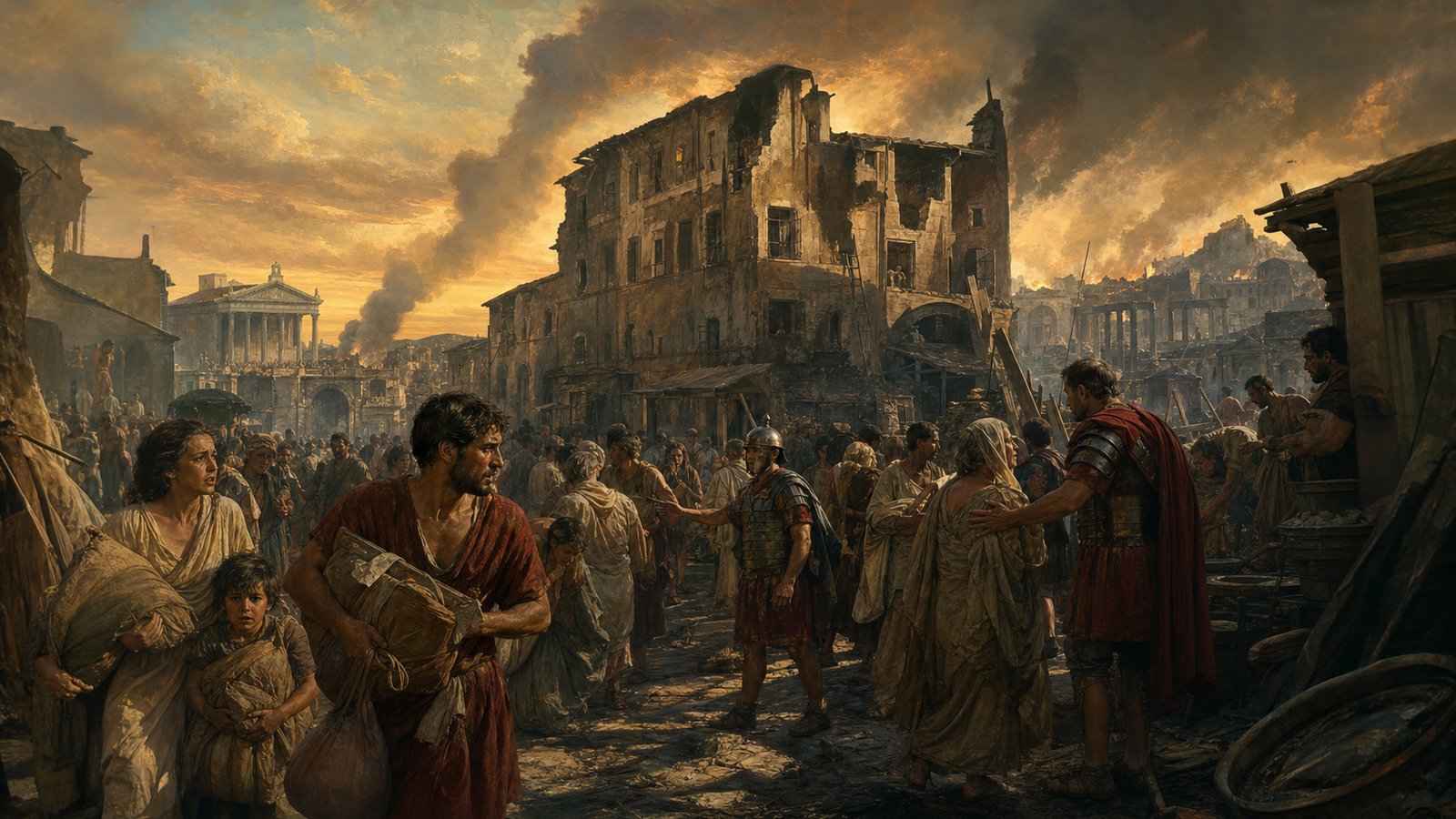
The new Rome made the old suspicion worse
After the fire, Nero’s rebuilding plans and the later construction of the Domus Aurea gave the rumor a second life. Even if the fire was accidental, the aftermath looked convenient to enemies: old neighborhoods gone, imperial space expanded, a city remade under one man’s imagination. In politics, sequence can be more damaging than evidence.
That does not mean Nero was innocent in every moral sense. It means the famous story is less a solved crime than a case study in imperial trust. When people already think a ruler loves his own image more than their lives, every decision becomes suspicious.
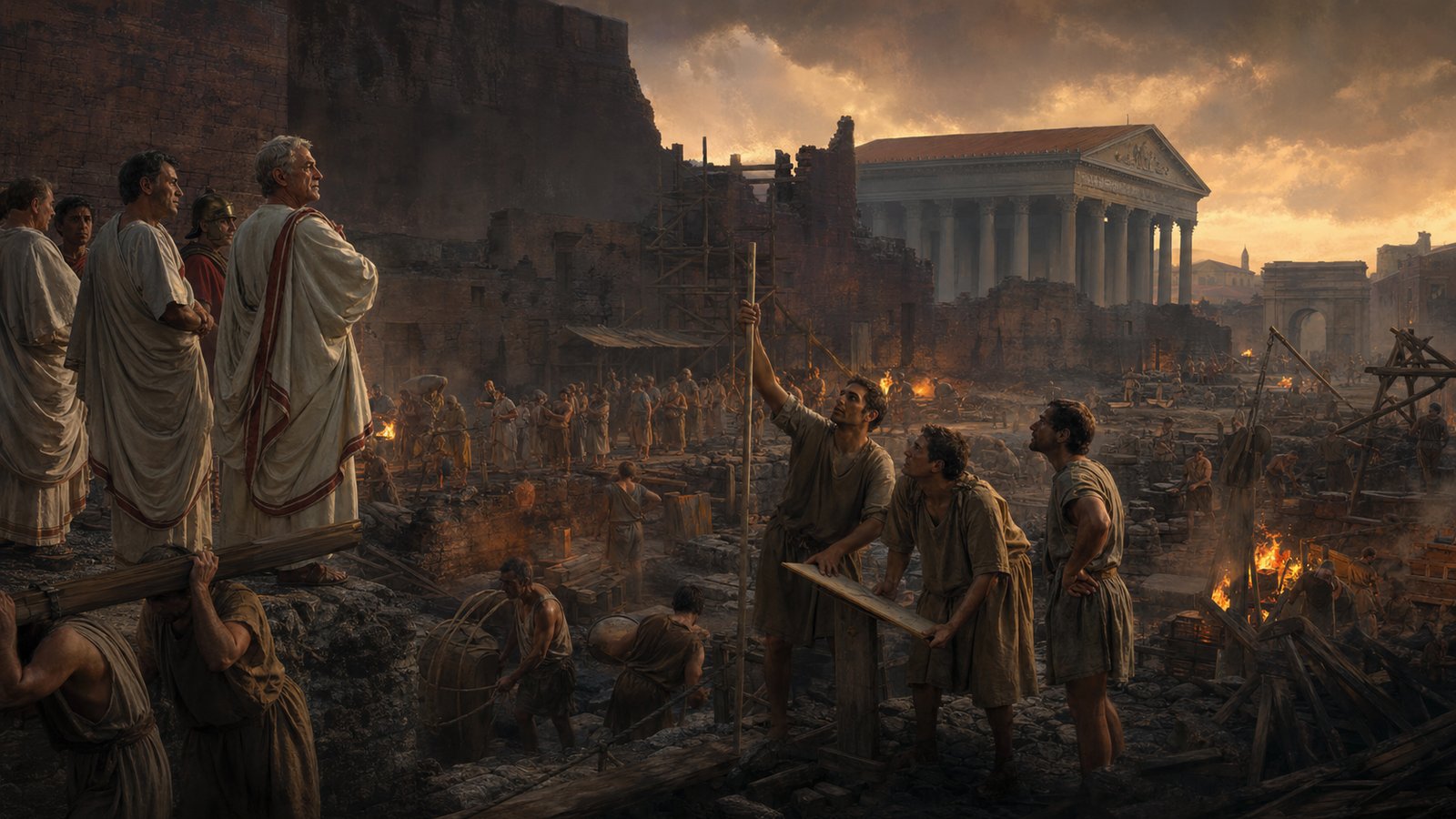
Why Christians entered the story
Tacitus says Nero shifted blame onto Christians, a small and despised group in Roman eyes. That detail matters because scapegoating is not just about escaping blame; it is about restoring order through a target the crowd can understand. The city had burned. Someone had to carry the pollution of the disaster.
For later Christian memory, the episode became one of persecution and witness. For Roman political memory, it became proof of Nero’s theatrical cruelty. The same fire served different moral needs, and that is why it never cooled.
The real lesson
The Great Fire did not make Nero hated from nowhere. It gave existing hatred a stage. The strongest historical question is not simply “Did Nero do it?” but “Why were so many people ready to believe he could?”
That question brings us closer to Rome than the lyre ever does. Empires are not held together only by armies and laws. They are held together by credibility. When credibility burns, even relief measures can look like part of the crime.
What the famous lyre story distracts from
The lyre story survives because it is visually perfect. It gives us one man, one instrument, and one burning city. But Roman politics rarely worked that neatly. A rumor could be false in detail and still true to public feeling: many Romans believed Nero was capable of caring more about performance, building, and personal grandeur than about the city that had to live beneath him.
That is why the Great Fire belongs with the larger problem of imperial image. Nero’s enemies did not need a courtroom case. They needed a story that matched the character they already thought they knew. Once disaster and reputation fused, later writers could repeat the scene as moral shorthand: this is what happens when power becomes theater without trust.
How to read Nero without rescuing him
None of this turns Nero into a misunderstood public servant. Ancient hostility toward him had reasons: elite executions, extravagance, performance politics, and a style of rule that made many Romans uneasy. The point is not to rescue Nero from every charge. It is to separate what the evidence can bear from what the legend wants.
That distinction matters because bad rulers often become containers for every fear around them. Nero’s reputation made him believable as the author of disaster, and later memory preferred the believable villain to the uncertain event. The result is history hardened into a scene: Rome burns, Nero performs, and doubt disappears.
Sources & Further Reading
- Tacitus, Annals 15.38–44
- Suetonius, Nero 16 and 38
- For the wider problem of imperial image and public suspicion, see our article on the Praetorian Guard and palace power.