
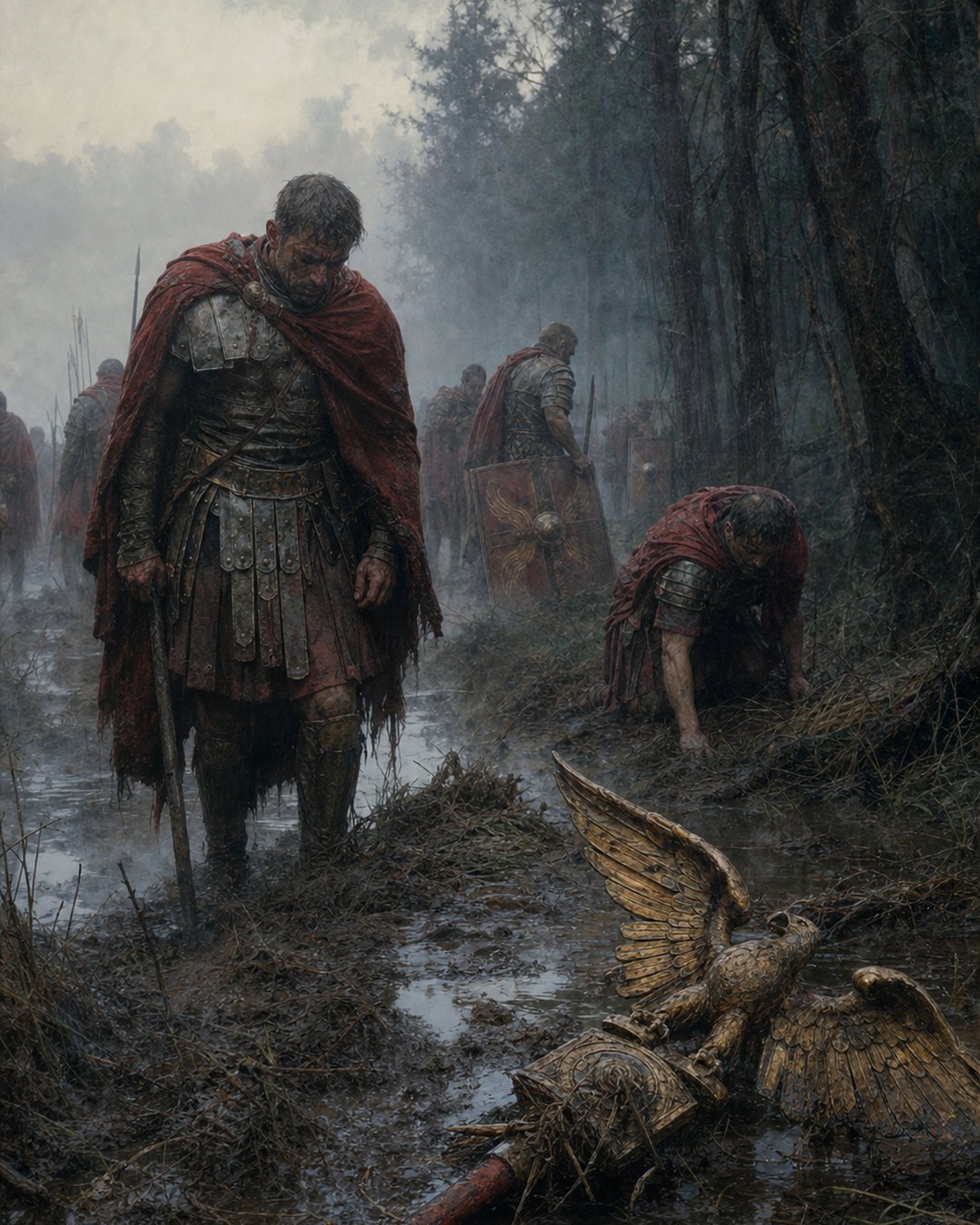
Teutoburg was not the largest disaster Rome ever suffered. It was not Cannae. It did not bring Hannibal to the gates. Yet the loss of Varus and his legions remained unusually painful because it wounded something Rome cared about almost as much as soldiers: the belief that Roman order was supposed to keep advancing.
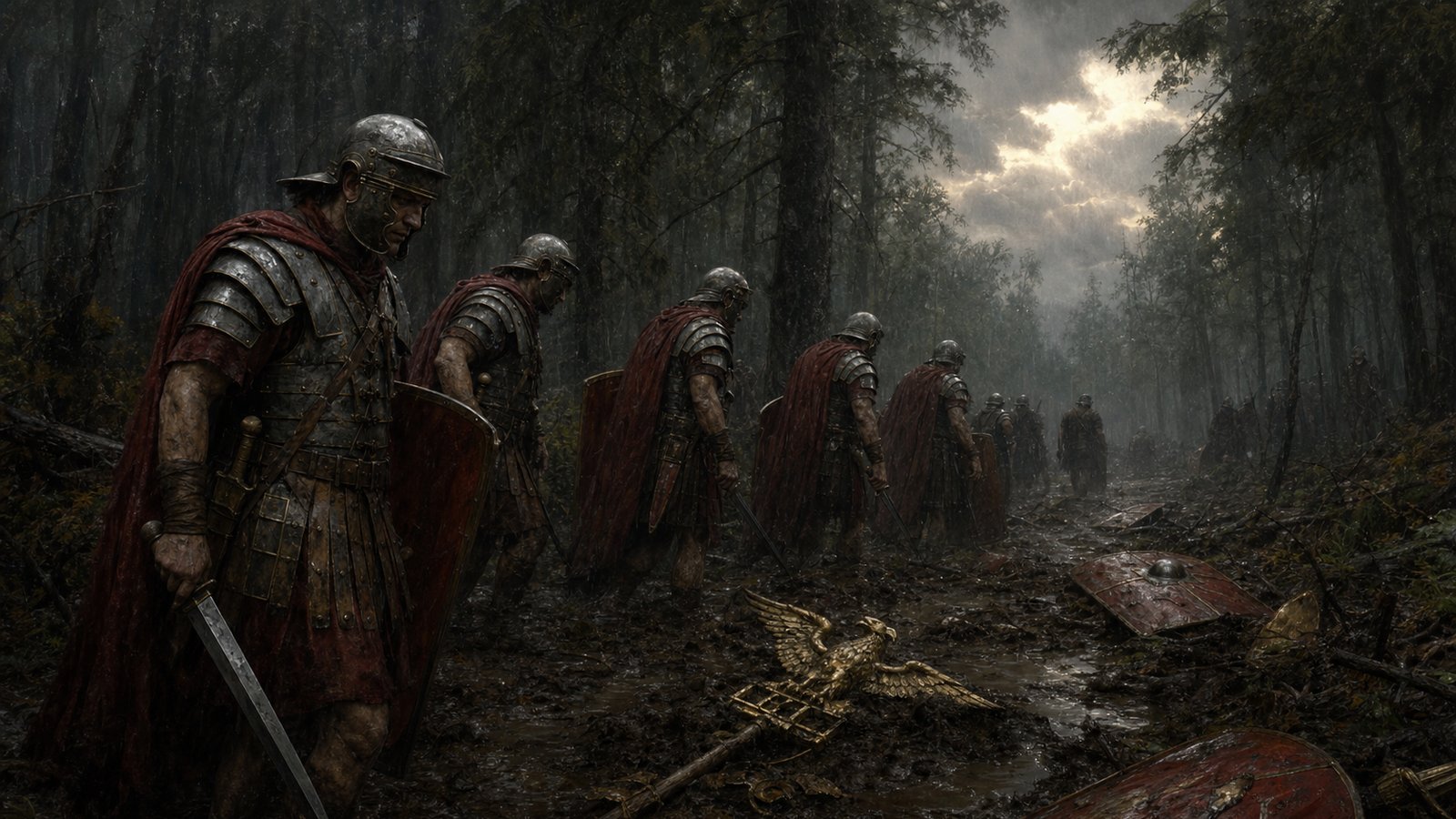
Three legions disappeared in the forests of Germania in 9 CE. Ancient writers turn the defeat into a scene of shock — ambush, rain, confusion, broken columns, and standards falling into enemy hands. The standards matter. A legionary eagle was not decoration. It was the visible soul of a unit, the object around which discipline, memory, and honor gathered.
A frontier defeat became a symbolic defeat
Rome could absorb military losses when it could turn them into the next campaign. Teutoburg was harder because it forced a different question: what if the frontier itself was saying no? Augustus had spent decades making expansion look like destiny carefully managed by Roman command. Varus made that confidence look fragile.
That is why the disaster lived beyond the battlefield. The men were dead, but the missing eagles kept speaking. Every unrecovered standard implied that Roman power had been interrupted in public view. A province might be abandoned quietly; a lost eagle was an insult with wings.
Germanicus and the politics of repair
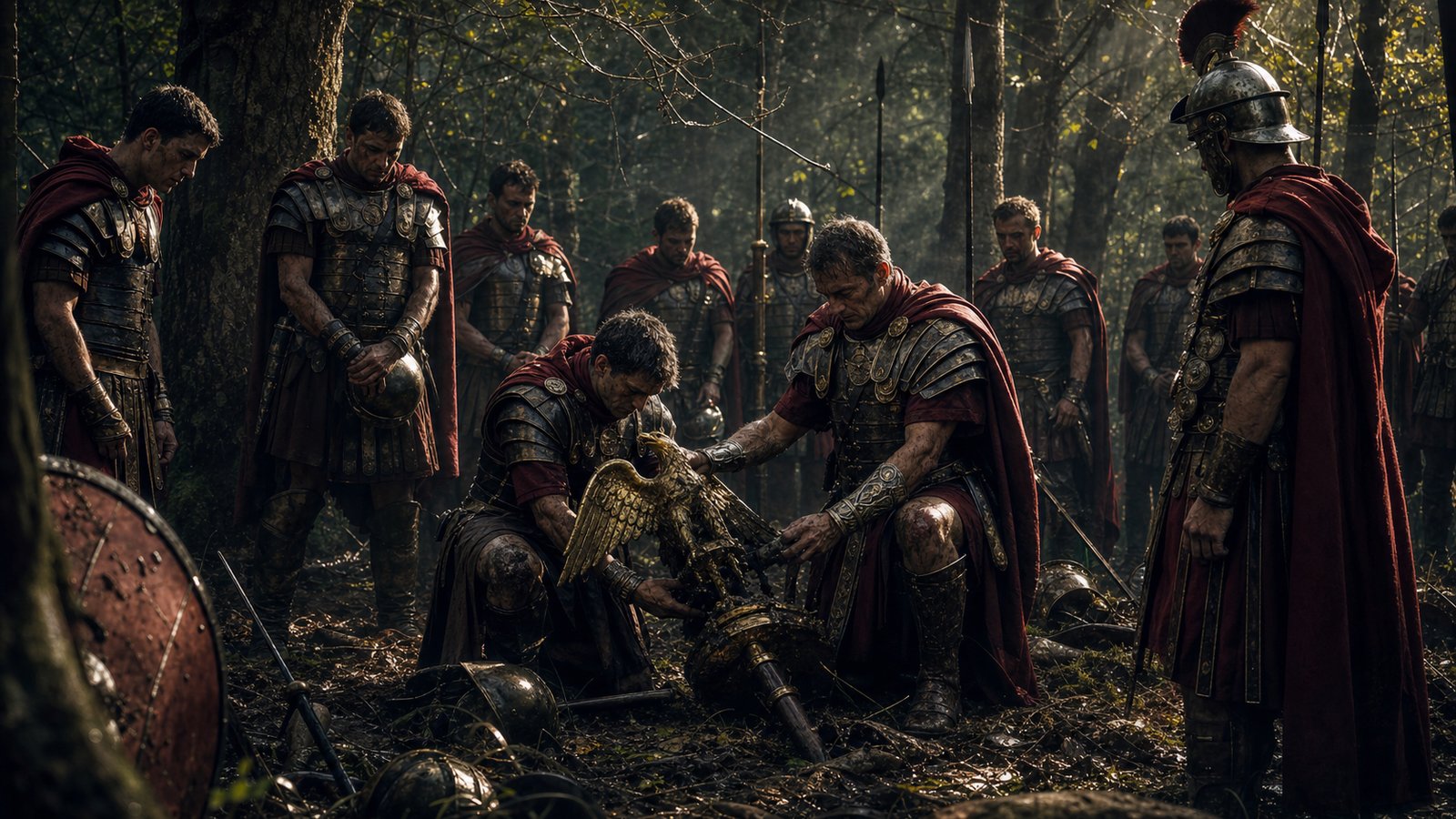
Years later, Germanicus’ campaigns in Germany mattered not only as military operations but as acts of emotional repair. Tacitus describes Roman soldiers encountering the remains of the disaster and recovering lost standards. These scenes are written with the weight of ritual: Rome returning to the place where its confidence had been humiliated.
Recovery did not mean Rome simply reversed the defeat. The empire did not permanently absorb the lands beyond the Rhine in the way earlier ambition had imagined. But retrieving standards allowed Romans to say that disgrace had been answered, even if geography had won.
Why Varus became useful
A disaster needs a shape that can be remembered. Varus became that shape. Blaming one commander made a structural failure easier to carry. It turned terrain, intelligence failures, local resistance, overconfidence, and imperial ambition into a single name.
That habit is very Roman and very human. Institutions often protect their own story by concentrating failure into a person. Varus could be condemned; the dream of Roman order could survive.
The real wound
Teutoburg hurt because it revealed that conquest was not automatic. Roads, camps, law, and commands did not always become obedience. The forest could swallow a column; local knowledge could defeat imperial procedure; symbols could be captured.
Rome did not forget the eagle because the eagle was the empire’s promise made visible. When it fell, the promise did not vanish — but it looked, for a moment, breakable.
Why the Rhine became more than a river
After Teutoburg, the Rhine was not just a line on a map. It became a psychological border between what Rome could punish and what Rome could comfortably possess. Roman armies would cross it again, fight beyond it, and recover honor there, but the dream of easy provincial absorption had been damaged.
That makes the defeat different from a normal lost battle. Teutoburg changed the imagination of expansion. It taught Rome that disciplined roads, camps, and commands could meet landscapes and alliances that did not behave like the Mediterranean world. The empire still looked enormous afterward, but its northern confidence had learned to hesitate.
Memory made the defeat useful and dangerous
Roman writers could use Teutoburg as a warning about arrogance, bad command, treacherous allies, and the limits of expansion. That usefulness helped preserve the story, but it also simplified it. The defeat was not only Varus being foolish or Arminius being clever. It was a collision between Roman administrative confidence and a region that could not be reduced to paperwork.
That is why the lost eagle remains such a strong image. It lets the whole disaster be held in one object. Men, mud, trees, ambush, policy, and grief become a single captured standard. Rome loved symbols because symbols made empire emotionally manageable.
The defeat Rome could not turn into a triumph
Roman culture was very good at converting pain into future glory. A defeat could become discipline, a dead commander could become an example, and a failed campaign could become the preface to revenge. Teutoburg resisted that pattern because the strategic answer was limited. Rome punished, raided, recovered symbols, and remembered — but it did not simply turn Germania into the province the old ambition had imagined.
Sources & Further Reading
- Tacitus, Annals 1
- Cassius Dio, Roman History 56
- For another article on Roman military-political pressure, see why the Praetorian Guard became so dangerous.