
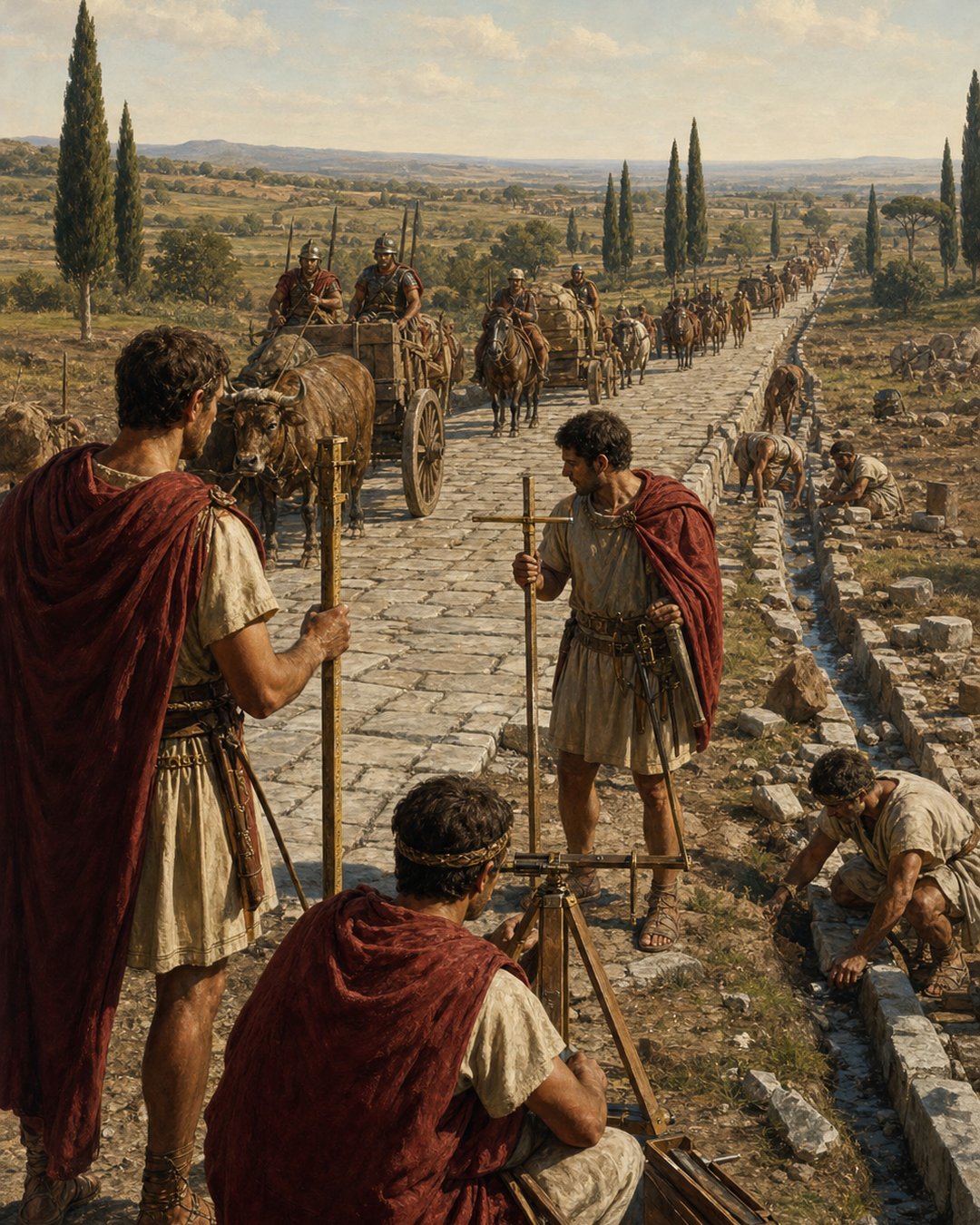
A battle can change a map for a season. A road can keep changing it for centuries. The Appian Way mattered because it made Roman power returnable. Soldiers could march, messengers could ride, merchants could follow, officials could inspect, and taxes could move along the same engineered line.
Begun in 312 BCE by Appius Claudius Caecus, the road first connected Rome with Capua and later stretched toward Brundisium. Its fame as the regina viarum, queen of roads, was not only a compliment to construction. It recognized a deeper political fact: conquest becomes durable when movement becomes reliable.
The road remained after the army moved on
Campaigns end. Roads stay. That difference is crucial. A Roman army might defeat an enemy, impose terms, or secure an alliance, but the work of control continued afterward. Orders had to arrive. Supplies had to move. Officials had to travel. Loyal communities had to remain connected to Rome.
The Appian Way turned victory into repetition. Each use strengthened the relationship between center and territory. A cart, a courier, a magistrate, a trader, or a veteran did not need to reinvent the route. The road made Roman presence habitual.
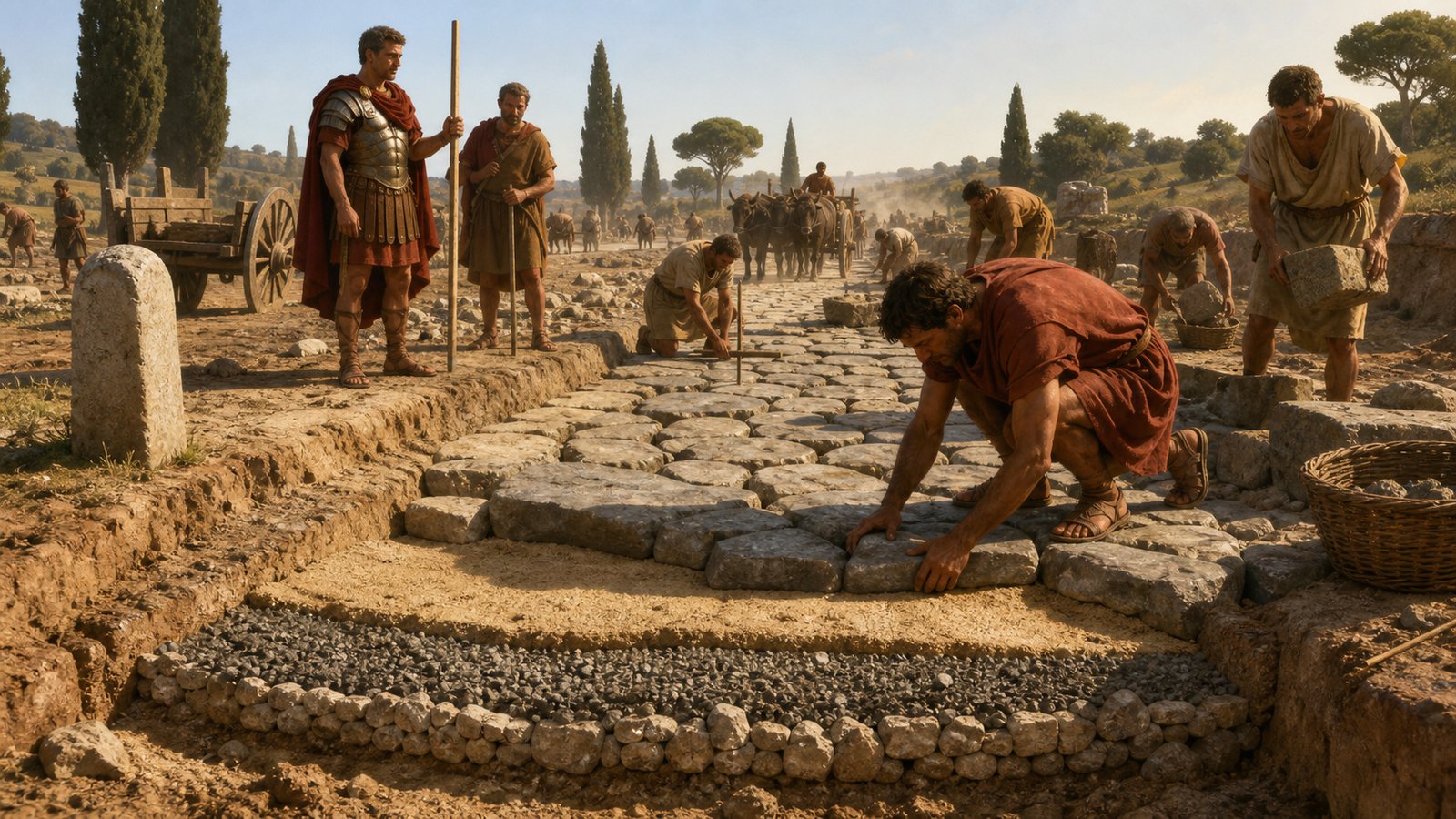
Engineering made politics physical
Roman roads required surveying, layers, drainage, paving, and maintenance. Those details can sound technical, but they were political in effect. A straight, durable road reduced uncertainty. It made travel easier to plan and easier to repeat.
A roadbed is a promise that the state expects to come back. Ditches, stones, bridges, and milestones told travelers that movement had been organized by authority. The Appian Way did not merely lie across the landscape. It taught the landscape to serve a Roman rhythm.
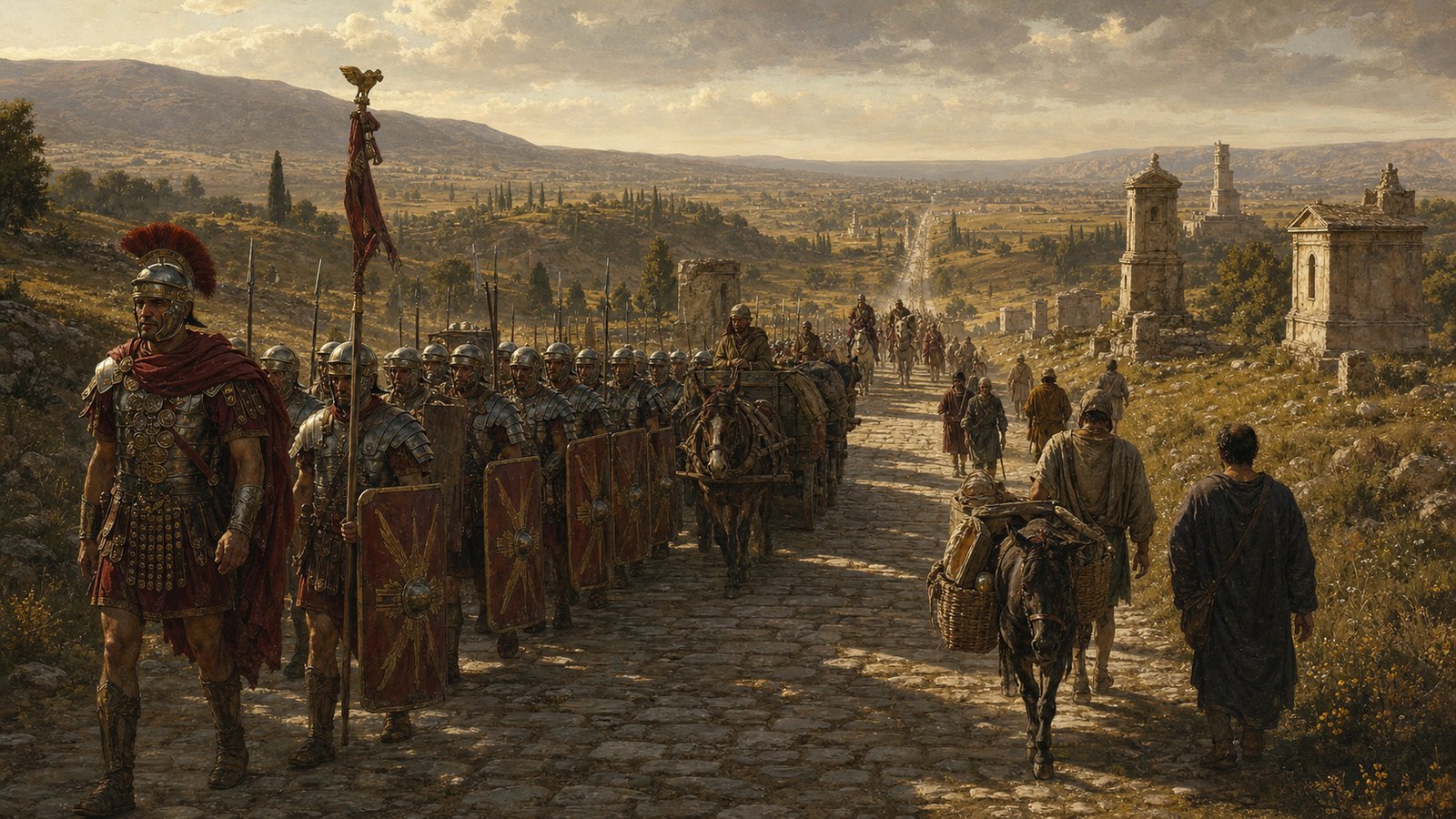
Capua made the first line strategic
The early route toward Capua mattered because southern Italy was not an empty backdrop. Rome’s expansion in Italy required repeated pressure, alliance management, military readiness, and civic integration. A road to Capua helped bind a strategic zone more tightly to the capital.
That binding was not abstract. A commander could calculate distance. A messenger could carry news. Goods could follow opportunity. Communities along the route saw Rome not only as a distant political name, but as traffic moving past them on stone.
Extension toward Brundisium widened the horizon
As the road extended toward Brundisium, it reached toward routes across the Adriatic and into the Greek east. That expansion changed the road’s meaning. It was not only an Italian military artery. It became part of a larger Mediterranean direction.
A port at the end of a road is powerful. It joins land movement to sea movement. Soldiers, officials, merchants, and messages could pass through Brundisium into wider imperial theaters. The road made Rome’s reach feel continuous rather than broken between land and water.
Milestones made distance governable
Roman roads were also systems of measurement. Milestones and stations helped organize travel by turning distance into known units. That matters because power depends on timing. If a state knows how far, how long, and by which route, it can plan more effectively.
A traveler on the Appian Way moved through a landscape that had been numbered, surfaced, and remembered. Distance became administrable. The road converted geography from obstacle into schedule.
Roadside tombs turned travel into memory
The Appian Way was lined with tombs, especially near Rome. That detail adds another layer. Travelers did not move through bare utility. They passed monuments of families, status, and memory. The road carried the living while displaying the dead.
This made the route socially dense. Movement, ambition, ancestry, commerce, and military need shared the same corridor. The road did not separate practical power from symbolic power. It combined them in a line people used with their feet, wheels, eyes, and stories.
Durability was the real conquest
Rome’s genius was not that it won every fight easily. It often did not. Its genius lay in making victories difficult to undo. Roads helped by giving conquest a body that remained visible after fear faded. A road could be repaired, guarded, measured, and used again.
That is why the Appian Way made conquest durable. It turned expansion from an event into a system. The army might march away, but the route stayed behind, ready to bring Rome back tomorrow, next year, or in the next generation.
The road also made speed political. If orders moved faster than rumor, Rome gained an advantage. If troops could reach a trouble spot before a revolt spread, engineering had become strategy. The Appian Way shortened not only distance but uncertainty.
Its users were not all soldiers. Merchants, families, officials, animals, slaves, freedpeople, and pilgrims of memory all shared the route. This mixture made control look ordinary. Rome did not need every traveler to think about conquest; the repeated use of the road kept conquest embedded in daily movement.
The roadside tombs deepened that effect. Elite families placed memory where traffic would see it. The road became a stage on which the dead addressed the living, while carts and marching men continued past. Movement and status reinforced each other with every journey.
Construction details mattered because failure would have made the political claim hollow. A road that washed out, lost its line, or became impassable could not sustain authority. Drainage, layers, paving, and repair were the unglamorous habits that made Roman ambition credible.
So the Appian Way was more than a route south. It was a method for making power repeat itself. Each passage renewed the connection between Rome and the territories beyond the next milestone. Conquest endured because the road kept giving Rome a practical way back.
That return mattered after peace as much as during war. Colonists, contractors, litigants, and local elites could all move within a corridor that made Rome feel nearer than raw distance suggested. The road narrowed the psychological gap between center and region.
It also made absence less complete. Even when no army was visible, the prepared surface implied one could come. That possibility was a form of pressure. The Appian Way made Roman authority durable because it left behind a route for tomorrow’s order.
The road’s public character strengthened that pressure. Anyone using it shared a state-made corridor with other travelers who carried news, goods, petitions, and memories. Movement itself became a reminder that Rome had organized the ground beneath ordinary feet.
In that sense, the Appian Way made conquest less dependent on heroic moments. It replaced one-time drama with repeatable access. The same stones could serve a military emergency, a commercial journey, a funeral procession, or an official inspection, and each use renewed the road’s political meaning.
Durability came from this repetition. The road did not shout like a triumphal arch, but it kept working after spectators had gone home. Its power was quieter and more stubborn: a line of return, measured in miles, maintained by labor, and remembered by everyone who traveled it.
Sources & Further Reading
- Britannica, Appian Way
- Livy, History of Rome, 9.29
- World History Encyclopedia, Roman Roads
- Smith Dictionary, Viae
- LacusCurtius, Via Appia
- Britannica, Brindisi
- Roman Roads Research Association
- Parco Archeologico Appia Antica
- Cambridge Ancient History, Roman expansion