
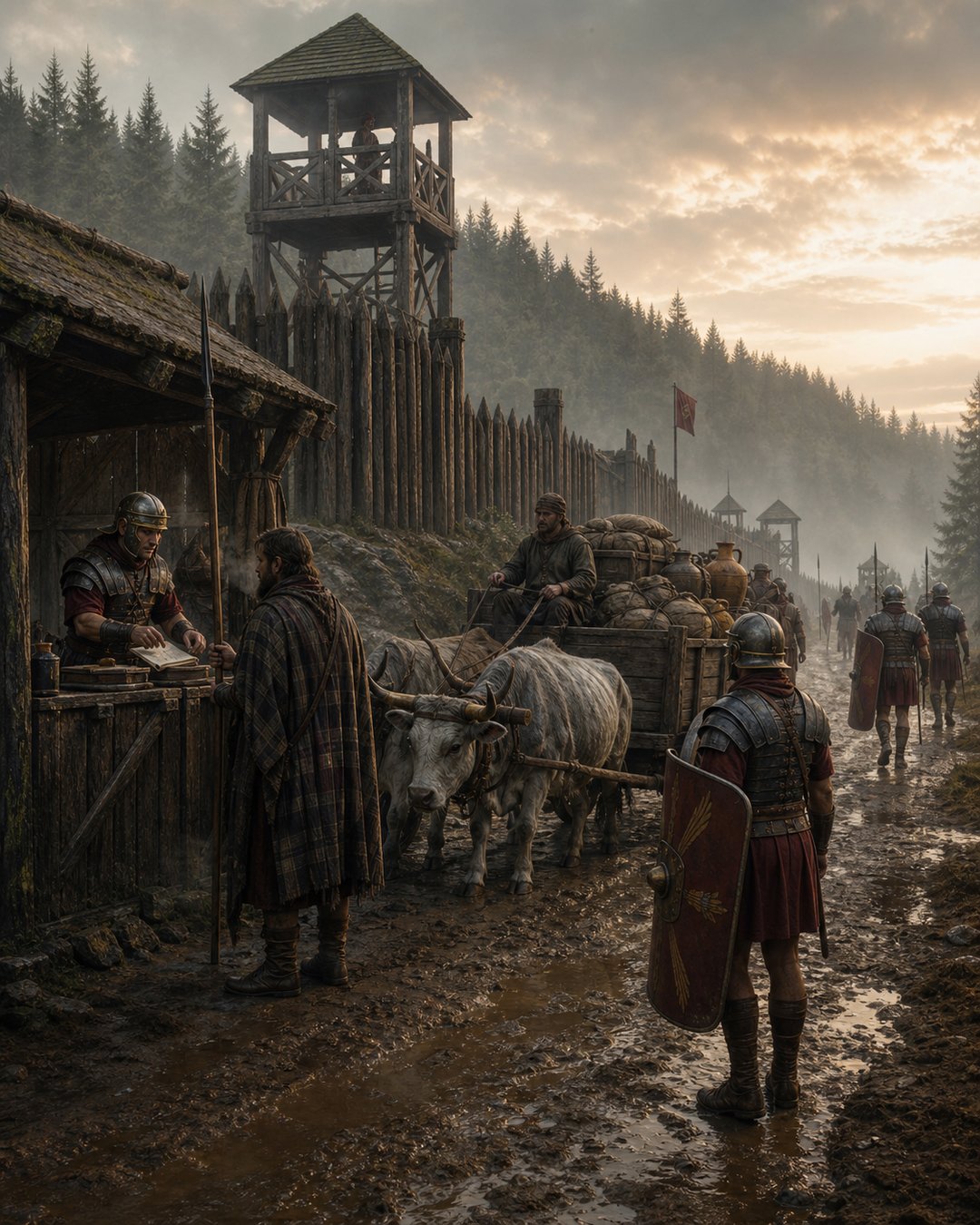
A frontier sounds dramatic when seen on a map. It becomes stranger when imagined as a work schedule. Men changed guard. Traders waited. Carts were checked. Letters arrived. Roads needed repair. Gates opened and shut. The Roman limes mattered because it made the empire’s edge routine.
The limes was not one identical wall running around the Roman world. It varied by region: roads, towers, forts, walls, palisades, ditches, rivers, patrol routes, and controlled crossings. Its power lay in repetition. Rome turned the border from a vague danger zone into a managed habit.
A frontier was a system, not a line
Modern maps tempt us to draw a clean boundary and call it Rome. The Roman frontier was messier and more practical. It could follow rivers, walls, roads, or zones of surveillance. What mattered was not only where the line sat, but how people moved through it.
The Upper German-Raetian Limes makes this clear. UNESCO describes a huge frontier system of hundreds of kilometers with forts, watchtowers, roads, ditches, and palisades. Those elements did different jobs, but together they created an everyday machinery of observation, delay, movement, and response.
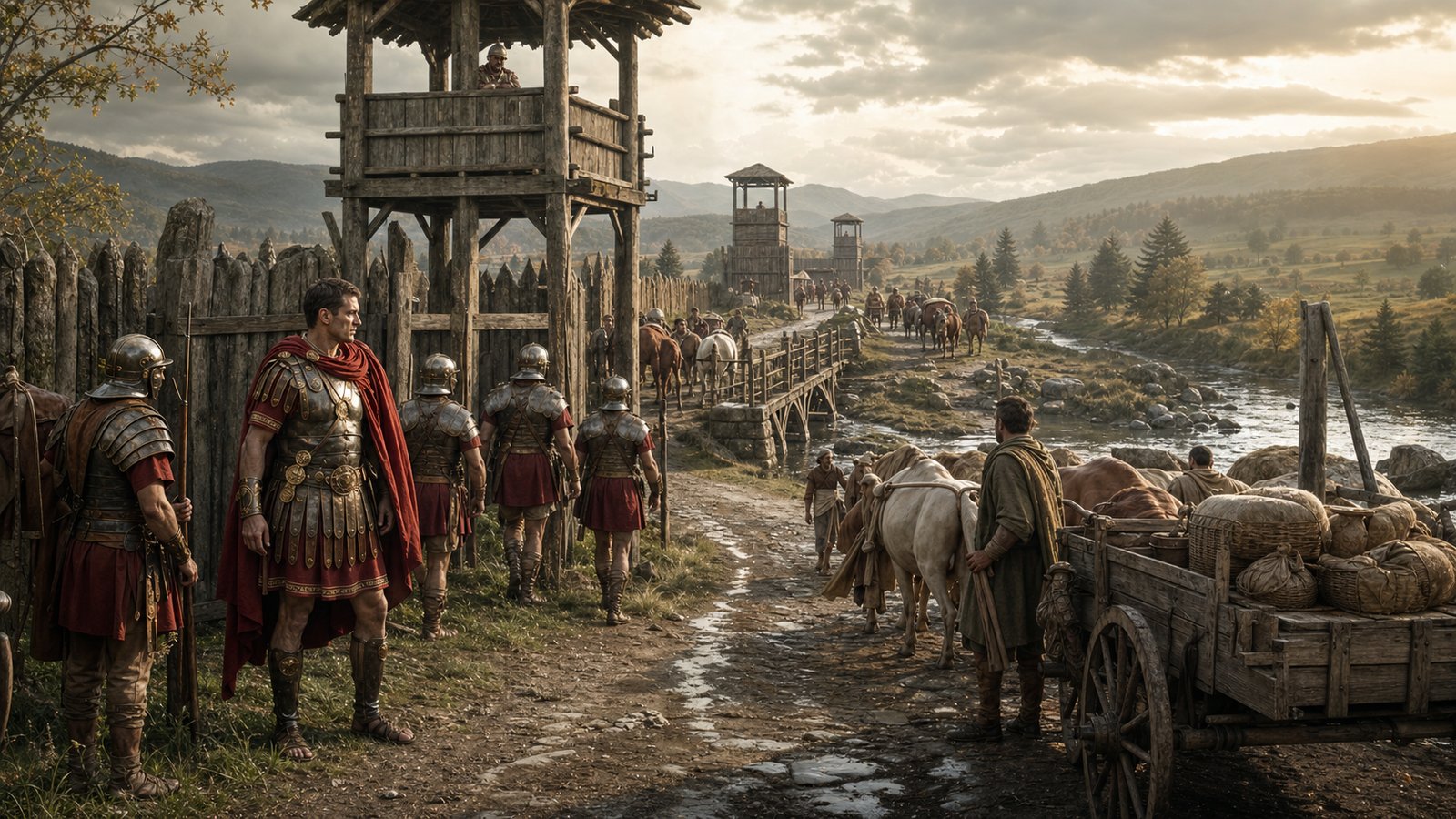
Watchtowers made distance visible
A watchtower does not defeat an enemy by itself. Its value is seeing, signaling, and making absence less complete. A soldier above the ground could look along the road, toward forest, river, field, or gate, and connect one small post to a larger pattern.
That visual chain changed how the edge felt. A lonely stretch of land became part of a watched corridor. Even when nothing happened, the act of watching was the point. Routine observation made surprise harder and made Roman presence seem continuous.
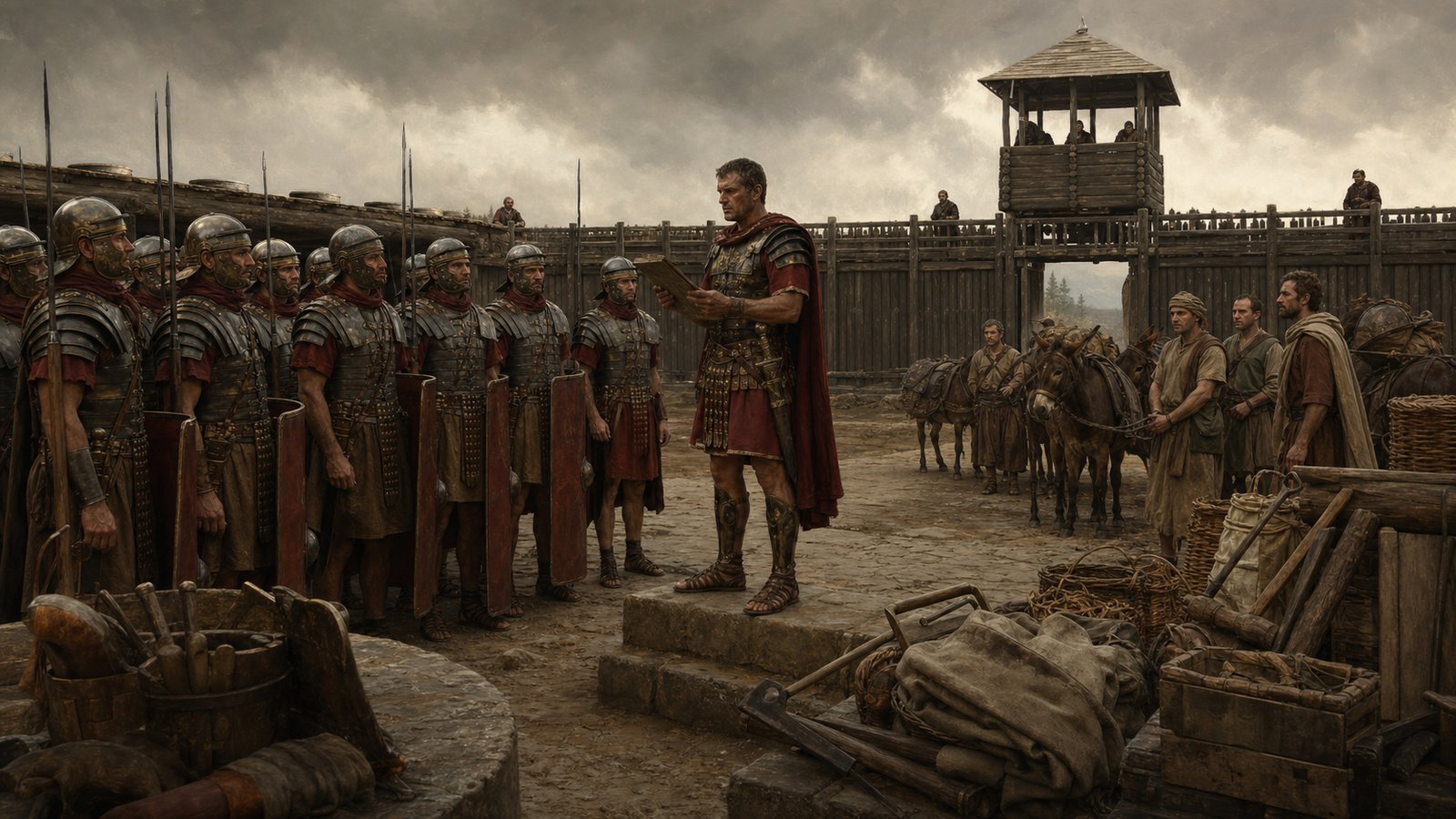
Forts turned the edge into a neighborhood
Frontier forts were military spaces, but they were not empty chess pieces. Soldiers needed food, shoes, tools, animals, pay, repairs, entertainment, and writing materials. Around and near forts, civilians, traders, families, craftsmen, and suppliers could gather in complicated relationships with the garrison.
The Vindolanda tablets are precious because they show this ordinary texture. They preserve names, supplies, invitations, and messages near Hadrian’s Wall. The frontier was not only shields facing outward. It was handwriting, requests, inventories, social obligations, and the small frictions of life near soldiers.
Roads made response repeatable
Rome’s frontier systems depended on movement. A fort that could not communicate or be supplied was a liability. Roads and tracks allowed troops, messengers, materials, and orders to pass between posts. They made defense less dependent on heroic improvisation.
This is one reason the limes feels Roman. The system did not merely place armed men at the edge. It connected them. A patrol could be assigned, a report delivered, a repair ordered, a wagon sent, and a local crossing supervised because the frontier had routes as well as guards.
Controlled crossings made power practical
A border that no one crosses is rare. The Roman frontier had to deal with movement: traders, envoys, livestock, migrants, soldiers, scouts, and smugglers. Gates and controlled points mattered because they converted movement into moments of inspection.
That inspection could be tense, boring, profitable, corrupt, or routine. A clerk with a tablet and a soldier at a gate may not look as dramatic as a battle, but they reveal how empires last. Power often survives by making people stop, answer, wait, pay, or pass through the proper place.
Tacitus shows consolidation as work
In the Agricola, Tacitus describes the Roman commander consolidating control in Britain through forts and strategic positions. The literary purpose is not the same as an engineering report, but the detail matters. Roman control became stronger when military success was converted into fixed positions and repeated presence.
That conversion is the heart of the limes. A campaign might open a region, but the frontier system tried to make Roman authority ordinary afterward. The edge had to be staffed, supplied, watched, crossed, recorded, and repaired.
The frontier changed the people inside it
Routine cuts both ways. The limes told outsiders where Rome expected interaction to happen, but it also shaped Roman soldiers and civilians. Life at the edge trained people to think in terms of patrol times, supply lists, gate rules, local markets, weather, and rumors from beyond the line.
This made the frontier less like a single crisis and more like a daily environment. A recruit might arrive imagining glory and discover mud, timber, smoke, inspection duty, and cold dawn watches. The empire’s edge was maintained by thousands of ordinary acts that rarely entered triumphal memory.
The limes was flexible because it had to be
No frontier system could freeze history. Pressures changed, commanders changed, rivers shifted in importance, and local politics evolved. The limes worked best not as a perfect barrier, but as an adaptable set of tools for managing movement and risk.
That flexibility is why it should not be reduced to a wall. Walls were one possible expression. So were roads, forts, patrols, river fleets, towers, and agreements. Rome’s edge was built differently because the empire met different landscapes and peoples.
Routine was the real achievement
The most impressive thing about the limes is not that it made Rome invulnerable. It did not. Frontiers were crossed, attacked, negotiated, abandoned, strengthened, and reimagined. The achievement was that Rome made the edge administrable for long periods.
That is why the Roman limes made the frontier routine. It turned danger into procedures: look from the tower, patrol the road, open the gate, read the tablet, send the report, repair the ditch, count the supplies, and wait for tomorrow. The empire’s edge was not only where Rome ended. It was where Roman habits had to prove themselves every day.
The routine also created memory. People who lived near the limes did not experience Rome only through emperors or distant laws. They experienced it through timber, stone, soldiers, prices, restrictions, opportunities, and languages heard near a gate. The frontier became a lived place rather than a line in official imagination.
That lived quality explains why archaeological frontiers are so revealing. Broken tools, writing tablets, shoe leather, postholes, roads, and fort plans show how much organization sat beneath the idea of defense. The limes made Roman power visible in small repeated details, and those details are exactly what made the edge work.
The frontier also made empire feel personal. A trader did not meet Rome as an abstract map; he met a guard, a gate, a road, a price, and a delay. A soldier did not defend a theory; he stood in weather, listened for news, and watched the same crossing again and again. Routine made authority touchable.
This is why the limes deserves attention even when no battle is happening. Its ordinary scenes show a harder truth about imperial control: the border lasted only when people kept doing small jobs correctly. Rome’s edge was built from command, but it survived through maintenance, habits, and the daily discipline of being there.
Sources & Further Reading
- Britannica, limes
- UNESCO, Frontiers of the Roman Empire
- UNESCO, Frontiers of the Roman Empire — Germany
- English Heritage, Hadrian’s Wall history
- Vindolanda Trust, Writing Tablets
- Tacitus, Agricola, 20-22
- World History Encyclopedia, Roman Army
- Cambridge Core, The Roman Frontier
- World History Encyclopedia, Roman Roads
- Oxford Classical Dictionary, limes