
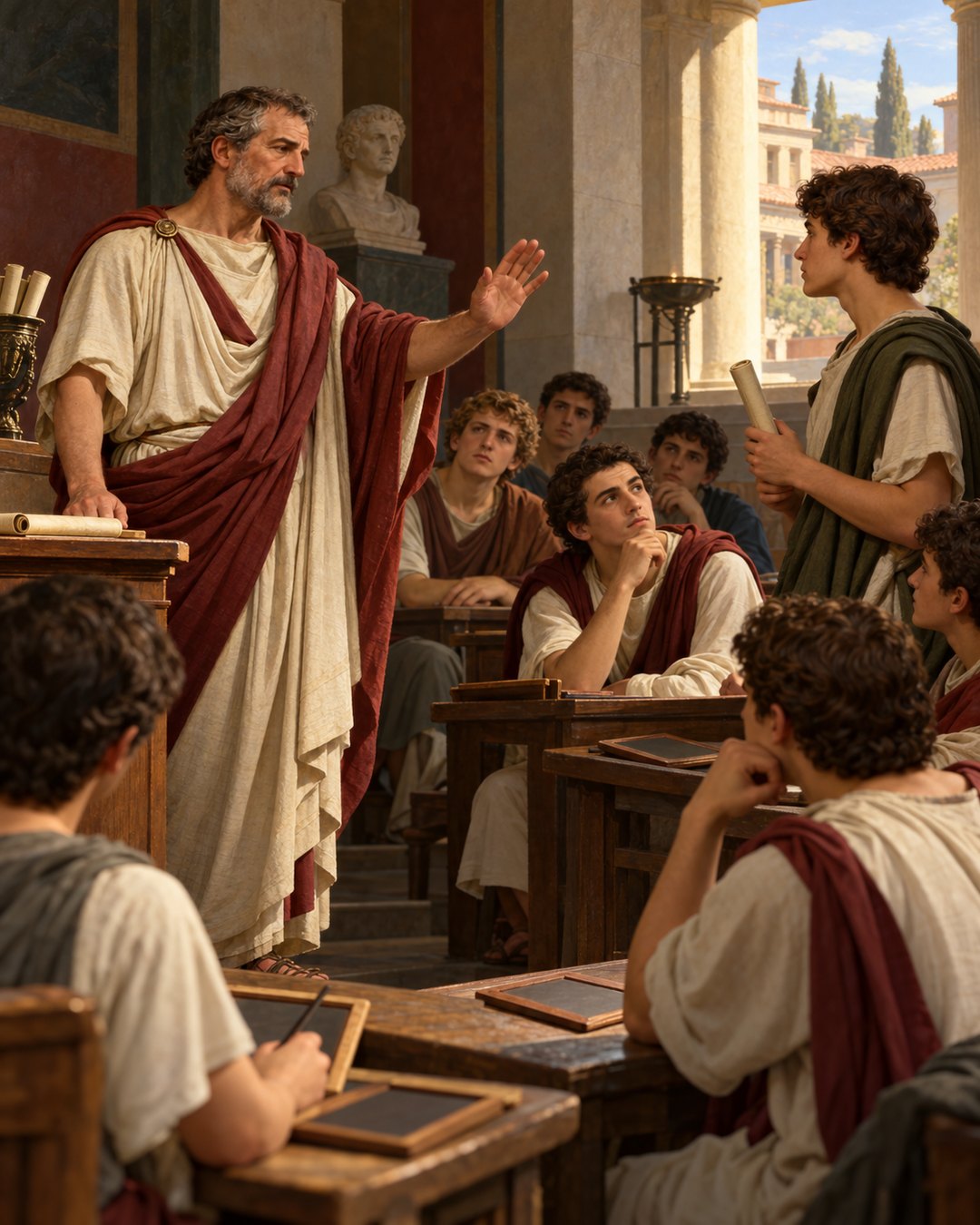
A sentence by Gaius Gracchus sounded so good that Aulus Gellius and his companions asked to hear it again. Its clauses flowed, its ending landed, and its rhythm seemed astonishingly polished for an early Roman orator.
Their teacher, Titus Castricius, asked them to stop listening and start weighing. Once the sentence was stripped of cadence, its impressive conclusion repeated information already packed into the premise. Someone who sought a thing earnestly had sought it earnestly; someone who rejected it rashly had rejected it without consideration.
The lesson was not an attack on eloquence. It was a method for deciding when eloquence had earned admiration.
Gracchus won the room through the ear
Gellius places the exercise around a speech by Gaius Gracchus against Publius Popilius. The words came from a figure whose power and dignity made criticism delicate.
The sentence argued roughly as follows: if listeners now rashly rejected things they had earnestly sought and desired for years, then either they had previously sought them earnestly or were now rejecting them without consideration.
Its construction was unusually careful and rhythmic for an early orator. Gellius and his companions responded immediately. They admired the rounded flow and the evidence that such composition already appealed to Gracchus.
Their reaction is important because Castricius does not expose foolish listeners from a distance. Gellius includes himself among those charmed. The chapter begins with genuine aesthetic success.
They asked for the words to be read again and again. Repetition could deepen admiration, but it also created the conditions for analysis. A sentence detached from the momentum of a full speech can be inspected clause by clause.
Sound mattered in Roman public speaking. An audience received arguments through a living voice, paced breath, and expectation. Castricius never denies that. He challenges the move from “this sounds complete” to “this thought is substantial.”
The distinction complements Polus using real grief to intensify a tragic performance. There emotion gives enacted words unusual force. Here rhythm gives a political sentence more apparent weight than its logic can carry.
Castricius put the sentence on a scale
Castricius is introduced as a teacher of rhetoric with sound and solid judgment. His intervention follows that description. He tells the group to examine force and value before allowing pleasure to confuse judgment.
His metaphor is practical: balance the actual weight of the substance against the quality of diction. A sentence may be ornamented, but it must still weigh something.
The test begins by identifying which words carry the apparent conclusion. “Earnestly” describes the earlier seeking. “Rashly” or “without consideration” describes the present rejection. Yet those qualities have already been placed in the opening condition.
If a speaker begins by saying that people earnestly sought something, the later conclusion that they sought it earnestly adds no discovery. If he begins by saying they rashly rejected it, concluding that they rejected it without consideration does the same work twice.
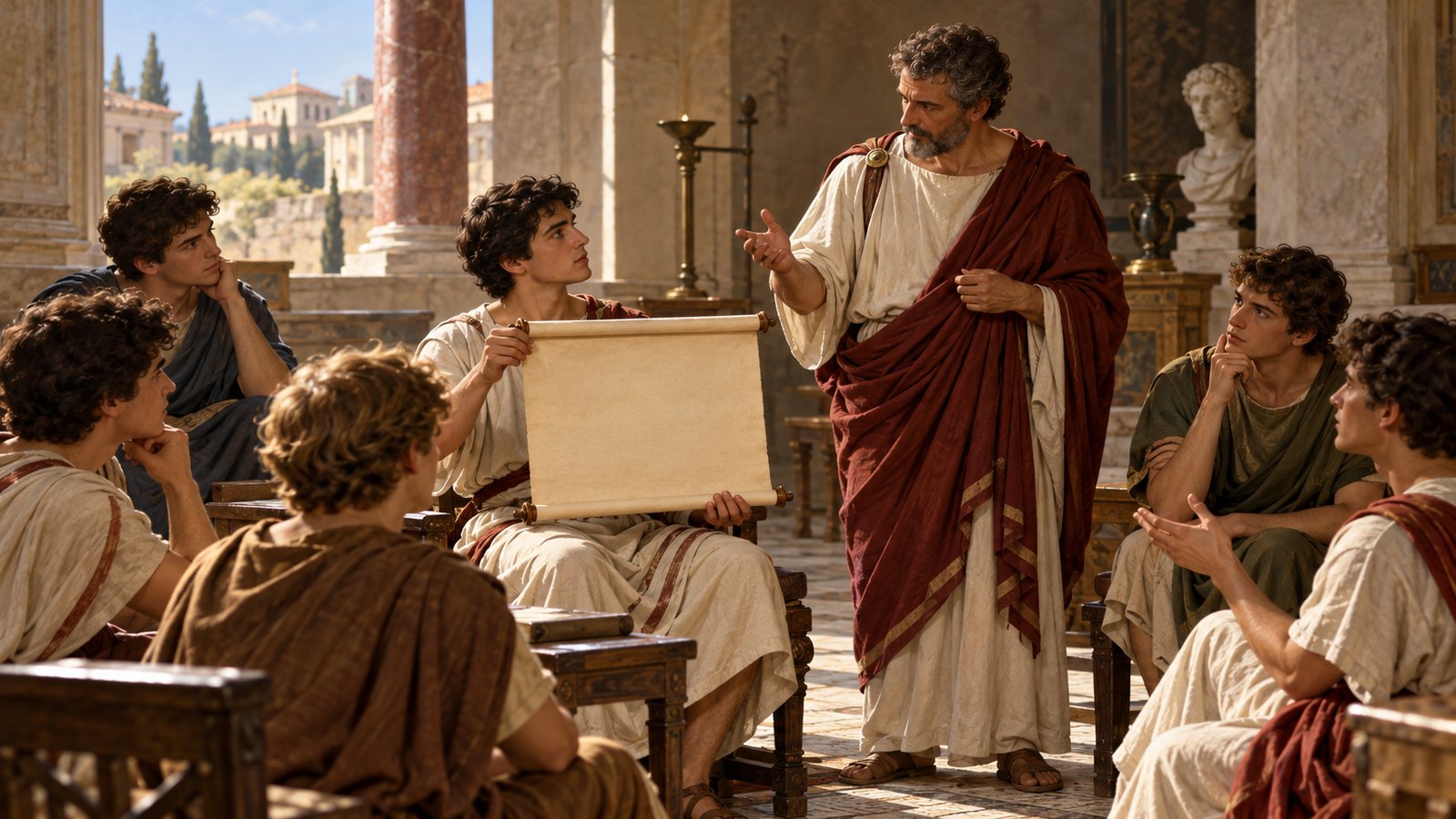
Castricius reduces the mechanism to an almost comic formula: if you do something earnestly, you will be said to have done it earnestly. The cadence had disguised a circle.
This is a precise criticism, not a vague preference for plain speech. He locates the defect in the placement of the qualifying words. The sentence promises an inference, but its conclusion has been smuggled into the premise.
Once that structure is visible, the pleasure does not vanish. Readers can still hear the rhythm. They simply stop treating auditory completion as logical progress.
A small revision restored expectation
Castricius proposes a stronger arrangement. Begin without the premature qualifications: if you now reject what you sought and desired for many years, then it must be said that you once sought it earnestly or that you now reject it without consideration.
In that form, the conclusion adds an assessment. Long pursuit followed by rejection creates a tension. Either the earlier commitment was genuine or the present reversal lacks adequate thought.
The listener can now wait for the sentence to resolve the relation between past desire and present refusal. Expectation arises because the premise no longer gives away the exact judgment that the ending is supposed to produce.
The revision demonstrates that rhetoric and reasoning need not compete. Better logical order also improves dramatic movement. Meaning creates the suspense that rhythm can then organize.
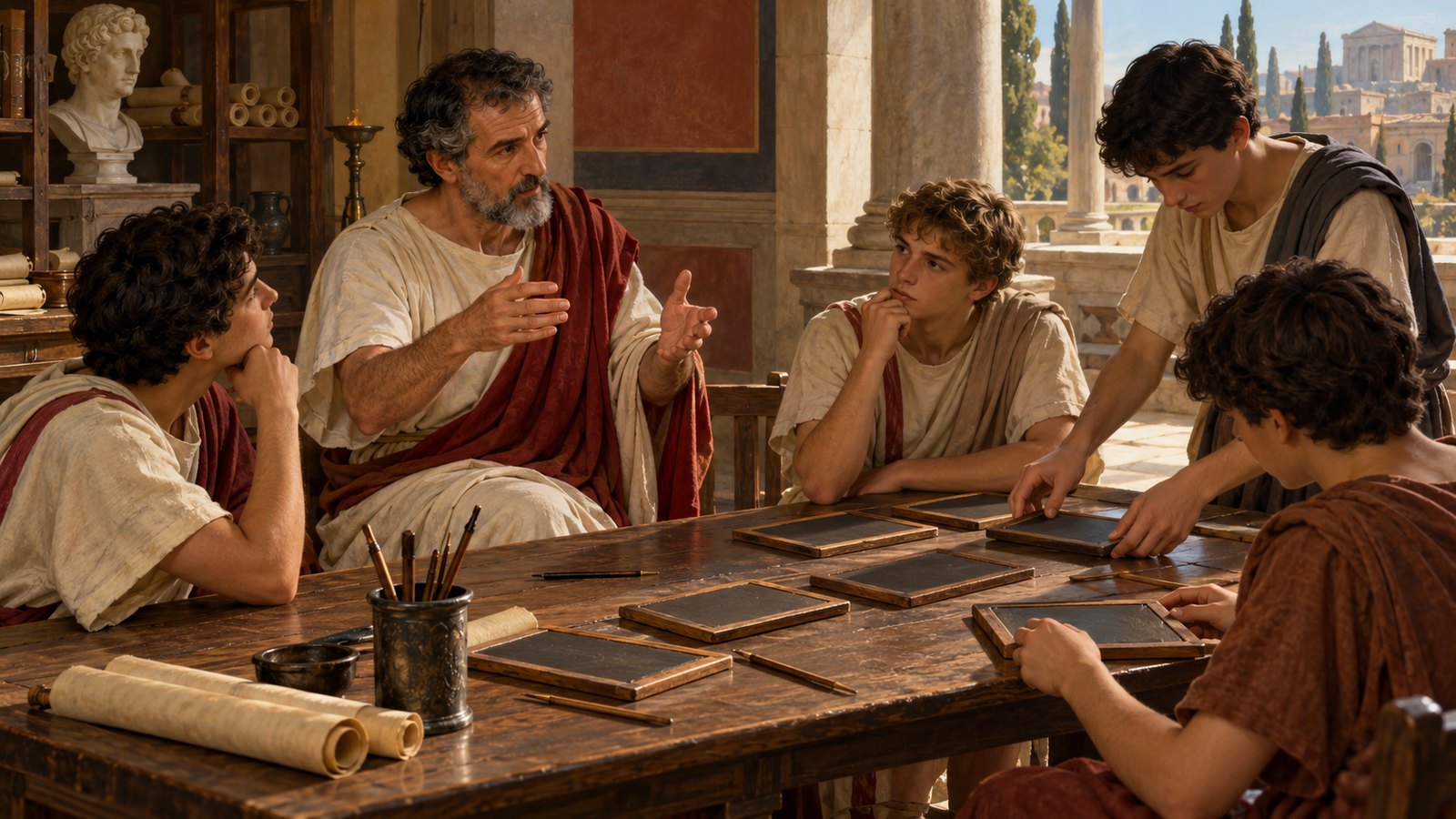
Castricius’s method resembles the Senate-secret story in which phrasing controls what an audience infers. Both episodes depend on listeners following verbal structure. The difference is that Castricius slows persuasion down until the structure can be audited.
The lesson is therefore constructive. He does not merely mock Gracchus. He shows how a change in order could make the sentence weightier, more solid, and more capable of arousing reasonable expectation.
Admiration survived after authority was removed
Criticizing Gaius Gracchus required care. Castricius explicitly says he is not trying to censure a man of such powerful eloquence. Antiquity and authority might excuse a blemish that would be less readily forgiven in a pupil.
But reverence cannot replace analysis. The teacher temporarily separates the sentence from the famous name behind it. His students must decide what the words do before the author’s prestige settles the question.
Only then may they restore praise. If the thought is weighty, honourable, and sound, they can also commend verbal flower and delivery. Style comes second in the order of judgment, not because it is trivial, but because it can create a false positive.
Castricius ends with a harsh visual comparison. Cold, trifling thoughts conveyed in neat rhythm resemble men conspicuous for deformity imitating actors and playing the buffoon. The language belongs to Gellius’s ancient account and reflects its values; its function in the argument is to make mismatch impossible to ignore.
Form promises stature. When content fails to supply it, polish can intensify rather than conceal the disproportion once a trained listener notices.
The classroom scene also models intellectual humility. Gellius records his own enchantment and correction. The authority of Gracchus and the pleasure of cadence both fooled him briefly, but neither prevented revision.
That honesty is part of the chapter’s value. Critical reading does not begin with immunity to persuasion. It begins when a listener can revisit pleasure, identify its source, and ask whether the thought moved as far as the sound suggested.
The sentence remained beautiful. After Castricius weighed it, beauty was no longer mistaken for proof.
The episode also distinguishes repetition from redundancy. Gellius and his companions repeat the sentence as listeners because they want to enjoy and examine it. Inside the sentence, however, the repeated judgment pretends to be a consequence. The same verbal return can aid criticism in the classroom while weakening argument in the speech.
Castricius does not offer a mechanical ban on adverbs or balanced clauses. His proposed revision preserves a shaped sentence and a forceful ending. What changes is the distribution of information. The premise establishes conduct across time; the conclusion evaluates that conduct. Each part now has separate work.
Authority receives similarly measured treatment. Gracchus’s stature explains why the sentence deserves attention and why a teacher speaks respectfully. It does not make every clause immune. In fact, a famous sentence is a better teaching object because students can feel how reputation amplifies sound before they test sense.
Gellius leaves readers with a reusable sequence: hear the pleasure, repeat the words, remove the speaker’s prestige, identify premise and conclusion, then restore whatever praise survives. Castricius did not train deafness to style. He trained an ear that could enjoy rhythm without letting rhythm vote twice.
Sources
Aulus Gellius, Attic Nights 11.13.