
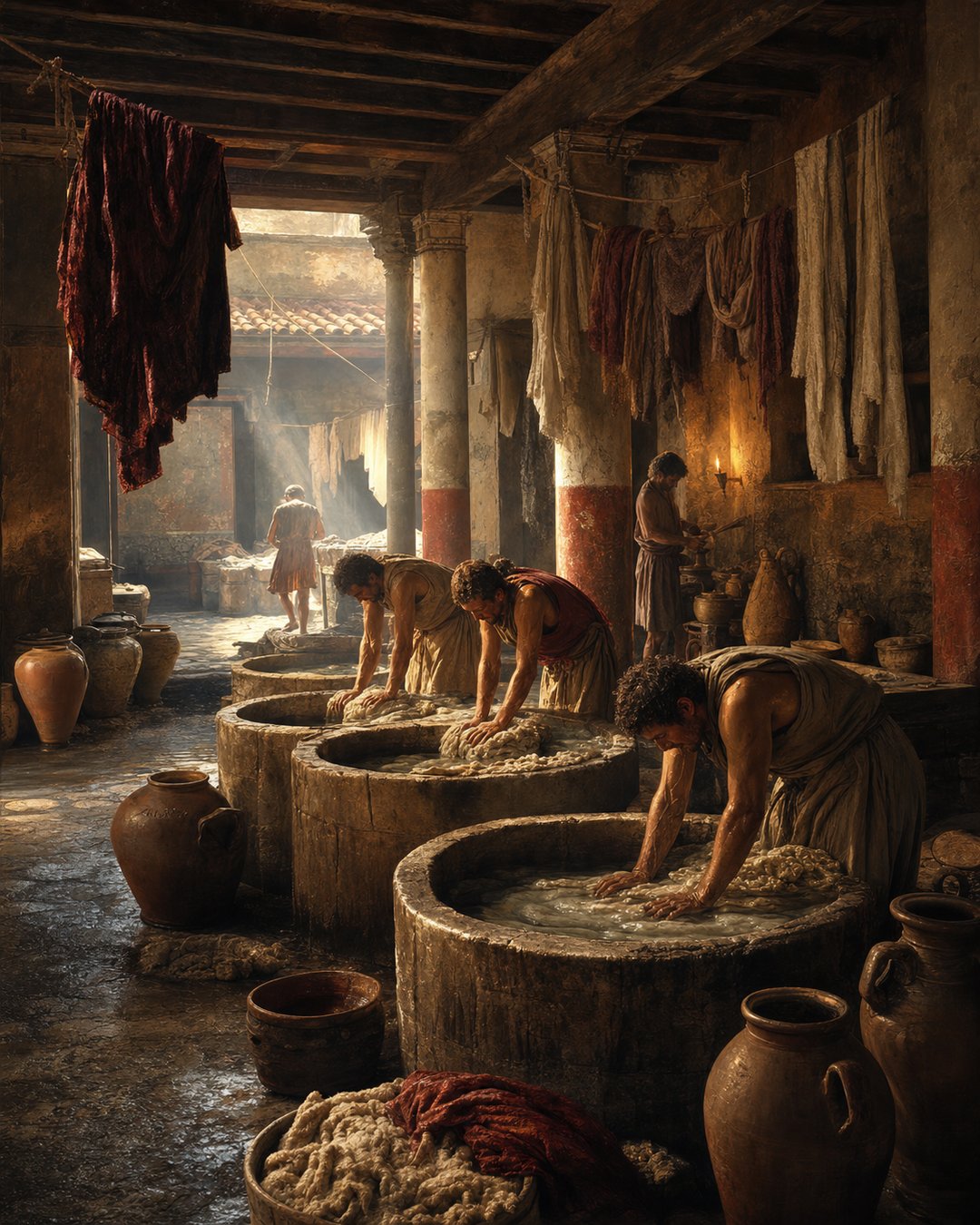
A Roman garment could look calm in public: folded cloth, a clean edge, a citizen dressed for the street, a tunic or toga made to seem natural. The work behind that surface was not calm at all.
The fullonica made clean clothes a public business because Roman respectability depended on labor performed in wet, noisy, visible workshops. Cloth care was not only domestic tidiness. It was urban industry.
The clean surface had a workshop behind it
The fuller’s shop reminds us that appearance was produced. Wool had to be washed, trodden, rinsed, treated, dried, brushed, and returned to use. A garment that looked proper in the Forum carried the history of basins and hands.
Pompeii’s Fullonica of Stephanus gives the scene a physical setting. Think of vats sunk into a work area, damp stone, hanging cloth, and workers repeating motions that public life preferred to forget.
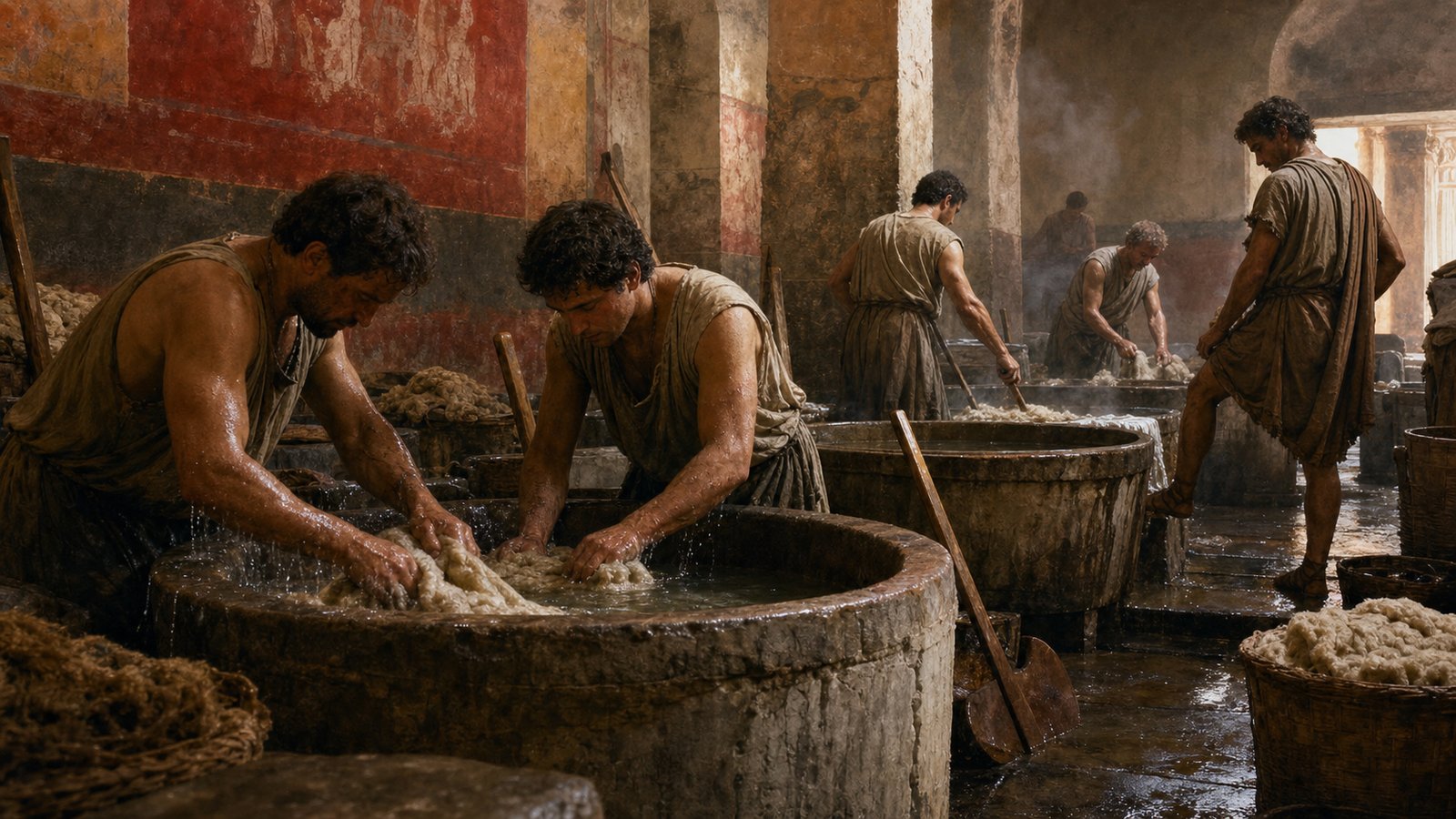
Fulling was skilled, physical, and repetitive
A fuller was not merely someone who rinsed laundry. Fulling could clean used garments and finish newly woven cloth. The work required judgment about water, pressure, substances, timing, and texture.
The sensory detail matters. This was a trade of wet feet, heavy cloth, sharp smells, rough wool, and repeated handling. Roman cleanliness was not airy virtue; it was a process performed by bodies.
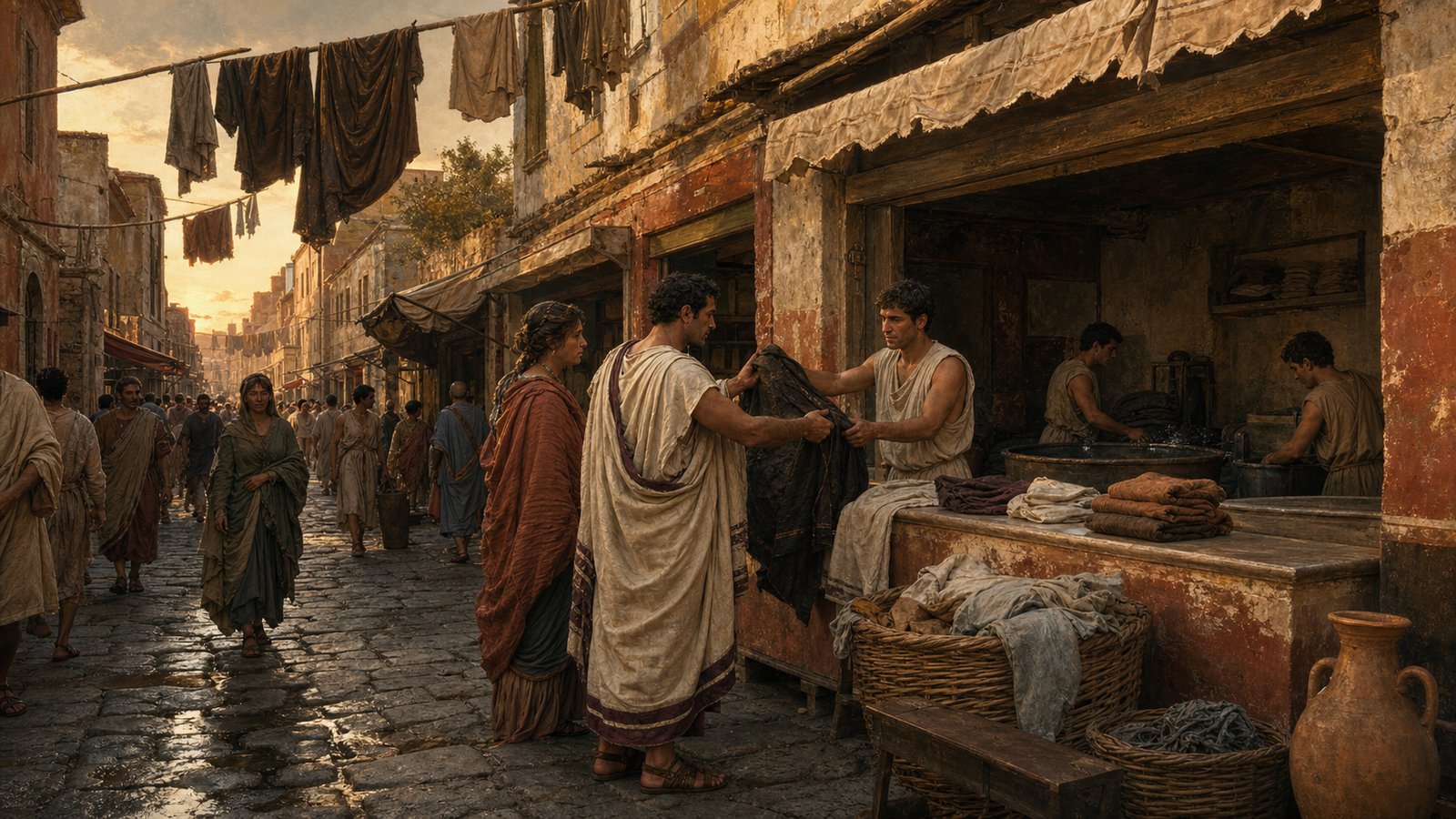
Clothing carried public meaning
Roman dress could signal citizenship, office, rank, mourning, celebration, and propriety. The toga especially made cloth into public language, which meant dirty or badly kept cloth could speak too loudly.
That link gave fullers importance beyond the workshop. They helped maintain the visible order of a society that judged people by what they wore and how they appeared in shared spaces.
The shopfront made care visible
Urban trades often faced the street, putting workers, customers, and passersby into repeated contact. The fullonica belonged to that world of open doors, errands, transactions, and neighborhood recognition.
A customer leaving a stained cloak did not simply send a private problem away. He entered a public chain of labor. The garment moved through hands, vats, drying space, and return.
Respectability depended on less respectable work
The social irony is sharp. Clean public clothing could depend on a workshop associated with strong smells and hard labor. The dignified garment and the messy process were part of the same system.
Rome often worked that way. A polished public surface rested on labor that elites could overlook only because someone else kept repeating it.
Clean clothes joined labor to status
The fullonica shows how daily life made hierarchy practical. Workers handled the materials that allowed others to appear composed in public, and customers depended on trades they might not honor equally.
This is why Roman fullonicae made clean clothes a public business. They put the maintenance of status into a workshop where water, wool, money, and reputation met.
The point is not that every Roman worried about elegance in the same way. A laborer, freedman, magistrate, and senator did not inhabit the same clothing world. Yet all of them lived in a city where cloth was seen before words were heard.
That visibility made maintenance important. A tear, stain, smell, crease, or faded surface could interrupt the impression a person meant to give. Fullers helped repair that impression before it reached the street.
The fullonica also connected private bodies to public judgment. Clothing touched skin, absorbed sweat and dust, then returned to social view. The workshop stood between those two realities.
For historians, that middle space is valuable. It reveals a Roman city not only of monuments, but of services: washing, finishing, carrying, drying, bargaining, and waiting.
The trade also shows how material culture shaped behavior. If a society valued visible presentation, then it required people and places that could keep presentation usable.
A fullonica was therefore not background noise. It was part of the machinery that allowed daily rank to be displayed without seeming manufactured.
Cleanliness looked like discipline, but it required infrastructure. Water, basins, vats, skilled workers, shop space, and customers all had to cooperate before a garment could look simple.
The fullonica also made time visible. Cloth could not be restored instantly; it had to be left, processed, dried, and collected. That delay meant appearance depended on schedules as well as money.
The workshop linked household reputation to neighborhood knowledge. If a family sent garments repeatedly to the same fuller, the transaction itself became part of local familiarity.
Even the smell of the trade had meaning. It reminded passersby that cleanliness was manufactured through substances and effort that polite presentation tried to conceal.
That does not make clean clothing hypocritical. It makes it social. A toga looked individual when worn, but communal when traced back through the labor that cared for it.
The fuller’s business also reveals a city where services specialized. Urban density made it possible for tasks such as cloth finishing to become trades rather than occasional chores.
A clean garment therefore belonged to an economy of trust. The owner had to surrender it, the fuller had to return it, and the city had to supply enough demand to keep the workshop alive.
A workshop like this also changed who could participate in respectable appearance. The cost and availability of fulling affected how often clothes could be restored and how confidently people entered public settings.
That confidence was practical, not philosophical. A man going to court, a woman visiting neighbors, a freedman meeting patrons, or a candidate moving through streets all depended on surfaces other people would read quickly.
Fullers therefore occupied a place between body and reputation. They touched the cloth that touched the wearer, then returned it to a world where strangers might judge before they knew a name.
Even damaged evidence is enough to recover that chain. Vats, basins, shop plans, and Roman vocabulary show a trade organized around the fact that cloth needed repeated technical care.
There is also a civic angle. Courts, rituals, elections, markets, and patronal visits all rewarded people who could present themselves properly, so the work of cleaning cloth supported public participation.
Fullers helped make the city readable by keeping garments within expected visual boundaries. A tunic or toga did not need to be luxurious to signal that its wearer understood the rules of appearance.
The trade therefore sat quietly beside law, status, and custom. It did not announce policy, but it helped people meet the visual demands that policy and custom placed on them.
That dependence made the fullonica part of Rome’s public texture. It was not glamorous, but it helped turn fabric into the disciplined social surface that Roman streets expected. The cleaned garment carried that hidden workshop back into public life every time its owner stepped outside into Roman judgment, reputation, expectation, and risk.
The next time a Roman statue shows drapery falling in noble folds, remember the workshop implied by that cloth. Public dignity often began in a damp room where fullers made appearance possible.
Sources & Further Reading
- Smith Dictionary, Fullo
- Smith Dictionary, Fullo
- World History Encyclopedia, Roman Daily Life
- Metropolitan Museum of Art, Roman Costume
- Smith Dictionary, Toga