
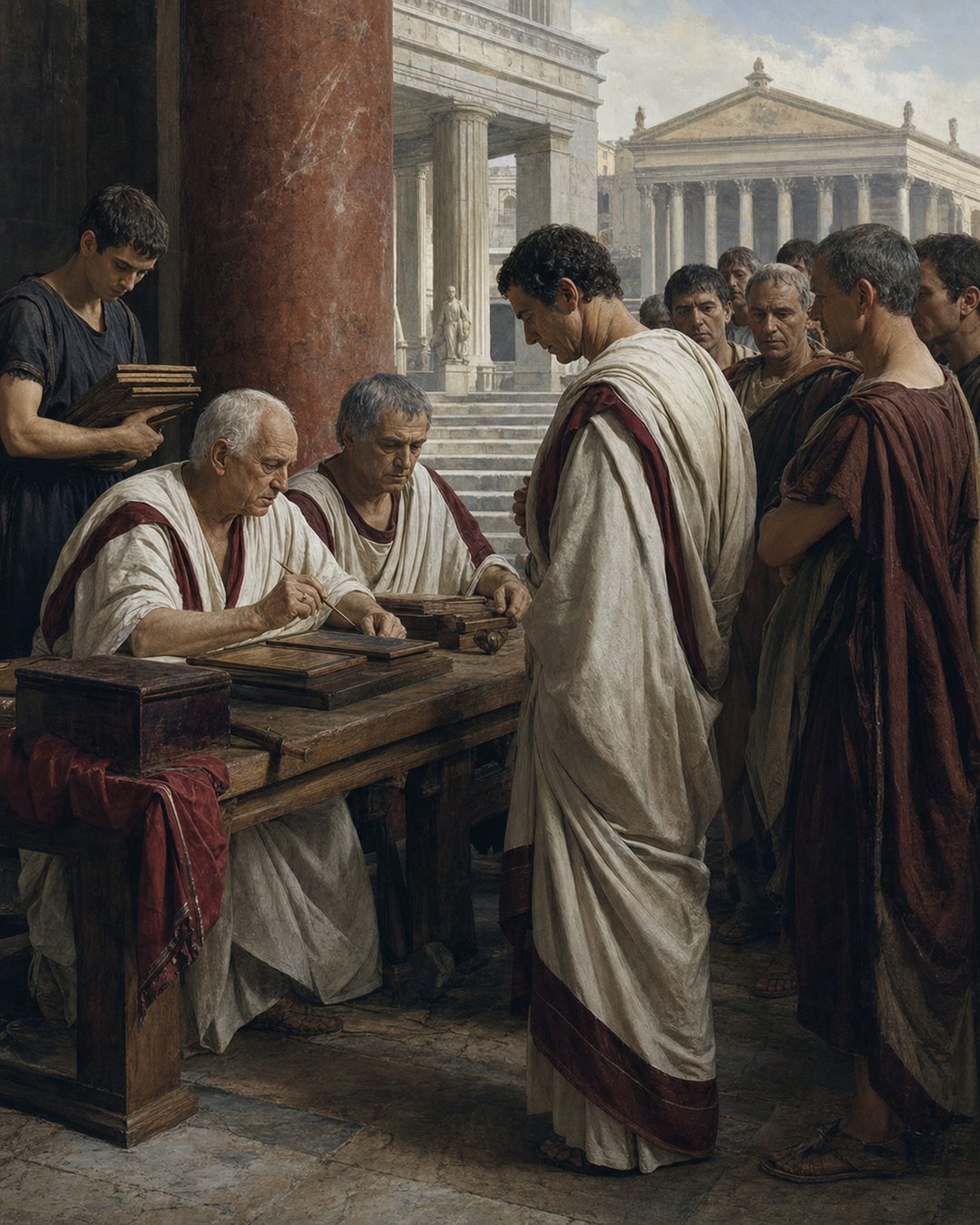
Reputation feels airy until an official writes it down. In Roman civic life, honor, property, household standing, rank, and disgrace could meet at a table where names were reviewed and social position became part of public record.
Roman censors made reputation countable because they joined moral judgment to enrollment. A citizen did not only live among opinions. He could be placed, assessed, marked, promoted, reduced, or remembered through procedures that made status visible to others.
The censor made identity public
Censor names a magistrate whose work reached beyond counting heads. The office touched census, morals, rank, and the public ordering of citizens. That breadth is the point: civic identity was not a private résumé.
Imagine the scene: a citizen in a toga before seated officials, tablets stacked on the table, assistants waiting, family details and property claims exposed to a public routine. Reputation has become an administrative encounter.
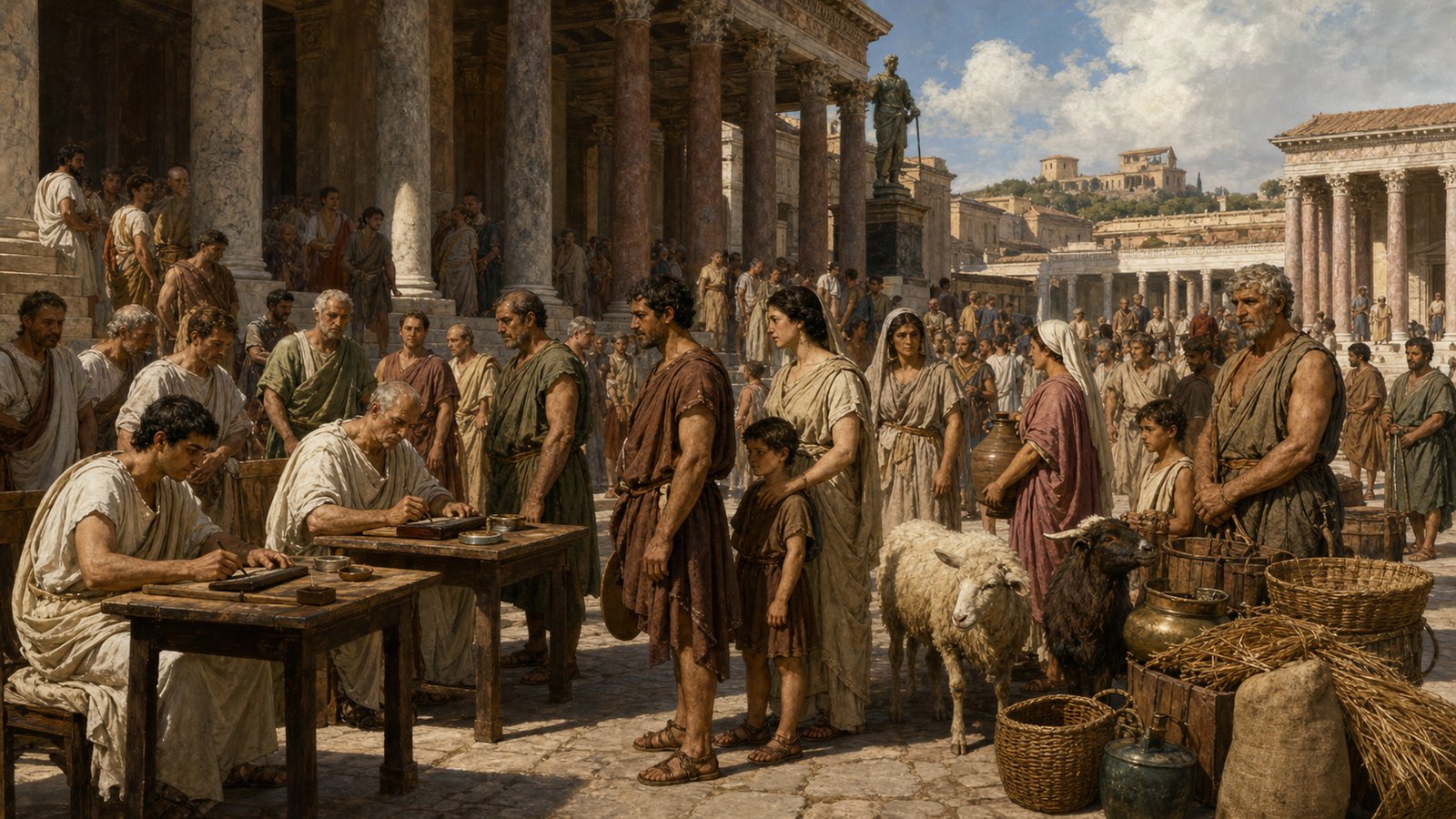
The list changed what people feared
A private insult can fade. A public list can remain. Tabulae, written tablets and records, made position durable enough to be checked, copied, remembered, and challenged. Social standing gained a material surface.
This connects with Roman treasury ledgers. In both cases, writing did not merely record power after the fact. It helped create the conditions under which power could act.
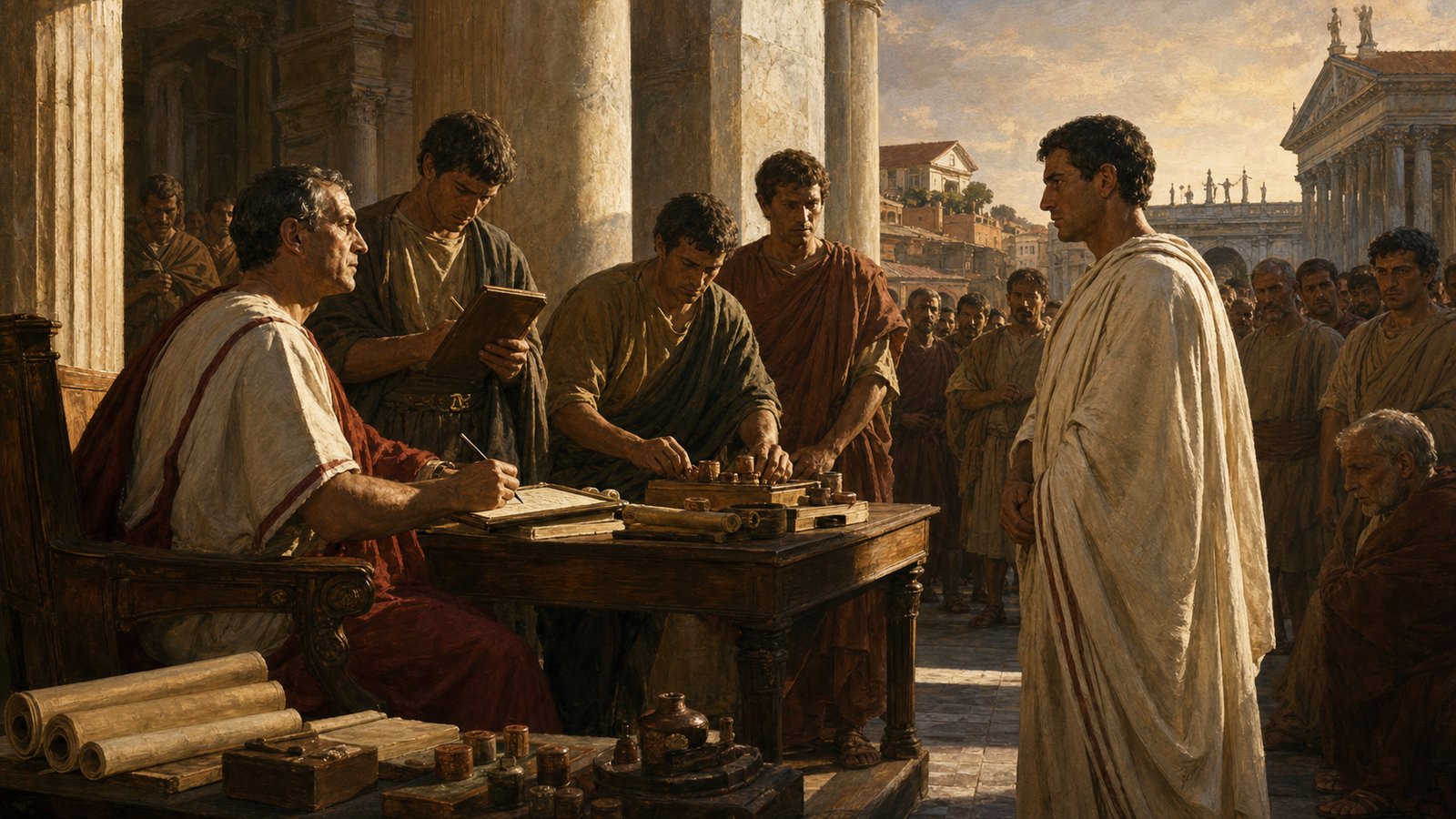
The nota made disgrace attach to a name
Nota could describe a censorial mark. That small idea is severe. Disgrace became more than a rumor whispered at dinner; it could become a sign joined to a citizen’s public identity.
The power was not simply punitive. It taught everyone watching that Roman honor was monitored through recognized channels. A man could lose more than popularity. He could lose formal standing in the eyes of civic memory.
Rank needed repeated recognition
Equites and other ranked groups remind us that status was not one flat category. Rome sorted people into visible orders, privileges, expectations, and obligations. The censor’s work helped keep those distinctions public.
The procedure made rank feel both social and official. Wealth, service, family, conduct, and record all met in a way that could confirm or disturb a man’s place.
Counting became a moral technology
A census can sound like arithmetic, but in Rome counting could become judgment. Who belonged? What did he own? What obligations followed? What shame could be marked? Those questions turned numbers into civic hierarchy.
Censors made reputation countable by letting public order pass through names, tablets, and visible review. Rome did not trust reputation to float freely. It tried to give reputation a place in the city’s records.
This does not mean Roman judgment was fair, impartial, or gentle. Power shaped who was heard, who was believed, and whose conduct mattered. The important point is that Rome gave judgment a public machinery.
The machinery changed behavior because people could imagine future review. A citizen’s acts did not disappear into private memory. They might return as a question at the censor’s table, where household, property, and conduct entered one field of attention.
The scene also made citizenship bodily. A man did not only possess a legal status; he appeared, answered, waited, watched others, and saw officials turn names into order. Civic identity had posture, voice, and embarrassment.
A censorial mark carried force because it joined language to record. Shame could be spoken in many places, but the mark made it harder to treat shame as passing noise. It became a public sign with consequences.
Ranked orders depended on repetition. A status confirmed once could weaken unless institutions kept recognizing it. The censor’s review helped renew the map of civic hierarchy, making the social world appear organized rather than accidental.
The census also linked individual standing to collective capacity. Lists told Rome not only who people were, but what the city could demand from them. Property and obligation met reputation at the same administrative table.
That is why the censors belong in a history of visible power. They did not need to march at the head of an army to shape Roman life. They made status legible, and legibility is one of authority’s sharpest tools.
For the citizen waiting in line, the procedure could feel humiliating, reassuring, or dangerous. He stood before a system that promised recognition but could also expose weakness. The same tablet that confirmed belonging could record failure.
The censors therefore made reputation less dependent on immediate applause. A popular man could still be judged through formal expectations, while a quiet household could be placed within a recognized civic order.
This public review also gave neighbors a language for status. People could point not only to wealth or rumor, but to official placement, recorded rank, and remembered marks. The city’s social imagination gained administrative anchors.
Like many Roman institutions, the system mixed moral language with practical governance. Counting people helped organize obligations; judging conduct helped defend hierarchy; recording rank helped make inequality look orderly.
Roman censors made reputation countable by giving the city a ritual of review. Names met tablets. Property met rank. Conduct met memory. A citizen’s standing became something that could be written, witnessed, and carried forward.
The public table mattered because it made a citizen’s story pass through other people’s eyes. A man could not separate property, age, household, rank, and conduct into sealed private boxes. The review gathered those fragments and asked what place they deserved in the civic order.
For families, the stakes reached beyond one encounter. A recorded loss of standing could alter marriage prospects, political expectations, friendships, and the way neighbors interpreted every future gesture. The mark did not have to shout to change the atmosphere around a name.
The censors also reveal how Roman freedom could be paired with scrutiny. Citizens possessed recognized status, but that status could be inspected through public forms. Belonging meant being counted, and being counted meant accepting that the city might judge the count.
This made the census more than paperwork. It was a civic drama with tablets instead of masks, officials instead of actors, and reputation as one of the things placed on stage. The outcome could confirm a man, unsettle him, or teach others what Rome expected from citizens.
The harshness of the system is part of its historical value. Rome did not imagine public order as merely physical control. It also tried to organize esteem, shame, duty, and hierarchy through repeatable administrative scenes.
A censor’s decision therefore joined memory to consequence. Once a name had been entered, marked, or placed, later Romans could treat that placement as part of the person’s public story. Reputation became countable because records let judgment travel beyond the moment of judgment.
The procedure also created a public rhythm of uncertainty. Citizens could prepare property claims, rehearse explanations, worry about family reputation, and watch others pass through the same scrutiny. The count was not merely a finished list; it was a recurring civic season of exposure.
That exposure made the system powerful even before any punishment. A man who expected review might adjust conduct, display respectability, or seek allies because he knew private life could be translated into public standing. Reputation became countable partly because people began living as if it could be counted.
Sources & Further Reading
- Smith Dictionary, Censor
- Smith Dictionary, Nota
- Smith Dictionary, Tabulae
- Smith Dictionary, Equites