
Death exposed Roman inequality with unusual cruelty. Some families could turn grief into monuments; others faced the fear of being forgotten, mishandled, or left without the rituals that made a life socially complete.
Roman burial clubs made memory affordable because they turned funerary care into a collective obligation. A modest association could give ordinary people a way to plan for honor after death when a great household could not guarantee it.
The collegium made obligation collective
A collegium was an organized association, and that form mattered because death arrives one person at a time while preparation often requires a group. Shared rules and contributions could make care more dependable.
The club did not need to make every member wealthy. Its power lay in pooling small obligations so that one member’s death did not depend entirely on one household’s resources at one terrible moment.
Funeral ritual made memory visible
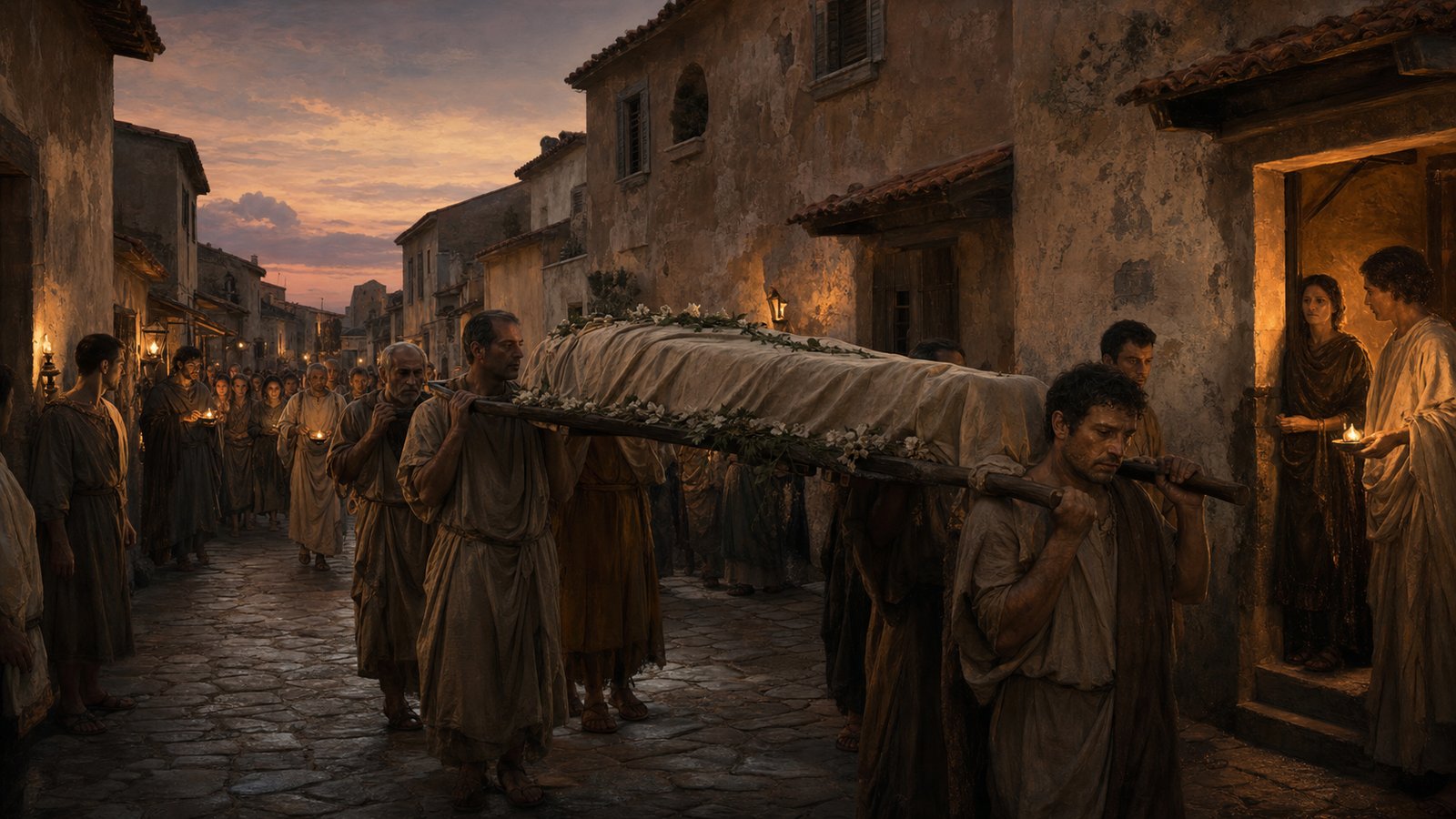
Funus points us toward the public movement and ritual of Roman death. A funeral was not only disposal of a body. It was a transition made visible through attendance, carrying, lament, procession, and placement.
Imagine the mini-scene at dusk: a bier moving slowly through a street, lamps trembling in hands, neighbors stepping back, club members keeping pace because a promise made in life has come due. Memory has acquired feet.
Records protected the promise
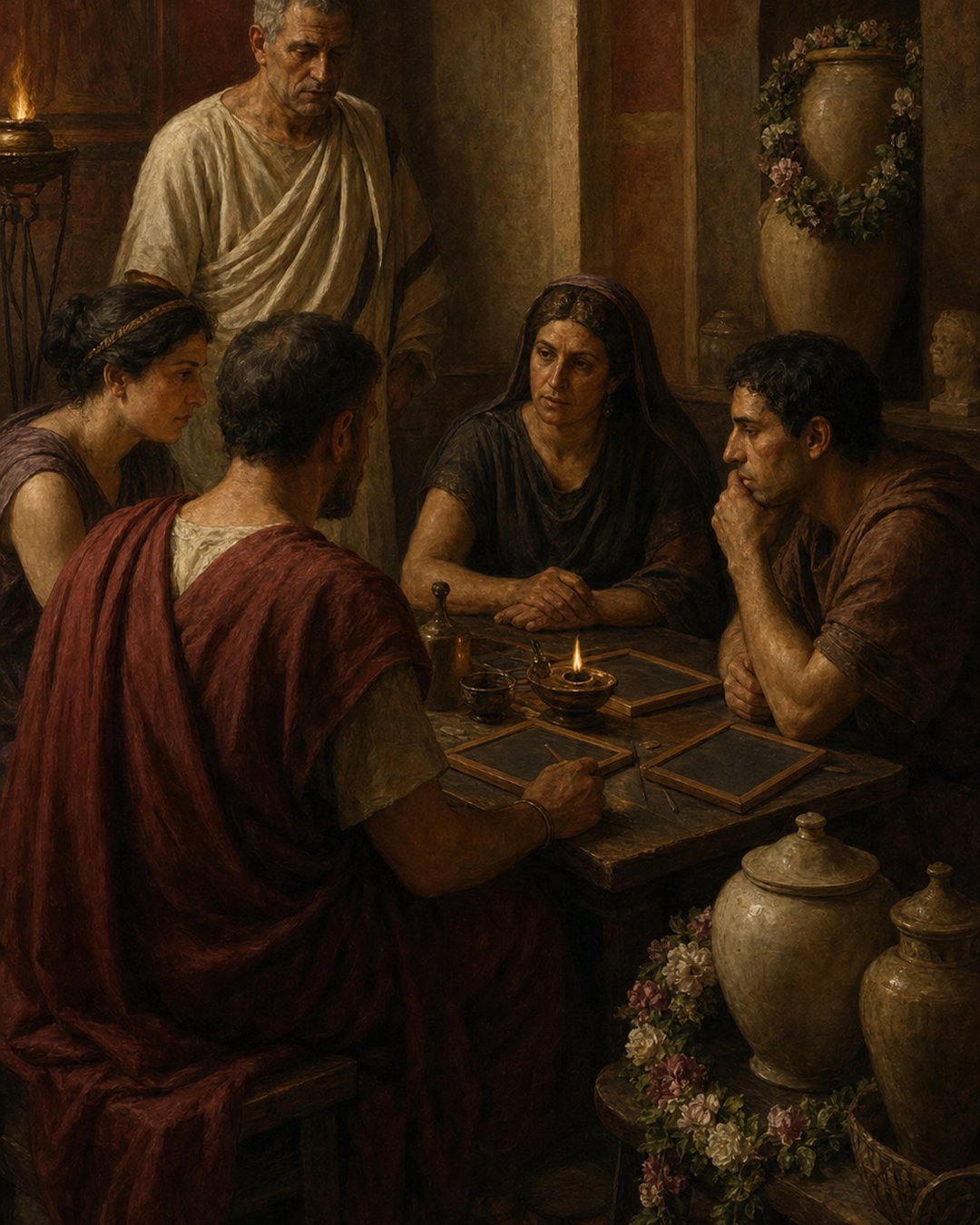
Tabulae mattered because shared care can collapse if nobody remembers the terms. Contributions, names, duties, and obligations needed a memory stronger than emotion.
A tablet in the meeting room changed the future. It said that the member was not depending only on pity. The obligation had been named, recorded, and made part of the association’s identity.
Burial linked grief to property and duty
The word heres reminds us that death created legal and social consequences. Heirs, property, family obligations, and funerary expectations all met around the dead.
For people with limited household power, a club could supplement fragile family arrangements. It offered another body of witnesses who could say that this person’s memory had been promised attention.
A modest tomb could still make belonging durable
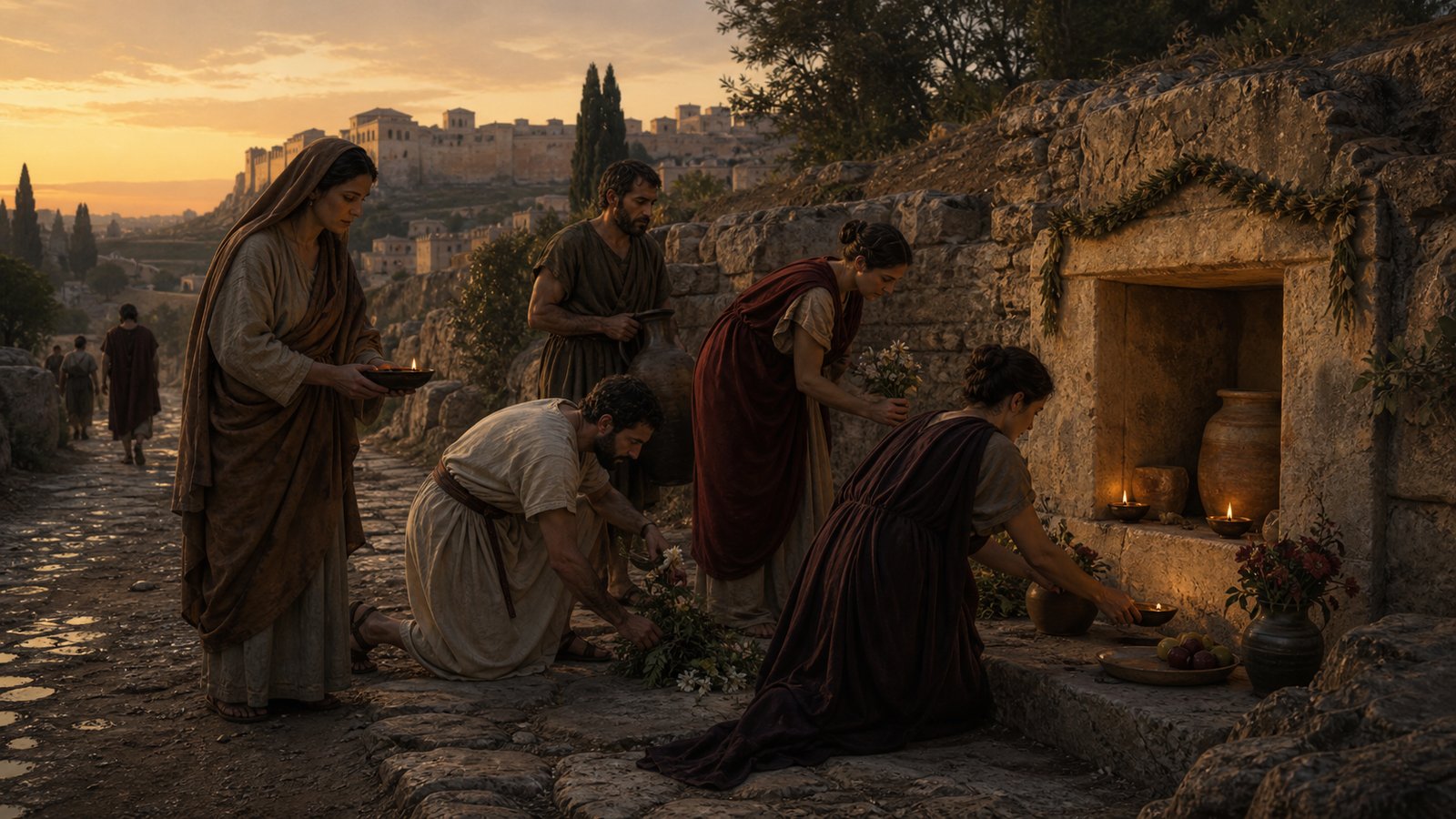
Elite monuments shouted. A smaller niche or collective burial place spoke more quietly, but it still mattered. It gave a name, a body, or an urn a recognized place rather than leaving memory to vanish into rumor.
Affordability changed the emotional meaning of memory. The question was not whether a person could imitate aristocratic display. It was whether belonging could outlast the last breath.
The burial club also changed the psychology of death before death arrived. A member could live with the knowledge that others had agreed to act when he could no longer speak for himself.
That knowledge was practical, not sentimental. It depended on dues, rules, meetings, records, and people willing to do unpleasant work when grief and inconvenience collided.
The association made memory social. A person’s end was not left entirely to private affection, which might be absent, poor, distant, or overwhelmed. The group gave obligation a second foundation.
This did not remove fear. Roman death remained surrounded by status, expense, ritual expectation, and uncertainty. But collective preparation could reduce the terror that poverty would turn a person into an unmanaged body.
Funeral movement mattered because it made the promise visible to the living. The procession showed that someone had companions, even if those companions were bound by association rather than blood.
The tomb or niche mattered because place stabilizes memory. People need somewhere to go, point, clean, decorate, or mention. Without place, remembrance becomes much easier to neglect.
Records made that place more secure. A name on a tablet, an account of contributions, or a note of obligation kept the club from becoming only a collection of good intentions.
A burial association therefore joined emotion to administration. That may sound cold, but it was precisely the mixture that made the promise useful. Memory needed feeling, and it needed organization.
There is a deeply Roman quality in that combination. The same culture that staged elite funerals with ancestral display also allowed humbler forms of collective remembrance to give ordinary people a claim on dignity.
The burial club made memory affordable by making it shared. It turned the final vulnerability of one body into a duty that many bodies could carry together.
The affordability was not only financial. It was emotional and organizational. A member did not need to invent a funeral network from nothing at the worst possible hour; the network had already been named.
The public procession made the agreement visible to outsiders. Lamps, bearers, and companions showed that even a modest person could leave behind a body of witnesses who knew what was owed.
The records gave those witnesses discipline. A club without memory could become a promise easily forgotten; tablets and accounts made neglect easier to accuse and responsibility easier to locate.
This is why burial clubs belong beside Rome’s larger monuments in any history of memory. They reveal how people below the highest ranks tried to secure a future presence without pretending to be aristocrats.
A small niche, a carried bier, and a list of members could never match a great family tomb. But they could answer a more urgent question: when I cannot speak, will anyone still know what should be done?
The answer made collective belonging visible at the edge of death. It showed that Roman memory was not only inherited from famous ancestors; it could also be purchased in small shares, guarded by rules, and carried by companions.
The scale of this promise matters. It was not the language of conquest, triumph, or senatorial ancestry. It was the smaller language of members, dues, lamps, bearers, and a place prepared before panic arrived.
That smaller language could still be profound. A person who feared disappearing into poverty gained a structure in which others had already agreed that his death would not be treated as mere disposal.
The club therefore made dignity administrative. It translated compassion into procedures: who contributed, who attended, who carried, who recorded, and who remembered after the funeral noise faded.
This procedure did not make grief less real. It made grief less lonely by giving it companions and tasks. In Rome, even memory for the modest could become a public obligation when people organized before the need came.
The arrangement also protected the living from uncertainty. A member could know that the cost, route, and minimum honor of burial had been discussed before grief made decisions urgent and confused.
That prior agreement is the heart of the story. Burial clubs made memory affordable because they moved care from emergency to preparation, from private panic to shared routine.
When the bier moved through the street, the association’s promise became visible. People did not see only a corpse; they saw a network fulfilling what it had recorded, funded, and rehearsed in advance.
The result was humble, but not small. It turned one of life’s most unequal moments into a scene where organized companions could still give a member a recognized place among the dead and the remembered.
Sources & Further Reading
- Smith Dictionary, Collegium
- Smith Dictionary, Funus
- Smith Dictionary, Heres
- Smith Dictionary, Tabulae