
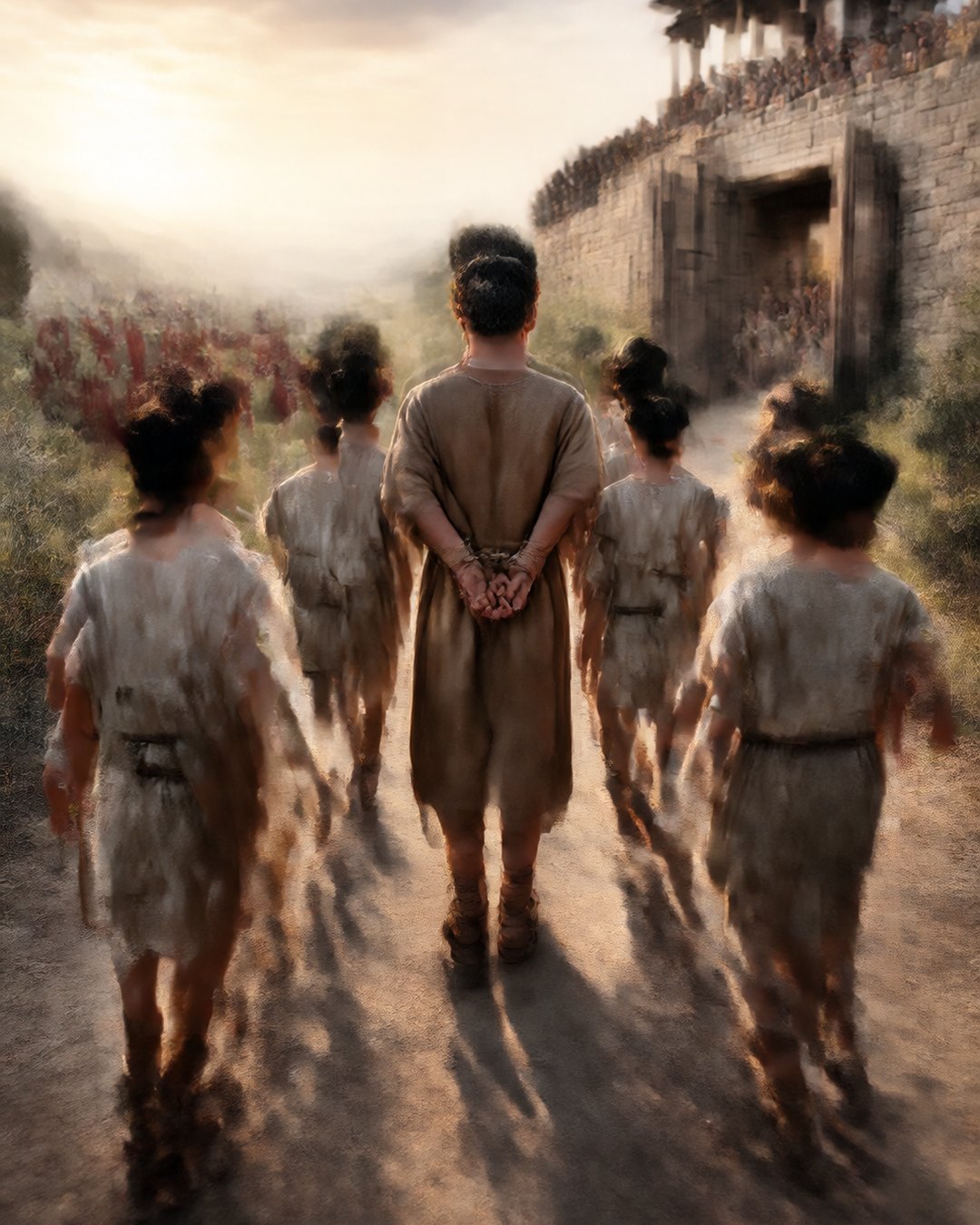
The betrayal began as a school routine. Livy says a tutor at Falerii regularly took the sons of leading families beyond the city for play and exercise. He had done it in peace, so the gate opened for him during war. Short walks became longer ones. Conversation and games carried the boys farther than usual until their teacher led them through Roman guards and into the camp of Camillus.
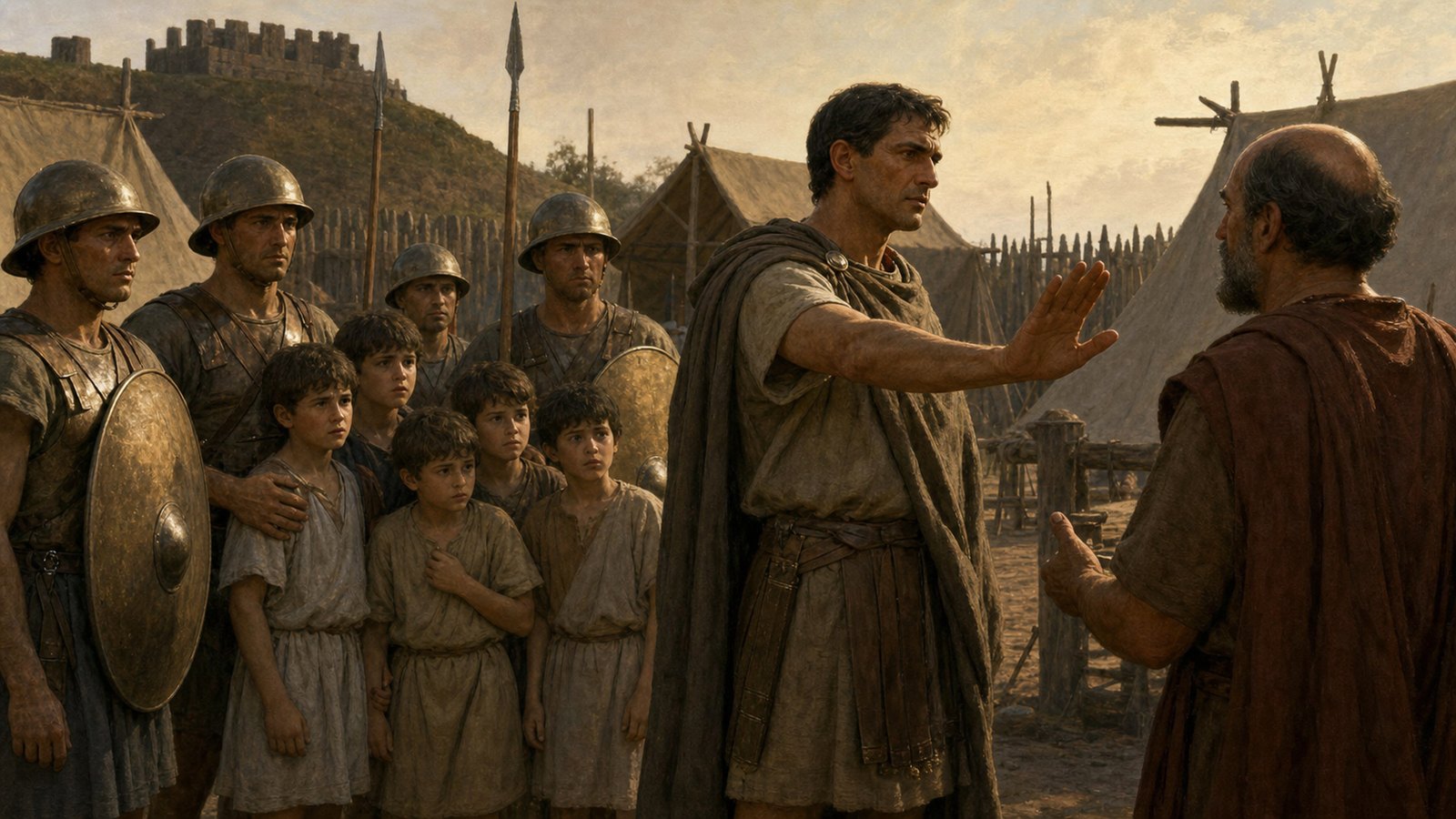
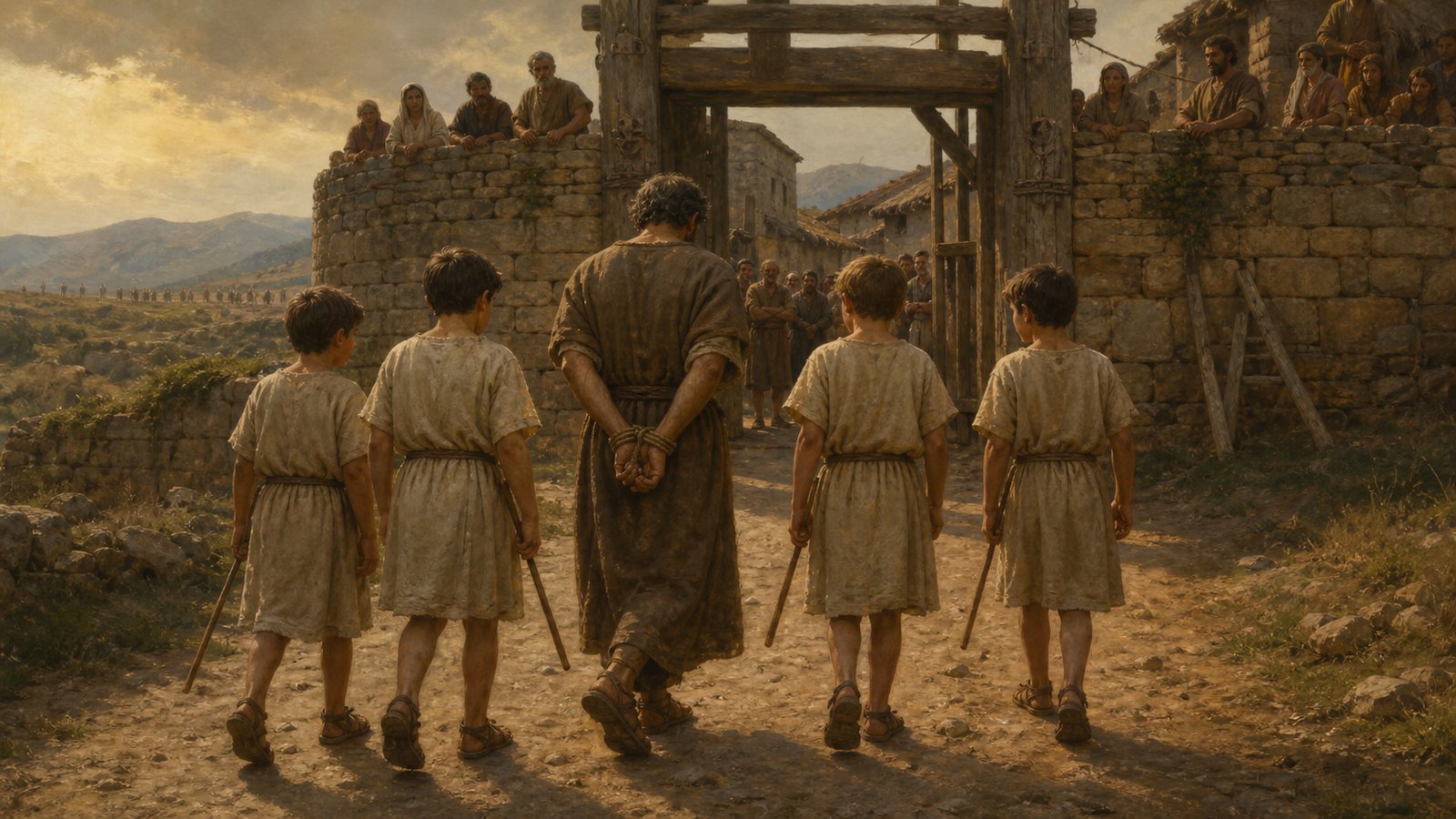
The tutor expected the children to function as a key. Their parents stood at the head of Falerii, he argued, so putting the boys in Roman hands amounted to delivering the city. Camillus refused the offer. He ordered the man stripped, tied his hands behind his back, gave rods to the children, and sent the entire group toward the gate in reverse.
Livy’s episode is often reduced to a lesson about honour. Its mechanism is more exact. A private betrayal had to be answered in public, across the same ground that made it possible. The children ceased to be proposed hostages and became witnesses carrying the evidence home. Military restraint gained force because Falerii could see it.
A Trusted Walk Became a Siege Route
The tutor’s access depended on repetition. Faliscan custom placed several youths under one preceptor, and this man taught children from prominent households. During peace he took them outside the walls. The outing looked ordinary because it had happened before: a familiar adult, a known group, exercise, play, and a return through the gate.
War changed the landscape without immediately changing the routine. The Roman camp stood outside, yet the tutor continued the excursions. Livy describes a gradual extension, sometimes shorter and sometimes longer, before the decisive walk. That sequence matters. He did not need to overpower guards or drag unwilling pupils through a hidden tunnel. He converted trust into distance one accepted step at a time.
Once beyond the gate, children from the leading families carried unusual political value. They could be threatened, exchanged, or displayed as proof that civic leaders had lost control of their own households. The tutor understood this logic and presented the boys as a complete shortcut through the siege.
The route therefore joined domestic authority to military geography. A school custom crossed the boundary between protected city and hostile field. Livy’s Rome had long treated roads, camps, and gates as instruments of command; the empty ground around a Roman camp shows how carefully soldiers managed approach. At Falerii, the dangerous opening arrived under the harmless appearance of a lesson.
Camillus Refused the Hostage Calculation
The tutor’s proposal was brutally practical. The boys’ parents influenced the city, and fear for them might end resistance faster than assault. Camillus did not dispute their importance. He rejected the means by which they had entered his power.
Livy gives him a formal answer. There are laws in war as in peace, Camillus says, and Roman arms are directed against armed men rather than the age spared even when cities are captured. The speech distinguishes battlefield danger from betrayal of dependants. Falerii was an enemy, but that status did not make every action against every Faliscian legitimate.
This is Livy shaping a moral commander, not a transcript preserved by a camp clerk. The polished antithesis serves the historian’s design. Even so, the action that follows is concrete. Camillus did not merely decline to use the hostages and send everyone away. He separated the children from the betrayer, restrained the adult, and transferred control of the return to those he had exploited.
The refusal also carried risk. Returning the boys surrendered immediate leverage and gave Falerii no guarantee that Rome would not later face the same defenders. Camillus chose a slower claim: that victory by Roman courage, labour, and arms would be more secure than a city obtained through one tutor’s crime.
The Return Reversed Every Part of the Betrayal
Livy’s staging is precise. The teacher had led clothed and trusting pupils outward; he returned stripped, bound, and driven by them. He had controlled the length and direction of the walk; now the children controlled his movement. He had spoken for their value in the Roman tent; their rods supplied the answer without a diplomatic speech.
The rods should not make the scene sentimental. The children had been frightened, used, and then made participants in an exemplary punishment. Livy does not record their names or private reactions. His interest lies in the visible reversal. They cross the contested space as a group no longer treated as spoils.
That visibility turned a command decision into communication. A secret release could have been misunderstood as weakness or failed bargaining. A bound traitor driven toward the walls made the reason legible. The tutor himself became the message: Rome possessed the proposed advantage and deliberately returned it.
Roman punishment often marked bodies so that an audience could read status and fault. The opened vein used to disgrace a soldier likewise joined discipline to a visible bodily sign. At Falerii the spectacle faced outward. It told an enemy city what sort of victory Camillus claimed to seek.
A Crowd Turned Restraint into Leverage
Livy says people gathered at the extraordinary sight. Magistrates then convened the senate, and sentiment changed with remarkable speed. The city that had resisted in anger now praised Roman good faith and the commander’s justice. Ambassadors went first to Camillus and then, with his permission, to the Roman senate.
The sequence shows why the return had strategic weight. Parents recovered their children, but the effect spread beyond private relief. The forum and senate-house interpreted the act together. Camillus had demonstrated that Roman power could impose a limit on itself even when an enemy offered a tempting advantage.
The Faliscan envoys, as Livy represents them, said they had been overcome by a victory displeasing to neither god nor human being. Rome preferred faith to present victory; Falerii, challenged by that faith, voluntarily yielded victory. The language turns restraint into conquest while preserving a distinction between the two. No wall fell in the episode, but the political basis for continued resistance did.
Livy’s conclusion remains a Roman story told for Roman readers. It presents submission as happy recognition of superior justice and compresses whatever arguments divided Falerii. The material settlement was not costless: money was required to pay the Roman soldiers for the year. Moral victory still ended in Roman sovereignty and a financial burden.
The Story Made Law of War Performable
The episode survives because Livy made an abstract rule move. “Laws of war” could have remained a sentence in Camillus’s tent. Instead they travelled toward Falerii in the shape of returned children, a bound tutor, and rods rising on the road.
That performance did several jobs at once. It protected the boys from becoming coercive objects, punished the breach of trust, displayed Roman self-command, and gave Faliscan leaders a reason to change course without waiting for a bloody assault. Ethics and strategy were not opposites in Livy’s construction. Restraint worked because it was made public at exactly the moment when betrayal offered speed.
The story does not prove that Roman warfare consistently spared children or rejected treachery. Roman history supplies abundant violence against civilians. Livy offers an exemplary exception and asks readers to judge commanders by it. The standard gains force precisely because it was not automatic.
Falerii’s gate had first opened for a harmless routine. Camillus sent that routine back transformed. The children returned alive, the shortcut was refused, and the siege ended through a spectacle about the boundaries of victory. A teacher tried to turn trust into a weapon; Livy’s commander turned its rejection into the decisive act.
Sources
Livy, History of Rome, Book 5, chapter 27.