
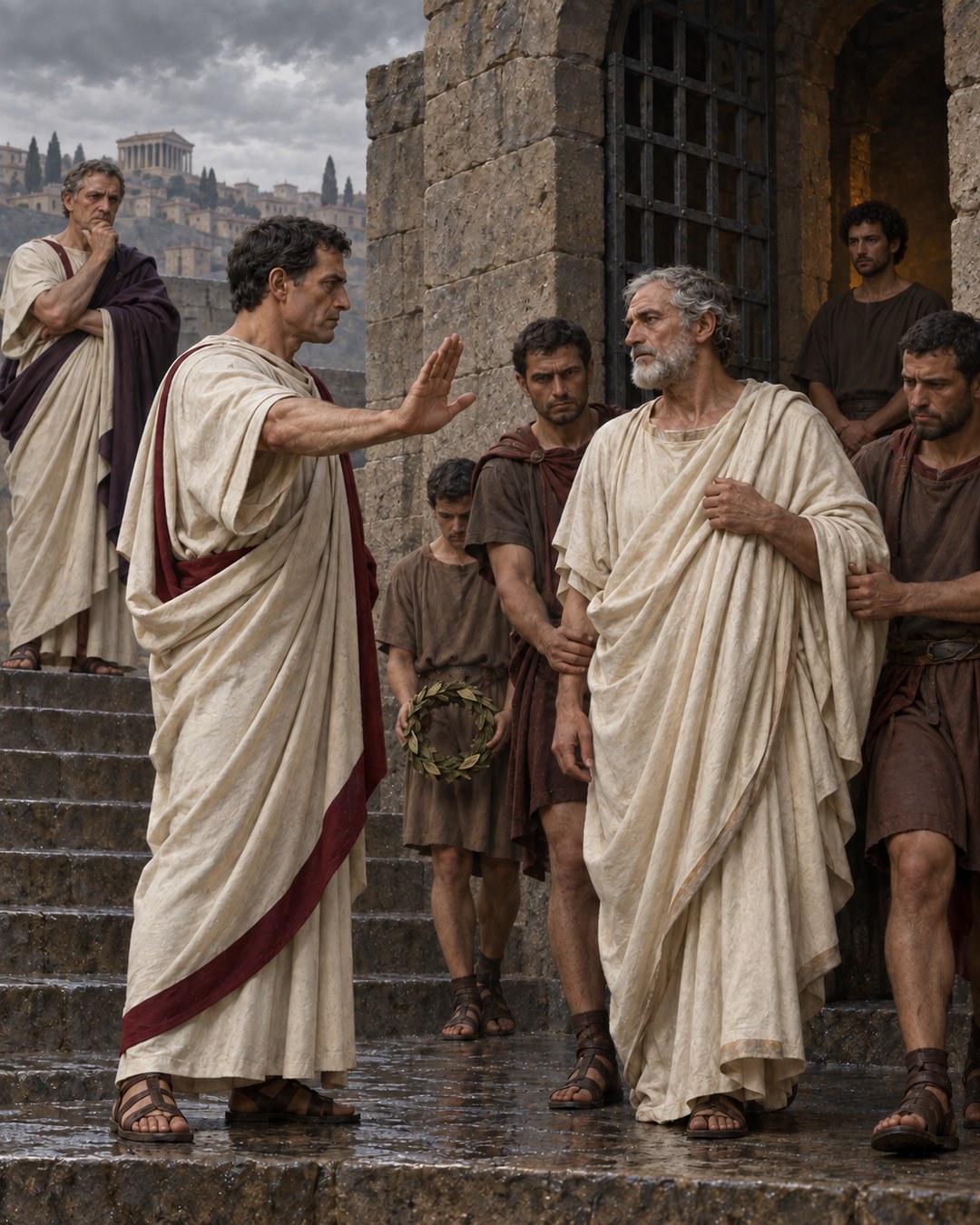
Lucius Scipio Asiaticus had commanded Roman armies and celebrated a triumph. Now a tribune fined him, demanded security for payment, and ordered him toward prison when he refused.
His brother, Publius Scipio Africanus, appealed to the other tribunes. Eight offered only a conditional shield. Then an avowed political enemy supplied the veto that friendship could not secure.
Tiberius Sempronius Gracchus stopped the arrest without pretending the feud was over.
A Fine Became a Test of Collective Tribunician Power
Aulus Gellius begins with Gaius Minucius Augurinus, one of the tribunes of the commons. Augurinus imposed a fine on Lucius Scipio Asiaticus and required him to furnish security for payment.
The demand mattered because money alone did not enforce itself. Security gave the state something dependable to claim if payment failed. Refusal moved the dispute from an assessed penalty to control of the defendant’s body.
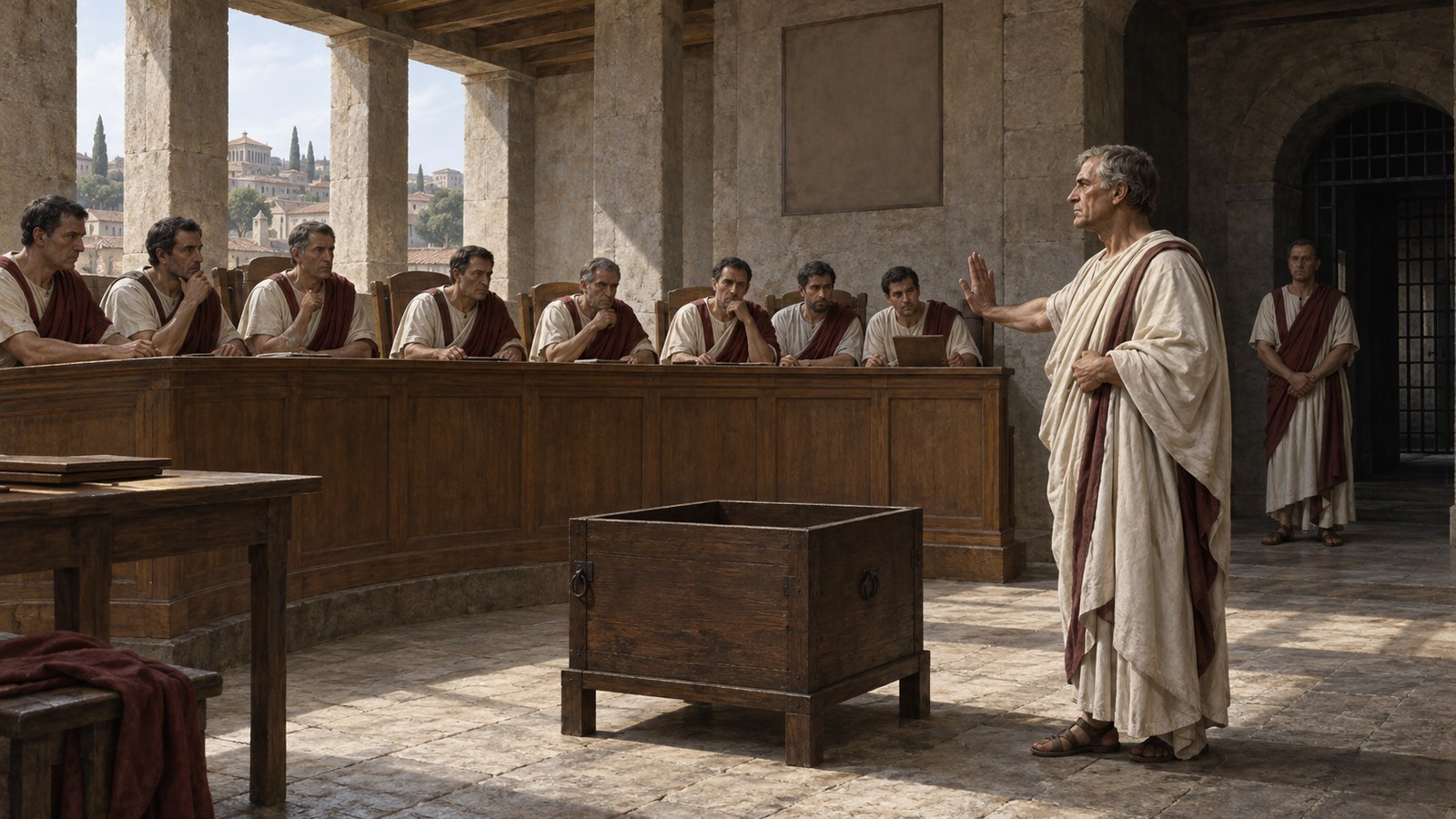
Publius Scipio Africanus appealed to the college of tribunes for his brother. He described Lucius as a former consul and triumphant commander and asked the group to restrain what he called the violent action of their colleague.
The appeal exposed a feature of republican office: one tribune’s force could meet another tribune’s protection. The college did not operate as a single undivided executive. Colleagues had to decide whether intervention was justified.
Eight tribunes heard the case and issued a formal answer. Their decree repeated both sides. Africanus alleged an unlawful assembly, neglected auspices, an unprecedented fine and threatened imprisonment. Augurinus asked them not to obstruct his lawful authority.
The eight chose a narrow middle. If Lucius gave the required security, they would stop imprisonment. If he refused, they would not interfere. Protection depended on compliance with the financial demand.
The wording made responsibility traceable. Augurinus would own the decision to imprison, the eight would own their refusal to obstruct him, and Lucius would own the refusal that activated the threat. Collegial government did not dissolve agency into a crowd; the decree recorded where each choice sat.
The recent account of senators following Cato toward prison shows collective movement turning detention into a constitutional confrontation. Lucius’s case first produced the opposite response: most colleagues let the coercive mechanism continue.
Lucius Refused the Condition That Would Have Kept Him Free
Lucius did not furnish security. Gellius gives no private speech explaining the refusal, so pride, poverty and tactical calculation should not be supplied for him.
The public consequence is clear. Augurinus ordered his arrest and transfer to prison. The eight-tribune compromise had reached its own limit because the condition for their assistance had not been met.
A security demand occupied a revealing middle ground between verdict and confinement. It translated a monetary judgment into a promise backed by property or guarantors. Lucius’s refusal removed that bridge, leaving Augurinus to reach for the harsher instrument attached to noncompliance.
This sequence prevents the story from becoming a simple tale of aristocratic immunity. Lucius received an offered route away from confinement. He declined it. The college did not erase the fine because of his family name, consulship or triumph.
At that point the issue changed. The question was no longer whether security should be given. It was whether imprisonment was an acceptable way to proceed against this particular former commander after his refusal.
Roman political honor often lived in such distinctions. One could accept that an official possessed authority yet oppose a chosen consequence. A veto did not need to deny every earlier act in order to halt the next one.
The story of Africanus converting a trial day into Zama’s anniversary follows a commander answering legal pressure with the memory of victory. Here the memory of command entered through someone who insisted he was no friend of Africanus.
Gracchus Preserved the Feud before Exercising the Veto
Tiberius Sempronius Gracchus was also a tribune. Gellius identifies him as the father of the later Tiberius and Gaius Gracchus, but the chapter belongs to the father’s decision.
Before reading his decree, Gracchus made a public oath about his relationship with Africanus. He had not reconciled with him. He had not become his friend. Their repeated political disagreements still stood.
That declaration removed the easiest explanation for his intervention. The veto could not be treated as payment for a new alliance or concealed affection. Gracchus deliberately kept personal and political hostility visible.
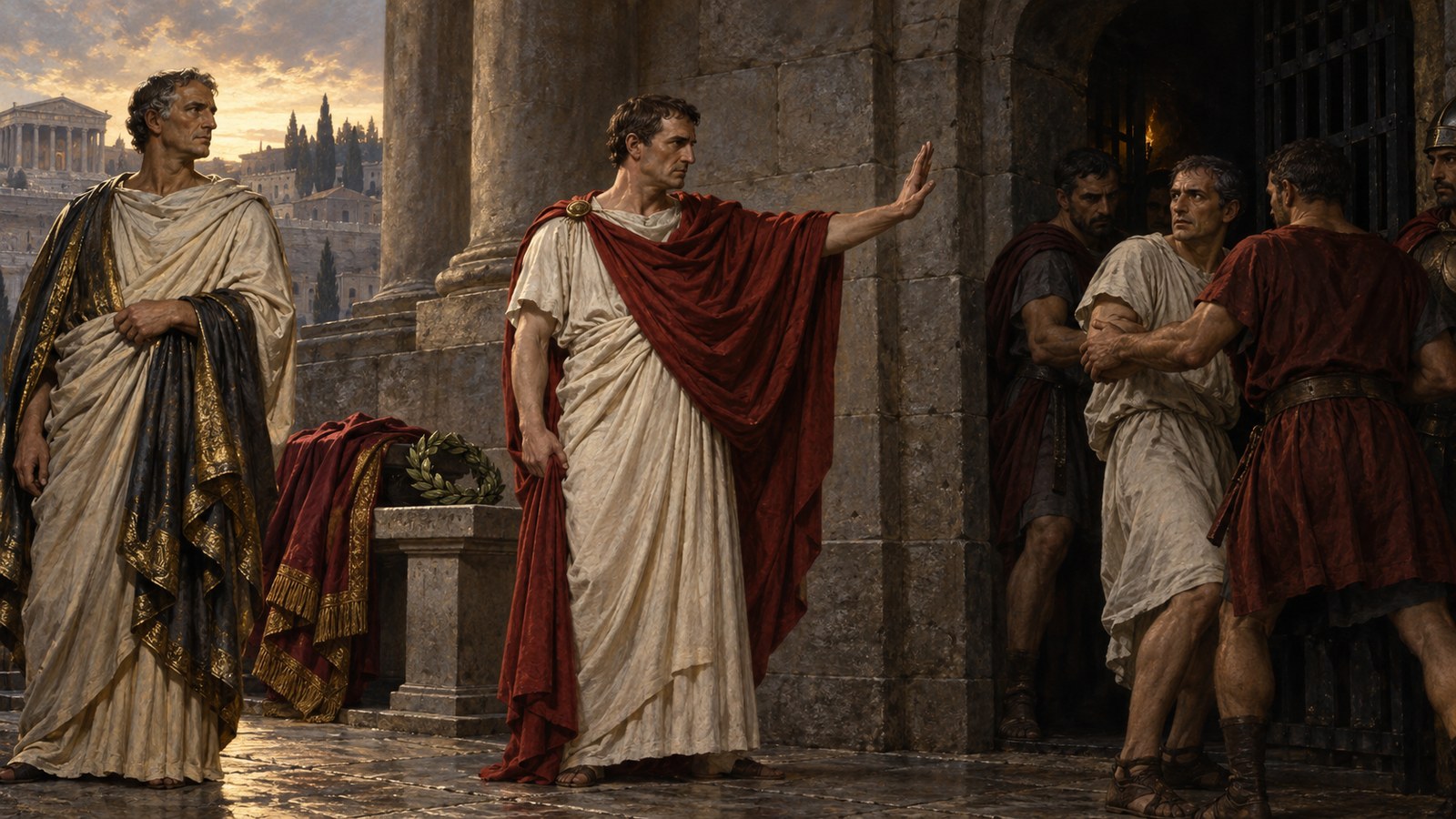
He then forbade Augurinus to use force against Lucius. The order assisted Africanus’s brother, but it did not endorse Africanus’s whole complaint or adopt the eight colleagues’ conditional bargain.
The separation gave the action its exemplary force for Gellius. Gracchus could judge an opponent’s treatment without turning the opponent into a friend. Office required a decision about the act in front of him, not a permanent sorting of citizens into protected allies and abandoned enemies.
This is more demanding than neutral language suggests. A public enemy offered an easy reason to stand aside. Gracchus instead made non-reconciliation part of the record and intervened anyway.
A Triumph Supplied the Boundary Gracchus Would Not Cross
Gracchus’s decree did not rest on a general claim that commanders were immune from punishment. It used a concrete contrast involving the prison itself.
During his triumph, Lucius Scipio had sent defeated enemy leaders into confinement. Gracchus argued that it was contrary to the dignity of the country for the Roman people’s commander to be delivered to the same place.
The prison therefore carried two meanings. In a triumphal sequence it displayed Roman victory over foreign leadership. In the proposed arrest it threatened to reverse the direction of that symbolism and place the victorious commander where his captives had gone.
Gracchus treated that reversal as a public problem, not merely as Lucius’s humiliation. His decree invoked the standing of the country. Rome’s handling of its commander would interpret Rome’s own triumph after the procession had ended.
This reasoning remained selective. It did not say the fine disappeared. It did not compel Lucius to offer security. It did not declare Augurinus without authority in every respect. It blocked force at the point where coercion met a symbol of national victory.
Modern readers need not accept the hierarchy behind that distinction to see its constitutional texture. Republican restraint could emerge from status, memory and rivalry together rather than from a universal rule stated in abstract terms.
A Conflicting Annalist Shows the Story Was Already Contested
Gellius closes by preserving a contradiction. Valerius Antias placed the intervention after Africanus’s death and connected Lucius’s danger to conviction for embezzlement of money taken from Antiochus.
That account conflicts with the quoted decrees and older annalistic record as Gellius presents them. The disagreement matters because it warns against blending every version into one seamless scene.
In Gellius’s preferred evidence, Africanus personally appealed, the eight tribunes issued their conditional decree, Lucius refused security, and enemy Gracchus vetoed imprisonment. Antias supplied a different chronology and charge.
The exact legal background may therefore remain contested, but the exemplary structure Gellius wanted is not obscure. A feud persisted. A coercive step approached. An officeholder distinguished opposition to a man from judgment of an act.
Gracchus did not rescue Lucius by declaring him innocent. He did not reconcile with Africanus in order to be humane. He refused to let one political conflict decide every constitutional response that followed from it.
That pattern gives the anecdote value beyond personal magnanimity. A republic depends on opponents who can recognize a limit without denying that they remain opponents. If every restraint requires alliance, then rivalry makes restraint impossible precisely when it is most needed.
The raised hand at the prison door did less than end an arrest. It showed that rivalry could survive restraint—and that restraint did not need friendship as its excuse.
Sources
Aulus Gellius, Attic Nights, book 6, chapter 19.