
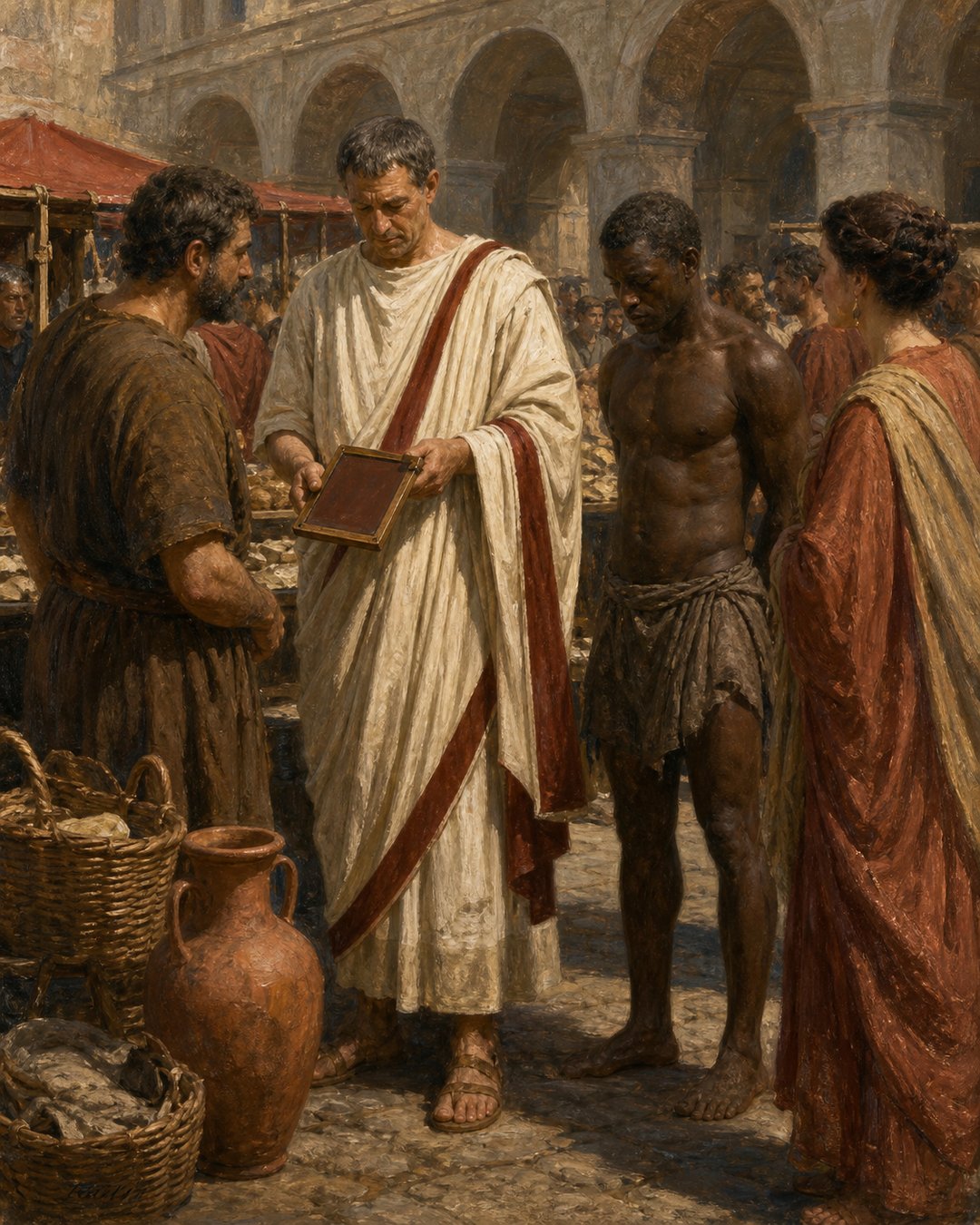
A single missing tooth divided two Roman jurists. Servius thought it could justify returning an enslaved person after a sale. Labeo thought that conclusion was absurd.
The disagreement appears in Aulus Gellius’s discussion of the curule aediles’ market edict. The rule required a sale ticket to reveal disease, defect, flight, vagrancy and an unresolved condemnation. Disclosure sounds straightforward until a buyer, seller or magistrate has to decide what counts as disease.
Labeo defined it as an unnatural bodily condition that impaired usefulness. Yet the surviving arguments immediately strain that formula. Was short-sightedness an illness or a natural trait? Did congenital barrenness differ from a condition caused by failed health? Could the absence of one tooth make a person legally unsound when many otherwise healthy adults lacked one?
The answers mattered because Roman law treated enslaved people as saleable property. Gellius preserves the jurists’ technical distinctions, not the voices of those whose bodies were inspected and priced. Read with that limit in view, the missing-tooth argument reveals how a market converted human variation into categories, disclosures and remedies.
The sale ticket tried to make hidden risk visible
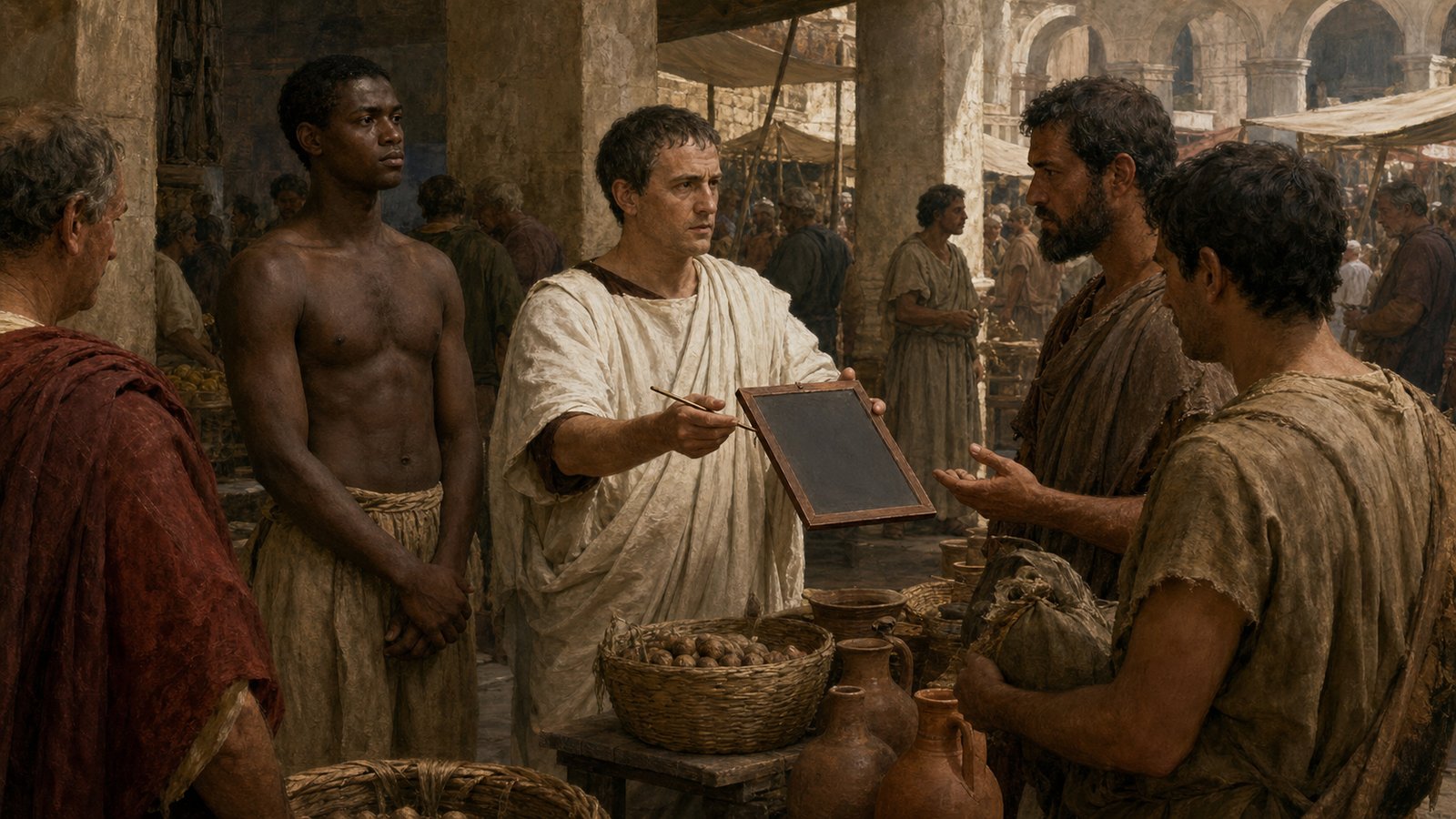
The curule aediles supervised important parts of urban market life. In the section Gellius quotes, their edict required the ticket attached to each sale to state exactly what disease or defect the enslaved person had. It also had to identify a runaway or habitual wanderer and disclose an outstanding condemnation for an offence.
Each item addressed information a buyer might not discover during a brief inspection. Fever could recede. A history of flight did not appear on a face. Legal exposure could be absent from the body altogether. The ticket therefore joined physical condition, behavior and status in one compulsory account.
This was not modern consumer protection, and it did not challenge the sale itself. The rule operated inside slavery. Its practical concern was whether the transaction had been accurately described and whether an undisclosed condition supported a remedy.
That transactional setting resembles the fixed twenty-five-as penalty that turned an insult into a calculated cost. In both cases, a formal rule met behavior that its wording could not completely control. A price, ticket or penalty looked exact, but application still depended on judgment.
The edict created a demand for definitions. Once “disease” and “defect” appeared on the ticket, jurists had to say whether the terms overlapped and which conditions belonged under each.
Labeo made usefulness the center of disease
Caelius Sabinus quoted the jurist Labeo’s definition: disease was an unnatural condition of a body that impaired its usefulness. It might affect the whole body, as consumption or fever did, or only a part, as blindness or lameness did.
The phrase “impairs usefulness” carried the market’s logic into the definition. The body was assessed through expected function. Gellius does not supply one universal task against which every person was measured, and the edict covered people sold for many forms of labor. The definition therefore opened another question: useful for what, and impaired by how much?
Labeo separated disease from a wider field of defects. Someone who stuttered or stammered was defective rather than diseased. His animal comparison made the distinction vivid: a horse that bit or kicked had faults, not an illness. Every diseased person was also defective, he said, but a defective person was not necessarily diseased.
That asymmetry mattered. “Defect” could describe more conditions than “disease,” while the available action depended on how a condition fitted the edict. Labeo also connected impairment with price, saying it was fair to state how much less the person was worth because of the condition.
The words sound clinical, but the process was commercial. A person’s fever, eyesight, speech or limb became evidence in an argument about description and value. The legal sophistication did not soften the underlying ownership; it made the transaction more finely classified.
Congenital and acquired conditions produced different answers
The hardest cases were not hidden facts alone. They were conditions whose legal meaning changed according to cause.
Labeo ruled that an undisclosed eunuch could be returned as diseased. He also allowed an action under the aediles’ edict when sterile sows had been sold. The second example shows jurists testing the same vocabulary across the market for humans and animals, with reproductive capacity treated as commercially relevant.
For a barren enslaved woman, Trebatius disagreed with Labeo. Labeo considered her returnable as unsound. Trebatius drew a line between a condition present from birth and one resulting from failed health. Congenital barrenness did not support an action under the edict in his view; a later health failure that prevented conception did.
Short-sightedness generated a similar split. Some jurists allowed return in every case. Others did so only if disease had produced the poor vision. Masurius Sabinus went further in the direction of natural variation: someone near-sighted by nature was as sound, he said, as someone who merely ran more slowly than others.
Cause could therefore matter as much as effect. Two people with the same practical difficulty might receive different classifications because one condition was congenital and the other acquired. The law was not just reading bodies. It was constructing histories for them.
That reliance on legal voice offers a grim contrast with Afrania’s remembered ability to argue in court. Here the enslaved individuals do not appear as advocates. Jurists speak about their bodies, sellers make disclosures, buyers pursue remedies, and the affected person remains the object of the dispute.
One tooth exposed the limits of every tidy definition
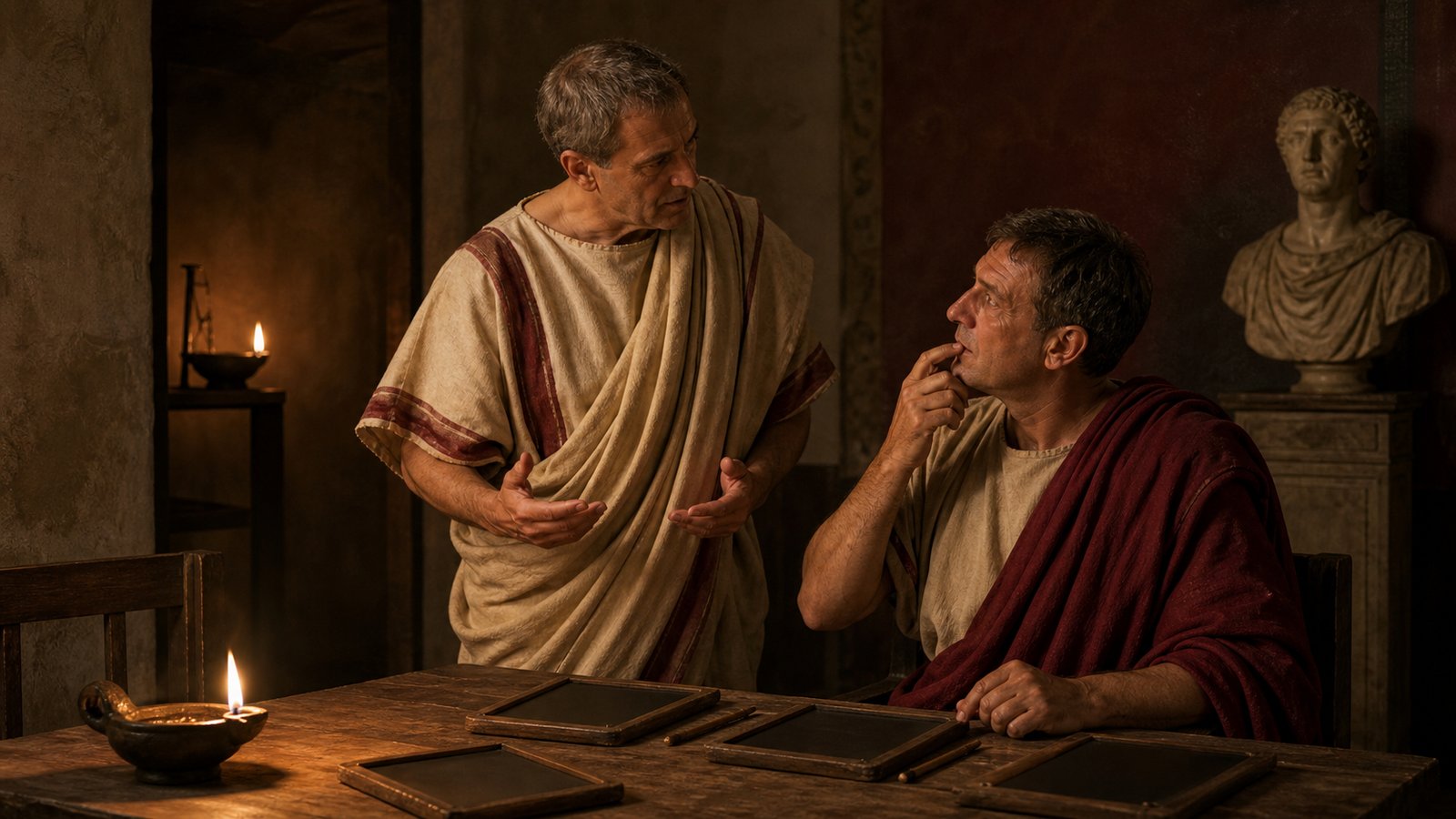
Servius ruled that a person lacking a tooth could be returned. Labeo rejected the result. Many people lacked one tooth, he observed, without being diseased. He sharpened the objection with infants: humans were not born unsound merely because they entered the world without teeth.
The joke-like force of the example should not hide the legal problem. A missing tooth was visible, lasting and physically real. Yet permanence alone did not prove illness, and difference alone did not prove impaired usefulness. If every departure from an ideal body triggered return, ordinary human variation would make the category unmanageably broad.
Another early distinction made defect lasting while disease came and went. Gellius immediately notices the trouble: under that rule, blindness and castration would not count as diseases, contrary to Labeo’s examples. A neat temporal line collided with conditions that were permanent but had already been placed within disease.
Masurius Sabinus supplied still another list. Madness, muteness, a broken limb or a crippled limb counted as disease when usefulness was impaired. Natural near-sightedness did not. The jurists were not selecting labels from a settled medical chart. They were negotiating the reach of market language through examples.
Gellius’s chapter preserves no final code that dissolves every contradiction. Its value lies in the argument. Sale-ticket words had practical force, but their boundaries remained vulnerable to the next body, the next history and the next lawyer.
The missing tooth wins the chapter because it is so small. It forces the law to decide whether a visible difference is an illness, a defect, neither, or simply common. Servius and Labeo could agree that the edict required disclosure while disagreeing about the remedy. Regulation made the question unavoidable; it did not make the answer automatic.
For the people sold under this system, those classifications were imposed rather than chosen. Gellius records learned disagreement around their bodies but no testimony from them about pain, capacity or value. The silence is part of what the market document reveals. Rome’s jurists could debate one tooth with precision because the sale had already reduced a person to conditions written on a ticket.
Sources
Aulus Gellius, Attic Nights 4.2