
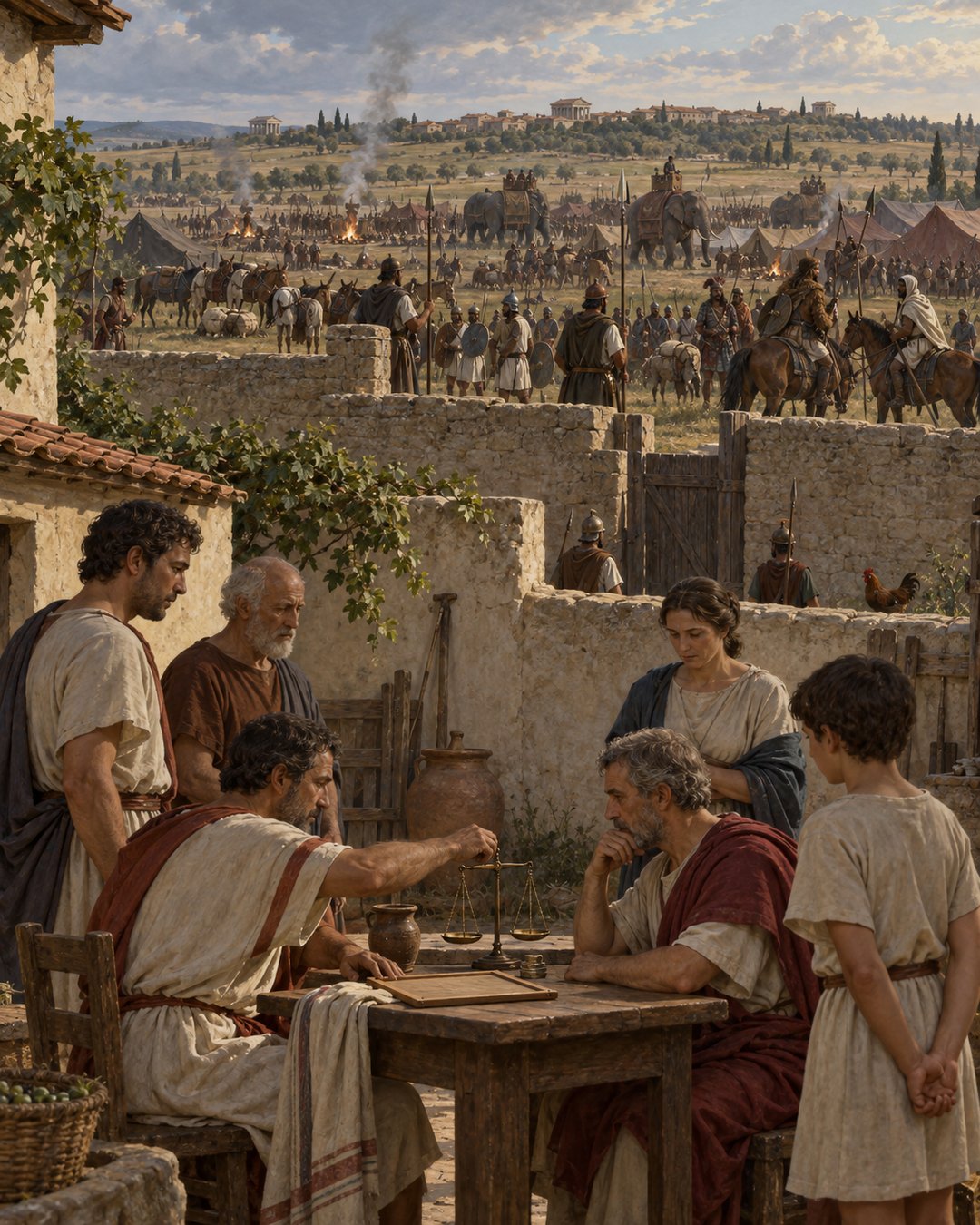
Hannibal’s tents stood on the land, but a Roman buyer still paid its full price.
Livy pairs that report with another provocation: troops were marching out of threatened Rome to reinforce Spain.
The city answered physical danger with two public bets on survival.
Two Storms Delayed the Battle outside Rome
Livy’s land sale arrives during Hannibal’s march against Rome in 211 BCE, an operation intended to draw Roman pressure away from Capua.
The armies formed on the same ground, but a tempest separated them. On the following day they deployed again, and another storm forced them apart.
After each withdrawal to camp, the weather became calm. Carthaginian observers treated the repeated pattern as divine intervention.
Livy reports Hannibal saying that at one moment he lacked the will to take Rome and at another he lacked the opportunity. The line condenses frustration into an unstable balance between decision and circumstance.
The storms did not defeat his army. They interrupted the clear test that deployment promised. Each side remained close enough to threaten while uncertainty accumulated.
Weather carried religious meaning because its timing seemed selective. Yet the events that reduced Hannibal’s expectations most sharply were human signals arriving from inside the city.
The first concerned manpower. He learned that Roman troops had marched out with colors flying to reinforce Spain.
A city supposedly on the edge of conquest was not concentrating every available soldier behind its walls. It continued to treat a distant theatre as worthy of reinforcement.
That decision might have been strategically risky, but as information it was aggressive. It told Hannibal that Rome did not understand his presence as the end of its wider war.
The prisoners sent back after Cannae reveal another Roman struggle over what conduct would communicate under pressure. Outside Rome, movement and markets communicated before either army fought.
The Buyer Valued Ownership after Occupation
The second report came from a prisoner. The very ground beneath Hannibal’s camp had been sold in Rome.
Livy adds the detail that gave the transaction its force: there was no reduction in price.
A buyer normally discounts uncertainty. Occupied land faced obvious immediate danger—trampled crops, cut timber, earthworks, theft and the possibility that the current owner’s legal claim would become meaningless.
Paying the ordinary value implied confidence that those risks were temporary. The buyer expected Roman courts, title and control to outlast the foreign army physically holding the plot.
The unchanged price did more than deny panic. A discount could have acknowledged Roman title while charging the seller for delay and damage. Livy’s version removes even that concession. The buyer valued the plot as though the enemy’s present advantage would not permanently alter its economic future.
We do not know the sale contract, acreage, buyer, seller or exact price from Livy’s passage. Nor can we prove that no political theatre influenced the deal. The historian preserves what the report meant to Hannibal.
Possession and ownership had separated. Hannibal possessed the field by force. Rome continued to price it as Roman property.
The result was a compact statement about time. The camp described the present; the price described an expected future.
Markets do not always predict accurately, and one transaction cannot measure an entire city’s confidence. Still, a buyer risking capital made the gesture harder to dismiss than a boast shouted from the wall.
Roman auctions could transform power into a public, competitive form. The spear used to mark public auctions linked sale procedure to the state’s claim over goods. Here private land pricing became a claim over territory the enemy could see.
Livy calls the sale less important than the departure of reinforcements, yet it was the more personal insult. An unknown purchaser had treated Hannibal’s occupation as a temporary inconvenience.
Hannibal Answered with Shops He Did Not Control
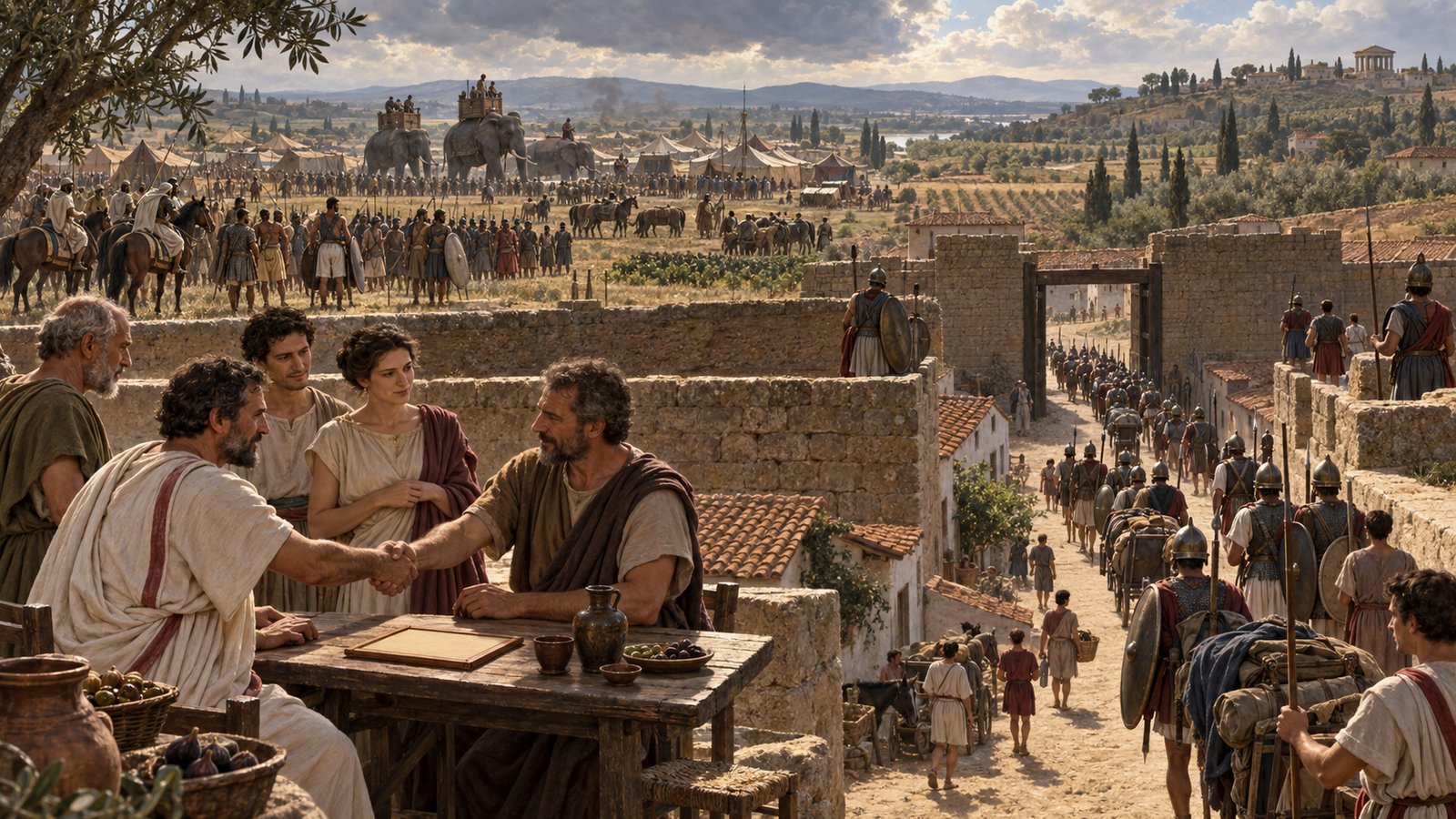
Hannibal responded immediately. He summoned a crier and ordered the silversmiths’ shops around the Roman forum to be put up for sale.
The counter-auction mirrored Rome’s gesture. If Romans could sell land beneath his camp, he could offer valuable property inside their city.
Both sales asserted a future claim, but they did not carry equal foundations. Rome had institutions capable of recording a land transfer and, if the city survived, enforcing it. Hannibal’s crier could proclaim a sale without controlling the forum or delivering its shops.
That gap is why the reply reads as symbolic retaliation. The object was not to create an ordinary commercial exchange; it was to reject the humiliation contained in the first one.
Silversmiths’ shops were a pointed choice. They stood around the forum and represented concentrated urban value. Offering them inverted the claim that Roman ownership remained secure.
Livy does not say that purchasers completed Hannibal’s sale. The asymmetry matters. One report contained a buyer and unchanged price; the other records an order to a crier.
The exchange became a contest in credibility. Each side could name property. Only one could persuade someone to pay as though its law would govern the outcome.
A crier could make an offer audible, but sound was not settlement. Completion required a purchaser, a transferable claim, and some prospect of delivery. Livy supplies those features for the Roman land sale through its buyer and price; for Hannibal’s shops he preserves only the retaliatory command.
That does not mean Rome was safe. Hannibal had already inflicted catastrophic defeats and now stood near its walls. Confidence can coexist with mortal danger.
The auction story worked precisely because danger was real. Full price meant little if no one doubted Roman control. With an enemy camp on the land, valuation became defiance.
Hannibal understood the message well enough to answer in the same vocabulary. His irritation confirms how effectively the sale compressed politics into price.
Withdrawal Turned the Price into a Verdict
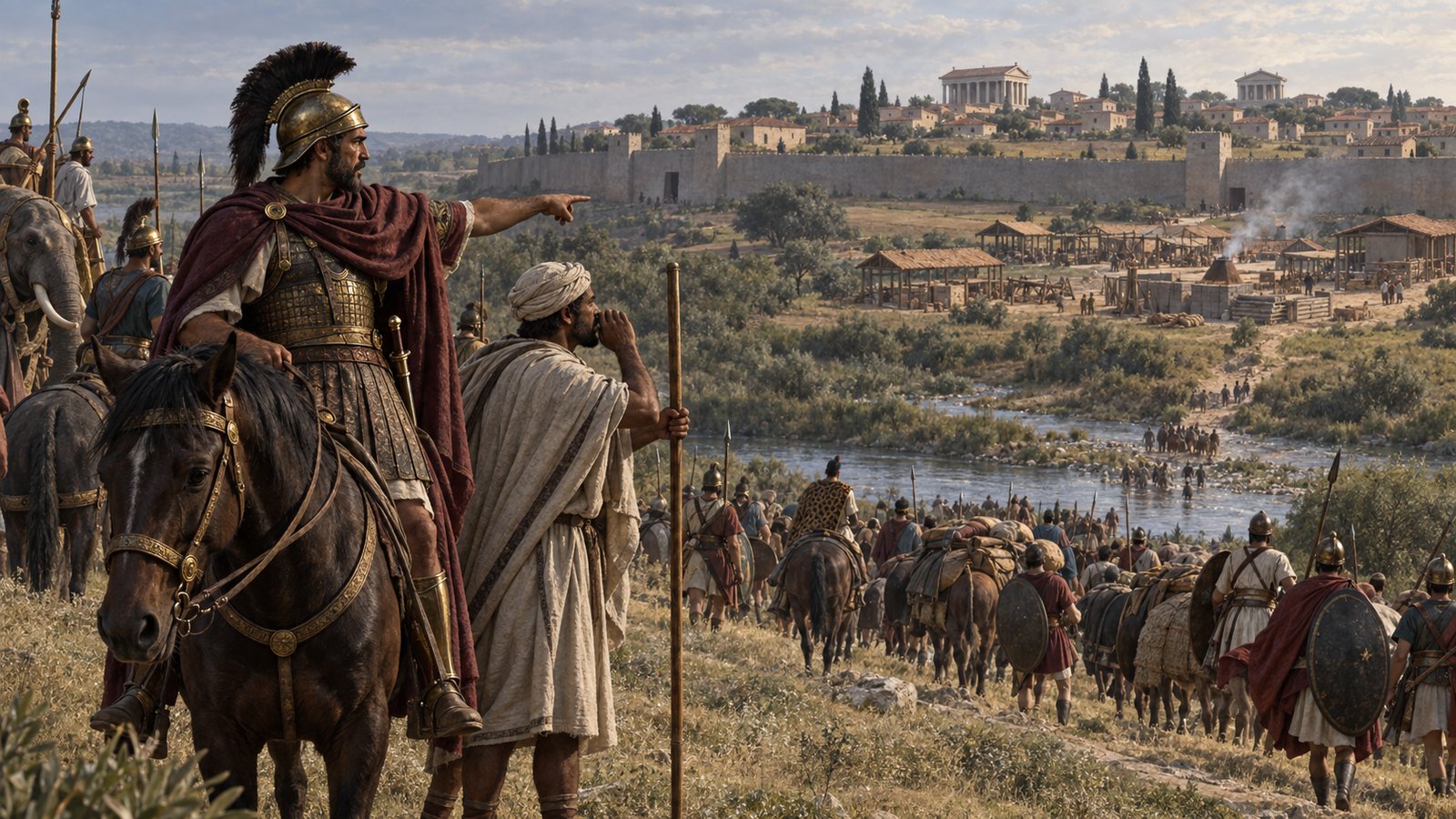
Livy says these circumstances induced Hannibal to withdraw to the river Tutia, six miles from Rome, and then proceed toward the grove of Feronia.
The campsite sale alone did not force that movement. The storms, Roman deployments, the reinforcement column, the strategic situation at Capua and Hannibal’s wider logistics all belong to the episode.
Still, withdrawal changed the meaning of the transaction. Once the camp moved, the buyer’s expectation looked vindicated. Roman legal possession could again converge with physical access.
Livy’s narrative then follows Hannibal to Feronia and discusses the sanctuary’s wealth and his route. The land anecdote is one component in a mobile campaign, not the entire explanation for its outcome.
Its survival in the narrative shows how ancient historians used small economic details to portray morale. A price could reveal courage, arrogance or calculated confidence more efficiently than a long speech.
The story also warns against treating ownership as merely physical. Hannibal’s soldiers could occupy, fortify and use a field without making Roman buyers stop imagining it inside Rome’s future.
For the farmer or owner, that confidence would not erase immediate loss. An army could consume crops, dismantle fences and compact soil before leaving. The anecdote records the price signal, not the condition in which the field was returned or the private cost of restoring it.
Rome’s simultaneous decision to send troops toward Spain carried the same temporal reach. The republic behaved as though it would continue fighting on several fronts after the immediate alarm.
Neither signal guaranteed survival. Both made survival the basis for present action.
Hannibal’s counter-sale tried to impose a different future on the forum. Without possession of the city or a buyer willing to trust his title, the claim remained theatre.
The Roman buyer had made theatre costly. Full price turned confidence into a stake.
Sources
Livy, History of Rome, book 26, chapter 11.