
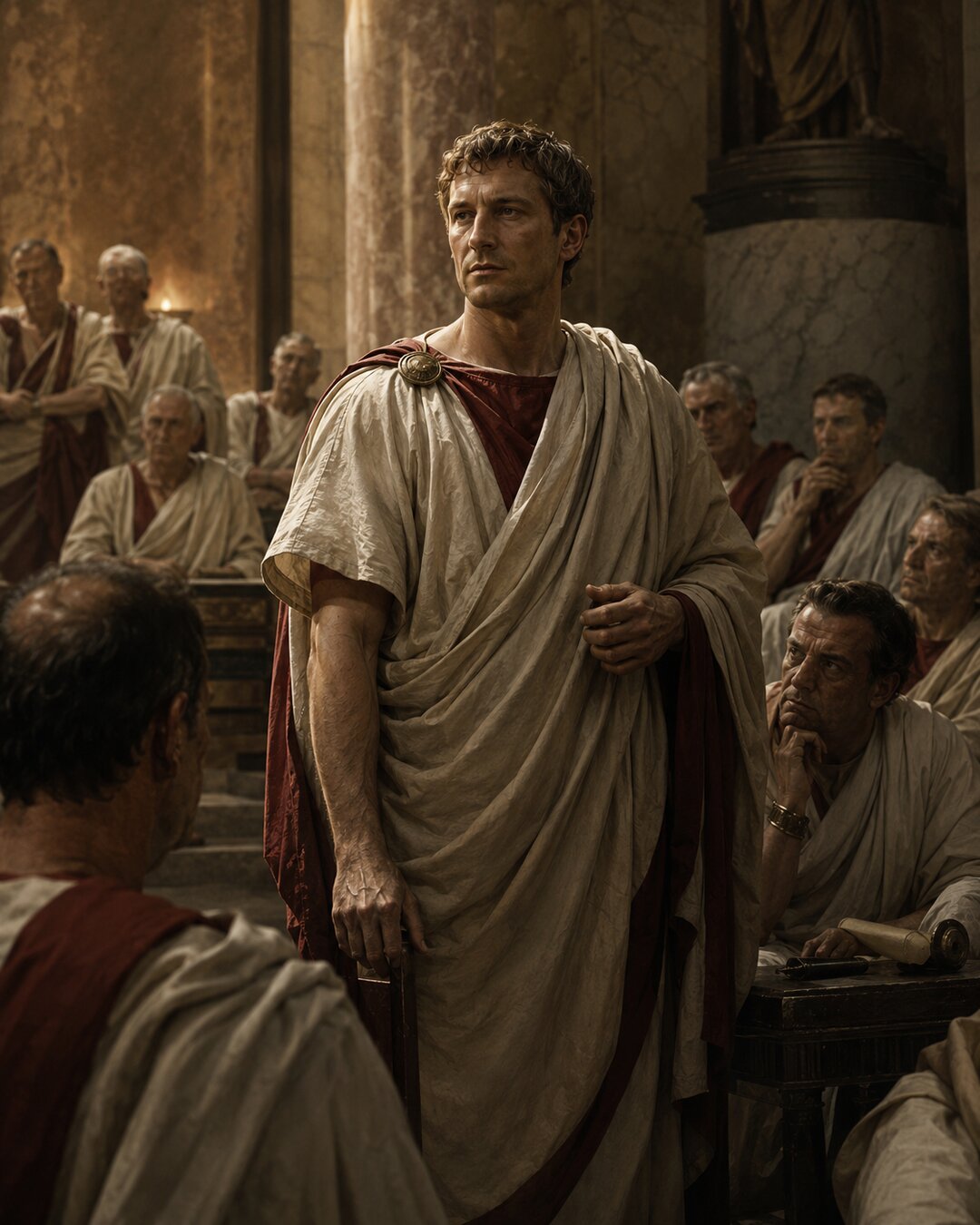
Rome remembered kings as a danger.
That memory mattered when Augustus took the Roman world into his hands. He could rule it, but he could not afford to look as if he wanted a crown.
Most of us remember Augustus as the first emperor. That is true enough. But it hides the cleverest part of his power.
He built a monarchy that kept saying it was not a monarchy.
Rome Had a Problem With Kings
The word king carried poison in Roman politics.
Romans told their own story as a people who had thrown kings out. The old monarchy became a warning from the city's past, and that warning shaped what later Romans could openly accept.
That memory did not stop powerful men from rising. It did make the shape of power dangerous.
Julius Caesar learned that the hard way. After his assassination in 44 BCE, Rome did not return to calm. Civil war followed, and Caesar's adopted heir had to survive inside it.
He was not born Augustus. He was born Gaius Octavius in 63 BCE. Caesar's adoption pulled him into the center of Roman politics, and Caesar's death gave him both a name and a battlefield.
Octavian did not rise alone. In 43 BCE, he joined Mark Antony and Lepidus in the Second Triumvirate, a legally recognized three-man regime. The Republic's old machinery was still there, but the men who mattered now commanded armies.
At Actium in 31 BCE, Octavian's side defeated the forces of Antony and Cleopatra. After their deaths, Octavian stood as the dominant man in the Roman world.
That was the danger. Everyone could see he had won.
The question was how he could keep winning without making Rome feel conquered.
The Trick Was Giving Power Back
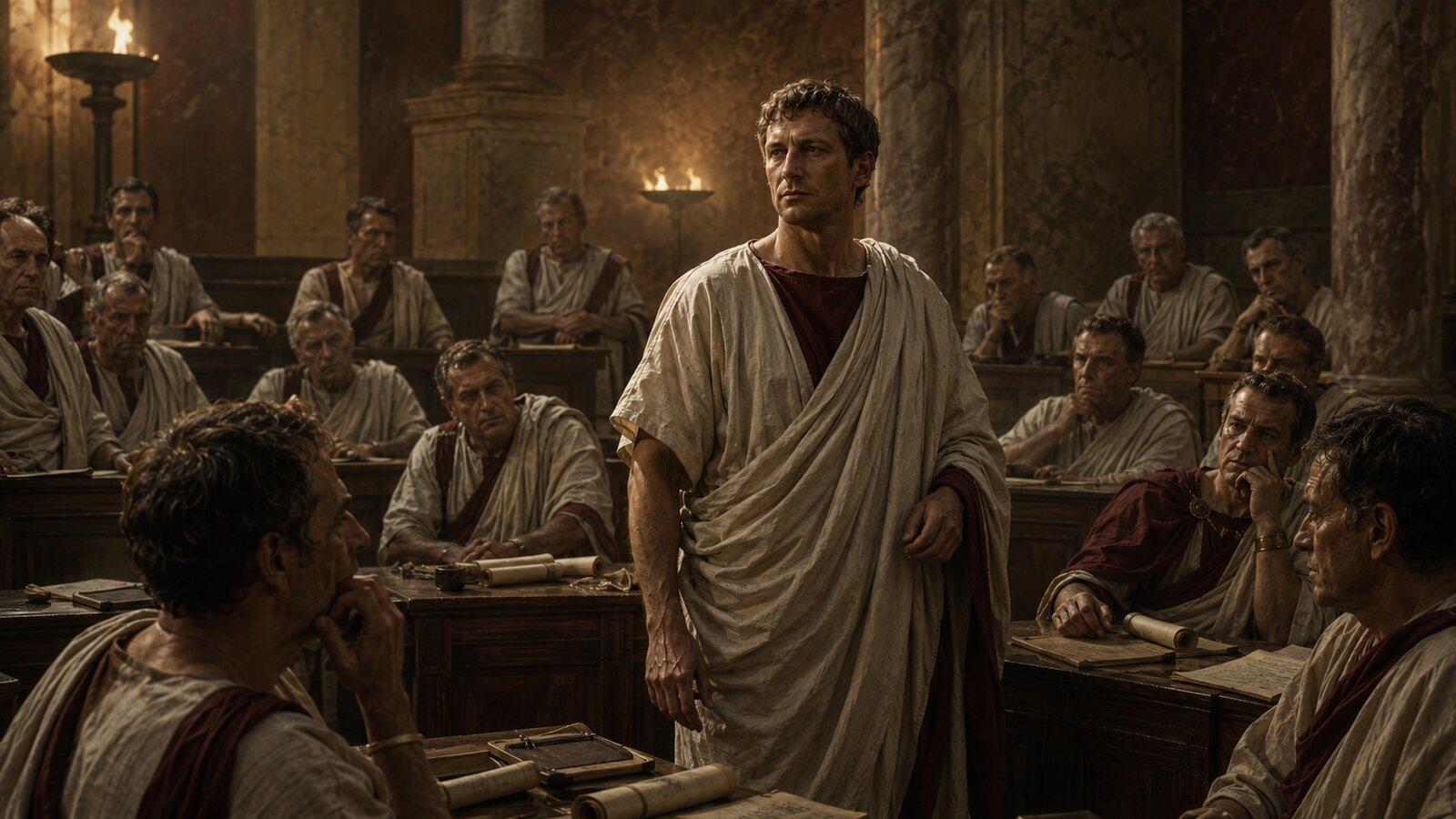
In 27 BCE, Octavian made the move that turned victory into a system.
In his own public record, the Res Gestae, he says that he transferred the Republic from his control to the Senate and Roman people. That sentence is the heart of the trick.
A man who had no rival announced that he was handing power back.
The Senate then gave him the name Augustus. It was not the word king.
This mattered. A crown would have shouted. Augustus chose a title that did different work.
The Res Gestae gives us the careful wording. Augustus says that after this moment he surpassed everyone in authority, but had no more official power than colleagues in each magistracy.
Read that slowly.
He was saying, in effect, that he stood above everyone without claiming to be a king above the law. His power lived in offices, honors, military command, public gratitude, and something harder to translate: auctoritas.
That word can mean authority, prestige, or influence. It is the power that makes a room listen before a vote is taken.
Augustus did not need to smash every Republican form. He needed to stand inside them as the man no one could ignore.
The Republic Stayed on Stage
This is why Augustus' system can feel slippery.
The Republic did not simply vanish in a puff of smoke. Offices remained. The Senate remained. Public honors remained. Old names remained.
That was the point.
Augustus held repeated consulships early in his rule. Later, he gathered powers that mattered more than one yearly office: tribunician power, proconsular authority, command, prestige, and the loyalty that came from ending years of bloodshed.
The result is usually called the Principate.
That word comes from princeps, the first man or leading citizen. Again, notice the mask. Not king. Not tyrant. First citizen.
It sounds modest until you ask who comes second.
Augustus understood that Rome could accept one man at the center if the old stage remained standing around him. The Senate could debate. Magistrates could hold office. Ceremonies could continue.
But the center of gravity had moved.
The great change was not that every Republican institution disappeared. It was that they now revolved around one man whose position could not be honestly matched by anyone else.
That is the strange genius of Augustus.
He did not just win power. He taught Rome a new way to describe power.
Suetonius Gives the Mask a Human Edge
Suetonius says Augustus twice thought about restoring the Republic.
That detail is easy to read as propaganda, and maybe part of it was. But it still shows the question Augustus wanted Romans to ask: was he holding power because he loved rule, or because the state would break without him?
According to Suetonius, Augustus decided not to risk renewed danger or weak government.
That is a powerful argument after civil war. People who have lived through political collapse do not always ask for perfect liberty first. Sometimes they ask who can keep renewed danger away.
Augustus built his legitimacy on that exhaustion.
He was the man after the storm. The man who could point to the armies, Actium, and the fear Rome had just survived.
No one had to say the rest out loud.
If peace required one man to be first, many Romans were willing to pretend that first did not mean king.
The Crown He Refused Was the Point
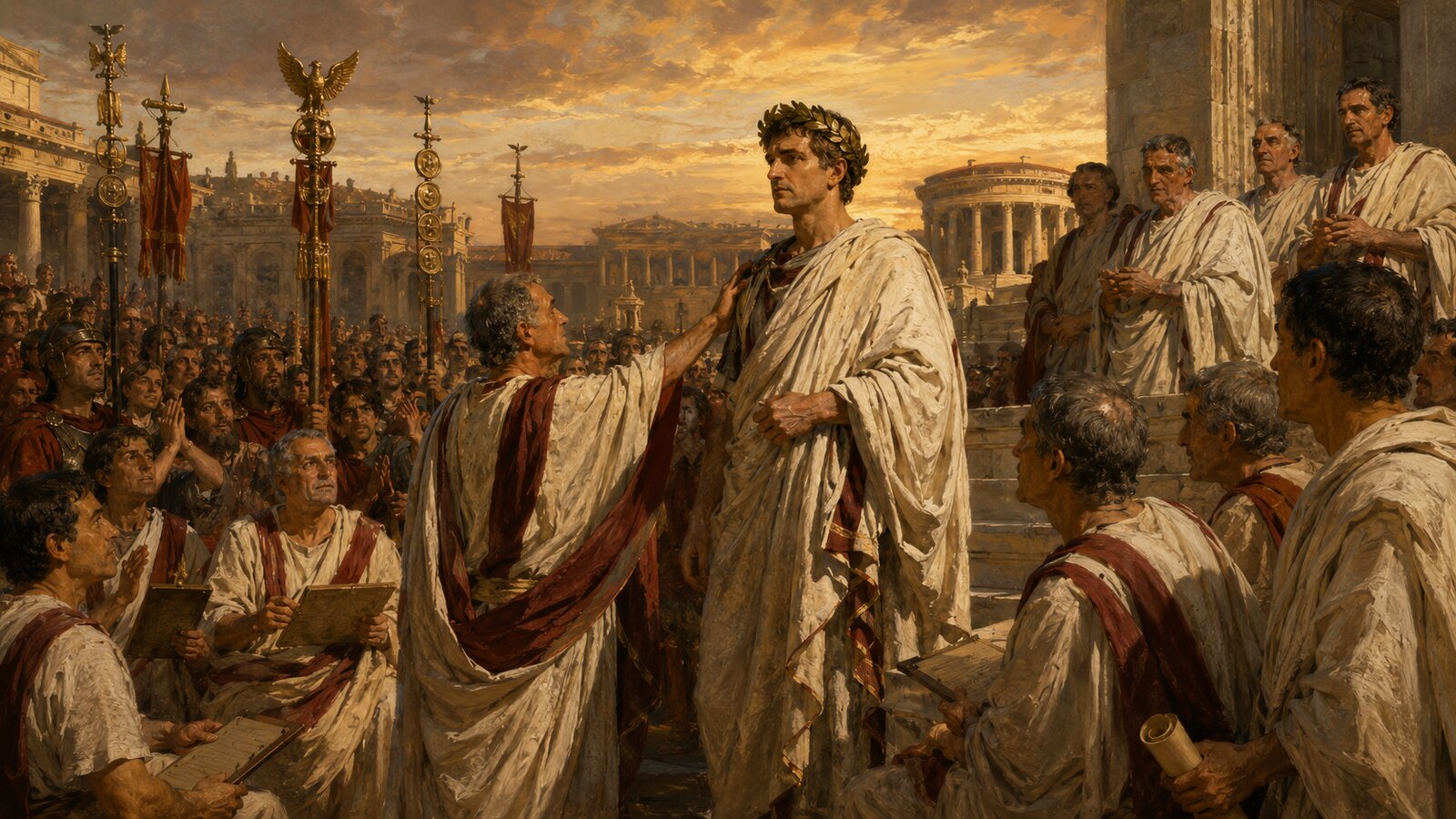
A bad usurper grabs the forbidden symbol.
A better one makes the symbol unnecessary.
Augustus did not need a royal title if the Senate gave him honors, if armies obeyed him, if offices gathered around him, and if public memory tied him to peace after civil war.
Suetonius reports another title that shows the shape of this public image: Father of his Country.
That was not a crown either. It was warmer. It made power feel protective. A king commands subjects; a father guards a household.
Of course, Rome was not a household. It was a huge, violent, unequal empire. But political language does not have to be honest to be effective.
Augustus' rule worked because it gave different audiences what they needed.
The Senate got forms it recognized. The people got stability. The army got command. Augustus got supremacy without the one word that might have made supremacy unbearable.
The Lie That Became a System
The sharpest part is not that Augustus had power. Everyone could see that he did.
The sharper thing is that he made power sound like restoration. The point was not to erase reality. The point was to make reality livable.
Augustus turned a personal victory into a political language.
That is why calling him Rome's first emperor is correct but too simple. The more revealing truth is that he became Rome's first emperor by refusing to look like what he was.
He understood the wound Caesar had left behind.
Rome could survive one man ruling it. What it could not easily swallow was one man admitting the old Republic was gone.
The next question is what happened when Rome grew used to one man standing at the center, even while the old Republican words still hung in the air.
Sources & Further Reading
- Wikipedia: Augustus: https://en.wikipedia.org/wiki/Augustus
- Wikipedia: Principate: https://en.wikipedia.org/wiki/Principate
- Wikipedia: Second Triumvirate: https://en.wikipedia.org/wiki/Second_Triumvirate
- Wikipedia: Battle of Actium: https://en.wikipedia.org/wiki/Battle_of_Actium
- *Res Gestae Divi Augusti*: https://en.wikisource.org/wiki/Res_Gestae_Divi_Augusti
- Suetonius, *The Lives of the Twelve Caesars: Augustus*: https://en.wikisource.org/wiki/The_Lives_of_the_Twelve_Caesars/Augustus
- World History Encyclopedia: Augustus: https://www.worldhistory.org/augustus/