
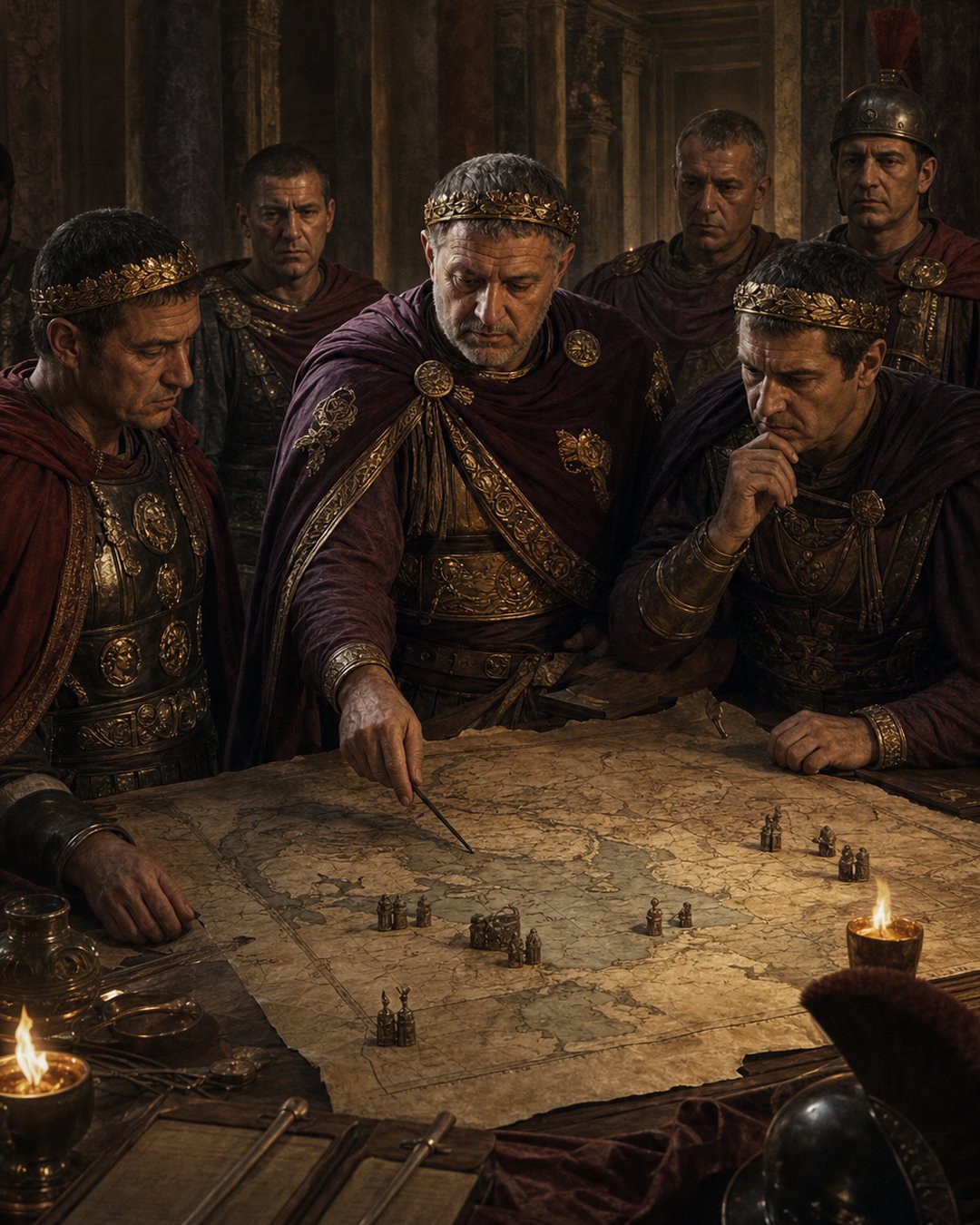
Diocletian did not split power because he wanted a smaller Rome. He split power because the empire had become too large, too violent, and too vulnerable to depend on one emperor appearing everywhere at once. Around AD 293, the tetrarchy tried to turn imperial rule from a single body into a system: two senior Augusti, two junior Caesars, multiple courts, and a clearer chain of succession.
Diocletian ruled from AD 284 to 305, after a century in which emperors rose and fell with frightening speed. Civil wars, usurpations, assassinations, frontier attacks, and economic pressure had taught a hard lesson. The empire did not only need a strong man. It needed a structure that could survive distance and ambition.
One emperor could not be everywhere
The Roman Empire stretched across frontiers that demanded attention in different directions. A crisis on the Danube did not wait politely while an emperor dealt with Persia. A revolt in one region could become a claim to legitimacy before news from another had fully arrived. Distance turned time into danger.
Earlier emperors had delegated command, but delegation created its own risk. A successful general far from the capital might begin as a servant and become a rival. Diocletian’s answer was to make shared rule official. If more than one man carried imperial authority, then military response did not have to look automatically like rebellion.
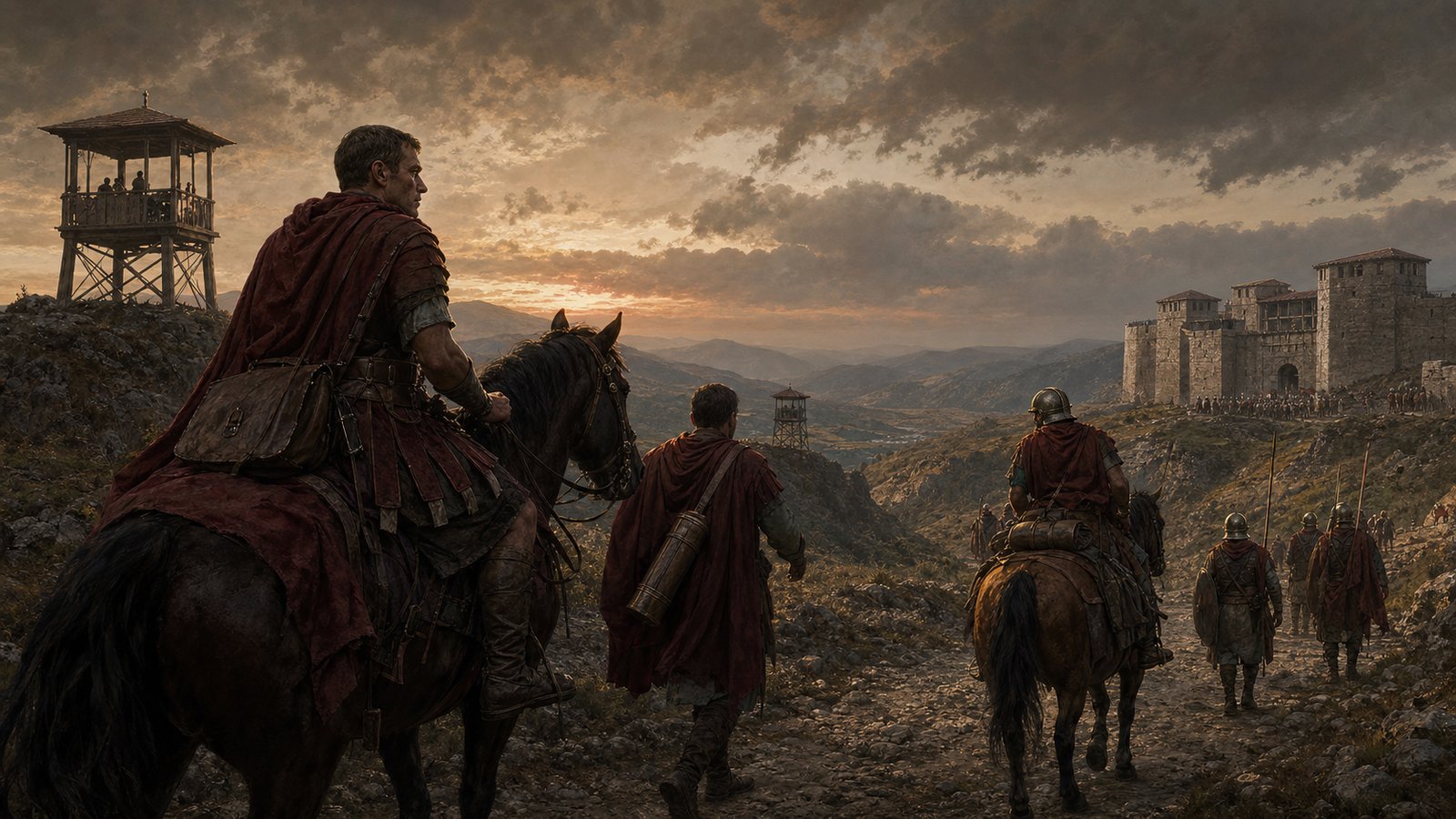
The tetrarchy was a succession machine
The most dangerous Roman political question was often simple: who comes next? A dead emperor could leave armies, courts, and ambitious commanders fighting over the answer. Diocletian tried to tame that question by building hierarchy into the office. The Augusti were senior rulers. The Caesars were junior partners and intended successors.
That design mattered because it attacked civil war at its source. If succession could be known before death, the empire might avoid the scramble that had repeatedly turned armies into kingmakers. The tetrarchy was therefore not only a map of power. It was a schedule for power to move without tearing the state apart.
Imperial presence became plural
Roman rule depended heavily on presence. Soldiers wanted an emperor near the frontier. Cities wanted decisions. Officials wanted authority they could point to. Subjects wanted to know who represented the final power of the state. A single emperor’s absence could make a region feel neglected or tempt a local strongman to fill the gap.
By multiplying rulers, Diocletian multiplied imperial visibility. The empire could show a legitimate ruler in more than one theater at once. That did not make politics gentle, but it made administration more plausible. Power could move through several courts instead of waiting for one man to cross the world.
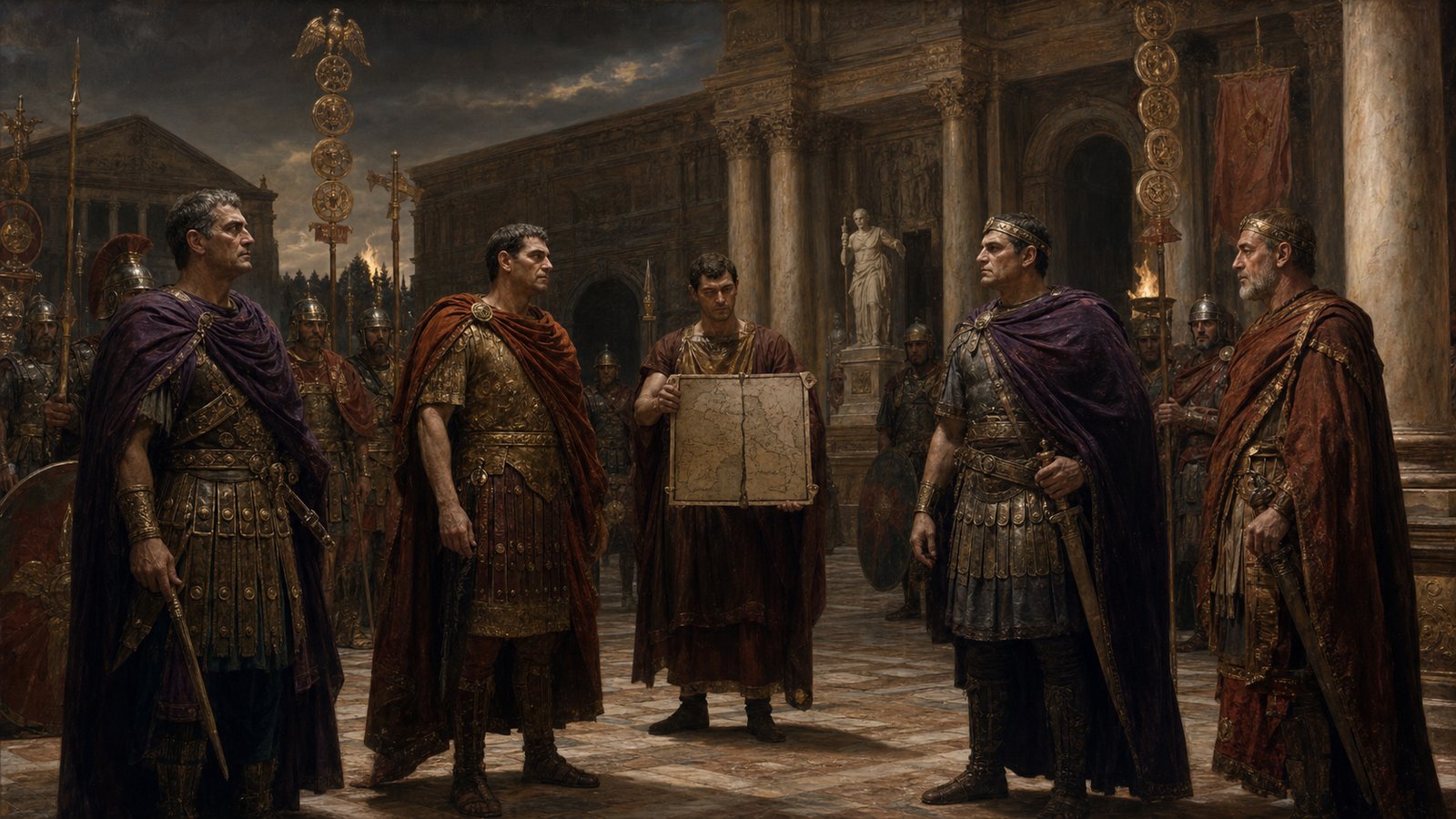
The reform also made monarchy more honest
Augustus had disguised monarchy beneath republican language. Diocletian moved in the other direction. His reforms made imperial hierarchy more formal, court ceremony more distant, and administration more openly centralized. The empire was no longer pretending that old republican habits could explain everything.
This was not decadence in the simple cartoon sense. It was adaptation. A state under repeated stress often makes authority more visible, more bureaucratic, and more ritualized. Diocletian’s world needed obedience across distances. Ceremony and rank helped communicate who commanded whom.
The system worked until people had to obey it
Diocletian’s abdication in AD 305 was extraordinary. Roman emperors did not usually retire voluntarily. The act showed his seriousness about making the system larger than himself. Yet the years after his retirement also showed the weakness of the design. Ambitious men, dynastic claims, and armies did not simply accept a neat diagram because the diagram existed.
The tetrarchy did not prevent later civil wars. Constantine’s rise would eventually reshape the imperial order again. But failure after retirement does not make Diocletian’s experiment foolish. It reveals the size of the problem he was trying to solve. A system designed to restrain ambition still had to be operated by ambitious people.
Splitting power was an attempt to save unity
The paradox is the point. Diocletian divided imperial authority in order to preserve the empire as a whole. He understood that one ruler’s undivided title could produce divided reality: neglected frontiers, rival armies, uncertain succession, and opportunistic usurpers. Four rulers looked risky, but one ruler had already proved risky in a different way.
That is why the tetrarchy matters. It was not the end of Rome disguised as reform. It was a hard diagnosis of imperial scale. Diocletian saw that the old model could not reliably answer every frontier, every army, and every succession crisis. His solution did not last unchanged. But for a moment, Rome tried to survive by admitting that power had become too large for one man to carry alone.
The reform made sense because the old danger kept returning
The third-century crisis had taught emperors that victory could be politically dangerous. A general who saved a frontier might earn the loyalty that made him a candidate for the throne. A court that waited too long to answer a distant emergency might invite a local army to proclaim its own ruler. The empire’s scale kept turning practical military needs into succession risks.
Diocletian’s reform tried to separate legitimacy from accident. A Caesar could command near a frontier without pretending to be a rebel. An Augustus could share authority without admitting weakness. The system was not democratic or gentle, but it was a serious attempt to solve a Roman problem with Roman tools: hierarchy, title, ceremony, and military command.
The tetrarchy’s failure after Diocletian should not blind us to its ambition. It recognized that assassination and usurpation were not personal bad luck alone. They were symptoms of an imperial office stretched across too much territory, too many armies, and too many urgent frontiers. Splitting power was meant to keep the empire whole by making rule less dependent on one vulnerable man.
The imagery of concord among the tetrarchs was therefore not decorative trivia. It advertised a political claim: rulers could share authority without immediately becoming enemies. That claim had to be repeated in ceremony, coinage, buildings, and commands because everyone knew the opposite pattern too well. Roman history was full of colleagues who became rivals. Diocletian’s system tried to make cooperation look stronger than personal ambition.
The important caution is that a famous Roman story should never be reduced to a single prop. Elephants, concrete, a rebel queen, or four emperors can become convenient shorthand, but shorthand is where the history starts rather than ends. The fact sheet forces the stronger reading: named people, dates, places, materials, and ancient testimony all have to carry the interpretation. That keeps the article from turning into a modern slogan placed on an ancient scene.
Seen that way, the episode becomes less familiar and more useful. It shows Roman power as something made from logistics, labor, fear, law, memory, and administration. Those forces were concrete enough to leave ruins and stories behind, but unstable enough to keep surprising the people who thought they controlled them in practice.
Sources & Further Reading
- Britannica, Diocletian
- Britannica, Tetrarchy
- Britannica, ancient Rome – The Later Roman Empire
- Lactantius, On the Deaths of the Persecutors
- Britannica, Constantine I
- Britannica, Roman Empire
- Metropolitan Museum of Art, The Tetrarchs