
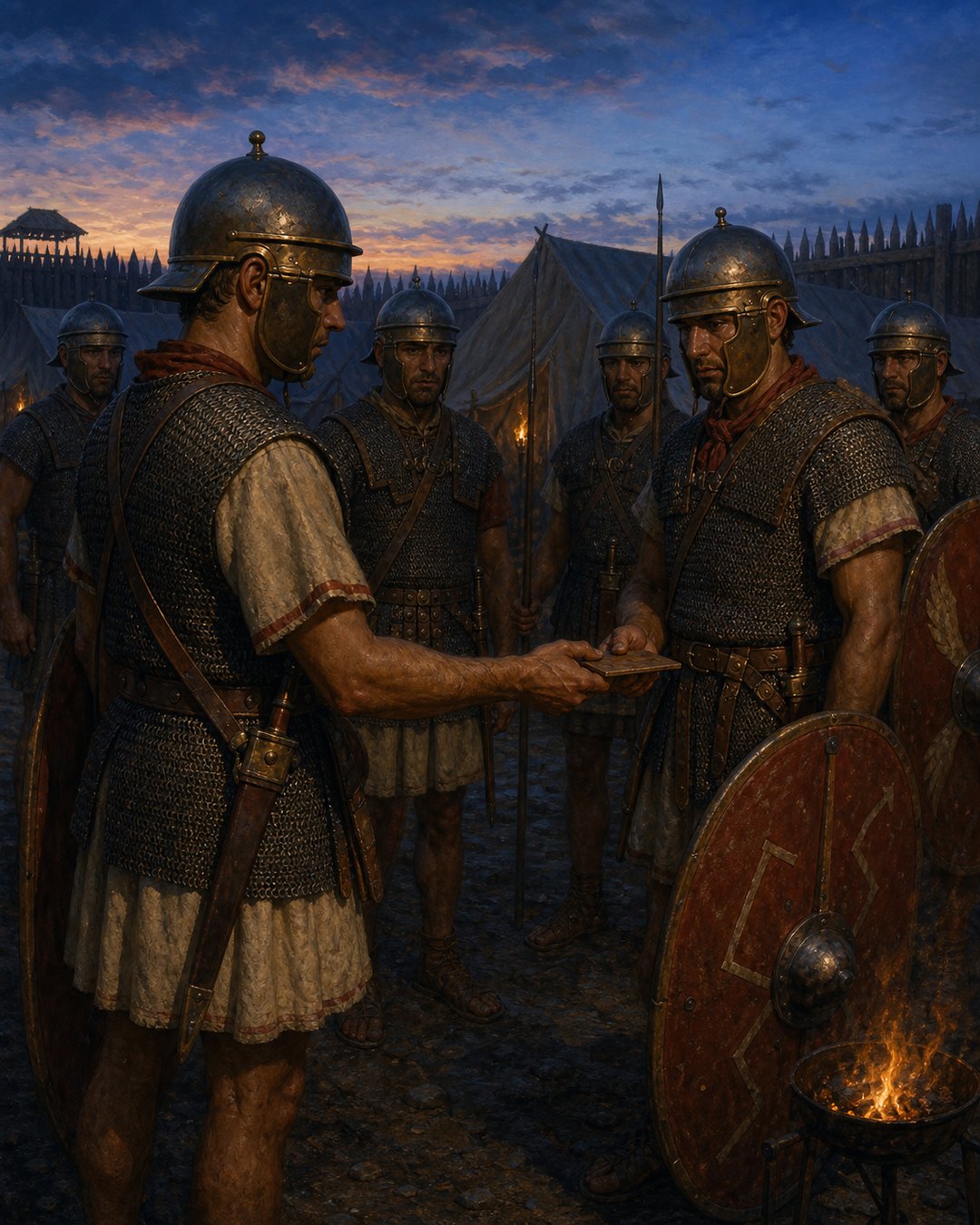
Before darkness settled over a Roman camp, a small wooden tablet had to complete a journey. It began with the tribunes and moved through a chain of maniples. At each handover, witnesses marked that the message had passed. The tablet eventually came back to the officers who had issued it. If every tablet returned before night, the password had reached the army. If one did not, the missing piece showed where the chain had broken.
Polybius presents this procedure inside his account of the Roman marching camp. His subject is not dramatic espionage. It is routine control. Thousands of soldiers needed to recognize a shared watchword, guards needed to stay at assigned posts, and commanders needed evidence that instructions and inspections had actually travelled through a dark, crowded settlement of tents.
The strength of the system lay in combining speech with objects. A password could be misheard, forgotten or passed to the wrong person. A returned tablet, a witness and an inspection token left a trail. Rome’s nightly security therefore depended on a communication network that was simple enough to repeat and strict enough to investigate.
The Rear Maniple Received More Than a Spoken Word
Polybius says the tribunes selected one man each day from the tenth maniple of every class of infantry and cavalry. These men were exempted from ordinary guard duty for that day. Near sunset, they came to the tribunes’ tents and received the watchword written on a small wooden tablet.
The daily selection matters. The password was not entrusted indefinitely to one specialist detached from the units. A new messenger stood at the rear of each line of maniples and carried responsibility for that evening’s transmission. The task was defined, temporary and visible to the officers who issued the tablets.
Writing stabilized the first step. Polybius does not describe the tribunes whispering a phrase into several ears and hoping it survived. The word was fixed on an object before it entered the chain. The tablet could be handed over, marked and returned, allowing the command to inspect the route as well as the message.
The camp itself made that route legible. Roman marching camps arranged units in repeated streets and positions rather than letting tents collect randomly. A man from the tenth maniple knew which ninth maniple came next. Communication followed the same ordered geometry used for movement, guard assignments and access to headquarters.
This is a different side of Roman discipline from the formal signal that began a camp-wide punishment. There, one touch of a cudgel opened a terrifying sanction after failure. Here, officers tried to make failure traceable before a sleeping camp became vulnerable.
Witness Marks Turned a Relay into an Audit Trail
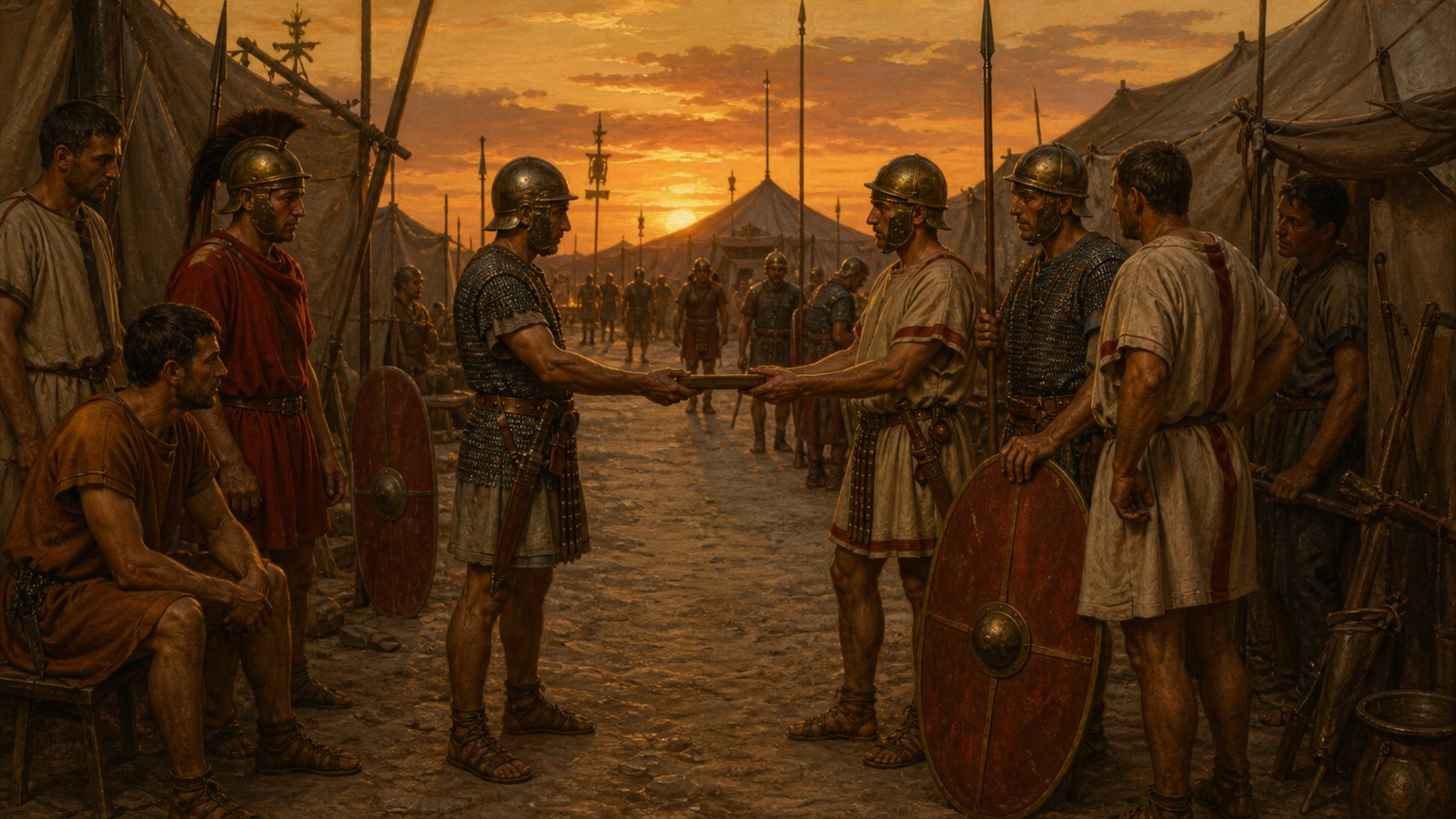
The selected man delivered the tablet to the commander of the next maniple. Polybius says the handover took place in the presence of witnesses, and the commander put his mark on the tablet. The receiving unit then repeated the action toward the front of the line.
That requirement separated delivery from private assertion. A messenger could not simply say that he had passed the word. Another person had seen the exchange, while the physical tablet carried a growing record of movement. The procedure distributed responsibility across sender, receiver and observer.
The direction of travel was deliberate. The tablet started with the tenth maniple and moved successively through the ninth, eighth and onward until it reached the first. Each step was short. No messenger had to find every unit in the camp, and no single missed conversation could silently remove several maniples from the network.
The first maniple returned the completed tablet to the tribunes. Polybius emphasizes the deadline: all of them should arrive before night. Officers could therefore compare the number issued with the number returned while there was still time to identify a missing chain. Darkness did not begin with an assumption that everybody knew the word; it began with a physical reconciliation.
If every tablet came back bearing the required marks, the tribunes knew that the watchword had passed through all the maniples. If one was absent, they investigated. The witnesses and sequence indicated the point at which transmission had stopped. A camp-wide communication problem narrowed into a particular handover.
Mounted Inspectors Collected Proof from the Night Guards
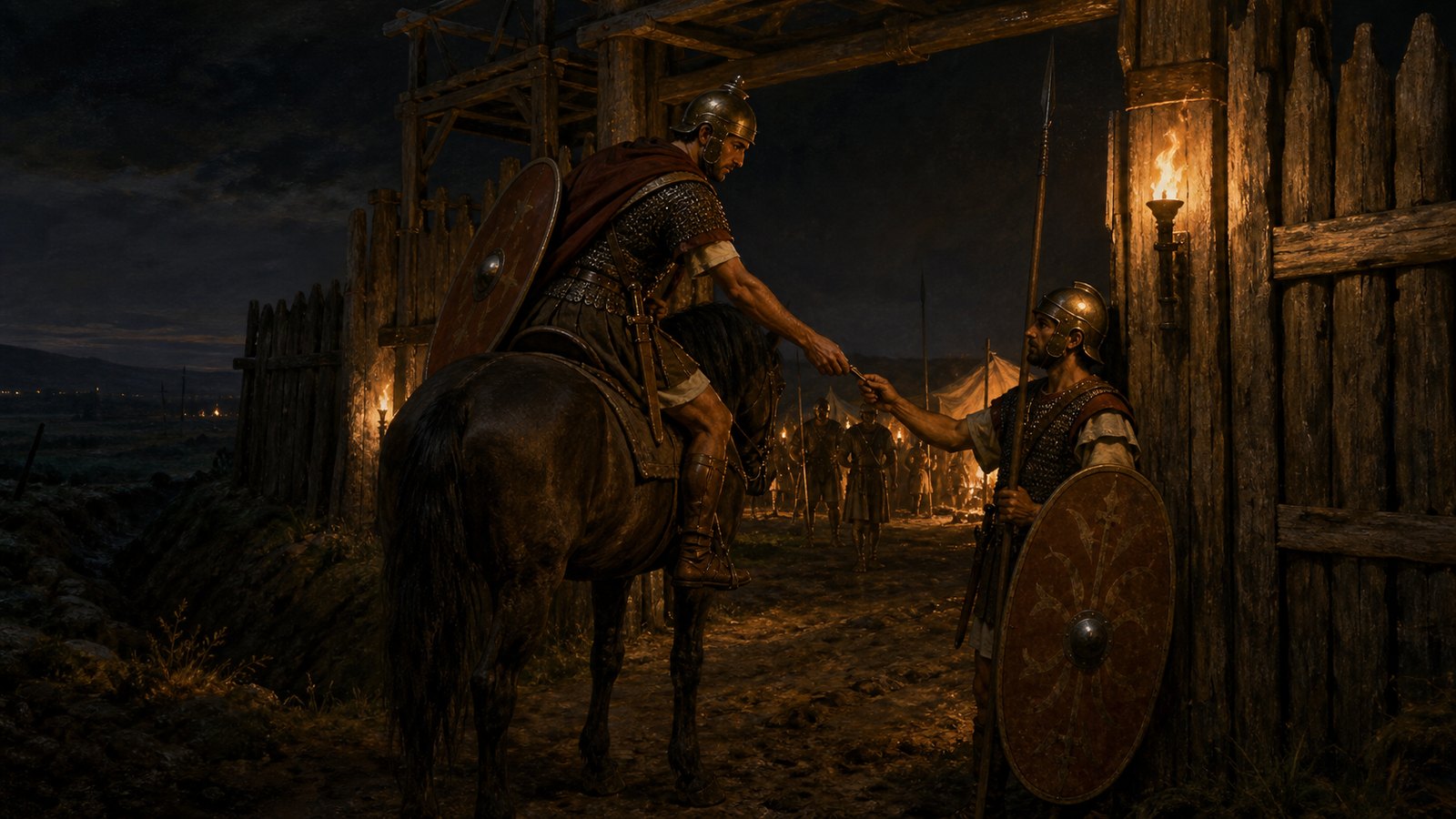
Distributing the password was only one half of the night system. Polybius also describes guards posted around the consul, tribunes and other important positions. Men drawn from the cavalry made inspection rounds to check whether sentries remained awake and at their posts.
The inspectors did not rely only on memory. Guards held tablets that the mounted rounds collected. Each token proved that an inspector had reached a particular post, and its absence could expose a section of the circuit that had not been visited.
Polybius assigns the rounds by watch and route. The aim was coverage rather than an officer wandering wherever he pleased. A mounted inspector moved through designated posts, gathered evidence, and later surrendered the tablets to the tribunes. The following morning, the officers could inspect a set of objects rather than hear only a general assurance that the night had been quiet.
Quiet was not proof of vigilance. Nothing happening at a gate could mean that the guard had deterred danger, or simply that no enemy tested him. The collected tablets measured the act commanders could control: whether the inspection route reached its assigned stations.
The distinction also clarifies the story of Pullo and Vorenus fighting beyond a besieged rampart. Caesar’s scene celebrates initiative under direct pressure. Polybius’s tablets belong to the less visible labour that kept a camp secure on ordinary nights, when reliability mattered precisely because no heroic crisis had yet begun.
Dawn Converted Missing Wood into a Charge
At daybreak, the tribunes received the inspection tablets and checked them. If the expected pieces were present, the rounds had left a complete material record. If one was missing, officers could summon the relevant guard and inspector, compare statements and determine who had failed.
Polybius describes severe consequences for abandoning a post or neglecting required duties. The harshness is often what modern readers remember, but punishment came after a procedure of assignment and verification. A sentry knew his station. An inspector knew his route. Tablets connected both obligations to a later inquiry.
The system did not make falsehood impossible. Witnesses could collude, a mark could be misunderstood, and a tablet could be lost without treachery. What it did was reduce the space in which failure could disappear. Every relay and round was expected to produce a specific object in a specific place by a specific time.
This is why the humble material deserves attention. Wood was cheap enough for repetition and durable enough to move through many hands. It could carry a word, accept marks and return to headquarters. The army did not need elaborate machinery to create administrative memory; it needed an agreed route and officers willing to compare what came back with what had gone out.
Polybius admired Roman organization because separate actions reinforced one another. Camp layout made units findable. Daily selections assigned messengers. Witnesses authenticated transfers. Deadlines exposed delay. Mounted rounds tested guards. Morning inspection converted the night into a reviewable record.
The password itself vanished with the day. The method survived because it did more than protect a secret. It made communication accountable from sunset to dawn. In a landscape of canvas, stakes and sleeping men, a handful of returning tablets told the tribunes whether the camp’s invisible lines had held.
Sources
Polybius, Histories 6.33–37.
W. R. Paton’s translation of Polybius, Book VI.