
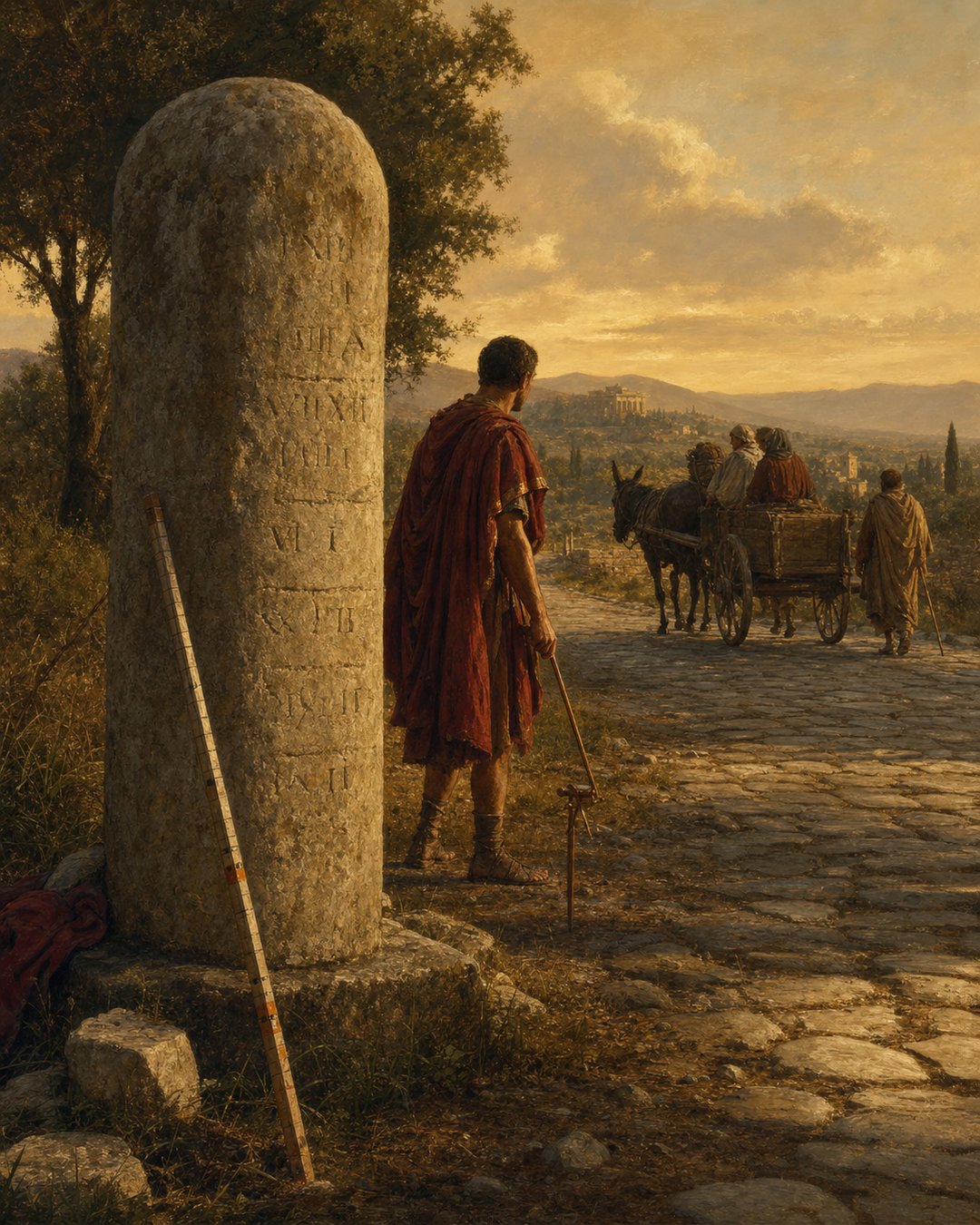
A Roman road was not only a strip of hard surface. It was also a measured promise. A traveler could walk over fitted stones, pass tombs and fields, watch the next rise of land, and then meet a marker that said the journey was not just felt in tired legs. It was counted.
That small change matters. The milestone made distance public. It took the uncertainty of a long road and fixed part of it in stone, close enough for a courier, merchant, soldier, or magistrate to stop and read. Roman power often looked huge from a distance, but on the road it could appear as a single carved column at the edge of the way.
The Road Became A Countable Surface
Roman roads could be impressive even without inscriptions. The prepared route, the paving, the drainage, the line across hills and plains all made movement feel organized. Yet a hard surface alone did not tell a traveler how far he had come or how far a messenger still had to go. The milestone answered that practical question in a public form.
A milliare was a stone marker for miles. Its job was simple enough to disappear into the landscape: stand beside the road, carry distance, and make the route legible. But that simplicity made it powerful. The road stopped being only a place of movement and became a measured sequence. Each marker changed distance from rumor into something posted.
For a merchant with animals, distance was cost. For a courier, distance was time. For a local community, distance could shape tax, service, obligation, and access to officials. The milestone did not solve every problem on the road, but it gave travelers a shared reference point. People could argue about speed, danger, or weather, while still pointing to the same stone.
A Stone Could Name The Person Responsible
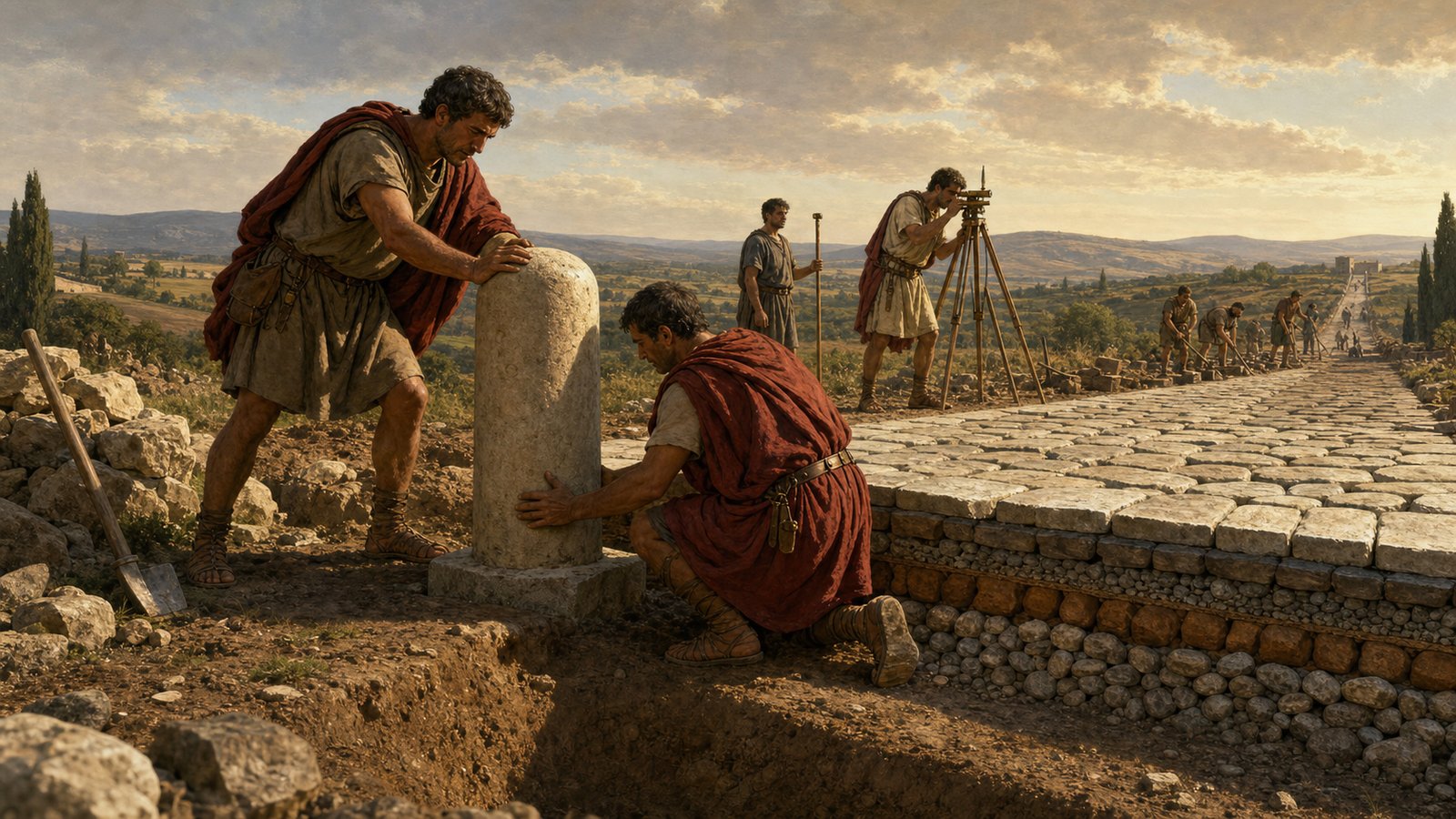
Milestones often did more than give a number. Many carried inscriptions naming the emperor or official connected with the road. That turned a practical marker into a political object. The traveler was not only told where he stood in a journey. He was reminded that roads had patrons, repairers, and rulers.
This is where the object becomes more than roadside furniture. A carved name on a milestone made maintenance visible. It suggested that the road was not a natural fact, and not merely the result of anonymous labor. Somebody wanted credit for its repair, extension, or supervision. Stone made that claim hard to ignore.
A traveler approaching such a marker would see authority at hand height. The road surface might be under his feet, but the inscription met his eyes. In that small encounter, administration became physical: not a decree in Rome, not a ceremony in a forum, but a stone set where dust, rain, wheels, and feet passed every day.
Rome Put Measurement At The Center
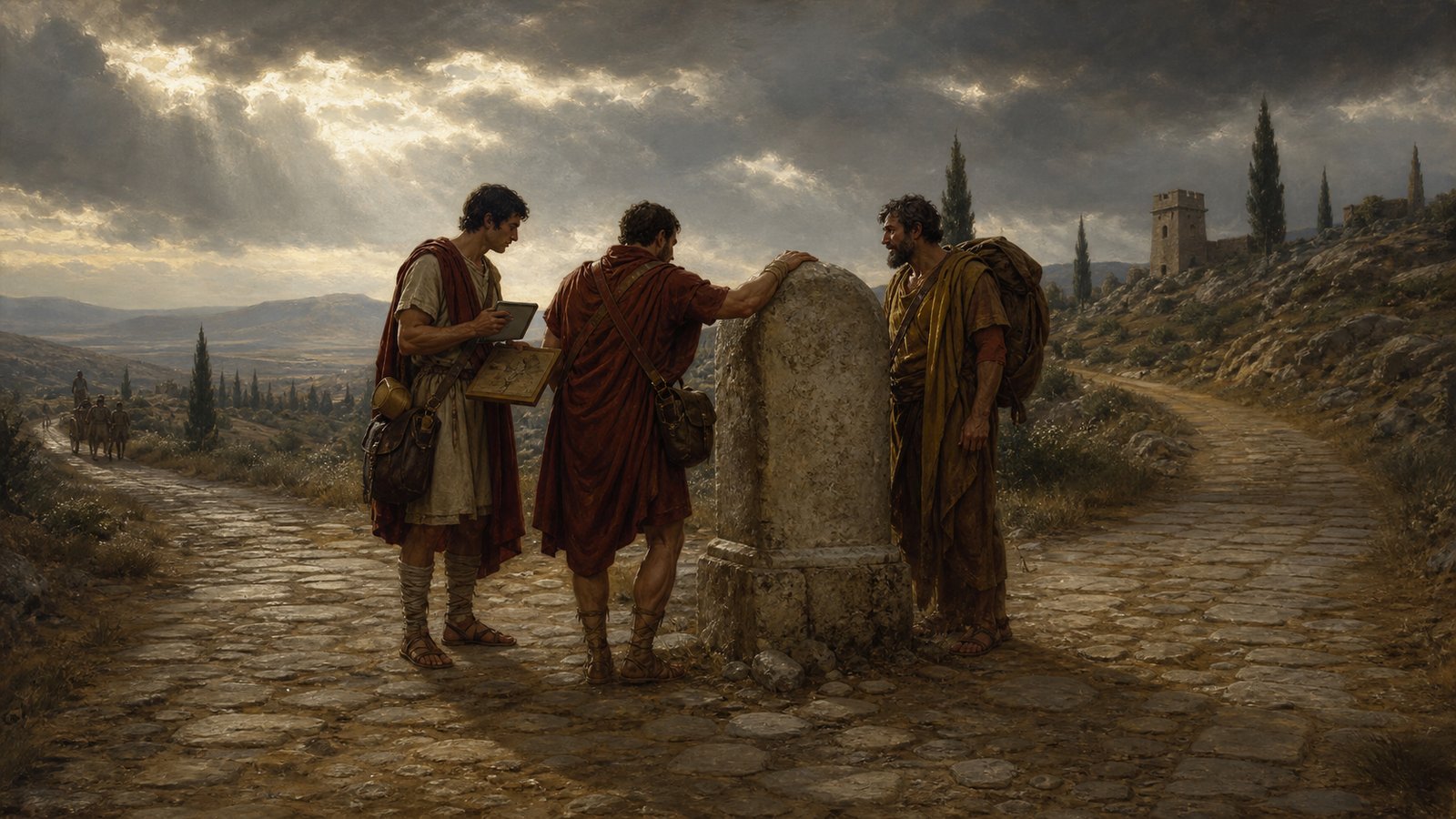
The famous gilded milestone of Augustus in the Forum, the milliarium aureum, gave this measuring habit a symbolic center. It was not an ordinary roadside post lost among fields. It stood in the city, connected with the idea that roads and distances could be reckoned from Rome. The symbol was blunt: movement across the empire could be imagined as a system with a center.
That does not mean every traveler experienced the road as a neat map. Real journeys were muddy, hot, delayed, expensive, and sometimes dangerous. Animals tired. Wheels broke. Inns varied. But the measuring language mattered because it gave scattered roads a Roman grammar. A milestone outside a town and a gilded marker in the Forum belonged to the same habit of turning travel into public order.
The Via Appia shows how old this prestige could feel. Associated with Appius Claudius Caecus and the censorship of 312 BC, the road toward Capua became a memory object as well as an infrastructure project. A famous road needed a surface, but it also needed names, dates, and markers that helped later generations understand it as part of Roman achievement.
Repair Became Something The Public Could See
Roads fail quietly before they fail completely. A rut deepens, a drain blocks, a margin crumbles, a bridge approach loosens, and the traveler begins to remember the route as neglected. Milestones and road inscriptions pushed against that invisibility. When emperors and officials attached their names to road work, they made repair part of public memory.
Smith’s account of the roads notes the large body of inscriptions commemorating imperial work from Augustus to Constantine. That range is important because it shows roads as a continuing concern, not a single conquest-era miracle. A road system had to be watched over, repaired, and claimed again. The stone beside the road helped turn maintenance into evidence.
The curatores and road commissioners also matter here. Public supervision made the road more than a local path maintained by habit. It placed the way within a structure of duty. The traveler might not know the full machinery behind a route, but the marker told him that the route belonged to a world where distance, names, and responsibility could be carved.
The Traveler Met Authority At Walking Speed
A milestone was most effective because it worked at human scale. It was not a palace façade or a triumphal arch. It was a stone near the road edge, touched by dust and weather, standing where a person could slow down, look, and measure himself against the journey. Its authority arrived at walking speed.
Imagine the scene in physical terms. The road is bright in the afternoon. A mule cart creaks past. A courier stops long enough to check the marker. The stone is worn, but the idea is still clear: this distance has been counted before you arrived. You are moving through a space that someone has named, measured, and claimed.
This also changed how people could talk about delay. A late messenger, an expensive haul, or a difficult stretch of road could be described against fixed points rather than only memory. The marker did not make travel easy, but it made excuses, estimates, and expectations more measurable. It also made a route easier to remember in pieces: this slope after that marker, that inn before the next one, that broken stretch beyond the named distance. For an administration that depended on movement, a numbered road edge was a practical language.
The milestone also gathered different kinds of travelers into the same system. A soldier marching with a unit, a merchant counting animal stages, a local farmer taking produce to market, and an official moving between towns could all meet the same stone. Their purposes differed, but the marker made the route public enough for each of them to read.
The quiet force of the Roman milestone was that it made the road feel less like empty ground between places and more like a public corridor. The traveler still had to endure heat, hunger, expense, and delay. But the numbered stone said that progress could be read. In a world built on movement, that was a form of control.
Sources & Further Reading
- Smith Dictionary, Milliare
- Smith Dictionary, Viae