
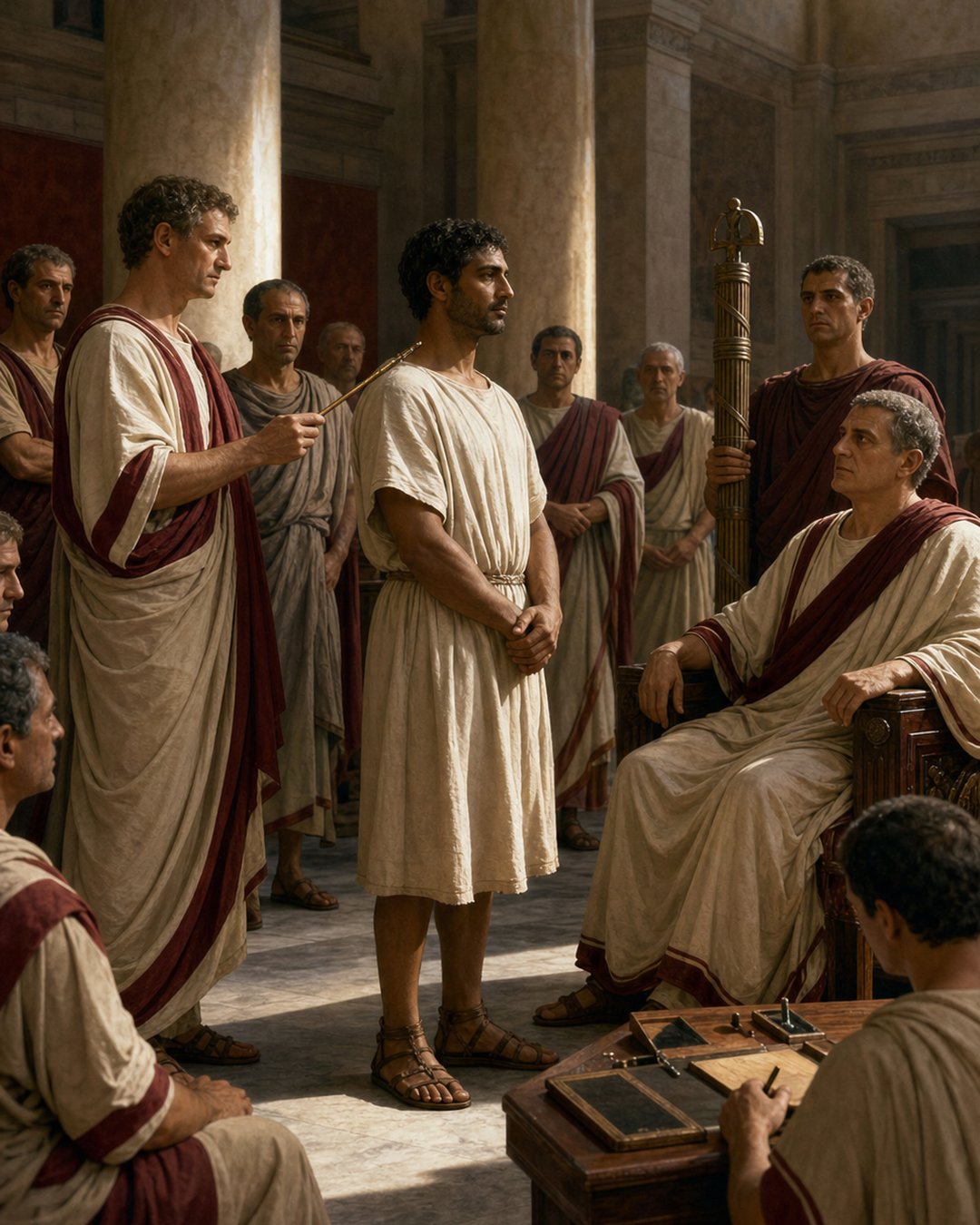
Freedom in Rome could begin with a gesture small enough to fit inside a courtroom. An enslaved person stood before a magistrate; a claimant touched the body with a slender rod; the owner did not contest the claim. The ceremony was stylized, but the result was not theatrical. A person whom law had treated as property crossed into a recognized civil status while officials and witnesses made the crossing difficult to deny.
Romans called the release from slavery manumissio, literally a sending from the hand. Owners could free people in several ways, including a formal proceeding with the vindicta, enrollment through the census in earlier periods, or a direction in a will. Informal promises also existed, but law did not always grant them the same consequences. Method mattered because freedom affected citizenship, inheritance, family, and the former owner’s claims.
The legal act did not wipe the slate clean. A freed person carried a history of enslavement and usually entered a lasting relationship with the former owner, now a patron. Roman manumission therefore joined liberation to hierarchy. It made freedom real, public, and transmissible, yet built the memory of dependence into the new status.
A Private Decision Needed a Recognized Form
An owner could want to reward service, regularize a household relationship, fulfill a promise, or arrange succession. None of those motives by itself explains the legal power of manumission. Roman law distinguished an intention to free from the forms that produced a fully recognized result. The distinction protected status from being rewritten whenever memories or interests changed.
The formal routes gave third parties something to trust. Magistrates, census records, wills, and witnesses connected the owner’s decision to institutions beyond the household. That mattered after the owner died, when heirs might prefer to keep valuable labor enslaved. A public act or properly witnessed testament could speak after the principal voice was gone.
This logic resembles the documentary world explored in Roman wax tablets and enforceable promises. Writing did not make every claim true, but recognized form changed what others could plausibly dispute. Manumission made a human status depend on more than a private conversation.
The Vindicta Turned Release into a Civic Scene
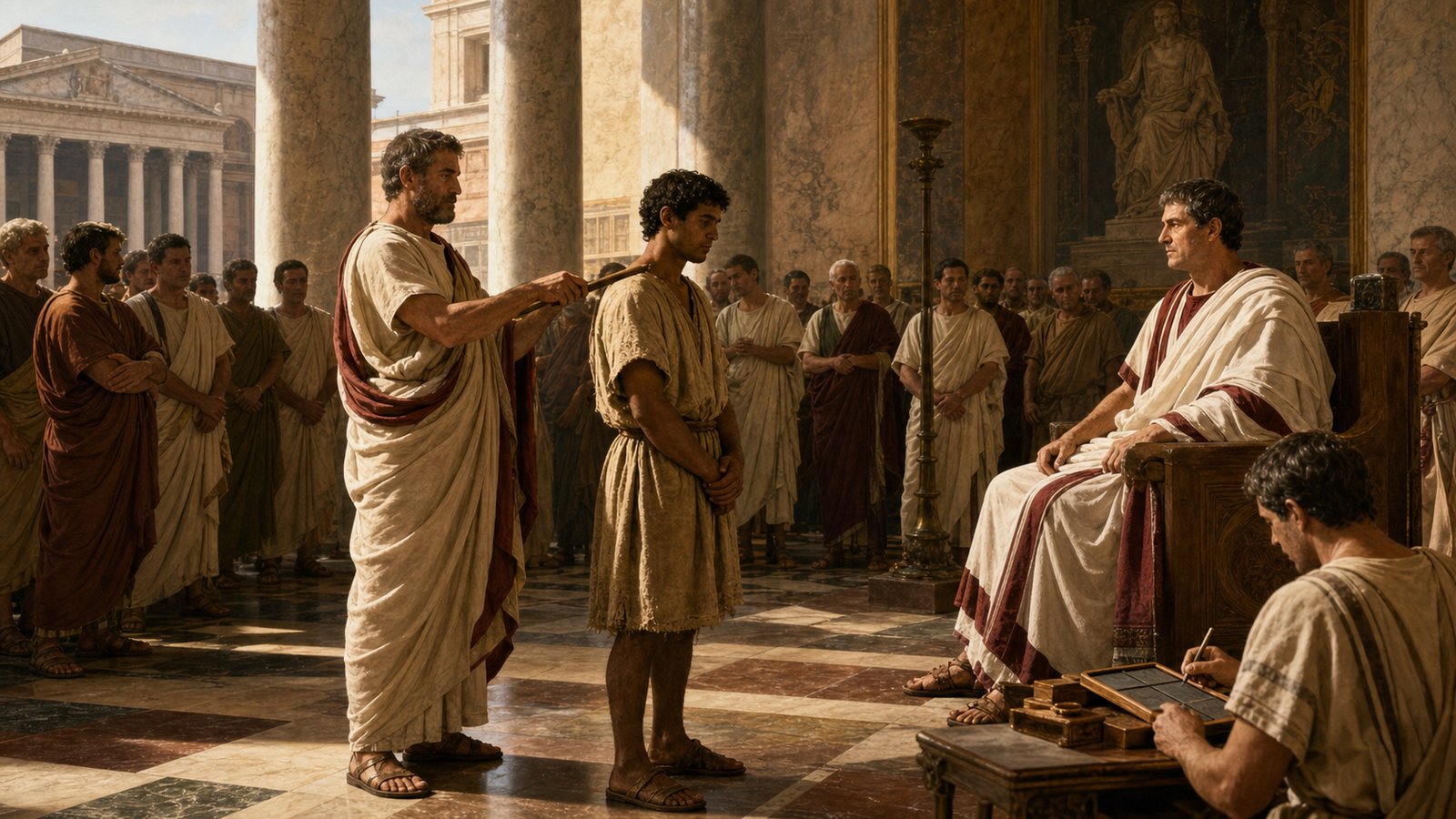
In manumission by the vindicta, the parties used a legal performance before a magistrate. Ancient legal summaries describe an assertor who claimed that the enslaved person was free and touched the person with a rod. When the owner yielded rather than contradicting the claim, the magistrate confirmed the freedom. The proceeding borrowed the shape of a lawsuit to create agreement.
The scene condensed Roman legal culture into bodies and objects: magistrate, owner, claimant, enslaved person, rod, spoken formula, and official decision. Its public quality was essential. Freedom appeared not as an invisible change of heart but as a status the civic order had acknowledged.
We should not mistake the ceremony for the whole emotional story. Sources rarely preserve what the person being freed felt at that moment, and motives varied enormously. The safe historical claim is narrower and stronger: the procedure made a contested category—slave or free—answerable through a recognized act.
Census and Testament Carried Freedom Differently
Roman tradition also recognized manumission through census enrollment. In periods when the census operated in the relevant form, an owner could permit an enslaved person to be entered among citizens. The mechanism linked freedom to the same civic counting that organized property, military obligation, and rank. A name in the register could announce that the household’s former claim had changed.
A will carried the decision across death. A testator might free an enslaved person directly or require an heir to perform the release. Testamentary manumission could reward service and shape the household that survived the owner. It could also produce conflict, which helps explain why wording, witnesses, and later imperial limits mattered.
The census article at The Lost Eagles shows that Roman counting assigned civic position rather than merely totaling bodies. Manumission through that system was powerful for the same reason: registration placed the former slave on a new side of a public boundary.
Freedom Could Bring Citizenship—and Restrictions
Under important periods of Roman law, a person formally freed by a Roman citizen could become a Roman citizen. That remarkable route made slavery and citizenship adjacent legal conditions. The transition was not uniform across every century or every method, and legislation under Augustus classified and restricted some grants. Age, the owner’s status, and the form used could affect the result.
The Lex Aelia Sentia and Lex Fufia Caninia are evidence of anxiety about manumission’s scale and consequences. One regulated circumstances of release; the other limited the number of enslaved people that a will could free according to the size of the household. Roman elites valued an owner’s power, yet the state claimed an interest when private releases altered the citizen body.
Informally freed people could occupy weaker positions than those released through the old civil forms. Legal categories changed over time, so a single neat chart cannot describe the whole empire. The constant is that “free” was not enough by itself. Roman officials asked how freedom had been granted and what civic standing followed.
The Former Owner Became a Patron
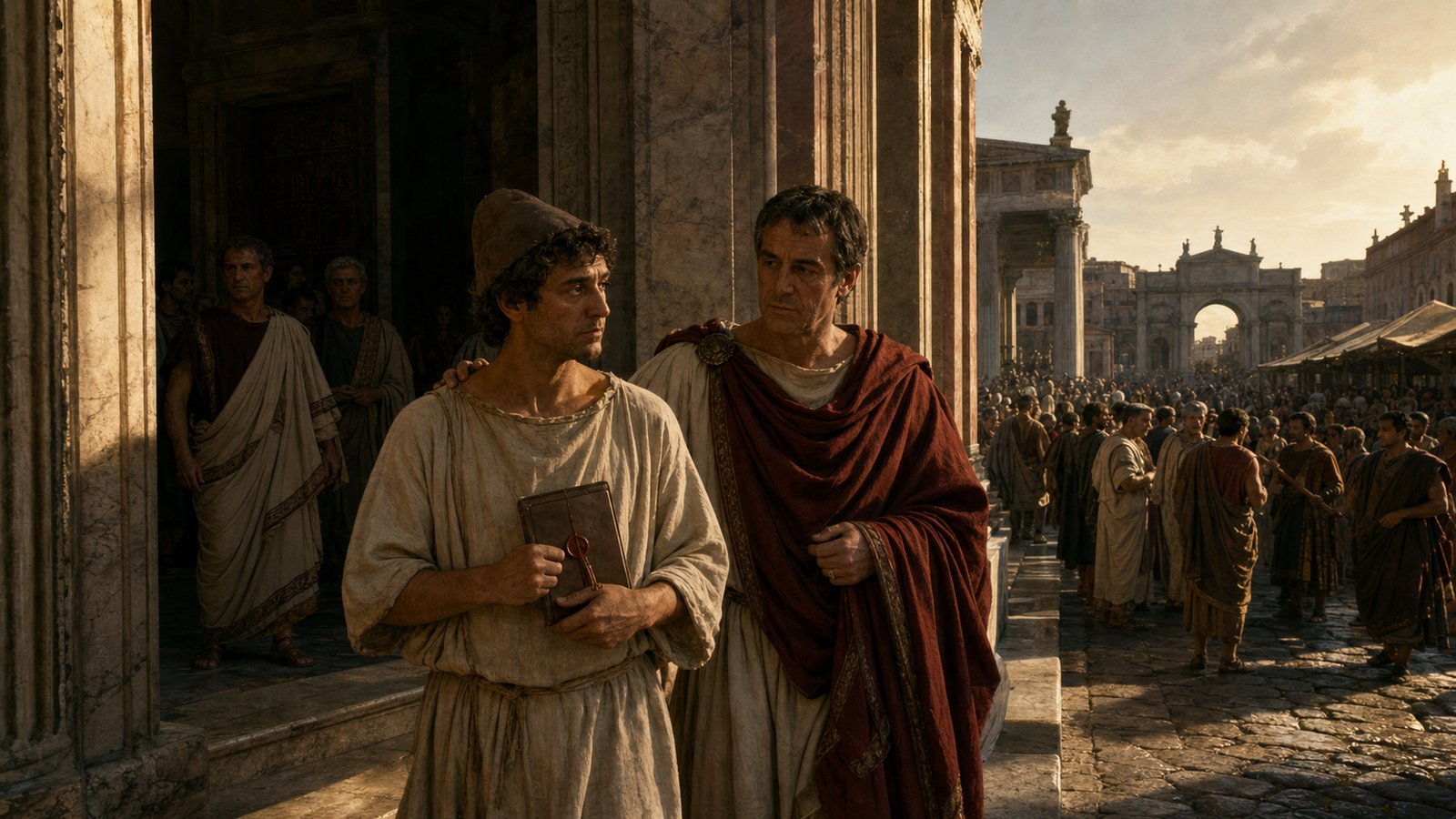
Manumission ended ownership, but it usually created patronage. The former master became the freed person’s patron, and law and custom expected respect, services, and loyalty. These duties could be negotiated and abused. A freed person had legal personhood and economic possibilities unavailable in slavery, while the patron retained social and sometimes enforceable claims.
The new relationship helps explain Roman freedpeople in business and household administration. Skills learned under slavery did not vanish at release. A patron might provide capital, contacts, or continuing work, while the freedperson’s success could benefit the patronal house. Cooperation and coercion could exist in the same arrangement. A craftsperson, shop manager, accountant, or agent could emerge from manumission with years of expertise but without a freeborn family network. Patronage supplied access while advertising the unequal route through which that access had come.
The morning ritual described in our article on Roman patronage was therefore not reserved for freeborn clients. Freedpeople entered a particularly durable version of it, marked by the fact that the patron had once owned them.
A New Name Preserved the Crossing
Freedpeople commonly took elements of the former owner’s name while retaining an individual name that could recall their earlier identity. In inscriptions, the abbreviation for freedman or freedwoman could identify the patron. A public name therefore announced both freedom and the relationship through which it had arrived.
Surviving funerary monuments show freedpeople claiming marriages, trades, affection, and achievement. They could own property, make contracts, and form households, though social prejudice remained. Their children, born after manumission, occupied a different position as freeborn citizens. One legal act could therefore alter a family line beyond the person who stood before the magistrate.
Roman manumission was genuine liberation, not a euphemism for unchanged slavery. It was also a controlled liberation shaped by owner, magistrate, statute, and patronal duty. Its deepest historical lesson lies in that tension. Rome could move a person across one of its hardest boundaries, but it made the route visible enough that society remembered exactly where the journey began.
Sources & Further Reading
- Encyclopaedia Britannica, “Manumission”
- Encyclopaedia Britannica, “Roman Law: The Law of Persons”
- World History Encyclopedia, “Slavery in the Roman World”
- Gaius, Institutes, Book 1