
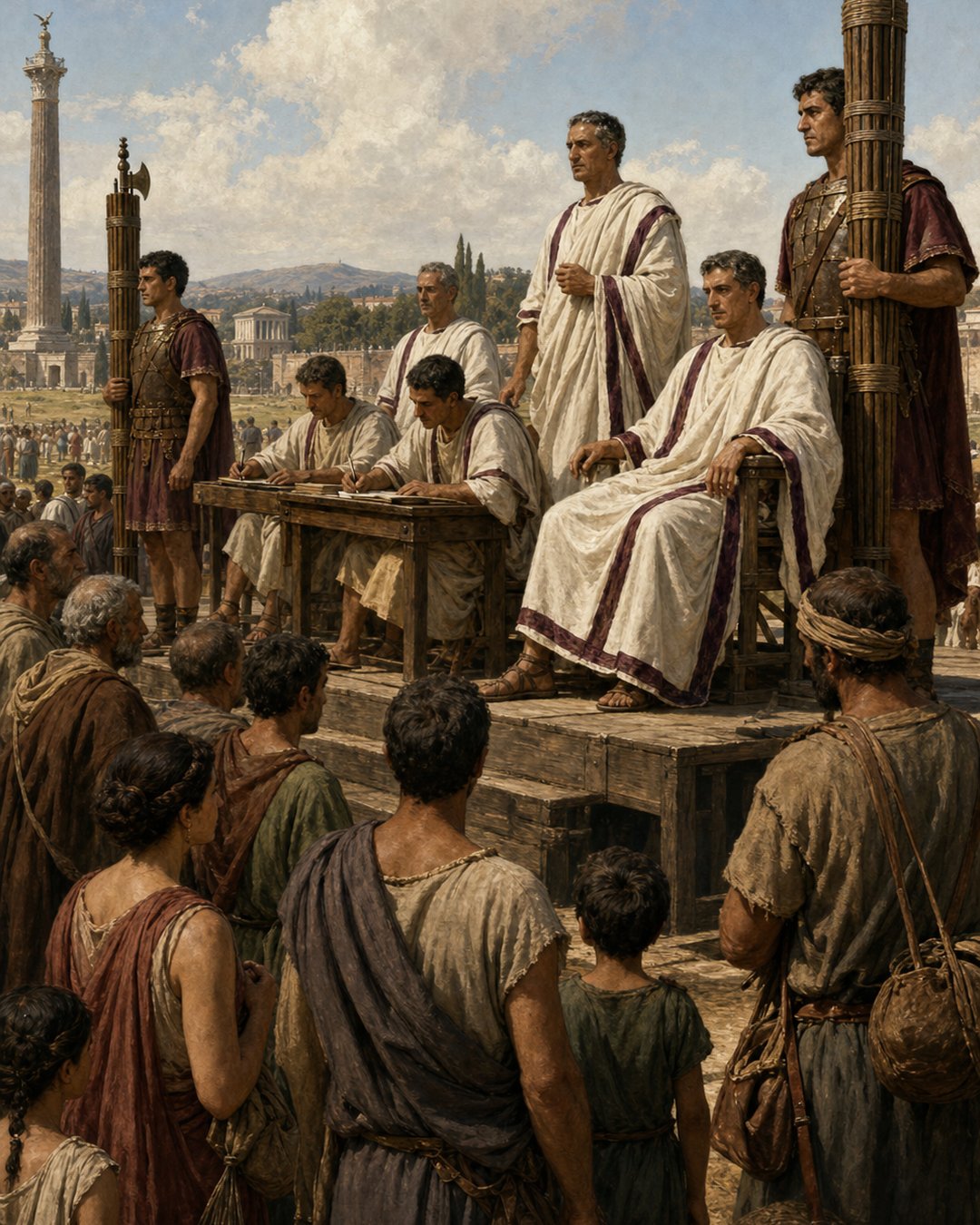
A census sounds harmless until you imagine it in Roman terms. It was not only a clerk asking how many people lived in a house. The Roman census made citizens stand before authority with names, property, family position, and public status exposed. It counted men, but it also sorted them. It translated private wealth into civic rank, military obligation, tax logic, and moral visibility.
That is why the office of censor carried weight beyond arithmetic. Censors were magistrates who supervised the census and had a role in public morals. In Republican memory, the census reached back to Servius Tullius, whose reforms were said to organize citizens by property classes. Whether every early detail is recoverable or not, Romans understood the principle: the state needed to know who its citizens were, what they possessed, and where they belonged.
The census turned households into public facts
Roman society rested on households, fathers, property, dependents, patrons, and names. The census drew those realities into the open. A citizen’s declaration was not a private spreadsheet. It was a public relationship with the state. What a man claimed about his property could affect how he was ranked, what burdens he carried, and how others understood his place.
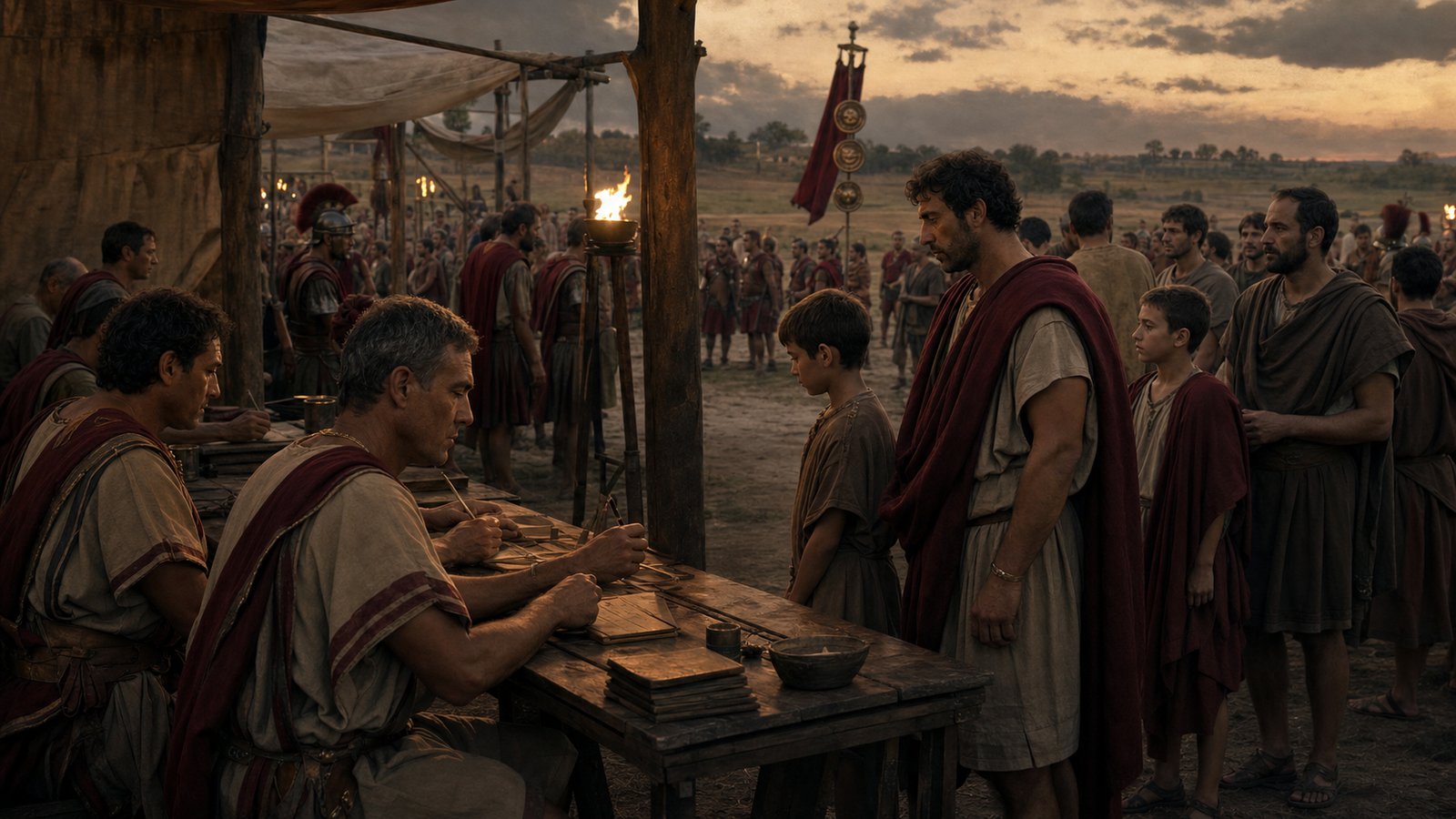
The physical scene matters. Citizens came forward, clerks recorded, magistrates judged, and families became legible to power. A farm, a son, a horse, a fortune, or a lost fortune could change a man’s civic meaning. Rome did not need modern bureaucracy to be bureaucratic in effect. It had ritual, lists, magistrates, and memory.
Property shaped service and status
Livy’s account of early census organization links property to classes, arms, and public burden. The details belong to Rome’s remembered past, but the logic was enduring. A citizen’s resources helped determine what the state could demand from him and what honor he could claim. Counting was therefore connected to fighting.
That connection makes sense in a city where military service and civic identity grew together. The poor, the middling, and the wealthy were not merely economic categories. They were different kinds of citizens in the eyes of the state. The census helped Rome imagine itself as an ordered body, with each part assigned weight and function.
Censors watched reputation as well as numbers
The censor’s moral role made the census more intrusive than a headcount. Roman public life treated reputation as political material. A man’s conduct could affect his standing; senators and equestrians depended on visible dignity as well as wealth. The power to revise lists and judge behavior turned census authority into a form of public discipline.
This did not make censors all-powerful judges of every private sin. It did mean that Rome tied citizenship to scrutiny. A citizen was not just counted; he was evaluated inside a culture where honor, order, and shame mattered. The state’s list could become a mirror no ambitious Roman wanted to face casually.
The lustrum made administration feel sacred
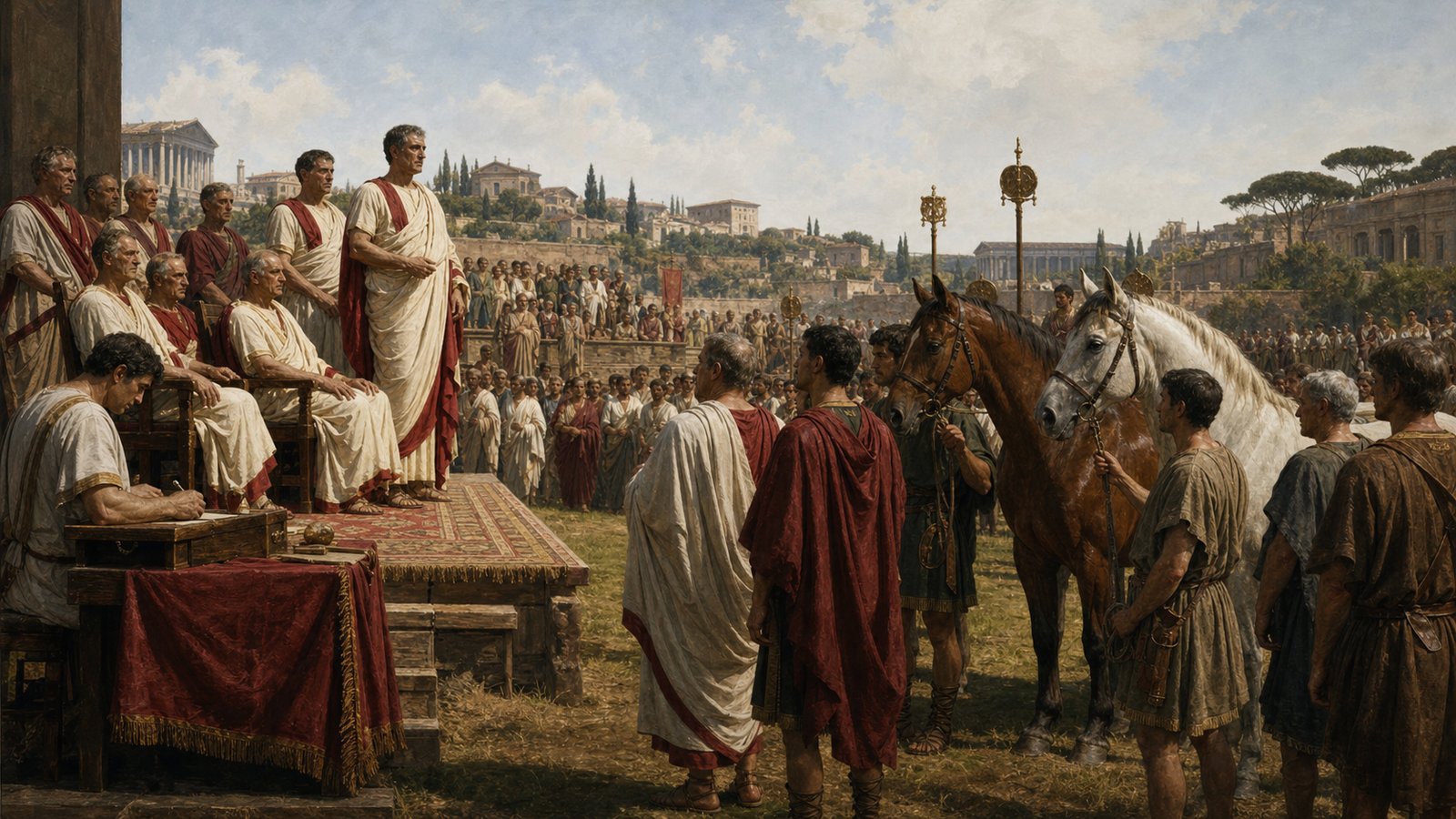
When the census was completed, the lustrum purification ceremony gave the process a religious frame. This is one of the most Roman features of the institution. Administration did not stand apart from ritual. Numbers, property, civic order, and divine favor could be woven together in public performance.
The ceremony helped transform registration into renewal. Rome did not merely update records. It purified the citizen body after making it visible. That sequence gave the census emotional power. The community had been counted, sorted, and symbolically restored. Bureaucracy became a civic drama.
Augustus understood the old language of counting
The census did not vanish when Rome became an empire. Augustus used census language in the Res Gestae, presenting registrations as part of his orderly restoration of the state. That was not accidental. Counting citizens could sound like republican care even when power had become imperial.
For Augustus, as for earlier Romans, the census was a way to show that the state saw and organized its people. It offered the appearance of continuity: Rome still had citizens, ranks, records, and rituals. The princeps could stand inside old forms while using them to support a new political reality.
A headcount cannot explain the fear and prestige
If the census were only a number, it would not have carried so much weight. Its power came from combination. It counted bodies, measured property, organized service, marked status, exposed reputation, and ended in ritual purification. It made Roman citizenship visible as a hierarchy.
That visibility could reassure or intimidate. A man properly registered belonged to the civic order. A man lowered, excluded, or shamed felt the state’s judgment. The Roman census was therefore one of the quiet instruments by which Rome governed itself. It did not need swords in the square to remind citizens that public life had ranks. It needed names on a list, magistrates watching, and a ceremony that told everyone the list mattered.
The census also reveals how different Roman citizenship was from a private identity. A citizen belonged to a web of public expectations. He could be summoned, assessed, ranked, praised, or shamed. His household gave him standing, but the state confirmed that standing through procedures other citizens could recognize. That public recognition was part of the value of being Roman. It made status something neighbors could see and magistrates could record, not merely something a family claimed around its own hearth.
Because the census connected money to honor, it also made decline visible. A family that had lost property could not always hide behind an old name. A rising man could use wealth to enter a higher civic conversation. The list therefore carried social tension. It could preserve hierarchy, but it could also reveal movement inside it. That movement was never neutral, because every change of rank altered how neighbors interpreted dignity and duty.
That is why Roman counting had a moral edge. It did not simply ask how many people existed. It asked what sort of civic body Rome believed it possessed, and how each citizen would serve, pay, fight, and stand inside it. The answer shaped military obligation, social ambition, and the public grammar of respect. A list could look quiet, but in Roman public life it helped decide who carried arms, who carried prestige, and who carried shame. It was a civic instrument that made the republic’s social body visible before anyone could argue about what that body owed. For the ordinary citizen, the ceremony could feel like belonging and exposure at the same time: his name was recognized, but his resources and reputation were no longer his alone to describe. Rome’s count was therefore a public bargain. Recognition brought obligations, and obligations proved that recognition was real. The census made that bargain visible in a way no private family archive could. It gave Rome a recurring moment when social reality had to be spoken aloud, written down, and accepted as part of public order.
Sources & Further Reading
- Britannica, censor
- Livy, History of Rome, 1.42-44
- Smith Dictionary, Census
- Smith Dictionary, Lustrum
- Britannica, Roman Senate
- Britannica, eques
- Britannica, ancient Rome
- Res Gestae Divi Augusti, 8
- Cicero, On the Laws, 3.3