
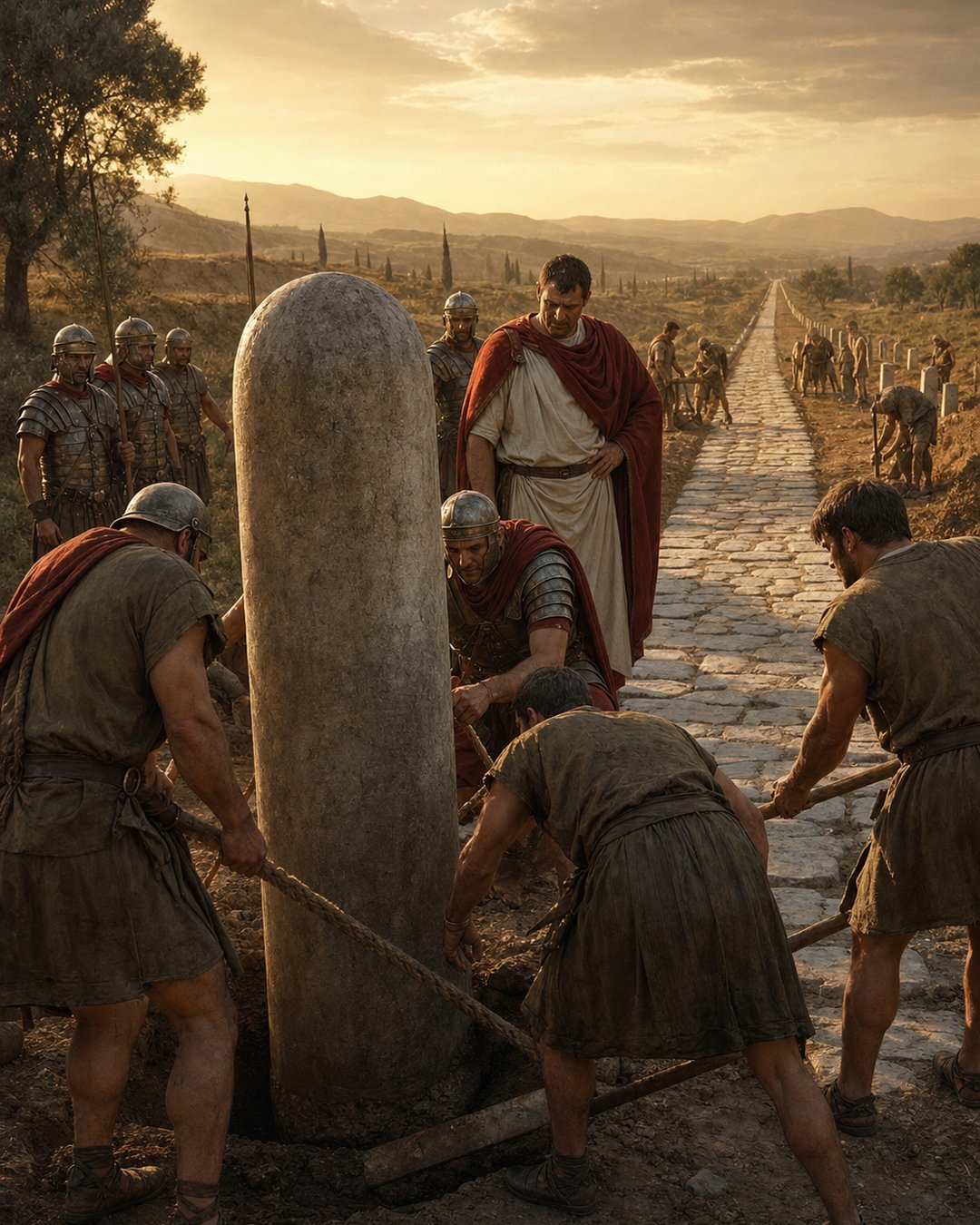
A Roman milestone seems like the least mysterious object in the empire. It stands beside a road and tells travelers about distance. But Roman milestones did more than help people count miles. They made movement political. A stone on the roadside could connect a traveler’s feet to an emperor’s name, a magistrate’s office, a repaired bridge, or Rome’s claim that space itself had been measured and organized.
Roman roads were practical. They moved soldiers, officials, merchants, letters, taxes, and news. Yet practicality and propaganda were not opposites in Rome. The more useful a road was, the more powerful it became as a public statement. A milestone said: this route is known, this distance is counted, this work belongs to authority, and your journey takes place inside an ordered world.
Distance was a form of control
The Roman mile came from the idea of a thousand paces, the mille passus. That sounds technical, but measurement changes how people imagine land. A rough path becomes a known route. A far town becomes a counted interval. A commander can plan a march, a courier can estimate time, and an official can speak about a province with more confidence.
Milestones turned geography into a sequence of public facts. They did not remove mud, heat, danger, or delay. They did something subtler. They told travelers that the road belonged to a system large enough to count it. In an empire built on movement, that mattered.
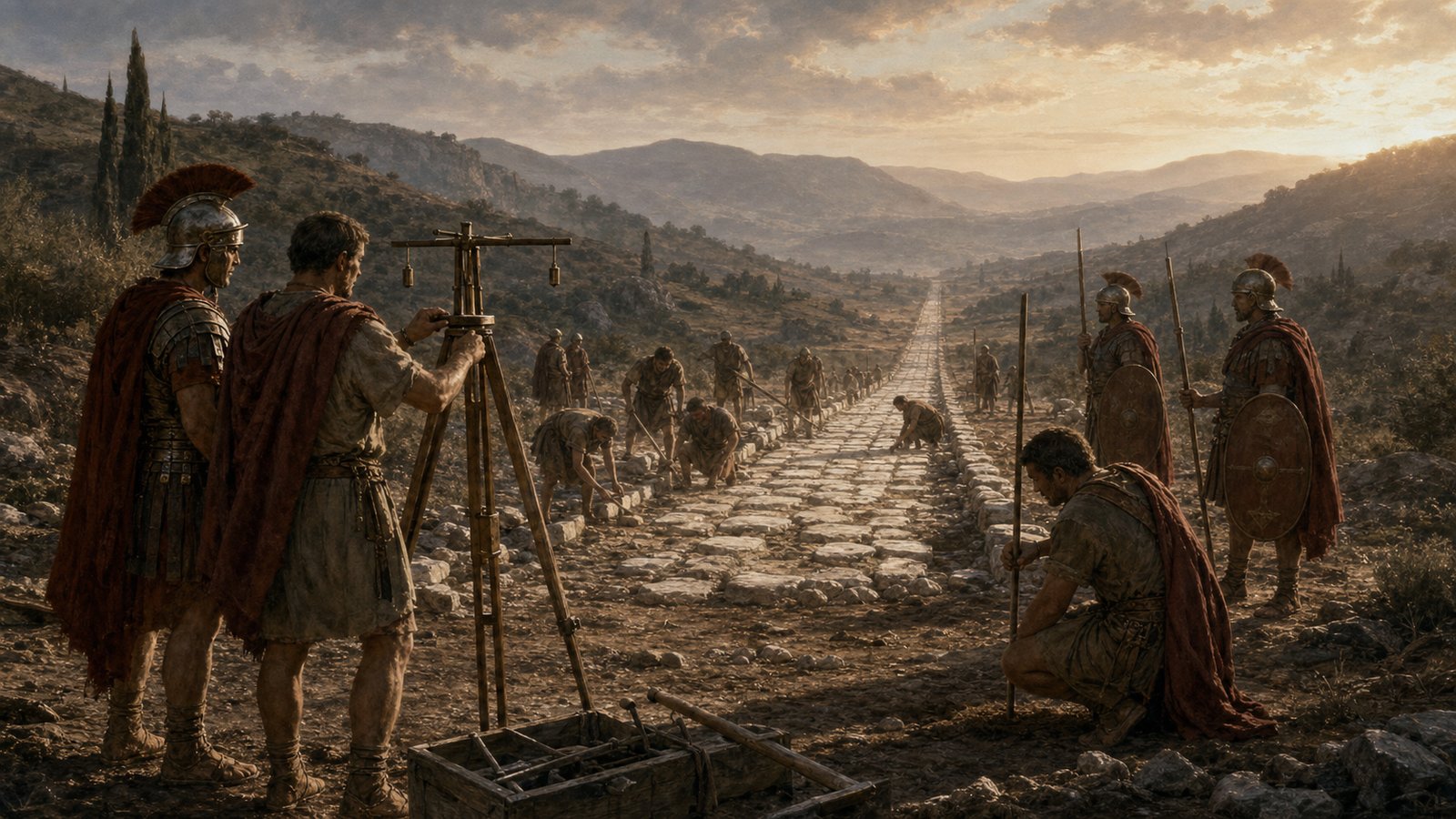
A stone could carry a political name
Many Roman milestones bore inscriptions naming emperors, officials, titles, or repairs. That made them miniature monuments. A traveler did not need to enter a forum to meet imperial authority. It could stand beside him in stone while he adjusted a sandal or watered a mule.
The name mattered because public works created memory. If a road was repaired under an emperor, the road could advertise that care again and again. Every passerby became a possible reader, or at least a witness to the fact that reading and authority belonged on the roadside. Even when weather wore inscriptions down, the idea remained: useful infrastructure could also praise power.
Augustus made roads part of restoration
Augustus understood the prestige of repair. In the Res Gestae, he records that he repaired the Via Flaminia and its bridges, with two exceptions, in his sixth consulship. That claim is not just a maintenance note. It belongs to his larger image as the man who restored order after civil war.
Road repair was an ideal Augustan message. It was peaceful but not weak, practical but impressive, traditional but connected to a new regime. A repaired road suggested that the world was once again passable. A bridge restored under Augustus turned political stability into something carts and feet could feel.
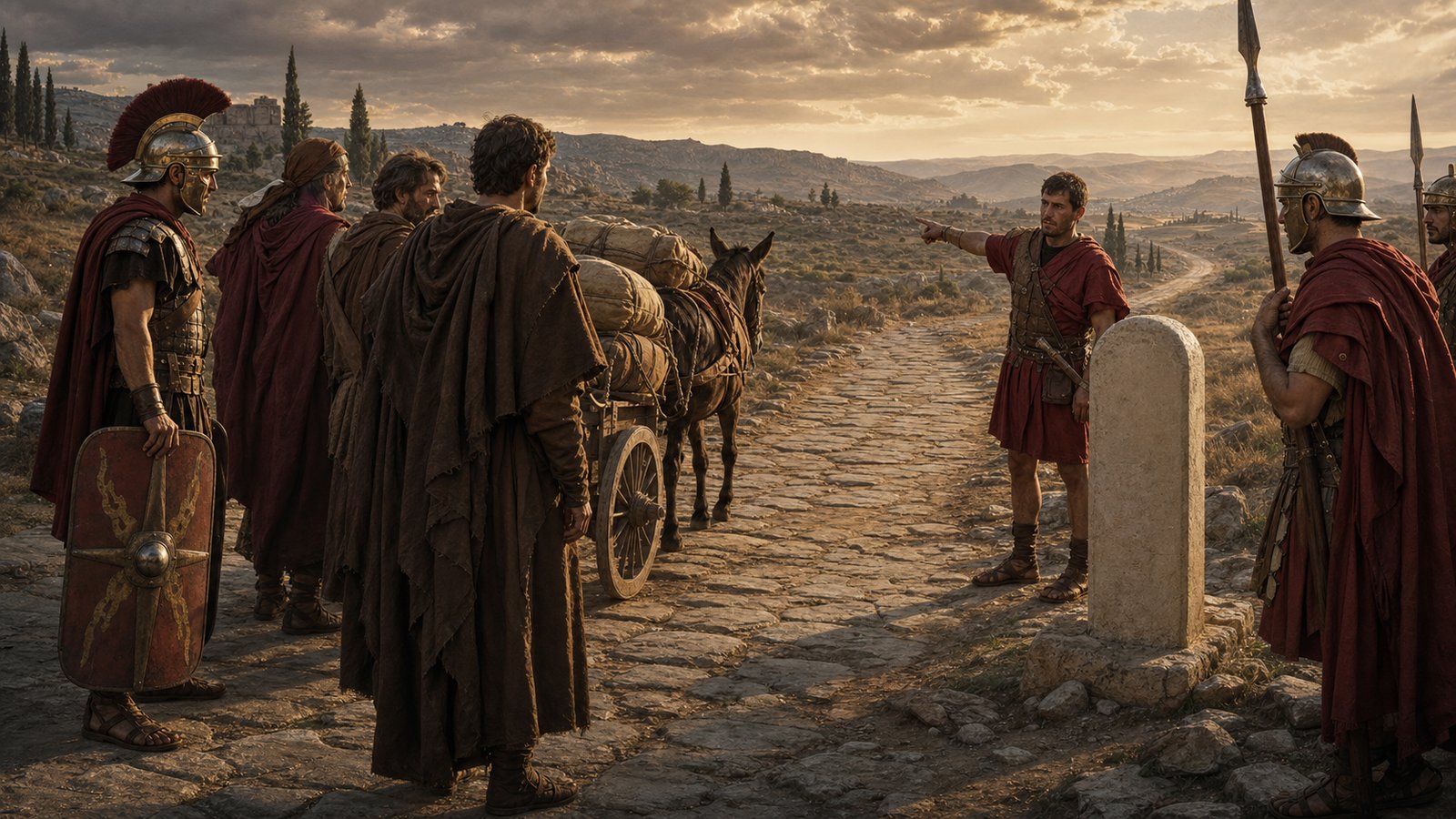
The Golden Milestone made the center visible
The Milliarium Aureum, the Golden Milestone in Rome, was associated with Augustus and the symbolic center of the road system. Its meaning was larger than route information. It made the capital feel like the measuring point from which distances and authority radiated.
That image suited Rome perfectly. The empire did not need every traveler literally to begin at the Forum. It needed people to understand that roads, distances, offices, and imperial prestige were connected. The Golden Milestone turned the idea of centrality into a public object.
Road signs helped soldiers and civilians differently
A soldier, courier, merchant, pilgrim, farmer, and governor did not experience a milestone in the same way. For a soldier, measured distance could belong to marching discipline. For a courier, it shaped urgency. For a merchant, it helped calculate cost and risk. For an official, it confirmed that the state had made passage legible.
This range is why milestones were so effective. They did not require one audience. They met everyone on the road. Their message could be practical in the morning and political by evening. The same stone could answer “how far?” and “who made this possible?”
The road system made absence feel governed
Rome could not station an emperor at every crossroads. It could place stones, bridges, pavements, stations, and inscriptions along the routes that mattered. Those objects extended authority into absence. They made remote spaces feel touched by decisions made elsewhere.
A milestone therefore belongs with arches, aqueducts, coins, and inscriptions as one of Rome’s quiet languages of rule. It was less spectacular than a triumph, but more often encountered. A traveler passing a milestone saw measured distance, but he also moved through a claim: Rome had counted this road, named it, repaired it, and tied it to power. The stone did not merely say where you were. It reminded you whose world you were traveling through.
Milestones also made maintenance visible. A road could fall apart quietly, but a repaired road with an official name attached announced that someone had taken responsibility for keeping movement possible. That mattered in a world where weather, carts, animals, and armies could damage the very routes that held the empire together. Repair was not glamorous, but it was political.
The stone’s durability strengthened the message. A spoken order faded. A milestone stayed in place through heat, rain, dust, and passing generations. Its inscription might weather, but its presence still declared that the landscape had been handled by Roman authority. For travelers who rarely saw the emperor, such objects made rule tangible.
Milestones also linked local experience to imperial time. A peasant driving animals, a courier hurrying with orders, and a veteran walking home could all pass the same marker and understand that their separate journeys had entered the same measured system. That common measurement was part of Rome’s genius. It made distance feel official, not merely personal.
The objects could even turn repair into memory. When a ruler or magistrate restored a road, the marker helped convert maintenance into reputation. The work might involve quarrying, hauling, digging, leveling, and sweating laborers, but the finished stone preserved the name of authority. Rome knew how to make practical labor speak politically.
That is why a roadside marker belongs in the history of power. It measured a journey, but it also trained people to experience the road as part of a governed world. The traveler counted miles; Rome counted on the traveler noticing the order behind them. A milestone did not need to be large to make the empire feel present. Its quiet strength was repetition: one stone after another, each turning road dust into a reminder that movement itself had been organized. The empire became easier to imagine because travelers met its measurements mile by mile, not only in Rome’s ceremonies. That repeated encounter was the point: authority did not appear once, it accompanied the journey.
The practical scene was ordinary enough to be powerful: dust on sandals, a mule pausing near the roadside, a courier checking distance before the next stretch, and a cut inscription naming authority in stone. Such moments made political order feel physical rather than abstract. The milestone translated the empire into something a traveler could touch, pass, remember, and use.
Sources & Further Reading
- Britannica, Roman road system
- Britannica, milestone
- Platner and Ashby, A Topographical Dictionary of Ancient Rome, Milliarium Aureum
- Res Gestae Divi Augusti, 20
- Oxford Classical Dictionary, milestones
- Britannica, mile
- Livius, Roman inscriptions
- Britannica, Appian Way