
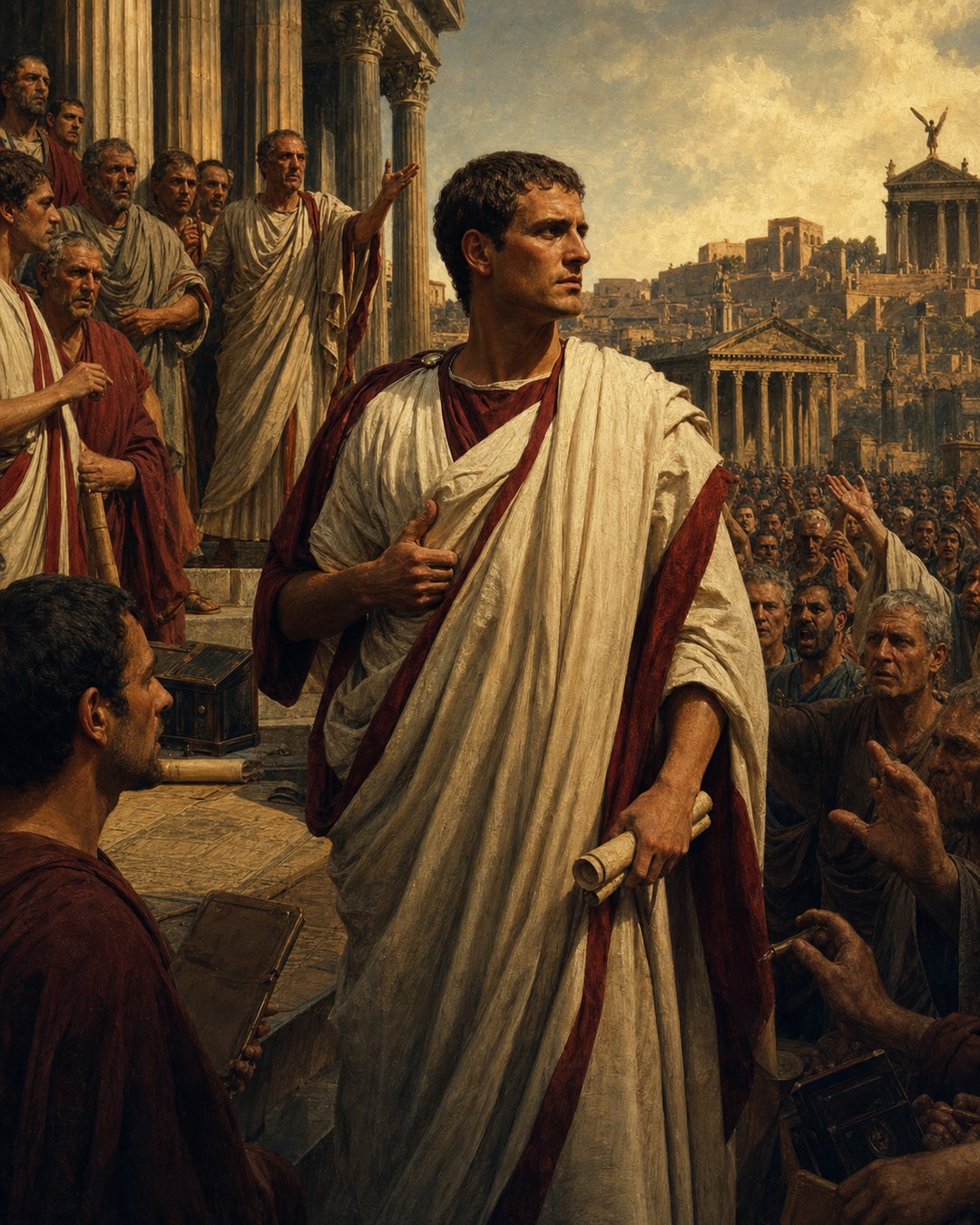
The frightening part of the Gracchan story is not that a Roman politician proposed a land reform. Rome had argued over land before. The frightening part is that Tiberius Gracchus made an old problem move through the city in a new way: from estates and senatorial conversation into the voting space of the Roman people, where a legal question could become a test of who really controlled the Republic.
In 133 BC, Tiberius Sempronius Gracchus was tribune of the plebs. His proposal dealt with ager publicus, public land that wealthy families had occupied for so long that possession began to look like ownership. Plutarch presents the reform as an attempt to restore smallholders and replenish the citizen body from which Rome drew soldiers. Appian describes a countryside where great estates had swallowed land and labor. That is the first concrete detail the story needs: this was not a vague speech about fairness. It was a fight over fields, leases, legal limits, and the shrinking base of citizens who could serve.
A farm question entered the Forum
The bill became explosive because Tiberius did not leave it in the Senate’s hands. Tribunes existed to protect plebeian interests, and the popular assembly could pass laws. Yet Roman politics also depended on custom, deference, and the expectation that the Senate’s authority would not simply be stepped around whenever it proved inconvenient. Tiberius forced that tension into daylight.
Imagine the scene not as marble calm but as pressure. Men who hoped for land crowded near the voting area. Patrons watched clients. Opponents knew that a line on a tablet might weaken fortunes built over generations. A public-land rule had become visible politics: bodies in the Forum, shouted arguments, and a tribune treating popular sovereignty as more than decorative language.
Octavius made the constitutional problem impossible to hide
The crisis sharpened when Marcus Octavius, another tribune, vetoed the bill. A veto was not a minor delay. It exposed a question with no gentle answer: if one tribune could block a law desired by the people, could the people remove that tribune for betraying them? Tiberius pushed for Octavius to be deposed. Plutarch makes the moment feel procedural and shocking at once. The assembly was asked not merely to approve land reform, but to decide whether sacred office could be stripped away by popular vote.
This was why conservatives feared the reform even when they could argue about the land on ordinary terms. Tiberius had found a lever. Once a tribune could say, “the people are the source of my authority, therefore they can remove an obstructing tribune,” every office began to look less protected by custom. Reform stopped being a policy. It became a method.
The land commission gave reform a machine
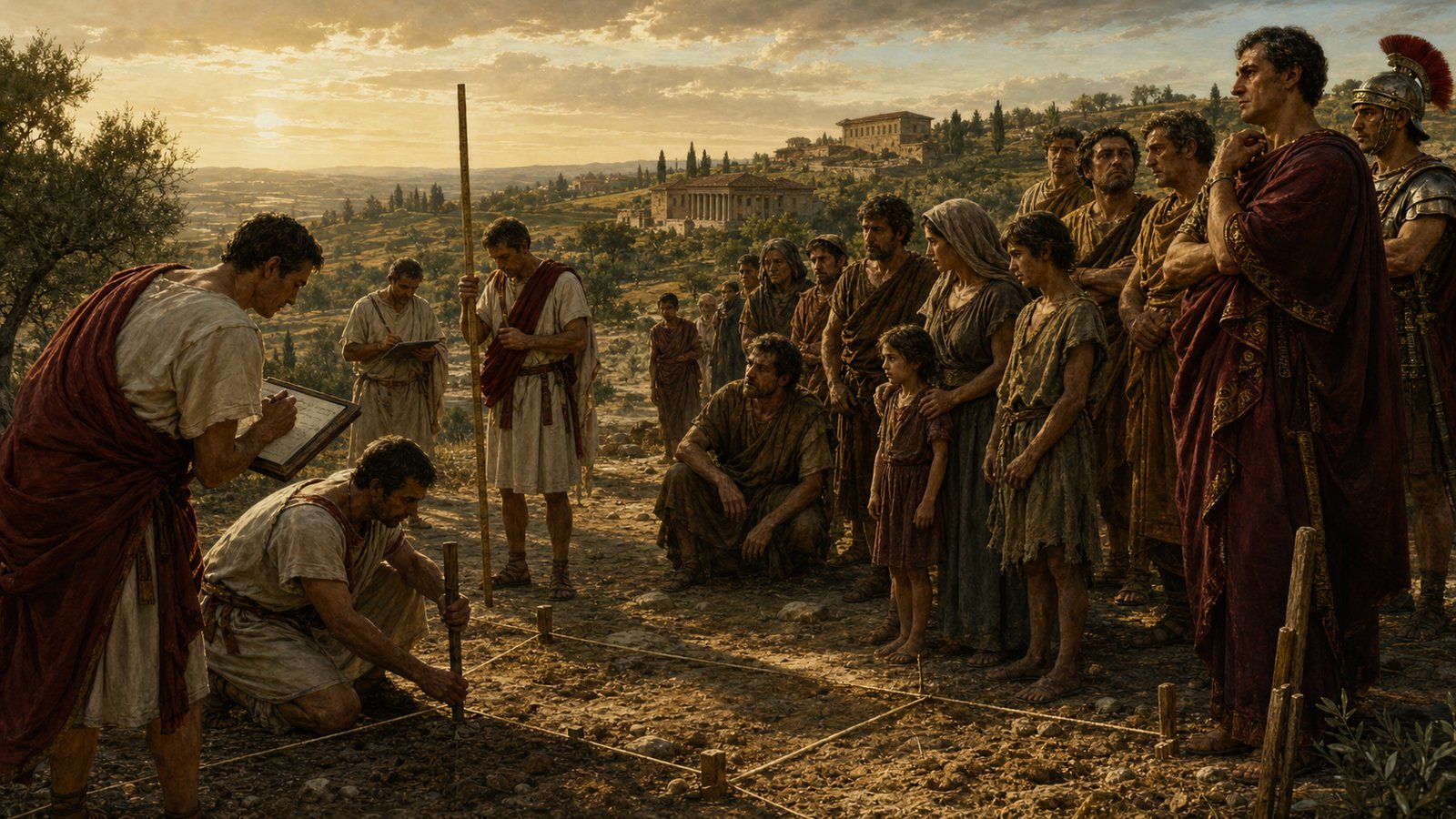
The law also created a commission to implement redistribution. That mattered because Roman politics often survived promises better than enforcement. A speech could fade. A commission could measure, list, summon, and reassign. The physicality of the reform made it more threatening: survey lines in soil, names on tablets, decisions about who had occupied too much and who might receive a plot.
The Gracchan program therefore touched several nerves at once. It challenged wealthy occupation of public land. It claimed the people could override an obstructing magistrate. It created a practical apparatus. It connected the health of Rome’s army to the condition of poorer citizens. Those connections are what made the episode larger than a compassionate reformer versus selfish nobles.
Violence answered a vote
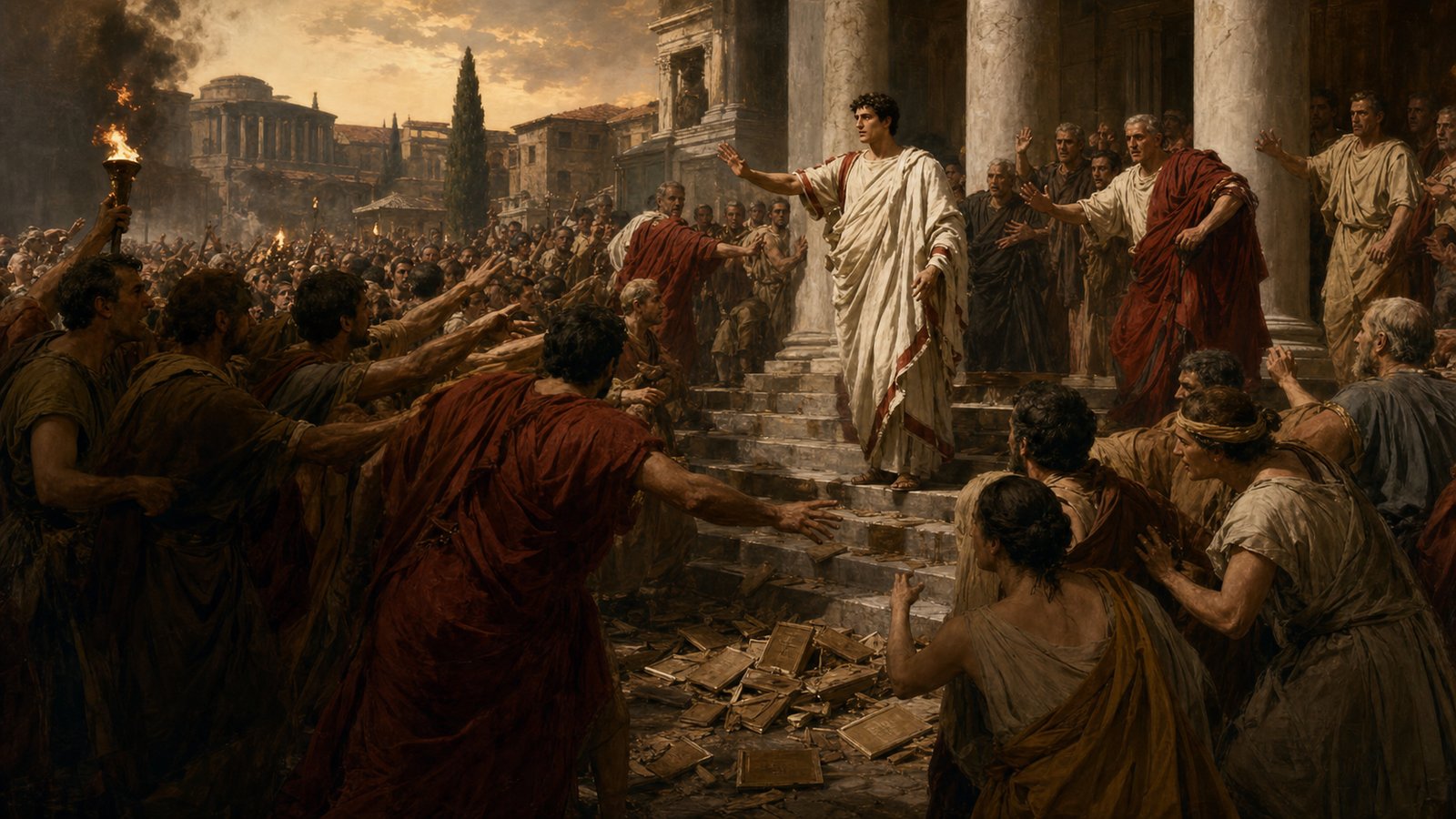
The decisive break came when Tiberius sought another tribunate. His enemies treated that as proof of dangerous ambition. Publius Cornelius Scipio Nasica led senators and supporters toward Tiberius on the Capitoline. Plutarch says clubs, broken furniture, and improvised weapons did the work. More than 300 people were killed, and the bodies were thrown into the Tiber.
The detail is ugly because it shows the Republic crossing a line without needing legions. No civil-war army had arrived. No foreign king stood at the gate. A domestic political dispute ended with elite men and their followers beating citizens in a sacred civic space. From then on, reform carried the memory of bodies in the river.
Gaius inherited more than a cause
A decade later, Gaius Gracchus did not inherit only his brother’s name. He inherited a changed political weather. His tribunate broadened the agenda with grain, courts, colonies, and allies. Whether one admires or fears the program, the pattern had been set: reform could be organized through popular institutions against senatorial obstruction, and opponents might answer by treating the reformer as a revolutionary.
This is why the Gracchi made Rome afraid of reform. They revealed that necessary change could expose the Republic’s weakest joint. If the Senate blocked change, popular pressure might break senatorial prestige. If the crowd prevailed, office and custom might look conditional. If elites panicked, legal argument might become street violence. The land question had been real. The deeper terror was that Rome no longer trusted its own rules to contain it.
The precedent mattered more than the program
One reason the story stayed dangerous is that later Romans could argue about Tiberius without agreeing on his motives. To supporters, he had defended the poor and tried to restore the citizen farmer. To opponents, he had treated sacred office, veto, and custom as obstacles to be bent by crowd pressure. Both readings gave the episode power. It was no longer only a land law from 133 BC; it was a warning about what happened when reformers and defenders of order stopped trusting the same procedures.
The concrete legacy was therefore institutional as much as emotional. Future politicians learned that an issue could be carried around the Senate and into the assembly. Future opponents learned that accusations of tyranny could justify extraordinary violence. The Republic survived the day, but it did not return to innocence. After Tiberius, reform always carried a shadow: if the law worked, it might transform power; if it failed, it might teach both sides that force was faster.
For The Lost Eagles, the useful question is not whether later memory made the story dramatic. It did. The useful question is which hard details let the drama survive: a year, a named actor, a public setting, an ancient source, and a physical object or ritual that people could remember. Those details keep the article from floating into slogan. They also show why Roman political culture was so powerful and so fragile. It could turn law, religion, and memory into order; under pressure, the same tools could turn into accusation, panic, and force.
The reform also mattered because it tied private comfort to public survival. Rome could celebrate conquest while poorer citizens struggled to remain the sort of property-holding men the military system expected. That contradiction made the land debate more than charity. It asked whether the victories of the elite were hollowing out the citizen base that made Roman power possible.
Sources & Further Reading
- Britannica
- Plutarch, Life of Tiberius Gracchus, 8
- Appian, Civil Wars, 1.7
- Plutarch, Life of Tiberius Gracchus, 10
- Plutarch, Life of Tiberius Gracchus, 11
- Plutarch, Life of Tiberius Gracchus, 16
- Plutarch, Life of Tiberius Gracchus, 19
- Plutarch, Life of Tiberius Gracchus, 20
- Britannica
- Livius