
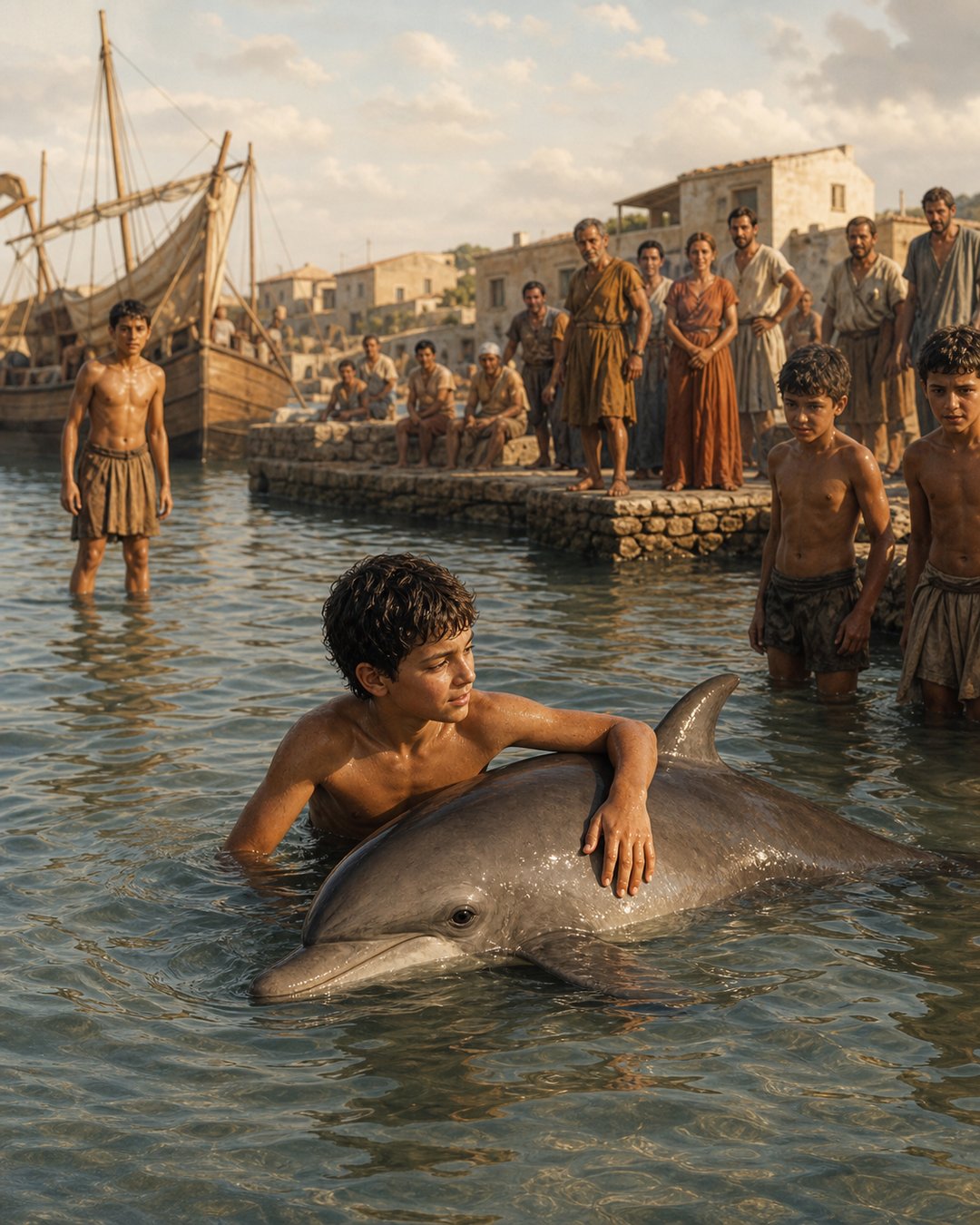
Pliny the Younger knew how his story sounded. He told Caninius that it was true, though very much like a fable, and suitable for a poet. He had heard it at dinner from a man he considered trustworthy. Those assurances do not turn the letter into a modern field report. They tell us that credibility was already part of the performance.
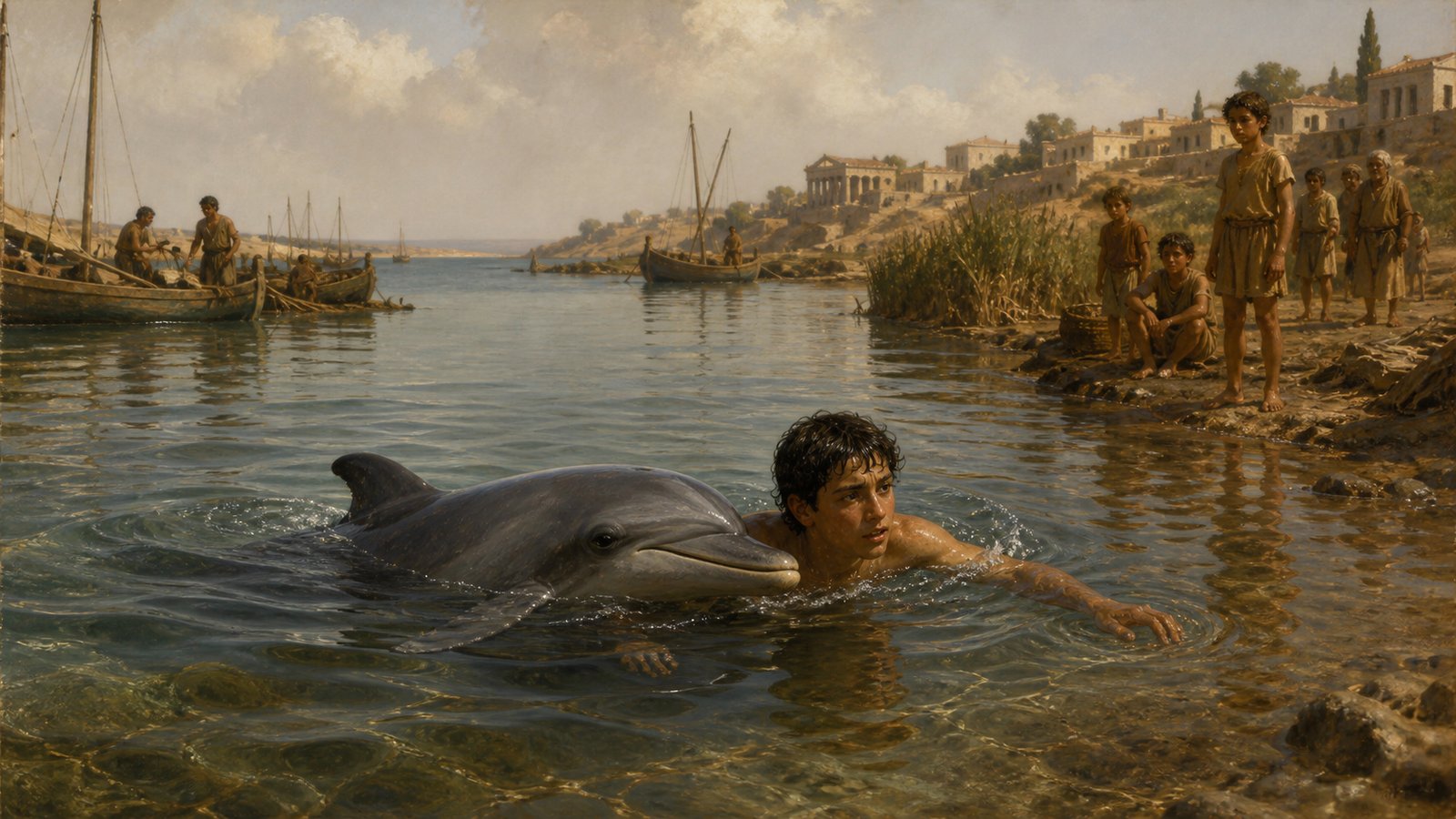
The setting was Hippo, a North African colony beside the sea and a navigable stretch of water connected to it by a tidal channel. Fishing, boating and swimming shaped local leisure. Boys competed to go farthest from shore, and one of them pushed beyond the others until a dolphin appeared around him.
In Pliny’s sequence, the animal moved ahead, behind and beneath the frightened swimmer, carried him toward open sea, then returned him to land. That encounter became a repeated attraction. The colony gathered, the boy eventually rode the dolphin willingly, and officials came to watch. The story ends not with harmony between human and animal but with a municipal calculation: important visitors cost too much to host, so the community secretly killed what drew them.
A Swimming Contest Supplied the Story’s First Witnesses
Pliny begins with ordinary movement. The lagoon responded to the tide, sending water toward the sea or back into the basin. Adults fished and sailed. Boys filled idle time by swimming, measuring courage through distance. The marvel enters a social setting already organized around water rather than dropping into an empty coast.
The first boy remains unnamed. That omission keeps the tale focused on action instead of biography. He swims farther, meets the dolphin and returns in fear. His companions become immediate witnesses, but Pliny does not give their testimony separately. Their presence makes the event public inside the narrative without allowing us to cross-examine anyone.
The dolphin’s motions are narrated almost like deliberate stages: in front, behind, around, underneath, away from shore and back again. Such order makes the episode memorable. It may preserve observation, literary shaping, or both. The strongest historical claim is that Pliny transmitted this carefully arranged account and expected a skeptical friend to find it credible.
the account of sponge divers using a signal cord shows how ancient marine writing can preserve a concrete human procedure while mixing observation with a source’s assumptions. Hippo’s dolphin demands even firmer boundaries because intention is repeatedly assigned to an animal through a polished social tale.
Repetition Turned Fear into a Public Relationship
On the next day the crowd watched the water. The boy returned but was less daring, and the swimmers fled when the dolphin approached. The animal leaped, dived and twisted. Pliny interprets the display as an invitation, language that reveals the human reading of behavior more securely than the dolphin’s motive.
Repeated appearances changed the balance. Men raised beside the sea became embarrassed by fear. They approached, stroked the dolphin and gave it a name. The boy mounted its back and was carried out and home again. What had been an involuntary rescue-like passage became, in the story, a practiced performance.
A second dolphin sharpened the contrast. It accompanied the first but remained untouchable, an observer rather than a mount. This detail gives the narrative texture because not every animal behaves identically. It also heightens the first dolphin’s exceptional status by placing ordinary distance beside unusual familiarity.
Pliny even reports that the animal came onto dry sand, warmed itself in the sun and rolled back into the sea. Modern readers need not accept every movement literally to understand why the story spread. Each repetition added a scene that could be retold, attracting another ring of observers and making the boy-and-dolphin pair a local possession.
Perfume Made Official Attention Physically Dangerous
The proconsular legate Octavius Avitus did more than watch. Pliny says that, moved by what he calls an absurd superstition, Avitus poured perfume over the dolphin while it lay on shore. The animal fled into deep water and disappeared for several days.
The episode joins status, ritual gesture and biological vulnerability without explaining the official’s exact belief. Perfume was a costly and meaningful substance, but on a marine animal it became an alien treatment. Pliny describes the dolphin returning weak and melancholy before eventually recovering its vigor.
We cannot diagnose the animal from this literary report. Nor can we know whether perfume caused the disappearance in the sequence Pliny gives. What the scene securely reveals is the author’s criticism of intrusive elite behavior. An official converts wonder into an occasion for display, and the admired animal bears the consequence.
The incident also foreshadows the ending. Fame does not merely bring eyes. It brings interventions by people whose rank gives them permission to act. The dolphin’s growing tolerance toward local swimmers leaves it exposed when outsiders treat accessibility as entitlement.
Hospitality Costs Turned a Marvel into a Civic Liability
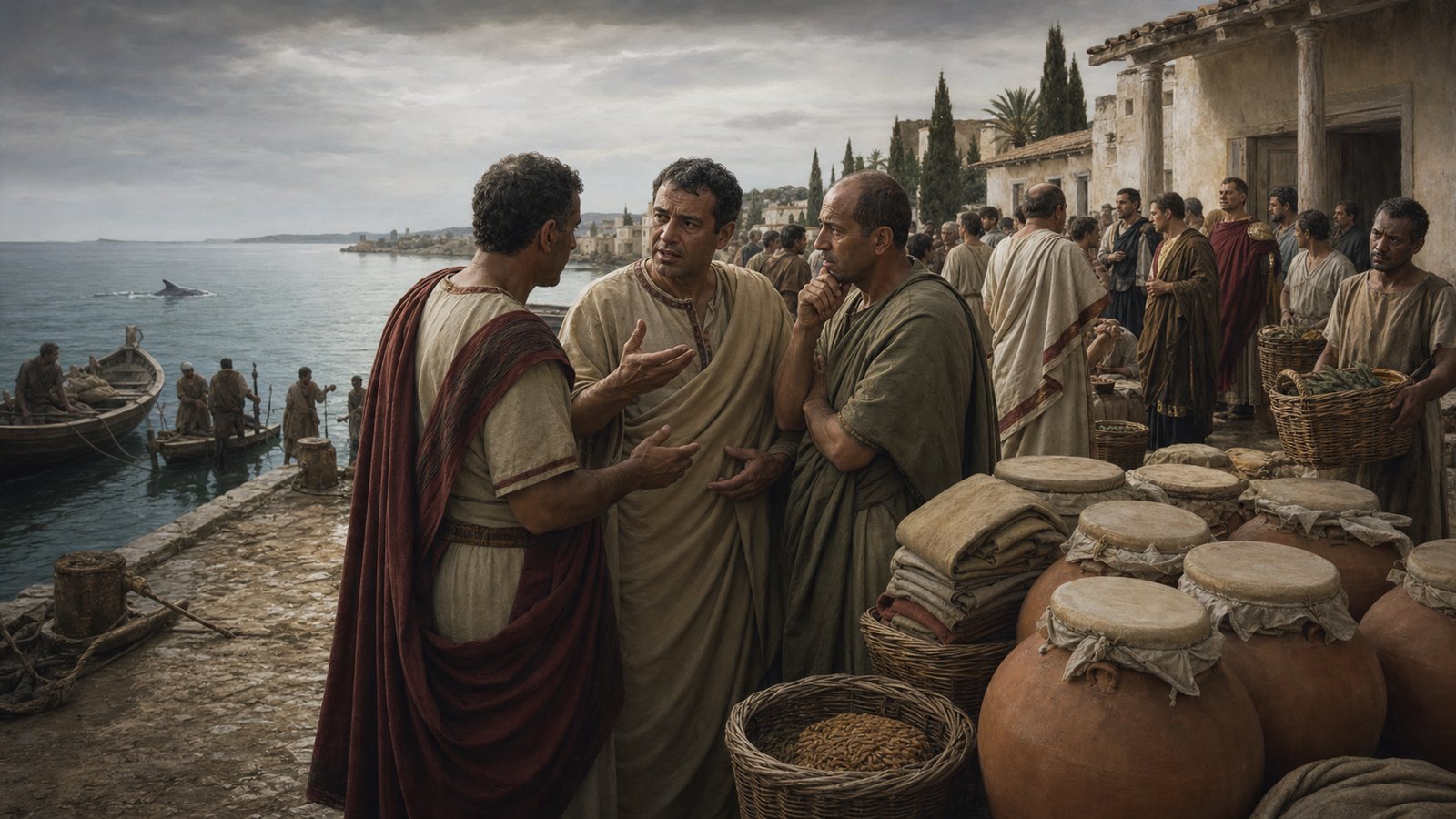
Magistrates flocked to Hippo. Pliny gives no ledger total, guest list or duration, but he says their arrival seriously burdened the small community’s finances. Hosting Roman officeholders required food, lodging, attendants and ceremonial attention. A famous animal generated obligations no ticket revenue is said to offset.
The waterfront also lost its calm. Boys’ play had become spectacle; local routines now served a stream of important visitors. The colony’s problem was not simply crowd size. Rank transformed curiosity into expense. People who could not easily be refused made the attraction harder to sustain.
This is the letter’s sharpest mechanism. News turns encounter into reputation, reputation summons authority, and authority sends the bill downward. The dolphin has no role in that machinery beyond remaining visible. Yet it becomes the only part the community can remove.
Pliny the Elder’s response to Vesuvius survives through another family letter in which observation, duty and narrative framing intersect. At Hippo, the younger Pliny builds a smaller chain of consequences. Curiosity begins the movement, but civic hierarchy decides its cost.
The Secret Killing Is the Point a Poet Was Not Meant to Improve
The community’s answer was to kill the dolphin secretly. Pliny supplies no method, debate or named decision-maker. Secrecy indicates that the act conflicted with the public affection and wonder surrounding the animal, while the missing details prevent a dramatic reconstruction of the killing itself.
Pliny anticipates Caninius’s response. The poet will lament, magnify and adorn the ending. Then the letter delivers a paradoxical instruction: invention is unnecessary; none of the supposedly true details should be omitted. This closing exposes the tale’s literary purpose even as it repeats the claim of factual completeness.
Pliny the Elder also records a boy-and-dolphin story associated with Hippo. The parallel shows that such a narrative circulated in the Roman literary world. It does not provide two independent modern observations, especially because relationships between tellings are difficult to establish. Repetition proves cultural traction more readily than zoological precision.
The letter also distributes responsibility unevenly. The boy begins the relationship, townspeople make it familiar, Avitus subjects it to an intrusive gesture, and unnamed civic decision-makers end it. No villain controls the whole sequence. The tragedy grows from connected incentives: daring earns attention, attention attracts rank, rank imposes cost, and cost falls on the one participant unable to negotiate.
Nor does Pliny tell us how local affection responded after the secret act. The boys’ grief, the swimmer’s later life and any public accusation are absent. A poet could invent those scenes easily, which is precisely why the closing challenge matters. Source discipline means allowing the dolphin’s death to remain abrupt rather than filling silence with a modern moral speech.
The ending survives because it reverses the comforting fable. Human familiarity does not save the animal. Official fascination makes it expensive, and local government solves a financial problem by destroying the source of attention. The boy and dolphin create the wonder, but magistrates and hospitality obligations determine how long it can live.
Sources
Pliny the Younger, Letters, 9.33; Pliny the Elder, Natural History, 9.