
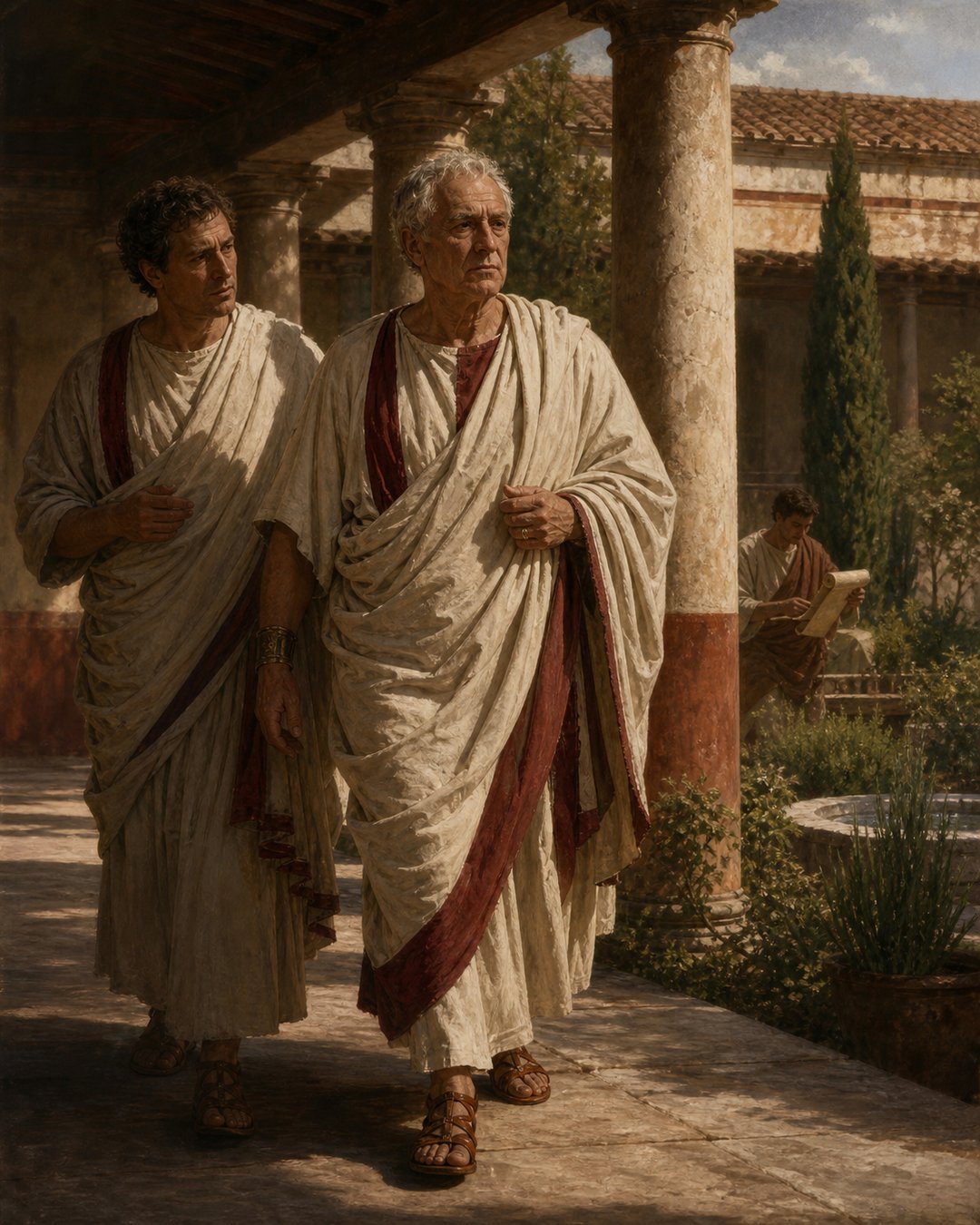
At the second hour, Vestricius Spurinna called for his shoes. He walked three miles, then moved through conversation, reading, a seven-mile carriage ride and one more mile on foot. Writing followed. Later came sun, ball, bath, another book and dinner.
Pliny the Younger watched this sequence while staying at Spurinna’s house. His host had passed seventy-seven, yet the letter does not reduce him to a claim about longevity. It maps the day activity by activity and shows how an old statesman arranged movement, thought, companionship and rest.
The measurements give the portrait its force. Spurinna’s leisure was neither empty nor hurried. Each task occupied its turn, and no single pleasure was asked to carry the entire day. Pliny saw in that order a model he hoped to follow once public work no longer had a legitimate claim on him.
The Second Hour Started a Deliberate Orbit
Spurinna did not spring from bed into business at dawn. Pliny says he remained on his couch in the morning. At the second hour, however, the routine took a visible turn: shoes, then a walk of three miles.
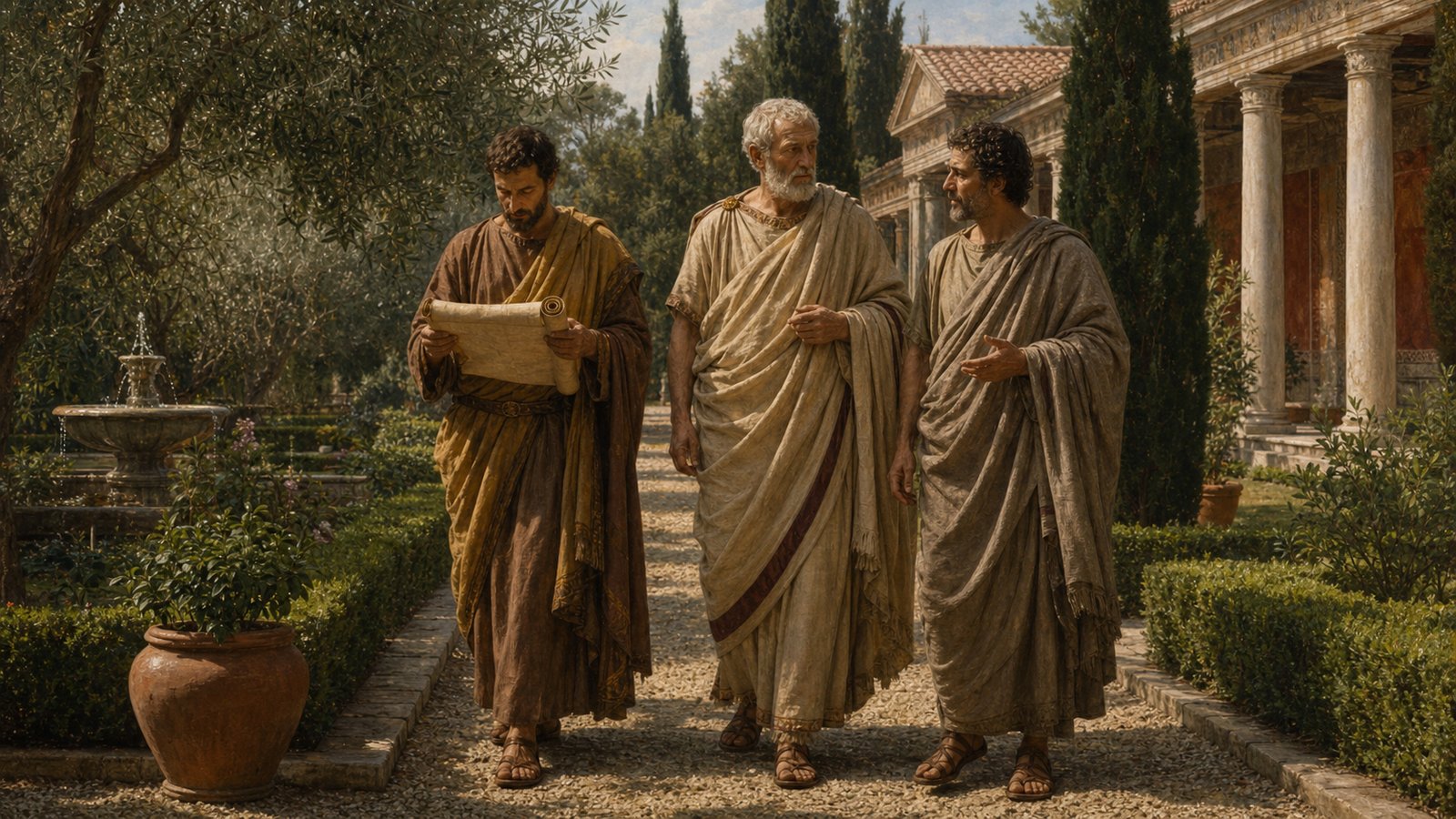
The distance was physical, but Pliny explicitly joined mind to body. If friends were present, they discussed serious subjects. If they were absent, someone read a book aloud. Reading could continue even with company, provided it did not become tedious.
After the walk Spurinna sat, and the exchange continued. Talk was preferred, but reading remained available. The order did not treat exercise as interruption and learning as the real work. Both belonged to the same morning, and each made the other sustainable.
This mental layer distinguishes his walk from a simple health prescription. Companions were not silent attendants counting steps. They helped make movement into a setting for conversation, while the reader supplied a voice when no friend had joined him.
The archive’s survey of Roman ball games shows how varied physical recreation could be. Spurinna’s letter gives that activity a biographical frame: exercise appears as one station inside a day whose other stations were equally intentional.
Seven Miles by Carriage Turned Memory into Company
Spurinna next entered a carriage with either his wife or a friend. Pliny had recently received that invitation and remembered the privacy of the ride as one of the visit’s special privileges.
Across seven miles, the older man talked about past times, notable deeds and notable people. Pliny admired the lessons but also the manner. Spurinna mixed learning with modesty, so recollection never felt like a formal lecture imposed on a captive passenger.
The carriage served more than mobility. It created a small moving room where one generation could speak to another without an audience. The road gave the conversation duration, while the chosen companion gave it intimacy.
After those seven miles, Spurinna walked another mile. The sequence alternated riding and walking rather than choosing one form of movement. By that point he had covered measured ground twice on foot and once by carriage, yet the day was still moving toward composition rather than collapse.
He returned to his seat or withdrew to his room and pen. The memories spoken in the carriage were not his only connection to language. Spurinna composed lyric poetry in Latin and Greek, and Pliny praises its learning, sweetness, humor and restraint.
Retirement therefore preserved two kinds of voice. Conversation carried remembered people and deeds to a companion. Poetry turned private concentration into crafted lines in both literary languages of the elite world.
Sun and Ball Prepared the Body for the Bath
The bathing hour shifted with the season: the ninth hour in winter, the eighth in summer. That adjustment reveals a routine fixed enough to be recognizable but not so rigid that daylight and weather ceased to matter.
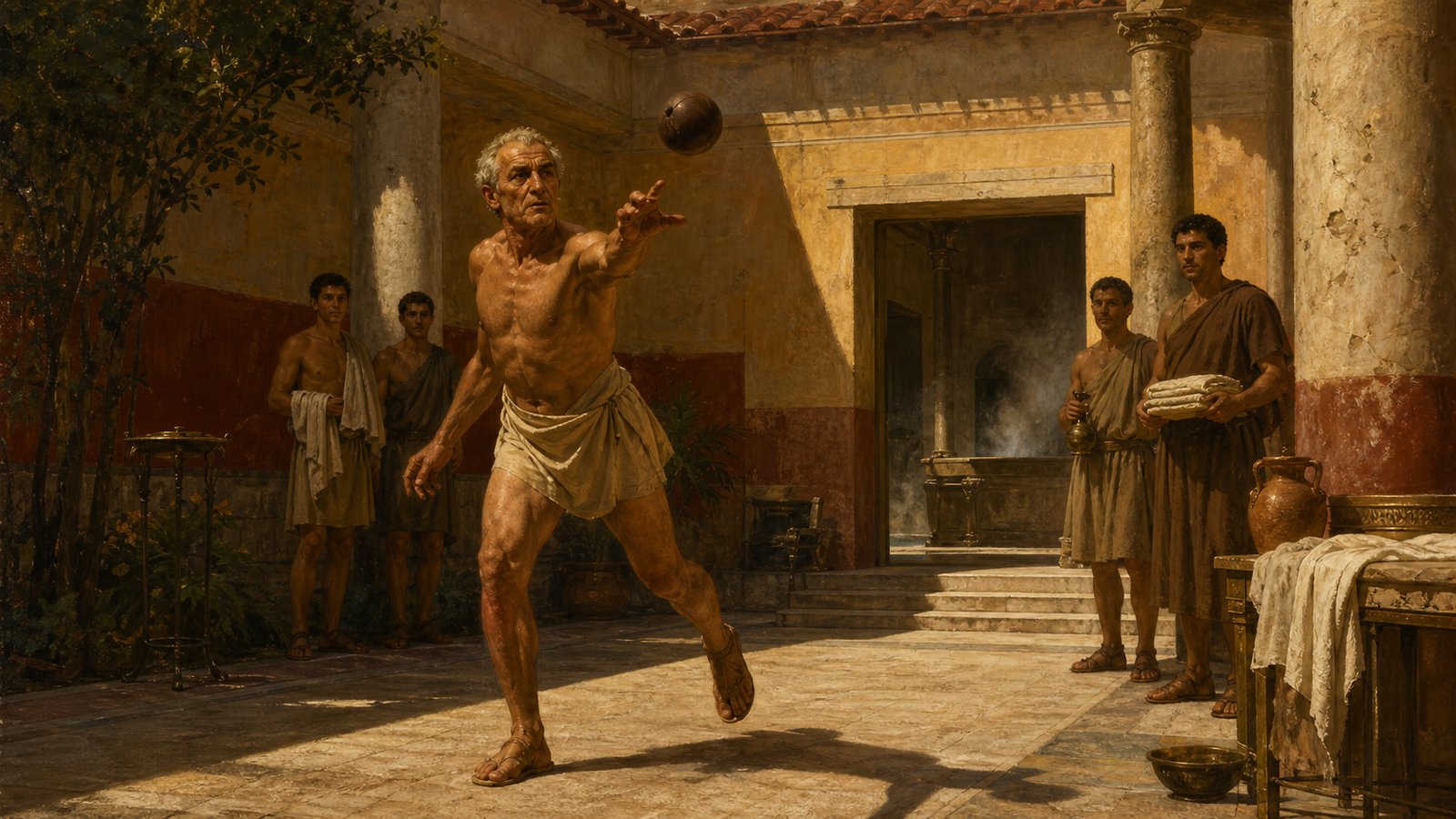
If there was no wind, Spurinna walked unclothed in the sun before bathing. He then played ball for a long time and threw himself into the game. Pliny interprets that energy as a way of fighting old age.
The phrasing does not make Spurinna young again. It shows an old man directing effort toward a manageable contest. Ball play demanded attention, movement and response, but it remained bounded by the bath that followed.
After bathing, he lay down and waited before eating. A light and pleasant book was read during the interval. Strenuous motion yielded to rest, and demanding subjects yielded to easier literature. The change in tone was part of the schedule, not a failure to maintain intensity.
Guests were free to imitate him or do something else. This freedom matters because an ordered host could easily make order oppressive. Pliny presents Spurinna’s rhythm as generous: visitors could enter its pleasures without becoming prisoners of every appointment.
Dinner Completed the Pattern Without Breaking It
Dinner was bright but modest. Spurinna’s silver was plain and old-fashioned. He also used Corinthian vessels, enjoying them without the mania that could turn collecting into performance.
That qualification meets the concern behind the impossible chronology attached to Corinthian bronze. Spurinna could value such objects without allowing rare material to define the room or its owner.
Comedy performers often joined the meal, adding literature to the table. In summer, dinner continued far into the night, yet Pliny insists that good humor and charm kept it from feeling long. The day ended socially, not with a grim display of discipline.
Roman dinner stories often expose excess or awkward accounting, as in Pliny’s complaint about three snails and an empty couch. Spurinna’s dinner offers another engine. Its interest comes from proportion: plain silver beside select vessels, food beside performance, long duration without tedium.
Pliny linked the whole arrangement to Spurinna’s condition after seventy-seven. He described hearing and sight still sound and the body active and alert. Those observations are praise from a guest, not a medical record, but they explain why the routine appeared convincing to him.
Pliny also makes clear that order reached the small choices repeated every day. The routine impressed him precisely because ordinary actions returned in a known sequence. A walk, a reading or a meal became evidence of character through recurrence, not through novelty.
The final lesson concerned earned withdrawal. Spurinna had accepted public duties, magistracies and provincial government while they suited him. His leisure came after sustained labor. Pliny did not admire escape from responsibility; he admired knowing when responsibility had been completed.
That is why he asked Calvisius to remember the letter and use it against him later. If Pliny continued to be swept beyond the proper limit, his friend should tell him to rest once no one could fairly accuse him of laziness. Spurinna’s day became both example and promise.
Its order was not empty punctuality. Three miles opened space for thought, seven miles carried memory, one mile returned the body to work, and ball prepared it for rest. At seventy-seven, Spurinna’s authority lay in giving each part of life enough room—and then moving on.
Sources
Pliny the Younger, Letters 3.1.