

Boudica’s revolt terrified Rome because it made conquest look reversible. Britain had been invaded under Claudius in AD 43, but less than twenty years later a provincial uprising burned Roman settlements and forced commanders to confront a brutal truth: occupation did not become secure just because Rome had planted roads, veterans, taxes, and officials on the map.
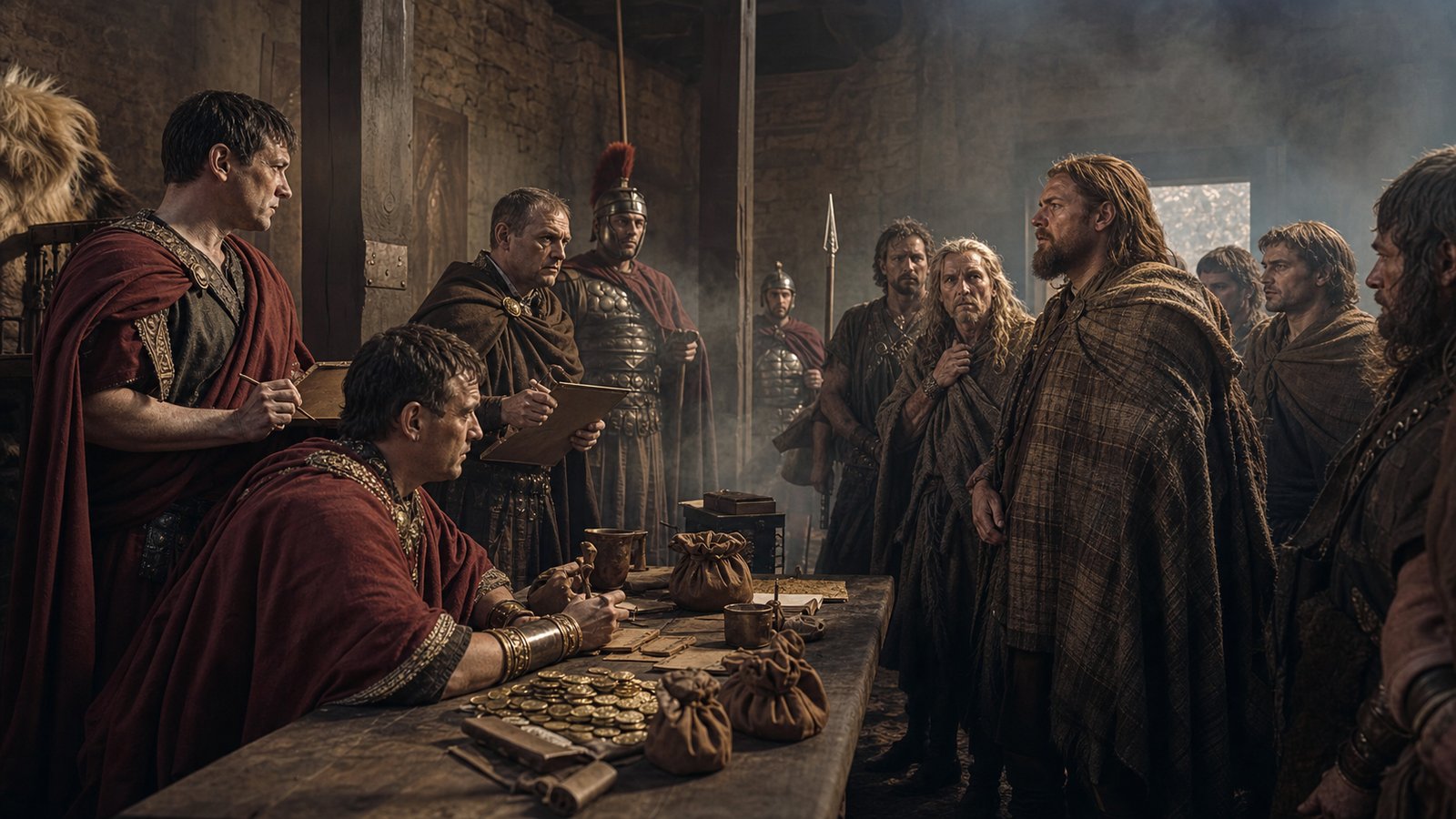
The revolt took place in AD 60 or 61, during Nero’s reign and the governorship of Suetonius Paulinus. Boudica was queen of the Iceni, and the ancient accounts tie the uprising to the treatment of her household after the death of her husband Prasutagus. Tacitus says the kingdom was plundered, Boudica was flogged, and her daughters were raped. Those claims come through Roman literary memory, but their function is clear: the revolt began where imperial power humiliated local status.
The crisis began with insult and extraction
Rome often ruled provinces through local elites. That made cooperation valuable and humiliation dangerous. If a client ruler or aristocratic family could be stripped, beaten, or dishonored, then other communities could imagine the same fate. The grievance was not abstract resistance to empire. It was tied to bodies, property, inheritance, debt, and rank.
Tacitus gives the revolt a moral fuse. Whether every detail is exact or sharpened for drama, the sequence is politically believable. Provincial rule could become predatory when officials, creditors, soldiers, and settlers acted as if conquest meant permanent license. Boudica’s story shows what happened when the people expected to absorb that pressure instead turned it outward.
Roman towns became symbols of occupation
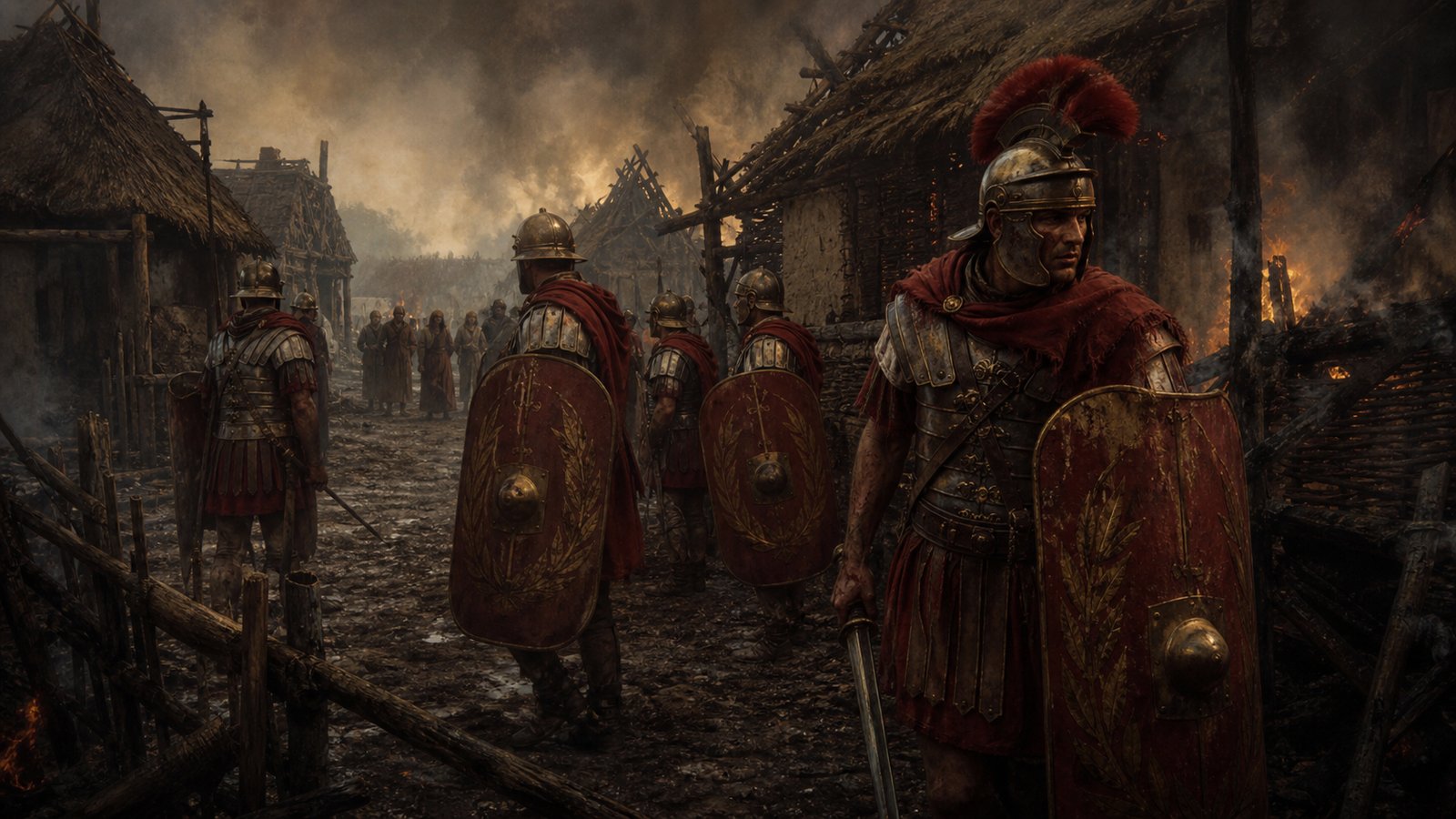
The rebels attacked places that embodied Roman presence. Camulodunum, Londinium, and Verulamium appear in ancient accounts as targets of destruction. These were not only clusters of buildings. They represented veterans, trade, administration, taxes, prestige, and the confidence that Rome’s order would spread across Britain.
When those places burned, the shock was larger than the loss of structures. Rome’s provincial future seemed to burn with them. A conquered landscape had revealed that it still contained people willing to strike at the visible machinery of conquest. The empire had to relearn that roads and towns could guide armies, but they could also mark where anger should go.
Suetonius Paulinus was in the wrong place
Timing made the revolt more dangerous. The governor Suetonius Paulinus was campaigning in Wales when the crisis erupted. That detail matters because it shows how thin Roman control could be. A province might look managed until the main military force was elsewhere. Then distance became an opening.
Roman power depended on movement, messages, and concentration. It could not be everywhere at once. Boudica’s revolt exploited that reality. The uprising grew while the man with the strongest military tools was away. By the time he returned, the crisis had become a test of whether Roman discipline could overcome provincial fury.
The final victory did not erase the fear
Suetonius eventually defeated the rebels in battle. Roman accounts present the victory as a restoration of order, but restoration is not the same as comfort. A province that requires spectacular punishment has already shown how fragile authority can be. The revolt proved that local anger could briefly overwhelm Roman settlements and force imperial attention.
The casualty figures in ancient sources are enormous and should be handled carefully. Ancient writers often used numbers to express scale and horror as much as statistics. Still, the point does not depend on exact arithmetic. Roman memory treated the revolt as catastrophe because it had threatened the imperial story that conquest naturally became obedience.
Boudica became terrifying because she joined private wrong to public war
The personal and political cannot be separated in the story. A queen’s humiliation became the language through which many people could understand their own vulnerability. That is why Boudica is more than a rebel figurehead. She made Roman misconduct legible as a shared danger.
For Rome, this was frightening because empire often relied on the cooperation of people who had been defeated. If those people decided that cooperation only led to insult, the whole provincial bargain weakened. Boudica’s revolt was not merely an emotional eruption. It was a warning that Rome’s method of rule could manufacture the enemies it then had to crush.
The edge of empire was never passive
The revolt’s deeper lesson is that provinces were not quiet containers waiting to be Romanized. They had memories, leaders, rivalries, sacred places, debts, and limits. Roman Britain was new enough that those limits remained close to the surface. Boudica exposed them.
That is why the revolt still feels powerful. It showed Roman readers that imperial power could be locally hated, locally attacked, and locally endangered. Rome won the military outcome, but not before Britain had shown what conquest looked like from below: not the smooth spread of civilization, but a tense bargain backed by force. Boudica terrified Rome because, for a moment, that bargain broke.
Roman victory depended on discipline returning in time
The revolt was terrifying because Rome’s recovery was not automatic. Suetonius Paulinus had to reassemble military control after the rebels had already demonstrated what could happen when provincial anger moved faster than Roman response. The final battle mattered because it restored the frightening reputation on which frontier rule depended.
For a province, reputation could be as important as the number of troops visible on a road. If people believed Roman punishment would always arrive, rebellion became harder to imagine. If they saw Roman settlements burn before a commander could stop it, the imagination changed. Boudica’s revolt briefly made Roman power look delayed, surprised, and vulnerable.
That is the reason the episode could be remembered as both a Roman victory and a Roman warning. The legions won, but the system had been exposed. Provincial rule had produced such intense local hostility that a queen’s household grievance became a wider revolt. Rome could punish that fact; it could not pretend it had never been revealed.
The fear also reached beyond Britain. If one new province could erupt after a succession dispute and official violence, others might do the same when Roman demands outran local patience. That possibility made the revolt more than a British emergency. It was a warning about the cost of governing conquered peoples through intimidation, credit, confiscation, and selective respect for native elites.
The important caution is that a famous Roman story should never be reduced to a single prop. Elephants, concrete, a rebel queen, or four emperors can become convenient shorthand, but shorthand is where the history starts rather than ends. The fact sheet forces the stronger reading: named people, dates, places, materials, and ancient testimony all have to carry the interpretation. That keeps the article from turning into a modern slogan placed on an ancient scene.
Seen that way, the episode becomes less familiar and more useful. It shows Roman power as something made from logistics, labor, fear, law, memory, and administration. Those forces were concrete enough to leave ruins and stories behind, but unstable enough to keep surprising the people who thought they controlled them in practice.
Sources & Further Reading
- Britannica, Boudicca
- Tacitus, Annals, 14.31
- Cassius Dio, Roman History, 62
- Tacitus, Annals, 14.32-33
- Tacitus, Annals, 14.34-37
- Britannica, United Kingdom – Roman Britain
- Britannica, Nero