
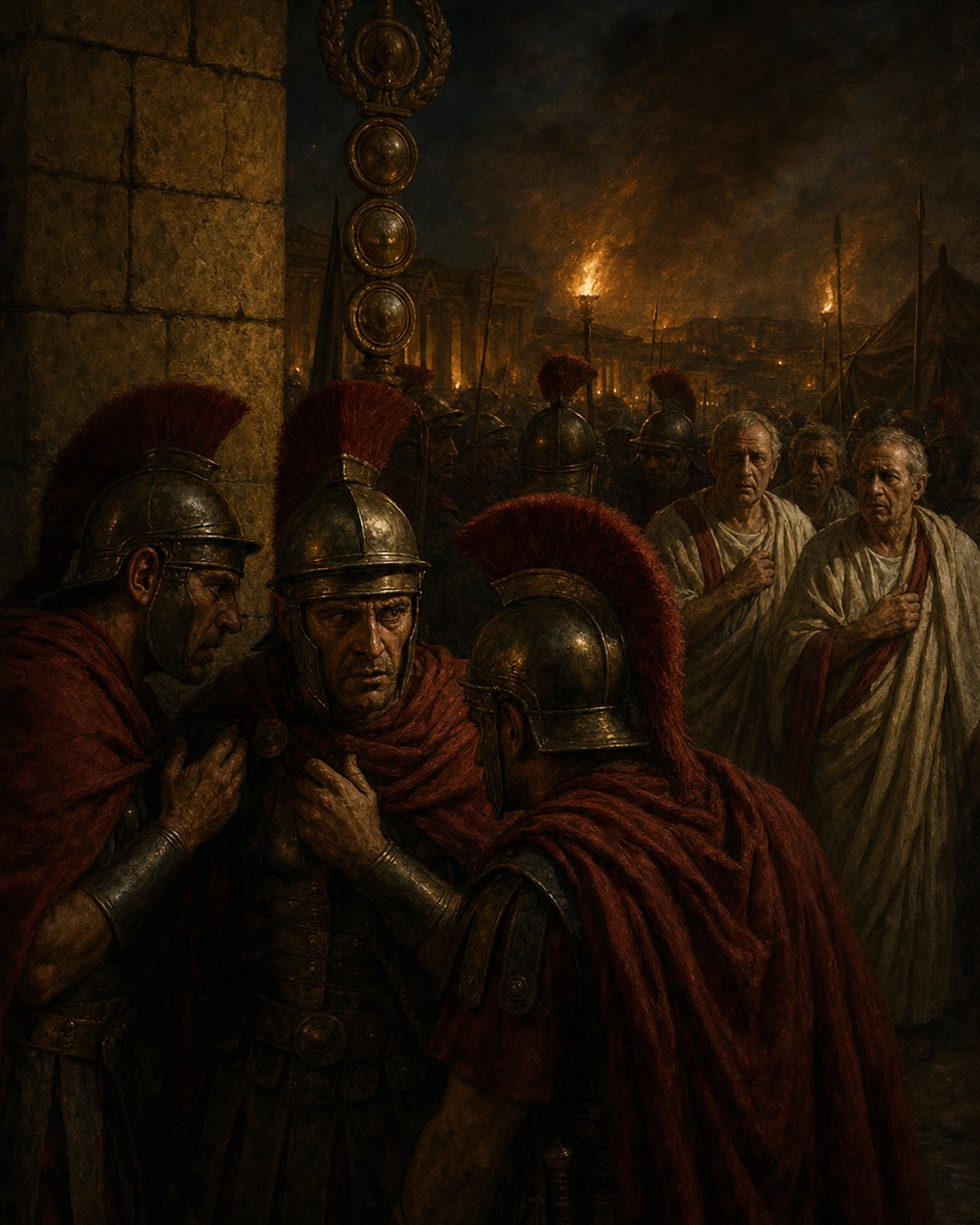
The most humiliating auction in Roman history did not sell a palace, a villa, or a shipment of grain. It sold the appearance of empire. In AD 193, after the murder of Pertinax, the Praetorian Guard helped make Didius Julianus emperor by turning power into a bargaining contest. The story is scandalous because it makes Rome’s highest office look less like destiny than a price shouted through a gate.
Cassius Dio, who lived through the age, says the guards offered the empire for sale and that Julianus outbid a rival by promising a larger donative. The details are dramatic, and ancient political stories often sharpen disgrace into theatre. But the core event is secure enough: Julianus came to power through Praetorian support, ruled only briefly, and collapsed when Septimius Severus marched on Rome. The auction mattered because it exposed a weakness that Roman ceremony usually hid.
Pertinax left a throne and a military debt
Pertinax had become emperor after Commodus was killed. He inherited not only the palace, but also the expectations of soldiers who believed that a new reign should mean money. The donative was not a decorative bonus. It was a political language. Emperors paid troops, troops acknowledged emperors, and everyone pretended that loyalty and legality moved together.
When Pertinax tried to impose discipline and could not satisfy the guards, the arrangement broke. He was killed after a reign measured in weeks, not years. That short reign is important because it shows the auction was not a bizarre interruption of stable politics. It came from a city where the emperor’s own protectors could become his executioners.
The bid made legitimacy visible as a transaction
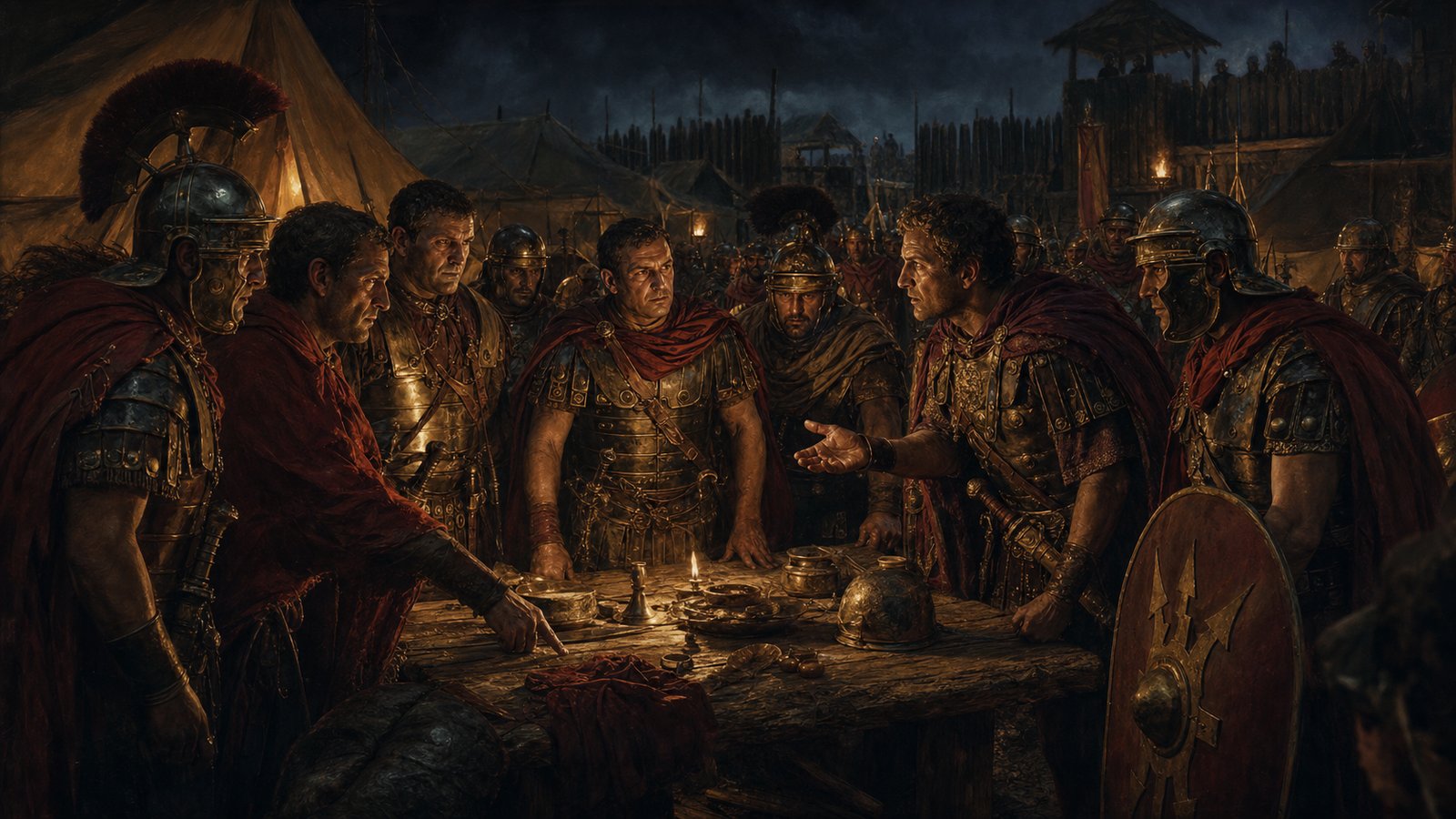
Roman emperors had always needed soldiers, money, and public recognition. Usually those ingredients were wrapped in titles, Senate decrees, family claims, victory, or divine language. The auction stripped the wrapping away. If Cassius Dio’s account is even broadly right, men in the Praetorian camp treated imperial power as something a bidder could purchase with promises.
Didius Julianus did not invent military monarchy. He revealed it in an especially ugly form. The Roman people could see a man enter the palace not because he had saved the state, won a war, or inherited a settled dynasty, but because a guard force in Rome had chosen its price. Power had always needed armed backing. In AD 193, that backing looked embarrassingly naked.
The Senate could ratify, but not rescue, the result
The Senate still mattered as a source of formal recognition. Julianus needed the language of legality, and senatorial compliance could make a violent transfer look official. Yet the Senate’s role also showed its weakness. A decree issued under pressure from soldiers did not create confidence. It only added a thin legal surface to a decision already made by force.
This is where the episode connects to the wider story of the Praetorian Guard’s danger. The guards were not merely palace decoration. They stood close enough to power to convert proximity into leverage. When the emperor depended on them for immediate survival, their barracks could become a second political chamber.
Julianus bought a title that armies outside Rome rejected
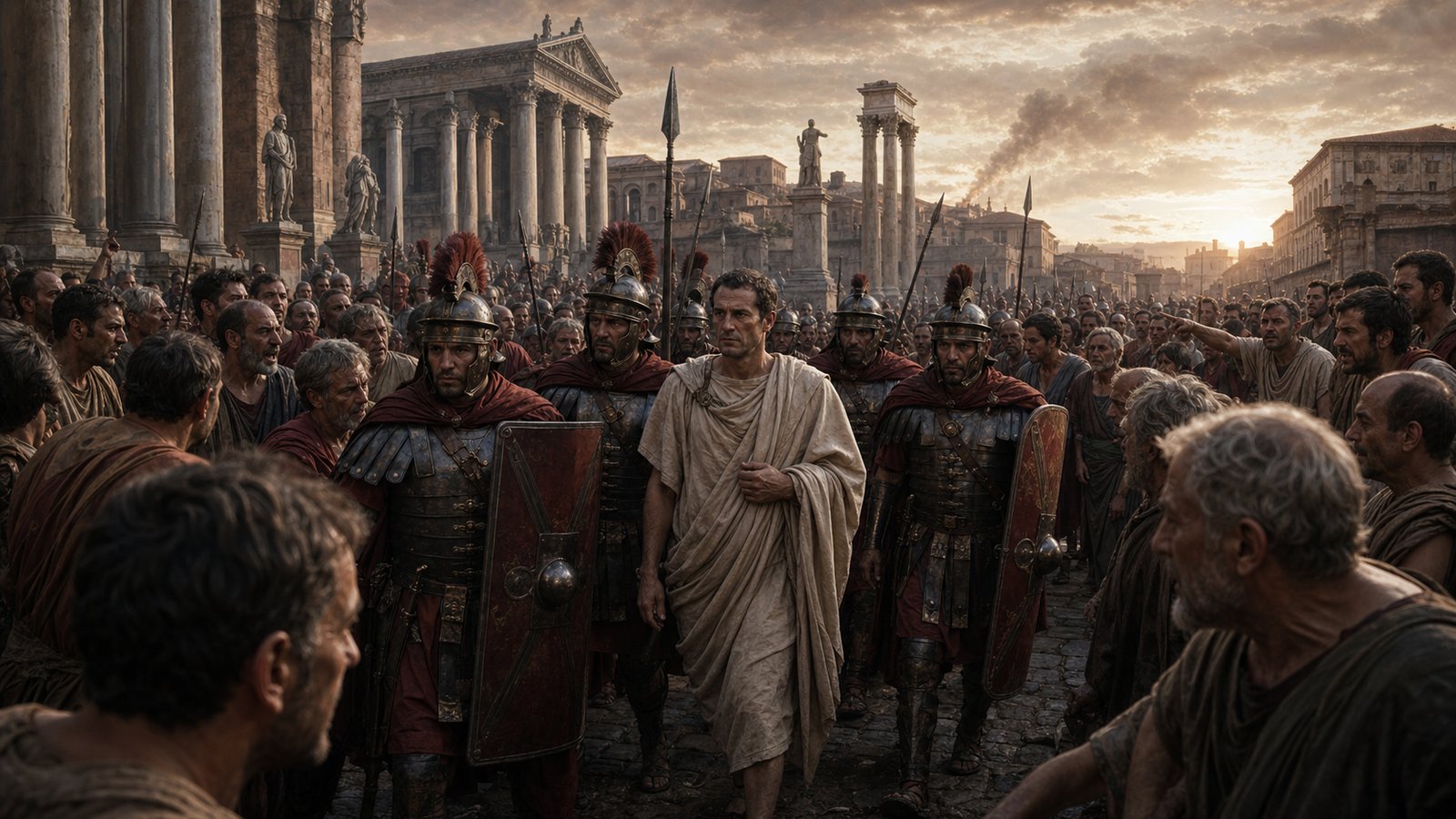
The auction failed because Rome was not only the city of Rome. Legions on distant frontiers had their own interests, loyalties, and candidates. Septimius Severus was proclaimed by his troops and moved toward the capital. Once that happened, Julianus’ purchase looked smaller than the military geography of the empire.
The Senate condemned Julianus as Severus approached. The man who had entered power through a bargain with one armed force could not survive the arrival of a stronger armed force. His reign lasted only about two months. That brevity is part of the lesson. Buying the palace was not the same as commanding the empire.
Severus answered the auction with his own soldiers
Septimius Severus did not restore a gentle constitutional order. He solved one military problem with another military fact. After taking power, he disbanded the existing Praetorian Guard and replaced it with men loyal to him. That was punishment, but it was also diagnosis. The guards who had sold the empire could not be trusted to guard it.
The replacement shows how practical Roman politics had become. Moral outrage was useful, but reliable force mattered more. Severus understood that the bodyguard in the capital had to be tied to the emperor personally. The auction had made institutional loyalty look like a fantasy. Severus rebuilt the guard around victory and dependence.
The scandal endured because it told the truth too plainly
Romans were not naïve about power. They knew emperors needed armies, money, and luck. What made the auction unforgettable was its crudeness. It compressed the whole imperial problem into one scene: a murdered emperor, armed guards, anxious senators, a bidder, and a city discovering that sacred authority could be handled like a contract.
The day Rome auctioned the empire did not destroy Rome by itself. Severus restored order enough to found a new dynasty. But the scandal marked a line in memory. It showed that when institutions lost authority, ceremony could not hide the marketplace of force beneath them. The throne could still glitter. For a moment in AD 193, everyone saw the price tag.
The auction explains why symbols still needed soldiers
Roman political language loved continuity. Emperors took names, wore familiar dress, accepted senatorial formulas, and stood inside rituals that made each transfer of power seem part of an ancient order. The auction cut through that language. It showed that a title without dependable force could become only a costume, and that force without public legitimacy could become a scandal too visible to endure.
That double failure is what makes Julianus useful to remember. He had the money to make a promise, the Senate frightened enough to acknowledge him, and the palace briefly within reach. He did not have the frontier armies, the confidence of the city, or a story Romans could respect. His reign exposed the difference between taking possession of imperial space and becoming the ruler of an imperial system.
The episode also warns against treating corruption as merely personal greed. The guards wanted payment, Julianus wanted power, and senators wanted survival, but the crisis was structural. A monarchy born from armies had to keep asking armed men to believe in it. When belief thinned out, bids and swords filled the gap.
This is why Severus’ later response was more than revenge. By replacing the guard, he admitted that the capital’s protectors had become a constitutional hazard. The empire could tolerate many scandals, but not a bodyguard that had learned to treat imperial legitimacy as a negotiable asset. The auction was a transaction; its aftermath was a lesson in who really had to be trusted with the keys to Rome.
It also explains why the story remained useful for later readers. The scene made a hidden dependency visible. Rome could speak in the language of law, but the law still needed men with spears to accept it.
Sources & Further Reading
- Britannica, Pertinax
- Cassius Dio, Roman History, 74.11
- Britannica, Didius Julianus
- Historia Augusta, Didius Julianus
- Britannica, Septimius Severus
- Britannica, Praetorian Guard
- Britannica, ancient Rome – The Severan dynasty