
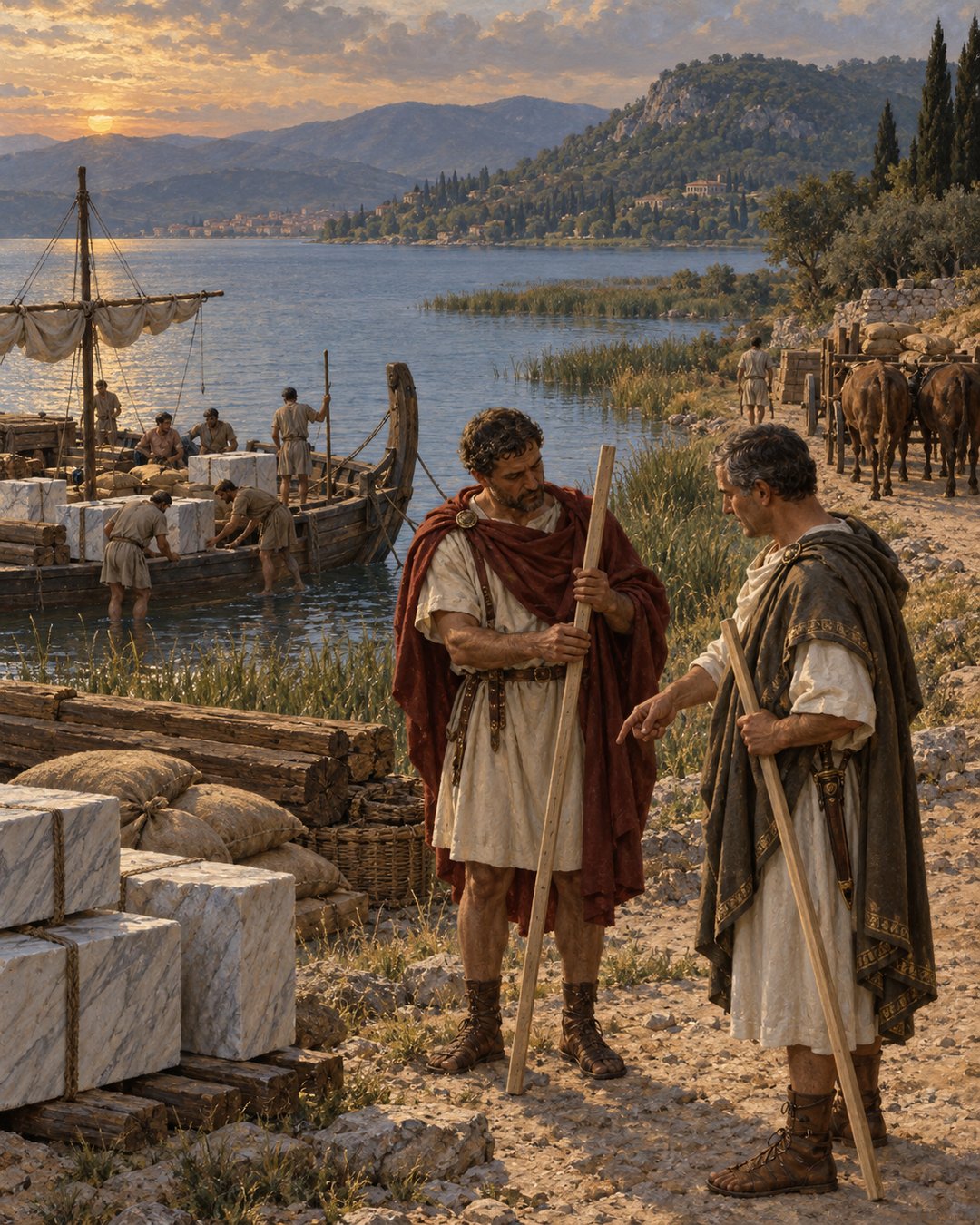
Inland from Nicomedia lay a spacious lake that already functioned as a transport route. Barges could carry marble, grain, timber and other bulky goods across its water to the high road with little expense or labor. Then the advantage ended. Cargo had to descend to the sea in wagons, and Pliny called that stage laborious and costly.
The governor saw an obvious shortcut: connect the lake toward the coast and let water carry the loads farther. Workers were plentiful. Local engineers claimed the lake stood forty cubits above the sea. An earlier king had even dug an unfinished trench across the same ground.
Trajan was tempted, but the claimed drop changed the project from a simple canal into a threat. Before approving a cut, he wanted specialists to determine the levels, measure how much water entered the lake and identify its sources. Otherwise the new outlet might empty the lake completely.
Pliny’s exchange with the emperor in Letters 10.41–42 reveals the two faces of gradient. A fall in elevation could move cargo cheaply toward the sea. The same fall could pull away the water on which the entire route depended. The canal’s commercial promise and its hydrological danger were not separate issues. They came from the same forty cubits.
The Cheap Journey Ended at the High Road
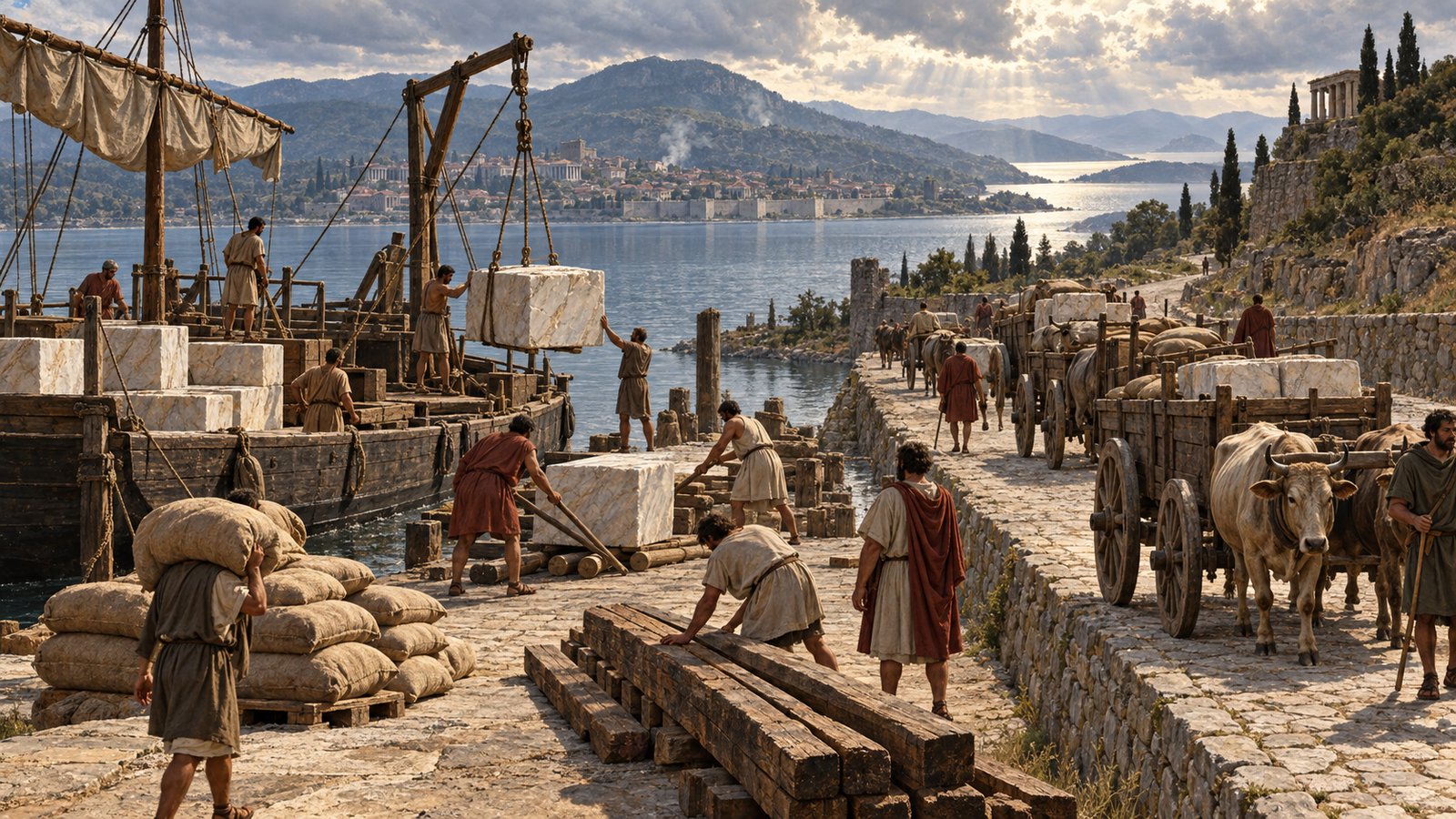
Pliny organized his proposal around a broken logistics chain. The lake was already useful. Low wooden barges could accept materials whose weight or bulk made every mile over land expensive. He names marble, grain and timber before widening the list to large articles generally.
Water bore those loads to a high road. The first stage required little labor and expense in Pliny’s account, but reaching a road was not the same as reaching a port. Everything then had to be transferred into wagons for the descent to the sea.
That transfer multiplied work. Cargo needed unloading, sorting, loading again and securing. Wagons required animals, drivers and a surface that could tolerate repeated heavy traffic. Marble concentrated weight; grain needed protection from damp; long timber demanded space and careful balance. Pliny does not itemize those operations, but his contrast between cheap barge movement and costly wagon haul rests on their accumulation.
The geography created a bottleneck rather than a complete absence of infrastructure. A lake route existed. A road existed. The sea offered onward movement. What failed was continuity between them. Each mode stopped before the next commercial network began.
The burden recalls the long chain of payments and handling behind frankincense carried from Arabia toward Gaza. Roman trade often depended less on one heroic journey than on repeated changes of carrier, surface and jurisdiction. At Nicomedia, Pliny wanted to remove one costly change of surface by extending navigation itself.
A canal promised savings because it preserved the cargo’s existing support. Instead of lifting stone, sacks and beams from hull to wagon, hauling them downhill and loading them again, workers could keep the goods afloat for more of the journey. The proposed earthwork was therefore a machine for avoiding transfers.
An Old Trench Made the Proposal Look Possible
Pliny believed labor would not stop the scheme. The countryside contained many workers, he said, and the city contained even more. He also assumed people would willingly support an undertaking that promised profit to everyone.
That claim should be read as advocacy, not a survey of every laborer’s wishes. Large excavation distributes benefits and burdens unevenly. Merchants, landowners, haulers and rural workers might not all value the same outcome. Pliny’s letter compresses those interests into an imperial pitch: hands were available and public utility would secure consent.
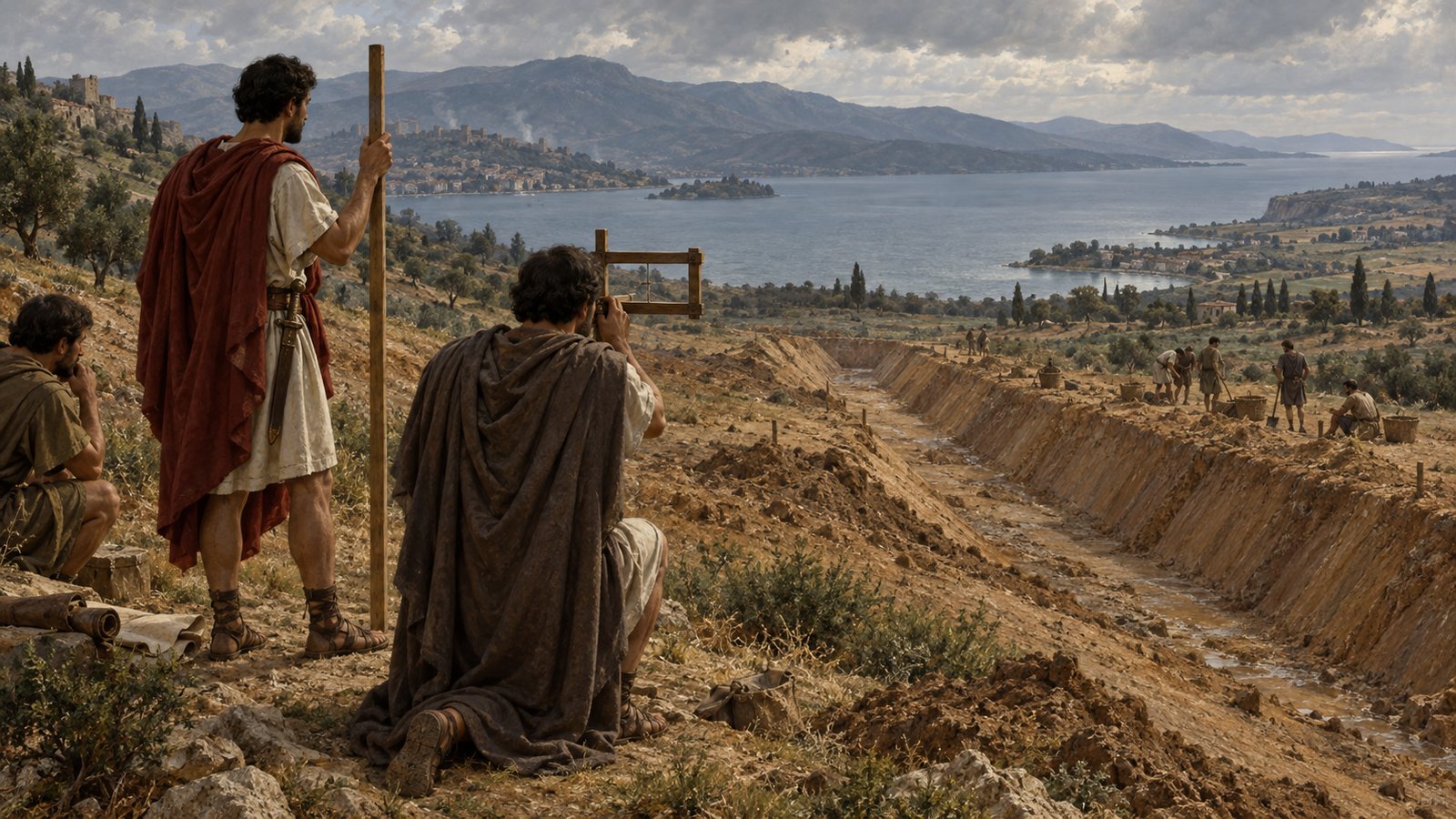
The old landscape supplied another argument. One of the region’s earlier kings had already cut a trench across the proposed ground. The abandoned work made the canal seem less like a governor’s fantasy and more like the completion of a recognized possibility.
Yet nobody could explain the trench securely. It might have been intended to drain wet fields. It might have aimed to join the lake to a river. Nor did Pliny know why construction ended. The king may have died, or the builders may have despaired of success.
Pliny turned that uncertainty into ambition. The failure of kings did not warn him away; it sharpened his desire that Trajan should finish what royal predecessors had merely begun. Ancient earthworks became political evidence because completion could attach the emperor’s name to a project deeper than the current administration.
The trench nevertheless posed a hard historical question. An abandoned cut proves that digging occurred, not that its intended hydraulic system was sound. Its route may record useful observation, a different objective or a failed calculation. Treating inherited work as a head start can save labor, but treating it as proof can repeat an unknown mistake.
Forty Cubits Were a Claim, Not Yet a Canal
Local engineers told Pliny that the lake stood forty cubits above the sea. If correct, that difference offered energy for moving water and vessels down toward the coast. It also meant water would not remain politely in place once an outlet opened.
Pliny did not present the local estimate as sufficient authorization. He asked Trajan to send a surveyor or architect to make careful observations and determine whether the lake truly lay at a higher level. Even an enthusiastic sponsor recognized that a canal begins with measured terrain.
Ancient surveying could establish alignments and differences in height with sighting instruments, rods and repeated stations. The exact procedure proposed for this lake is not described in the letters. What matters is the administrative sequence: local expertise produced a number; imperial expertise was requested to test the decision built upon it.
The difference resembles the logic inside Vitruvius’s wheel-driven mile counter. A useful result depended on translating repeated physical movement into a trustworthy measure. For the lake, however, a mistaken elevation was not merely a wrong journey total. It could govern the uncontrolled movement of a body of water.
The forty-cubit figure therefore carried opposing meanings. To Pliny it helped prove that connection was physically available. To Trajan it helped define what had to be controlled. A higher lake might feed a route toward the sea, but gravity would continue working after the first barge passed.
No lock sequence, retaining barrier or final channel design appears in this short exchange. Adding one would turn possibility into invented engineering. The correspondence preserves the survey problem before construction, when the central task was to learn what the water would do if given a lower path.
Trajan Asked What Would Refill What the Canal Released
Trajan admitted that the lake might tempt him to approve a connection. His caution was specific rather than dismissive. Investigators had to ensure that bringing the water down toward the sea would not empty the lake altogether.
That possibility exposed the project’s dependence on storage. The lake was useful because it held enough water for barges and cargo. A successful outlet that lowered the surface too far could destroy navigation at its starting point, strand shore facilities and alter surrounding land. The shortcut could consume its own reservoir.
Elevation alone could not answer the question. Trajan also wanted the volume of water flowing into the lake and the sources of that supply examined. A lake continually replenished by strong streams behaves differently from one whose visible surface exceeds its reliable inflow.
The emperor directed Pliny toward a surveyor available from Calpurnius Macer and promised additional expertise in that class of work. Technical knowledge entered government not as decoration but as a condition for deciding whether imperial ambition should alter a watershed.
The letters do not tell us that Trajan approved a completed canal, and they do not authorize a triumphant ending. They stop at investigation. Pliny had assembled a commercial case from cargo, labor, gradient and precedent. Trajan answered by defining the missing evidence.
That unfinished ending is precisely what makes the exchange instructive. Roman administrators could imagine large interventions, connect them to imperial fame and recognize the value of transport savings. They could also identify a failure mode that turned success into catastrophe.
Pliny saw forty cubits of opportunity between lake and sea. Trajan saw the pressure behind that opportunity and asked what would replace every unit of water released downhill. Before workers reopened the kings’ trench, the empire needed to know whether it was building a route—or pulling the plug.
Sources
Pliny the Younger, Letters 10.41–42.