
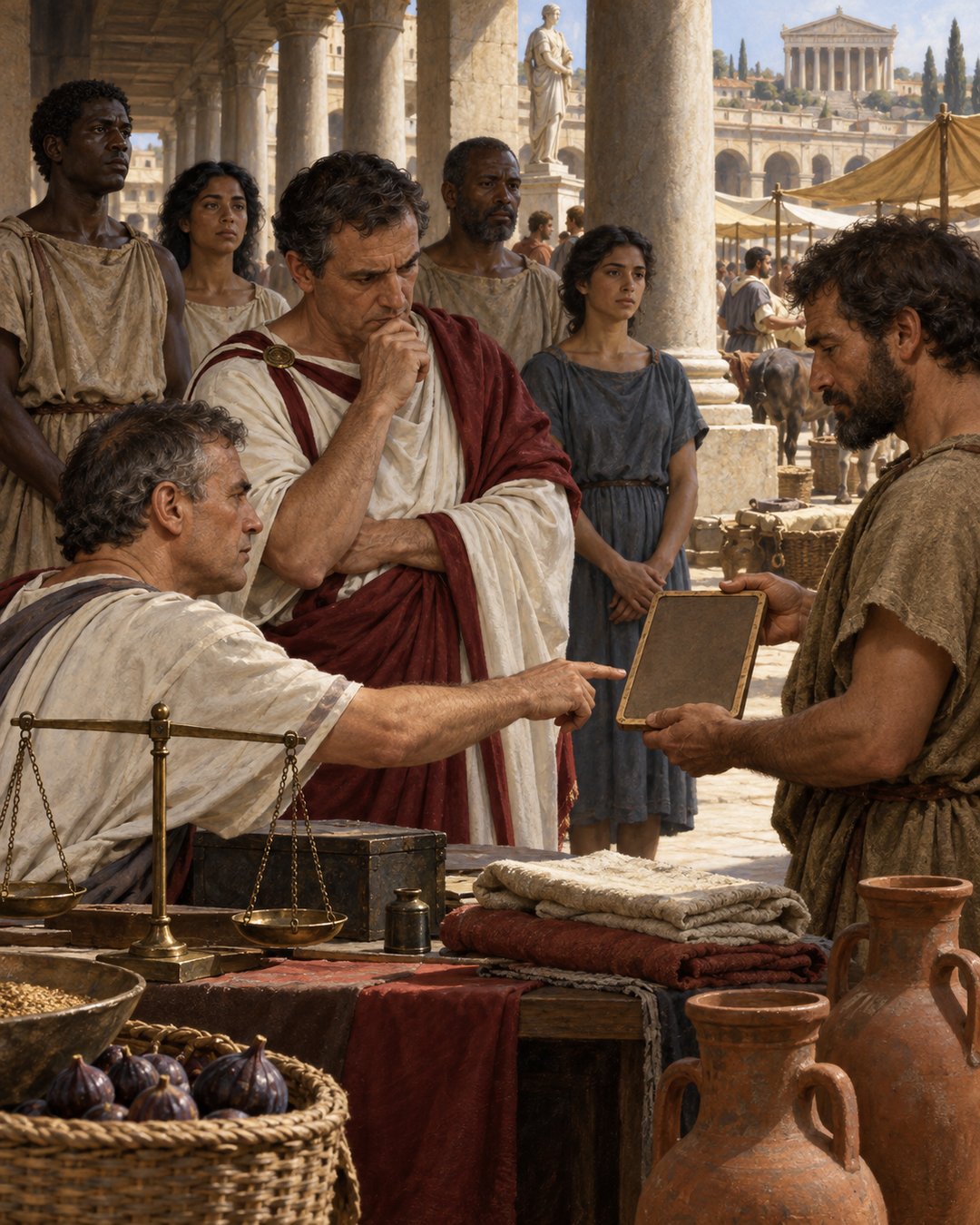
A Roman market rule demanded a written ticket for each enslaved person offered for sale. Disease, defect, a history of running away and an unresolved condemnation all had to be disclosed.
The rule looked concise. Its consequences were not. Jurists soon had to decide whether stammering was a disease, whether short sight justified return and whether one missing tooth could undo a transaction.
Gellius preserves a market in which the brutal treatment of human beings as property generated an exact vocabulary of bodies, usefulness and price.
The Ticket Attached Disclosure to Each Person Sold
In the fourth book of the Attic Nights, Aulus Gellius quotes the curule aediles’ edict on the purchase of enslaved people. The rule tells sellers to make the ticket of each person so precise that particular facts can be known.
The required list begins with disease and defect. It then asks whether the person is a runaway or a vagabond and whether any condemnation for an offence still hangs over them. Health, behavior and legal liability enter the transaction through the same small written instrument.
The ticket matters because a crowd cannot reliably inspect every hidden condition. A buyer may see age, build or an obvious injury, but not a fever that recurs, a history of flight or an unresolved judgment. Disclosure turns information possessed by the seller into a representation attached to the sale.
It also individualizes the representation. Gellius does not describe a general notice saying that some people in the market may have defects. Each ticket must identify the condition of the person beside it. The writing connects a particular claim to a particular human being.
That mechanism should not be allowed to make the institution look benign. The people described were being bought and returned as merchandise. The legal protection in this passage serves the purchaser’s bargain, not the enslaved person’s freedom or dignity.
Roman sale rules could make short deadlines carry large consequences. Cato’s conditions gave a buyer three days to test whether wine was sound. The aediles’ ticket addresses a darker market, but it also tries to make a transaction contestable by fixing what the seller was required to reveal.
Disease Meant a Condition That Impaired Usefulness
Once the edict used both “disease” and “defect,” lawyers had to explain the difference. Gellius says earlier jurists debated the proper force of the words and how far one category stood from the other.
Caelius Sabinus quoted the jurist Labeo. His definition made usefulness central: disease was an unnatural condition of a body that impaired its utility. The language reveals the commercial gaze of the rule. A person’s health was classified according to the work or service a buyer expected to extract.
Labeo allowed disease to affect the whole body or one part. Consumption and fever represented general conditions. Blindness and lameness represented conditions located in a part of the body but still serious enough to fit the category.
The examples convert a broad word into a working test. A seller, purchaser or judge could ask whether a condition departed from what was considered natural and whether it reduced usefulness. Those questions were not medically neutral. They were aimed at deciding the consequences of sale.
Labeo then made the categories unequal. Every diseased person was also defective, he argued, because disease created an imperfection. But the reverse did not follow. A person could have a defect without being diseased.
That logical relationship mattered. If the words had been synonyms, the edict’s paired formula would add little. If defect was broader, the ticket could capture traits that affected value or expectations even when lawyers refused to call them disease.
Gellius reports Labeo connecting disease with a fair statement of how much the price should be reduced because of the condition. Classification therefore reached directly into money. A label could change what the buyer owed or what remedy followed.
Stammering and a Kicking Horse Tested the Border
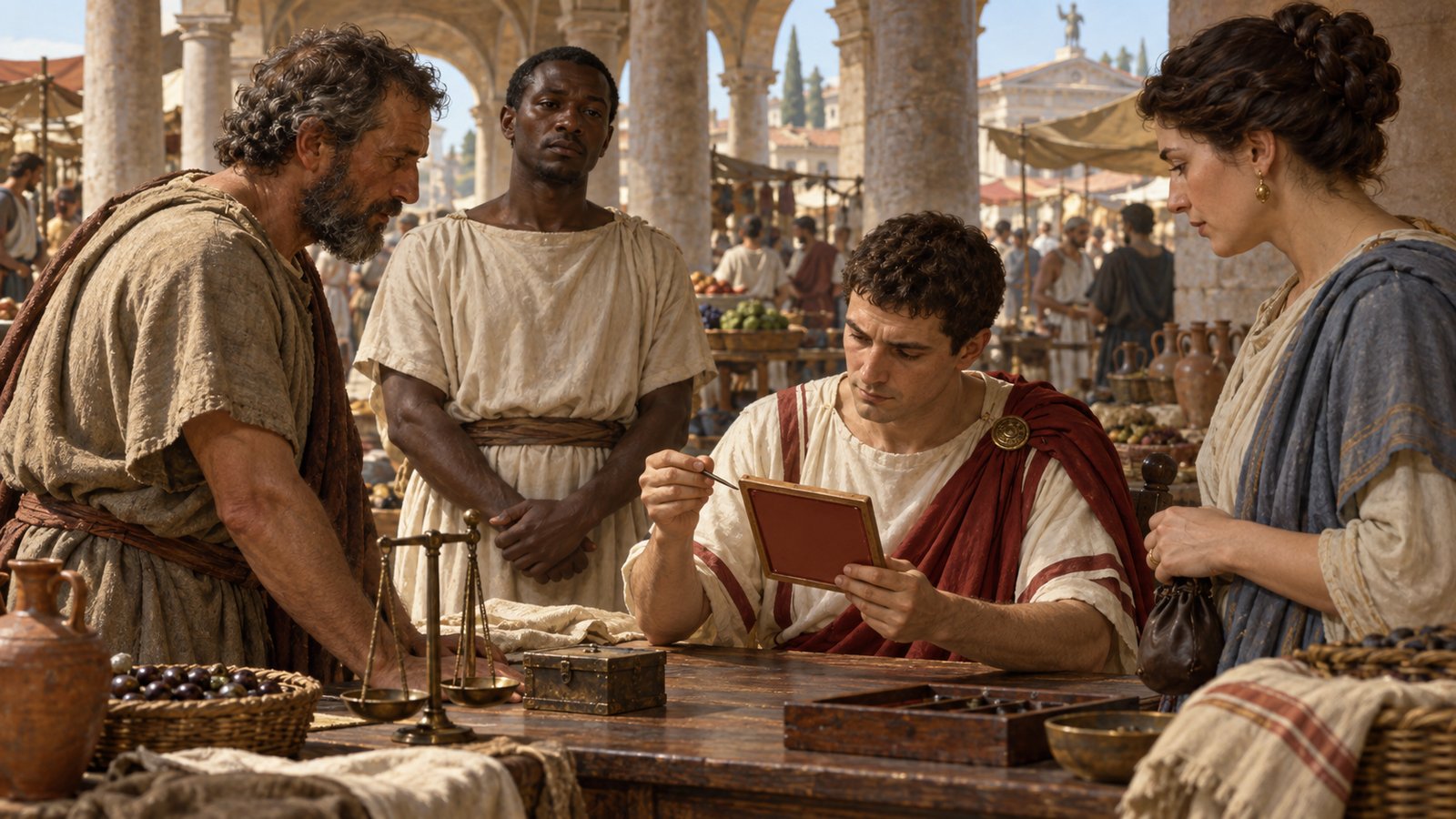
Labeo’s examples become deliberately awkward. Someone who stutters or stammers is defective rather than diseased. A horse that bites or kicks likewise has faults rather than a disease.
The comparison is jarring because enslaved people, animals and commercial fitness appear inside one chain of reasoning. That is part of the evidence. Roman private law frequently examined status and bodily condition through transactions in property, and Gellius preserves the categories without disguising their violence.
Stammering may affect how a purchaser imagines a person’s usefulness, yet Labeo would not treat it as an unnatural bodily disease in the same way as fever or blindness. The trait belongs to the larger category of defect.
The biting horse tests behavior rather than anatomy. It may be healthy and still dangerous or unsuitable for expected work. The example shows why visual inspection was insufficient. A seller could present a strong-looking animal while concealing conduct that made the bargain different from what the purchaser believed.
Flight history worked in a comparable informational space for enslaved people, though the moral reality was wholly different. An attempt to escape bondage becomes, in the edict, a fact reducing commercial confidence. The law records the enslaver’s risk while suppressing the fugitive’s reason for running.
The sale ticket collected these unlike facts because each could affect whether the buyer accepted the bargain. Disease, bodily difference, conduct and legal condemnation were not one kind of condition. Writing made them one disclosure problem.
Another Lost Eagles article shows Roman doctrine drawing a hard consequence from a thin factual line: paint added to another person’s board forced jurists to ask whether material or finished work controlled ownership. Gellius’s market problem is more human and more disturbing, but the legal method is similar. A word boundary allocates power.
Short Sight and One Missing Tooth Split the Jurists
The debate did not stop with definitions. Gellius lists disputes that exposed how unstable the categories became at their edges.
On short sight, some jurists allowed return in every case. Others limited return to poor vision caused by disease. The same visible difficulty could therefore have different legal treatment depending on its origin.
A missing tooth produced an even narrower disagreement. Servius held that a person lacking a tooth could be returned. Labeo thought one absent tooth was not enough. He observed that many people lack a tooth without being diseased and added a deliberately absurd comparison: infants are not born with teeth, but that does not mean they are born unsound.
The humor sharpens the test. If every deviation from an imagined complete body counted as disease, the category would expand until it ceased to distinguish serious conditions from ordinary variation.
Yet narrowing the word protected the completed sale. A purchaser who disliked the discovery could not return a human being merely by pointing to any physical difference. The lawyer’s anatomy was therefore also a map of commercial risk: seller risk on one side, buyer risk on the other.
Gellius also reports disagreement over barrenness. Labeo treated an undisclosed eunuch as returnable under disease and allowed an action when sterile sows had been sold. Trebatius and Labeo divided over an enslaved woman whose infertility was congenital rather than produced by failed health.
Those examples expose the cruelty of usefulness as a legal measure. Reproductive capacity becomes a priced attribute, and a woman’s body is discussed through a buyer’s remedy. Precision in doctrine does not soften the institution. It shows how completely the institution demanded classification.
Return Rights Depended on Whether the Category Held
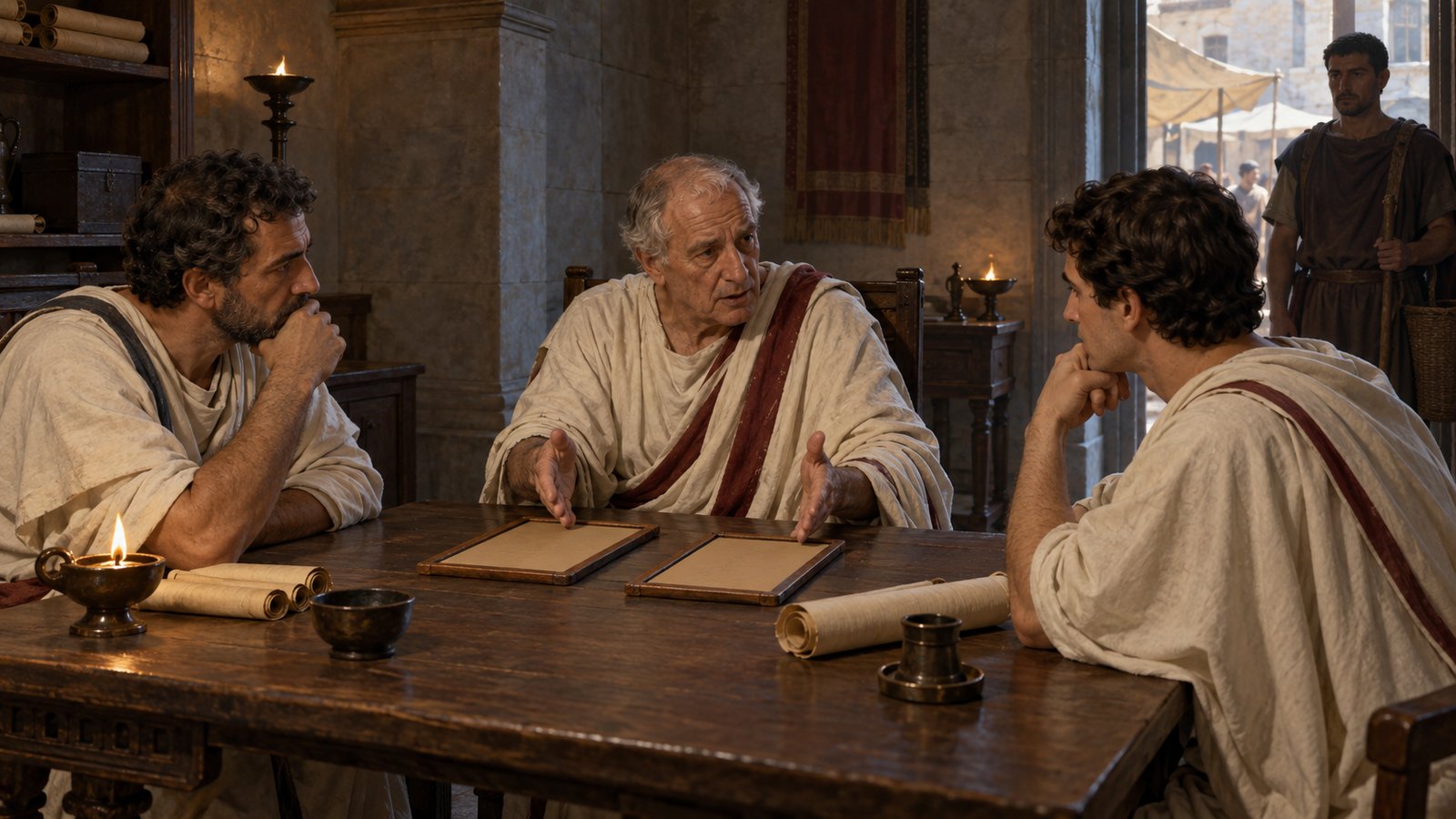
Some early jurists proposed another distinction: a defect lasted, while a disease came and went. Gellius immediately notices the problem. Blindness and castration are lasting, yet Labeo had treated conditions of that kind as disease. A tidy temporal rule collided with established examples.
Masurius Sabinus offered further cases. A person who was mad, mute or had a broken or crippled limb, or another condition impairing usefulness, counted as diseased. Someone naturally near-sighted was as sound, in his view, as someone who simply ran more slowly.
The comparison returns to baseline expectations. Slowness can matter to a buyer without making a person sick. Natural near-sightedness can limit a task without fitting a category meant for pathological change. The market needed language broad enough to expose meaningful conditions but narrow enough to prevent every difference becoming grounds for reversal.
That is why the ticket and the juristic debate belong together. The aediles required exact disclosure, but exactness is impossible until the required terms have operational boundaries. A seller cannot reliably state a “disease or defect” if lawyers cannot say what either word includes.
The surviving discussion does not tell us how every market inspector enforced the rule or how often enslaved people were actually returned. Gellius preserves doctrine and examples, not a statistical record of cases. The limits of the evidence should remain visible.
What it does show is the chain from writing to remedy. A fact had to be placed on a person’s ticket. Its omission could matter after sale. To decide the dispute, jurists classified the body, behavior or history and then assigned the financial consequence.
The same chain reveals the priorities of the system. Disease was important because it impaired usefulness. Flight was important because it threatened possession. Condemnation was important because another legal claim might follow the person into the transaction.
The ticket made hidden facts visible, but only inside a market that denied the most important fact of all: the person standing beside it was not a thing.
Sources
Aulus Gellius, Attic Nights, book four, chapter 2.