
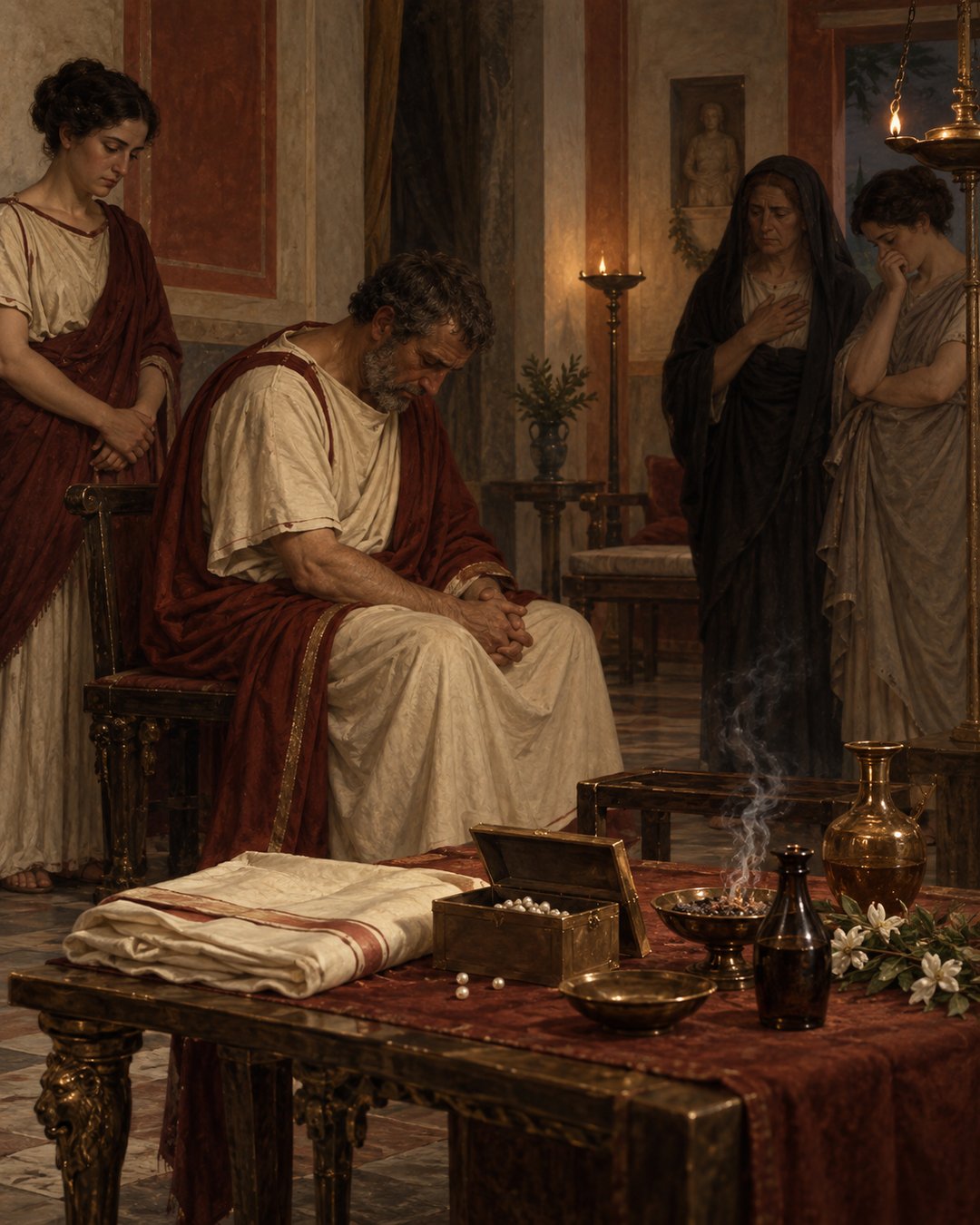
A wedding day had been chosen. Guests had already been called. Money was waiting for clothing, pearls and gems.
Then the younger daughter of Minicius Fundanus died before she had fully completed her fourteenth year. Her father ordered the wedding expenditure redirected to incense, unguents and scents for her funeral.
Pliny the Younger built his letter around that reversal: a household prepared for one ceremony and was forced to purchase another.
A Fourteenth Year Held an Adult Future in View
Pliny opens in distress, telling his correspondent that the younger daughter of their friend Fundanus is dead. He does not give her name in the surviving letter. Instead, he fixes attention on age: she had hardly completed her fourteenth year.
That number makes every later detail more difficult. Pliny says she possessed the prudence of age and the sedateness of a matron while retaining the sweetness of a child and the modesty expected of a maiden. His praise belongs to Roman elite convention, but it also marks a life positioned between childhood and an adult role that had already been arranged.
She clung around her father’s neck. She greeted his friends with affection and restraint. These gestures locate her inside a network rather than in an isolated portrait: daughter, sister, pupil, future wife and familiar presence to her father’s circle.
The letter is therefore full of relationships that death interrupts. Fundanus loses a child who resembled him in face, features and character. His friends lose someone they had watched grow. A prospective husband loses a marriage that had advanced beyond discussion to a fixed date.
Another Lost Eagles story shows Arria controlling her grief outside a sickroom so that her husband would not learn their son had died. Fundanus’s loss is differently staged. Pliny allows philosophy and public composure to fall away because the future had already become materially specific.
The girl’s age is not used to claim that she had finished becoming who she might be. It shows the opposite. Nearly fourteen is the threshold from which Pliny makes readers see how much preparation pointed beyond the present.
Nurses and Tutors Filled the Household around Her
Pliny remembers how she loved her nurses, teachers and tutors, each according to that person’s place. The list reveals the labor surrounding an elite child: care, instruction and supervision distributed among adults who knew her in different roles.
He praises both application and quickness in reading. He also says her amusements remained measured. Those judgments reflect an adult male author’s ideal of disciplined girlhood, not a diary from the girl herself. The distinction matters because the only voice preserved is Pliny’s.
Even so, the names of relationships prevent the portrait from becoming merely ornamental. Nurses and teachers could grieve because they had spent repeated days with her. Her sister and father could be comforted by her because illness unfolded inside shared rooms rather than at a distance.
Pliny says she followed the doctor’s orders. As her body lost strength, she tried to cheer her sister and father. The sequence reverses expected care: the patient consoles those beside the bed.
The letter does not identify the disease, specify a treatment or supply a precise duration. It calls the illness long and emphasizes patience, resignation and mental steadiness. Those are claims about character drawn from behavior under pressure, not a medical diagnosis that the evidence cannot support.
A reader should also resist turning the educational details into a modern curriculum. We know that she read with speed and care and had several kinds of instructors. We do not know which texts occupied her lessons or how she would have described them herself.

A Fixed Wedding Day Made the Funeral More Cruel
Pliny calls the funeral heartbreaking, then says the moment of death seemed crueller still because the girl had just been betrothed to a young man of excellent character. The wedding day had been settled. Invitations had effectively begun: Pliny and others had already been summoned.
Roman mourning is often described through general customs, but this letter offers a datable mini-scene inside one family’s preparations. Before the planned ceremony could occur, news moved through the same social circle that had expected to attend it. Anticipation became obligation to mourn.
The betrothal explains why the loss reaches beyond parents and siblings. Two households had begun organizing a union. Clothing and jewelry were not vague symbols of a someday marriage; money had been allocated for them because a day stood on the calendar.
Pliny’s emphasis on the prospective husband’s character also serves the reversal. The match is presented as promising, not as an escape from an unwanted arrangement. His account stacks reasons for joy before allowing one sentence to overturn them.
That literary construction does not make the grief invented. It shows how Pliny communicates it. He places readers among completed decisions—betrothal, date, guests and purchases—so that death arrives not as an abstract shortening but as the cancellation of work already performed.
The girl’s own expectations remain beyond recovery. Pliny does not quote her thoughts about the marriage. His evidence concerns what the adults had arranged and how those arrangements sharpened their response when she died.
Pearls and Gems Became Incense and Scent
The most physical moment belongs to Fundanus. Pliny hears him order that the money intended for wedding clothing, pearls and gems be spent on incense, unguents and scents.
Nothing in the line requires imagining the same merchant or the same objects literally exchanged hand to hand. The transfer is financial and ceremonial: funds assigned to adorn a living bride now purchase aromatic materials for death.
The categories make the change visible. Cloth would have dressed the girl for entry into another household. Pearls and gems would have caught light and attention. Incense, unguents and scents are consumed or dispersed. Their value rises as smoke and fragrance, then disappears.
Pliny says Fundanus had devoted himself from youth to serious learning and noble studies. At this moment, however, philosophy could not command him. Every virtue seemed temporarily displaced by parental love.
That observation is not contempt for philosophy. It is permission for grief to outrank performance. A learned father need not turn his daughter’s funeral into an exhibition of maxims he had read or taught.
The letter’s concern with writing and memory resembles, at a very different social and religious moment, Perpetua’s preserved prison narrative: both remind us that a young woman can reach us through texts shaped and transmitted by others. Here almost everything comes through a grieving family friend.
Consolation Had to Wait until Grief Could Bear Touch
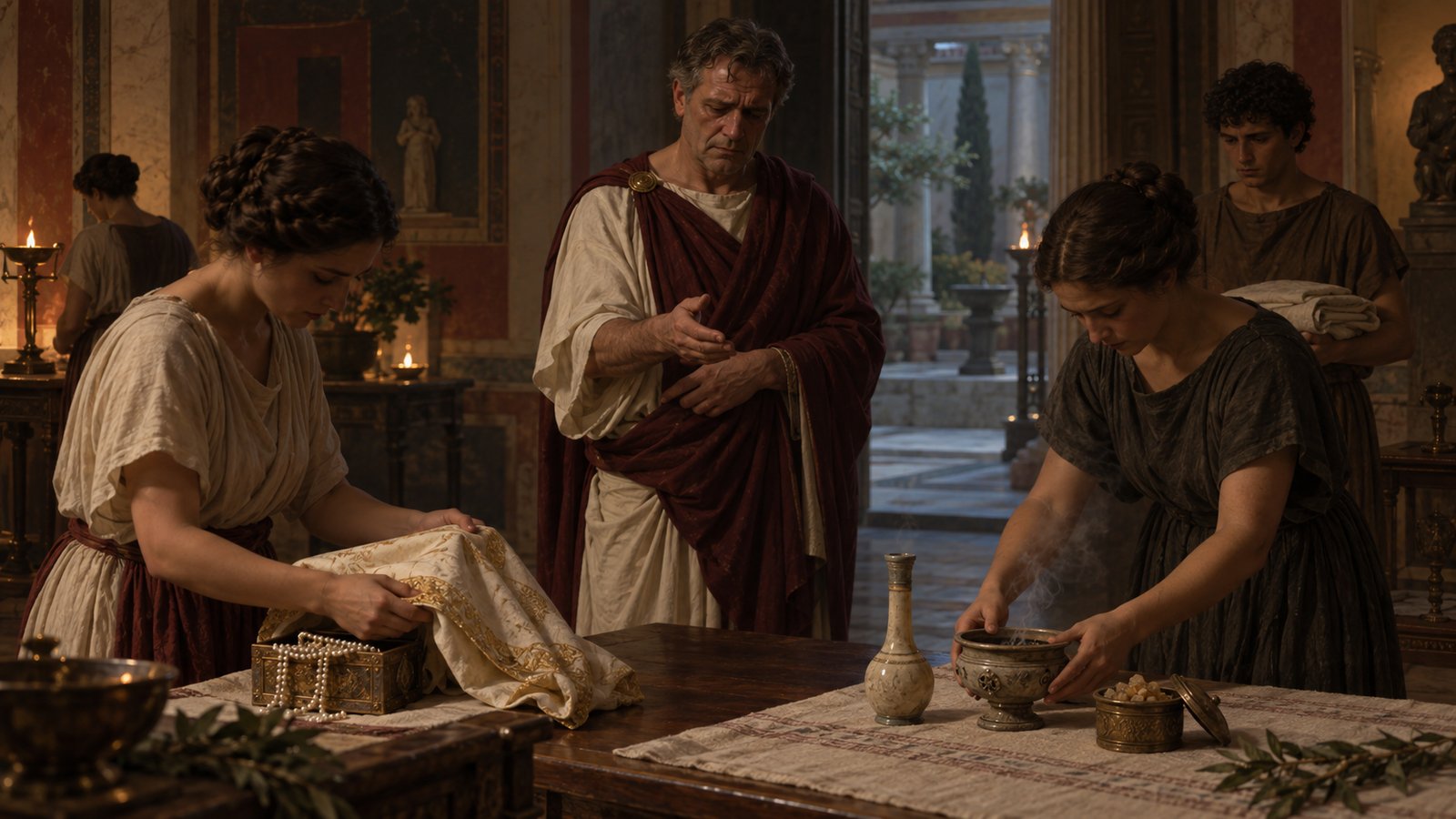
Pliny closes by advising his correspondent to write carefully. Words of comfort should not flay the heart or treat sorrow roughly. They should soothe and ease.
His final comparison is medical. A raw wound first shrinks from a doctor’s hand. Later it can endure touch and may even welcome treatment. Mental anguish, he says, similarly rejects consolation while pain is fresh and seeks relief only after time has passed.
The metaphor connects the daughter’s illness with her father’s grief without pretending they are identical. Her doctor gave orders during the bodily crisis. Fundanus’s friends must now judge when their verbal treatment can be borne.
Timing becomes an ethical skill. A perfectly phrased lesson delivered too soon may hurt. Silence for a short interval may show more understanding than immediate argument about endurance, fate or virtue.
Pliny does not ask his correspondent to erase the loss. He asks him to respect its present texture. The father’s learning remains real, but learning cannot make wedding cloth, pearls and gems resume their intended use.
The objects complete the portrait because they mark the future that vanished. The girl had read with her tutors, comforted her family during illness and stood close enough to marriage for a date to be set. Then the household’s money crossed from celebration to funeral perfume.
Pliny’s consolation begins by refusing to hurry past that crossing.
Sources
Pliny the Younger, Letters, book five, letter 16.