
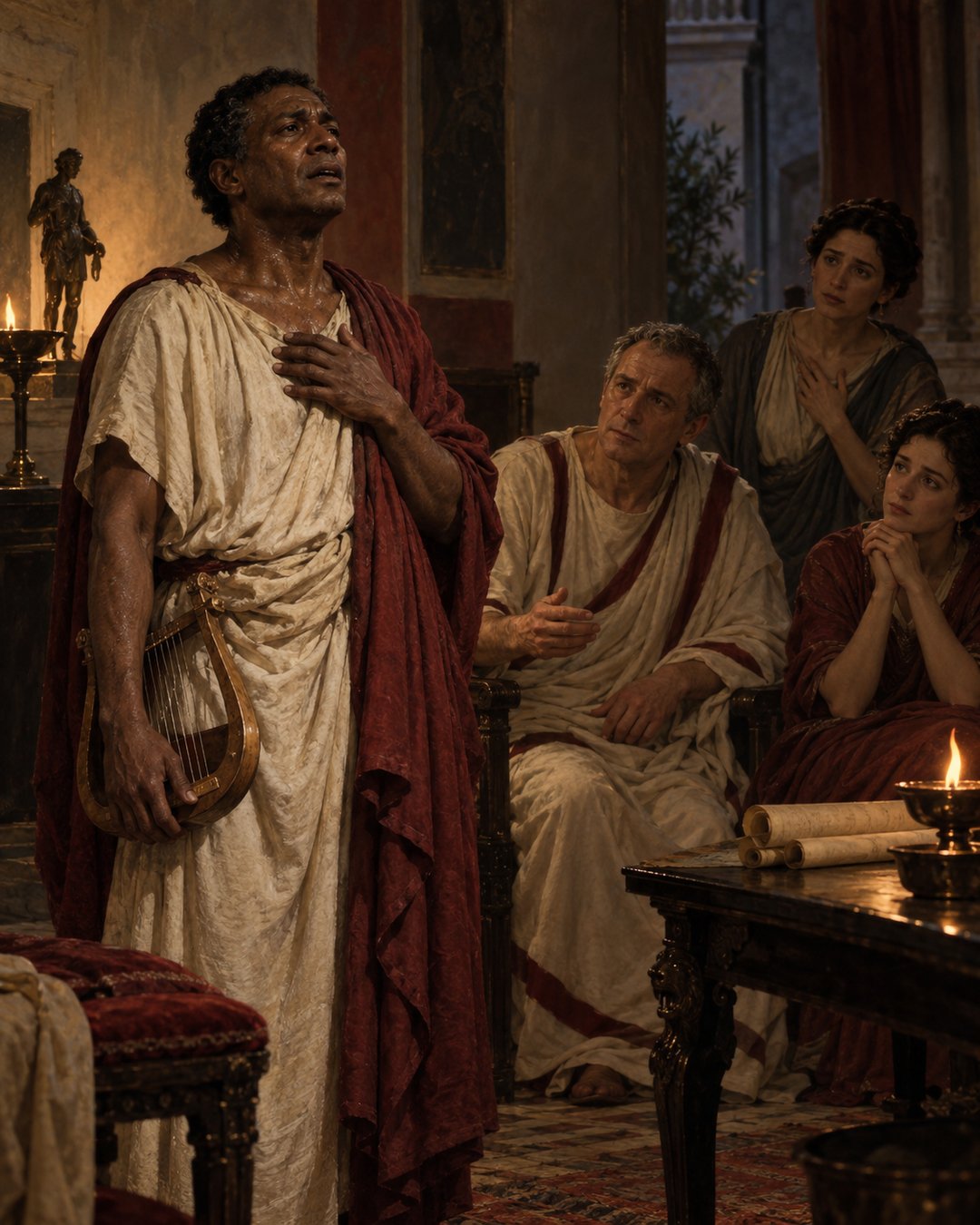
Zosimus could perform comedy, play the lyre and read speeches, history and poetry. The range made one trained voice useful across much of Pliny’s literary household.
It also made illness impossible to separate from work. Zosimus once coughed blood during an intense recitation, recovered after travel to Egypt, then relapsed after straining his voice for several days.
Pliny’s proposed remedy sent the freedman travelling again—this time toward air, milk and lodging at Forum Julii.
One Freedman Supplied Several Kinds of Performance
Pliny introduces Zosimus in a letter to Paulinus. He has noticed how kindly Paulinus treats the people serving in his household and answers with an account of his own indulgence toward a man who had once been enslaved and was now free.
Zosimus is described as honest, dutiful and well educated. His principal accomplishment is comedy. Pliny praises delivery that is sharp, intelligent, concise and graceful, qualities requiring control of pace, sense and audience.
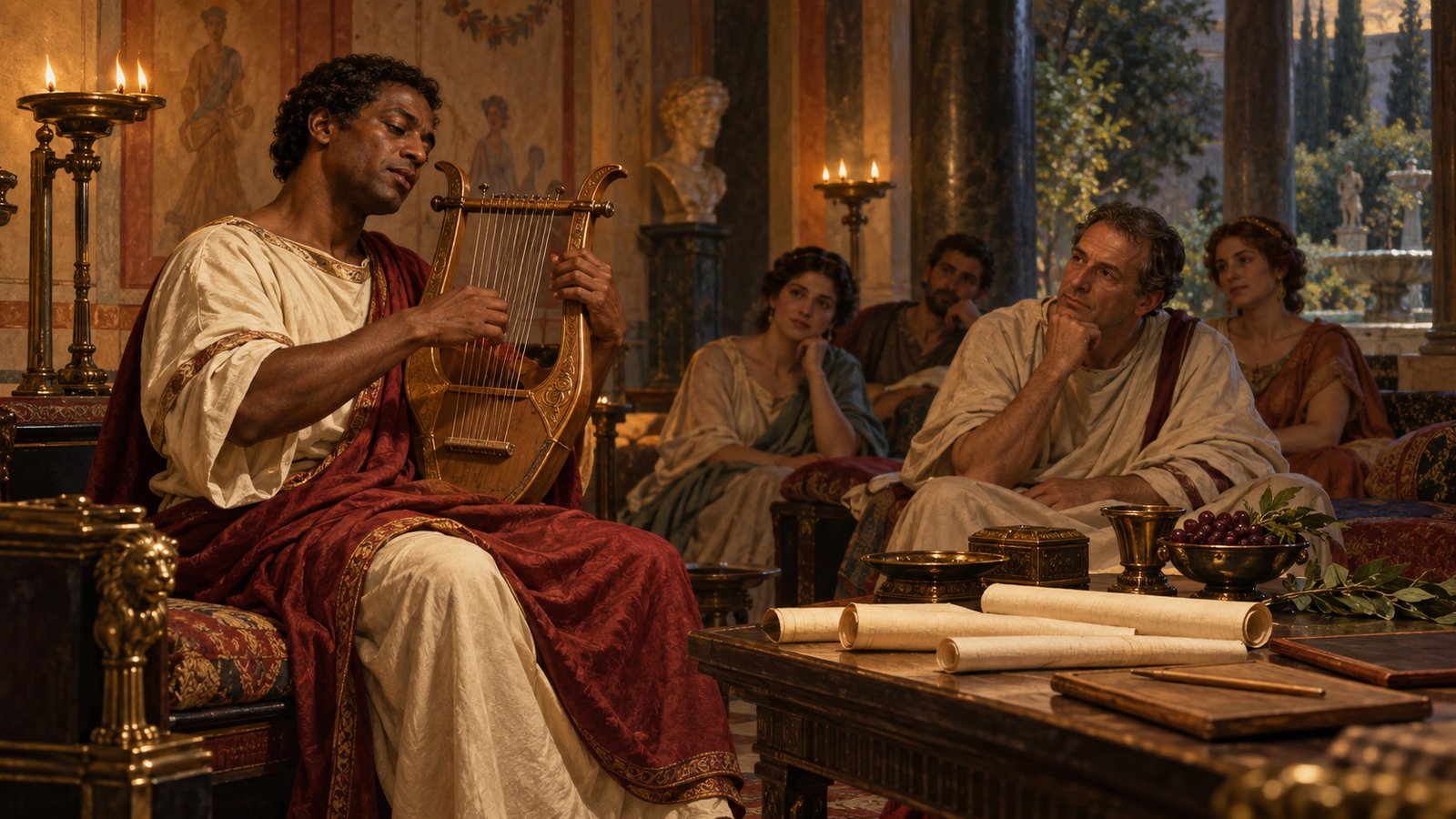
The skill set does not end with acting. Zosimus plays the lyre better than Pliny normally expects from a comedian. He also reads speeches, history and poetry so effectively that, in each genre, a listener might imagine he had studied nothing else.
That list reveals a household in which literature was frequently heard. Texts reached an audience through breath, rhythm and trained pronunciation. A single performer could animate courtroom prose, historical narrative, verse and comic dialogue.
The archive’s portrait of a reader following Pliny’s uncle through bath and dinner shows spoken books extending study across the day. Zosimus’s letter exposes the body behind that convenience. Continuous vocal service depended on a throat and lungs that could fail.
Pliny explains the accomplishments because he wants Paulinus to understand how many pleasant services one person renders. Admiration and utility occupy the same paragraph. Zosimus is valued as an individual and as a concentration of skills.
Blood Appeared in the Middle of Recitation
The first crisis came during a performance delivered with great earnestness and fire. Zosimus spat blood. Pliny gives no fuller clinical description, and modern diagnosis would exceed the source, but the sign was serious enough to prompt distant travel.
Egypt became the first destination. Pliny says he sent Zosimus there and that the freedman returned with health restored. The letter does not specify a city, physician, regimen or length of stay.
Those silences matter. “Egypt” in the text is a therapeutic geography, not a complete treatment record. Climate, rest or local care may have mattered, but Pliny only reports the journey and apparent recovery.
The account also shows the reach of an affluent household. A sick freedman did not merely stop work in the same room. He could be equipped and sent across the Mediterranean because Pliny controlled resources and routes unavailable to many people with similar symptoms.
Affection intensified under fear. Pliny says the possibility of losing Zosimus increased his regard, because fear of loss stimulates attachment. The admission makes the letter more than an inventory of services.
Yet the language never dissolves hierarchy. Pliny is the writer, patron and organizer. Zosimus’s condition is narrated by the man who can decide where to send him and ask another landowner to receive him.
Several Days of Voice Work Brought the Warning Back
Recovery did not remove the occupational strain. After Zosimus had taxed his voice severely for days together, a slight cough warned of the old trouble. He brought up blood again.
The sequence is unusually precise about mechanism even though it is not diagnostic. A skilled vocal worker resumed sustained use of his voice; cough and bleeding returned. Pliny recognizes the recurrence rather than treating it as an unrelated event.
Performance required more than speaking loudly once. Comic delivery, lyric accompaniment and reading across genres demanded repeated breath control. “Days together” suggests accumulated load, not one spectacular accident.
The relapse therefore threatened both health and identity. The abilities Pliny had just praised were the same abilities Zosimus could not safely exercise without limit.
Roman medicine could use fine instruments for highly specific interventions, as in the cataract procedure described by Celsus. Zosimus’s care looks entirely different. There is no operation in Pliny’s letter, only relocation, environment, nourishment and relief from the conditions that had preceded bleeding.
That contrast helps avoid a false single picture of ancient treatment. Some texts preserve instruments and manual technique. This one preserves a patron’s practical response to recurring symptoms whose cause he does not name.
Forum Julii Offered Air, Milk, and a Borrowed Room
Pliny chooses Paulinus’s farm at Forum Julii, the Roman settlement associated with modern Fréjus on the Mediterranean coast. He remembers Paulinus saying that the air there was healthy and that the milk was especially beneficial for complaints of this kind.
The remedy required more than a recommendation. Zosimus needed permission to enter an estate, a room in which to stay, people instructed to receive him and access to whatever daily necessities his condition demanded.
Pliny asks Paulinus to write to his people. The request demonstrates how care moved through commands between property owners. One letter could prepare accommodation at a distant farm before the traveler arrived.
The arrangement was not presented as unlimited charity from Paulinus. Zosimus was to meet the expense of what he needed. Pliny would give him sufficient travelling money for someone going that far.
The destination also separates convalescence from ordinary performance space. At Paulinus’s farm, the expected sounds and demands of Pliny’s household would be absent. The letter does not prescribe a numbered period of silence, but relocation itself would place distance between Zosimus and the recitations that had preceded his relapse.
Money, hospitality and health advice therefore came from different directions. Pliny funded the journey. Paulinus supplied access and orders to estate staff. Zosimus traveled, rested and paid the local costs from the resources carried with him.
The milk detail is easy to romanticize, but the source gives it a specific status: Pliny had repeatedly heard Paulinus recommend it for such complaints. It is reported advice, not proof that the treatment cured the underlying condition.

Care Remained Affectionate, Useful, and Unequal
Pliny worries that Zosimus’s own frugality may work against recovery. He says the freedman denies himself not only luxuries but even necessities required by weak health.
That observation gives the lodging request a second purpose. Staff at Forum Julii must be ready to provide what is needed even if the guest is reluctant to ask or spend. Care means creating permission around someone inclined to economize.
The letter can be read as evidence of real attachment without being mistaken for equality. Manumission had changed Zosimus’s legal status, but the relationship still ran through patronage. Pliny calls him “my freedman,” catalogs his usefulness and coordinates his movement.
Zosimus nevertheless appears as more than a passive recipient. He is educated, accomplished across several arts, capable of travel and expected to pay expenses. The source’s hierarchy should not erase the expertise that makes him the center of the letter.
Nor should Pliny’s concern be dismissed merely because it existed inside hierarchy. He had already sent Zosimus to Egypt, feared losing him more than once and now sought a second environment when symptoms returned.
The enduring tension is precisely what makes the document useful. Affection and power are not alternatives here. Care travels through power: one man has the money and contacts to move another; another estate owner can order lodging; a skilled freedman’s health determines whether the household will hear his voice again.
Zosimus’s cough interrupts the smooth circulation of Roman literature. Behind comedy, history and poetry stood lungs, breath and a worker who could bleed.
Sources
Pliny the Younger, Letters, book five, letter 19.