
The record reached the Senate and disappeared in the same pair of hands.
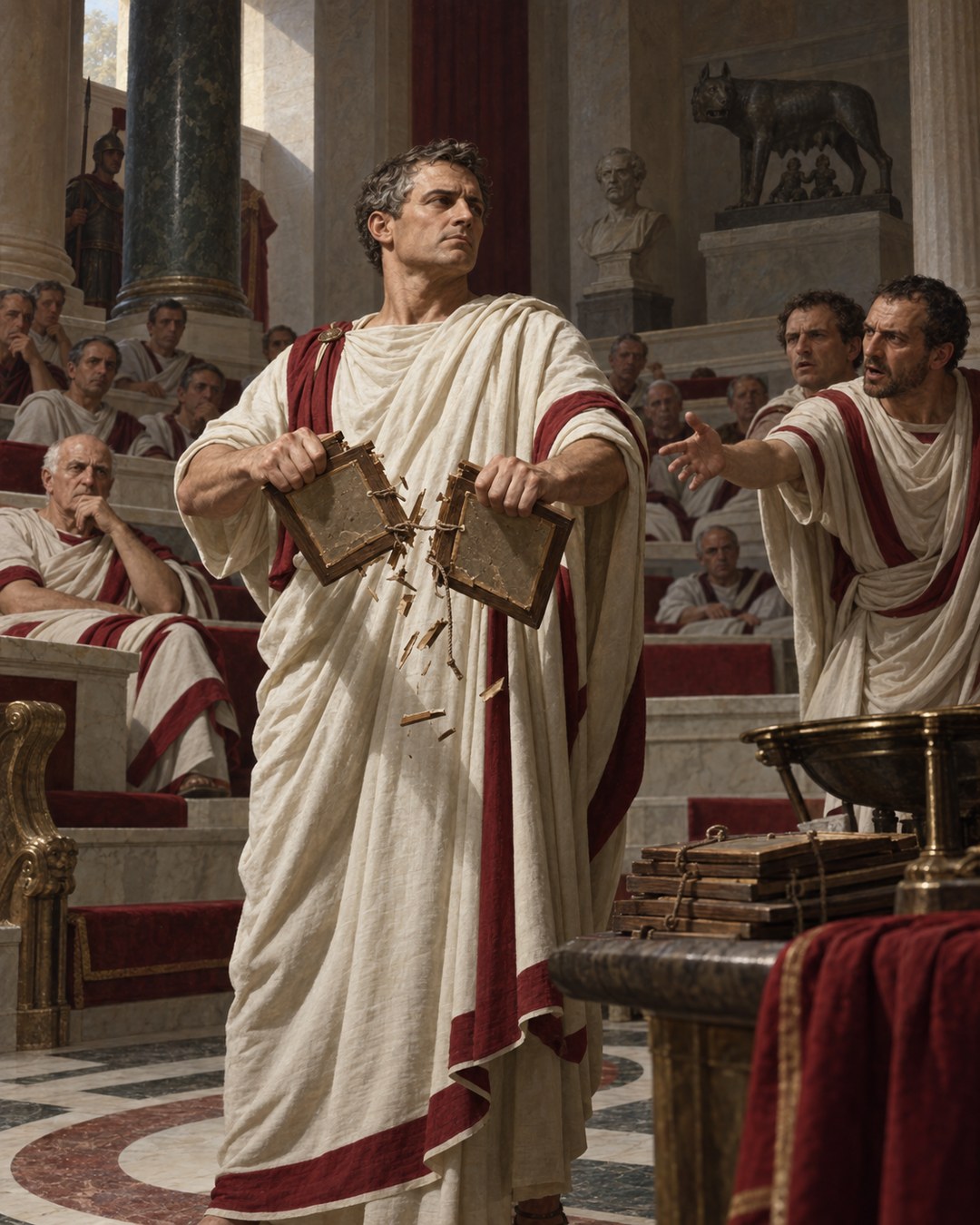
Scipio Africanus said the book inside his toga contained every account demanded from the war against Antiochus. Then, instead of letting senators hear it, he tore it apart before them.
The gesture did not settle the money. It made questioning Scipio the question.
The Tribunes Asked for a Public Chain of Custody
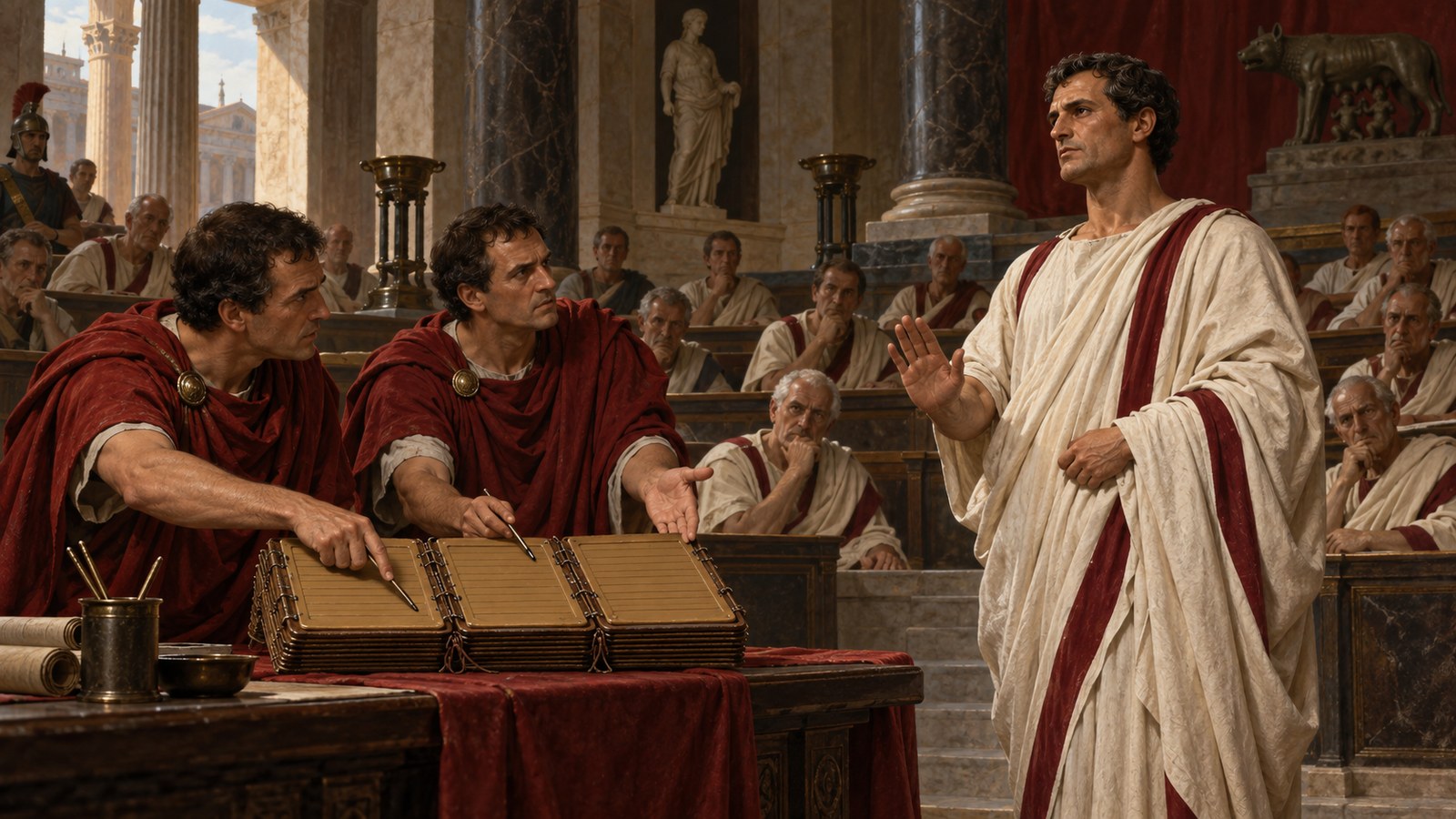
Aulus Gellius preserves the confrontation as a compact story about office, evidence and reputation. Certain tribunes of the plebs called the Petilii pressed Scipio in the Senate. Gellius says Marcus Cato, an enemy of Scipio, had prepared and set them upon him.
The hostility matters, but it does not erase the form of the demand. The tribunes wanted an account of money connected with Antiochus and of booty captured in the war.
Scipio had not commanded that province. His brother Lucius Scipio Asiaticus had held the command, and Africanus had served as his legate. Family prestige and official service therefore met in the same inquiry.
War wealth did not arrive as one neat pile. Money, captured objects and obligations moved through commanders, legates, clerks and the institutions that received them. An account made those movements reviewable after the army came home.
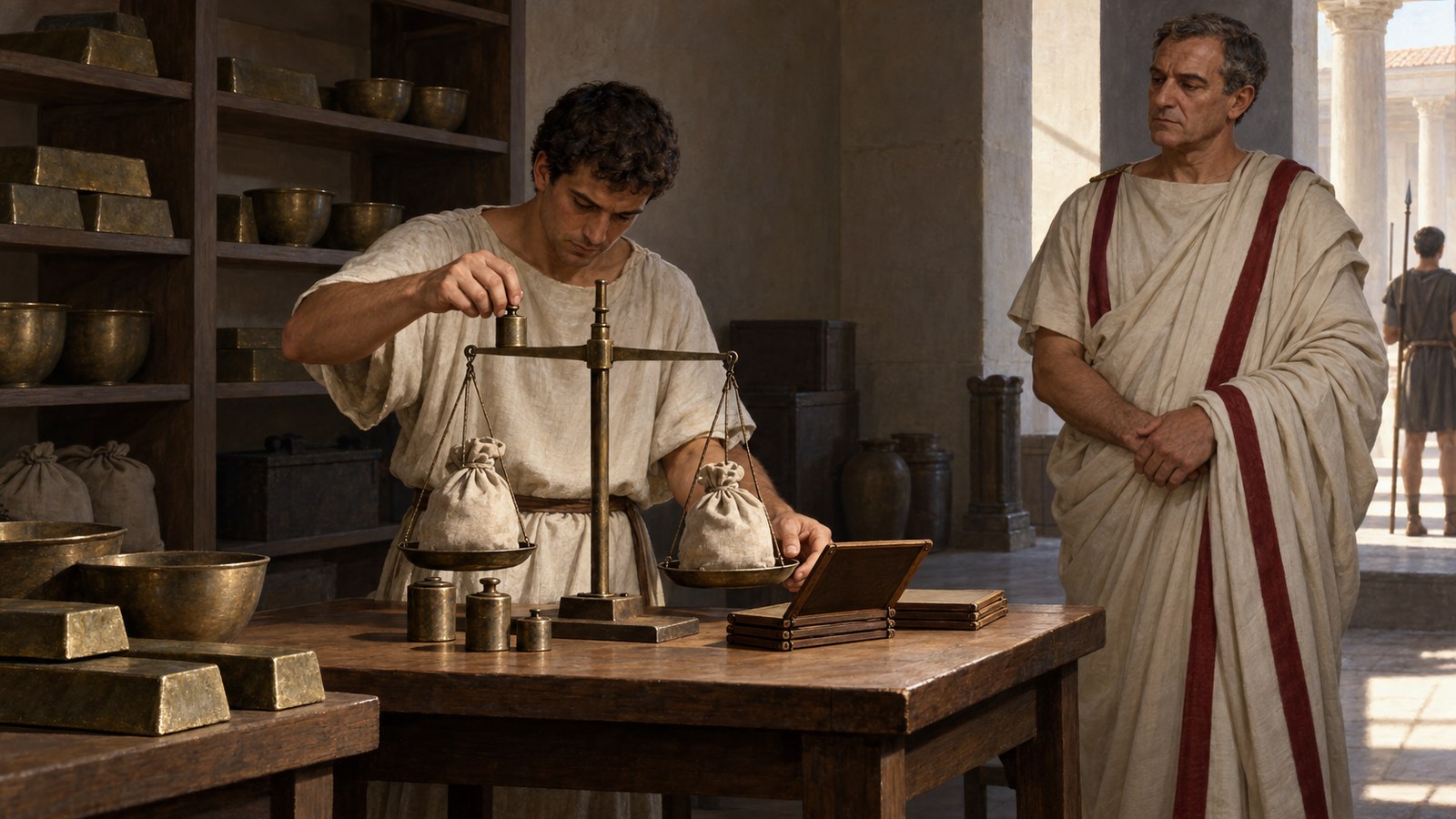
Gellius gives two intended destinations for the record. Its contents were to be read publicly, and the book was to be delivered to the treasury. One act exposed the figures to witnesses; the other placed the durable record in public custody.
That sequence made the request more than a demand for Scipio’s private assurance. Senators were being asked to hear what the record contained and preserve it where later officials could consult it.
The archive already shows how procedure could become visible through physical arrangements. Caesar’s order against Cato tested whether a senator’s removal could overcome the chamber’s collective response. Here the contested object was not a body at the door but a book on which scrutiny depended.
Nothing in Gellius’s scene tells us that the figures were false. Nothing proves they were correct. That is precisely why the requested reading mattered: the procedure was meant to move judgment beyond loyalty and accusation.
Scipio First Confirmed the Book’s Importance
Scipio did not claim that no record existed. He rose and drew a book from the fold of his toga.
He then identified it. The accounts of all the money and all the booty, he said, were written there. By Gellius’s telling, the object the tribunes wanted was already present in the chamber.
That moment strengthened the procedural demand. The senators did not need to wait for a clerk to search a distant archive. Scipio had brought the means of answering them.
It also made his next action more forceful. Destroying an unknown bundle might have looked evasive but ambiguous. Scipio first declared that this was the complete account and only then refused its use.
The book’s material form mattered. A spoken total could be denied, misremembered or altered. Written accounts could arrange categories, preserve quantities and be compared with other records. The physical book separated the figures from the status of whoever recited them.
Roman public finance still depended on people, and records were never magically neutral. A hostile tribune could frame a demand aggressively; a clerk could make errors; an entry could conceal as well as reveal. Yet a shared document created specific claims that others could challenge.
Scipio’s announcement briefly opened that possibility. The chamber had an accuser, the official under scrutiny, witnesses and the stated record. The remaining step was to let the contents enter the proceeding.
His brother’s position sharpened the stakes. Another Scipionic crisis turned on whether political hostility could strip Lucius Scipio of protection and dignity. In Gellius’s audit scene, Africanus treated the request for figures as a similar assault on standing.
Tearing the Record Changed the Kind of Contest
Scipio announced that he would not allow the public reading. He would not, he said, subject himself to such humiliation.
Then he tore the book with his own hands before the senators.
The act removed evidence while displaying control. No subordinate misplaced the accounts, and no fire destroyed them offstage. Scipio made the destruction visible to the same audience that had been asked to hear the figures.
His defense rested on a different ledger: the services credited to him. Gellius explains his indignation through the belief that the safety of the command and the republic ought to be placed to his account. A man owed gratitude for preservation, in this framing, should not be forced to account for booty.
That argument compares unlike things. Military service and captured wealth could both matter without canceling each other. Saving the state did not itself specify how much money came from Antiochus, what counted as booty or where each item went.
But the comparison was politically powerful because prestige could be experienced as a claim against ordinary treatment. The audit implied that Scipio might need verification like another officeholder. His response insisted that his past made the request degrading.
The destroyed book therefore shifted the Senate from arithmetic to identity. Senators could no longer ask only whether a line matched a sum. They had to decide whether pressing the demand against this man was legitimate after his victories.
The gesture also raised the cost of continuing. Anyone who renewed the inquiry risked appearing to side with Cato’s hostility against a celebrated commander. Scipio did not rebut the tribunes line by line; he made insistence look like ingratitude.
This was not the same as proving innocence. It was a way of controlling which standard the chamber applied first.
The Missing Figures Are the Point of the Story
Gellius celebrates the act as memorable, and his account explains Scipio’s anger more fully than the tribunes’ case. The narrative itself carries the prestige it describes.
That framing requires caution. We do not receive the account totals, the exact suspicion, a transcript of debate or the Senate’s final handling of each financial issue. The torn record cannot now supply them.
What survives is the collision between two forms of authority. The tribunes invoked office and documentary procedure. Scipio invoked service, honor and the embodied reputation of the man standing before them.
Both needed an audience. A private book would not create public accountability until read and deposited. A private sense of insult would not defeat the request until performed in front of senators.
The tearing fused those performances. Scipio demonstrated that the record existed, prevented its institutional use and offered the violence done to the book as evidence of the violence he believed the inquiry did to his dignity.
For the Senate, the practical loss was irreversible. Once the book was in pieces, a later request could not simply resume where the reading had stopped. Scrutiny would require another copy, other records or testimony about figures no longer present.
The story is therefore not valuable because it tells us whether Scipio stole money. It does not. It shows how accountability can fail even when a record reaches the right room.
An audit needs more than documents. It needs a political order willing to let documents speak when the person holding them is powerful enough to redefine scrutiny as insult.
The intended treasury deposit also shows what destruction interrupted. A deposited account could survive the temper of the meeting and become part of the state’s continuing memory. Officials who had not witnessed the campaign or the confrontation might still inspect it. Tearing the book kept the dispute inside the prestige contest of the present room, where Scipio’s presence was strongest, instead of allowing it to become an administrative question for later readers.
Scipio won the immediate scene by refusing that order. The tribunes asked for numbers. The answer history remembered was the sound of the book being torn.
Sources
Aulus Gellius, Attic Nights, book 4, chapter 18.